• Home
  • About
  • Recipe Index
  • Contact
Menu

Rivka Friedman

Street Address
City, State, Zip
Phone Number

Your Custom Text Here

Rivka Friedman

  • Home
  • About
  • Recipe Index
  • Contact

The Negroni

July 2, 2011 Rivka
DSC_0006-2
DSC_0006-2

I rarely post about drinks in this space. Truth is, until recently I hadn't a clue how to mix a good drink. My bar was "stocked" with two bottles of Kahlua, a half-empty jug of Bailey's, and the brandy and sherry I use in cooking. For a nice, hard drink, I went around the corner and plopped my derriere at a bar. So it was.

I'm pretty sure it was Jen, from Last Night's Dinner, who, in a sort of roundabout way, kickstarted my newfound intrigue in liquor and the cool things you can do with it. (I sound a little bit like I just had my 21st birthday, I know.) It's ironic, since Jen's husband, Mike, is the real drink expert. He blogs at A Dash of Bitters and writes a drink column for Serious Eats Drinks. But it was Jen who got me started. Earlier this year, Jen posted a recipe on Food52 for linguine with sardines, tomato, and fennel. That dish became one of my addictions this past winter, and I made it probably once a week. It's a beautiful recipe, in which long pasta meets melted fennel, bright tomato, briny sardines, toasted bread crumbs, and...dry vermouth.

Vermouth, I came to learn, is a fortified wine. There's sweet vermouth and dry vermouth. I've come to think that in cooking, dry vermouth is to white wine what shallots are to onions: more complex, more buttery, more exciting. I still cook with plenty of white wine, but especially in savory dishes, I turn more and more to dry vermouth.

Then there's sweet vermouth, which has about half as sweet as port and, again, fortified with various herbs and spices. I've used it in chicken dishes to impart a gentle sweetness with plenty of flavor. The stuff is really, really good.

In my urban kitchen, where we're perpetually in negotiations about the necessity of every utensil or appliance, the vermouth functioned as a new toy. It was great in food, but I wondered about its potential in, of all places, the glass.

I started playing with vermouth-based cocktails, this and this. But I have both a terrible memory and a penchant for not following recipes so well, and when those two things combine, you've got yourself a terrible mixologist. So at the end of the day, I've come to favor a cocktail that's as easy to memorize as it is to quaff: the Negroni.

A Negroni is 1 part gin, 1 part Campari, and 1 part sweet vermouth. Let's discuss: gin, you know. Campari is an apertif, a liquor infused with herbs and spices, that's notable for its bright red color and its mysterious bitterness. It's great with just soda, but it's even better when it meets gin and sweet vermouth. The result is a sweet but bracing cocktail, perfect to serve your guests before dinner. If that dinner is, say, a 4th of July barbecue, all the better. Negronis will gear everyone up for burgers and cherry pie.

Other July 4th menu ideas:Not So Potato-y SaladSingapore SlawAsian Cabbage SaladCucumber Avocado SoupJam-Filled Hand PiesMint Chocolate Chip Ice Cream

The Negroni

Now, if you're a drink expert, please don't freak out about the picture at the top of this post. Negronis should be served on the rocks, I know. But you see, our normal ice trays broke, leaving us only with the ice trays meant for water bottles, which produce long, skinny ice logs that sit very awkwardly in our cocktail glasses. Left with no choice, I stirred our Negronis on plenty of ice, but poured them off into our glasses without the frozen, so we wouldn't be whacked by ice logs while sipping our drinks. So be it.

Serves 2

2 oz. gin (I used Plymouth - no need to use Hendricks or anything too fancy here) 2 oz. Campari 2 oz. sweet vermouth ice cubes

Combine ingredients in an old fashioned glass. Stir, and serve.
In drinks, easy
1 Comment

Zucchini and Snap Peas with Sesame Oil

June 29, 2011 Rivka
DSC_0001-1
DSC_0001-1

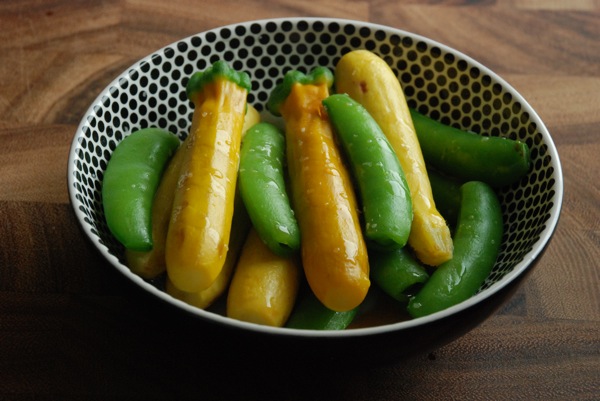
In some sense, it's hard to come up with anything insightful to say about a dish containing four ingredients, one of which is salt and the other three of which are in this post's title. On the other hand, one taste had me going on and on about how simple, how delicious, it all was. It's a dish of contradictions: complex flavor from very few ingredients, a celebration of the bounty of summer with none of the fuss involved in, say, sour cherry pie.

We're talking about zucchini and snap peas, two of summer's greatest-hit vegetables. If you've seen those very small zucchini at the market and wondered what to do with them, this is the perfect recipe for showing off their shape. (If you can't find baby zucchini, regular zucchini sliced into thick coins will work just fine.) I've spent many summers sauteing zucchini coins in butter; never once did I consider ditching the butter in favor of water. (Ditching butter? Would I ever? No.) But this is an exception: when you're dealing with summer's freshest vegetables, at the peak of the season, a little salted water is all you need.

DSC_0009-1
DSC_0009-1

I first had simple blanched baby zucchini at Blue Hill at Stone Barns. Theirs were blanched very briefly, kept still somewhat crunchy, then coated in sesame seeds and served just so, as a first course. Zucchini and sesame are a great match, and I echoed that pair here, but using sesame oil instead of the seeds. The blanched vegetables need little else: just some flaky salt to make the flavors really pop.

It's important to really drain the blanched vegetables well. By the time you're dressing them, you really want them completely dry, or else the oil will mix with the water and make a very diluted dressing at the bottom of the bowl. Usually I love that sort of delicious runoff, but here it's not welcome. You're looking for bone-dry vegetables, lightly coated in sesame oil and speckled with good, flaky salt. That is all. You will eat these on the porch, on a long summer evening. Or in the hot kitchen, off the platter, with your fingers. And then (I hope!) you will thank me.

Zucchini and Snap Peas with Sesame Oil

As I said in the post, you really want the vegetables to be completely dry before you dress them. Let them strain well for several minutes, and you'll be all set.

Also, two different ways to serve this dish. The first is to drizzle the sesame oil and sprinkle the salt over the vegetables. The second is to serve the vegetables unadorned on a platter, and give each of your guests a small bowl with a tablespoon or so of sesame oil and a sprinkling of salt. That way, they can grab a warm zucchini, dip it in the salted oil, and eat with their fingers. I think I actually prefer the second method, but both are great.

Serves 4 as a side dish

1 pound zucchini (if using baby zucchini, leave whole; if using large zucchini, slice into 1/2-inch coins) 1 pound snap peas 3-4 T sesame oil flaky salt

Put a pot of salted water over high heat and bring to a boil. Add zucchini to the pot and cook 1 minute. Add snap peas, cook 1 minute more, and drain. You're serving these vegetables warm, so no need to use an ice bath; instead, you just slightly undercook them, and they cook the rest of the way while cooling.

If using coins of large zucchini instead of whole baby zucchini, add them at the same time as the snowpeas, and cook just about 1 minute, maybe 10 seconds more.

Drain vegetables well, wiping with a towel if necessary. Transfer to a serving platter. Drizzle with sesame oil, enough so that when you give the platter a few shakes, all the vegetables look thinly coated. Then sprinkle some flaky salt over the whole dish. Taste one. Does it need more oil? More salt? Adjust seasoning accordingly. Serve now, or later. They're great at room temperature, too.

As I mentioned above, if you'd prefer, you can serve the vegetables plain on a platter, and put out the salted sesame oil in a bowl for dipping. I think I prefer the dish this way, but both work just great.

In sides, vegetarian, easy, healthy
4 Comments

Sour Cherry Compote

June 26, 2011 Rivka
DSC_0499
DSC_0499

It seems my latest attempt to test the temper of this bearable summertime weather has, gleefully, been ignored. DC persists in being comfortable. In June! No, I'm not complaining.

Instead, I'm reveling in the joy of walking down to the farmers' market on Sunday mornings after a workout, all hot and prepared to stay that way, only to encounter 80-degree breezes and precious little humidity. Sacks full of produce, I can walk home without needing the day to recover. Call it the tyranny of low expectations, but it's quite a thrill.

The nice (for summer) weather makes the bounty of East Coast produce an even greater bonus. To wit: I turned on my oven this week to make sour cherry hand pies, and guess what? No one fainted. Success. I'll have a recipe for that soon.

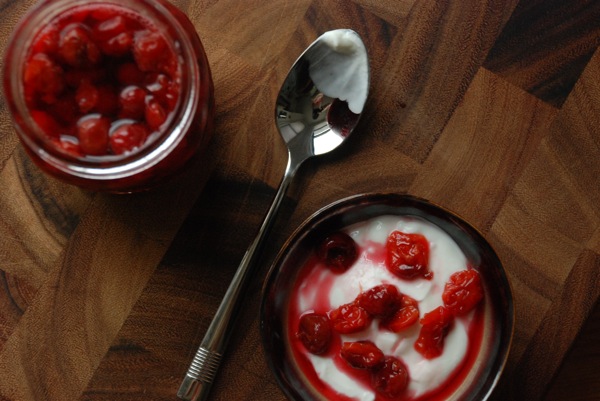
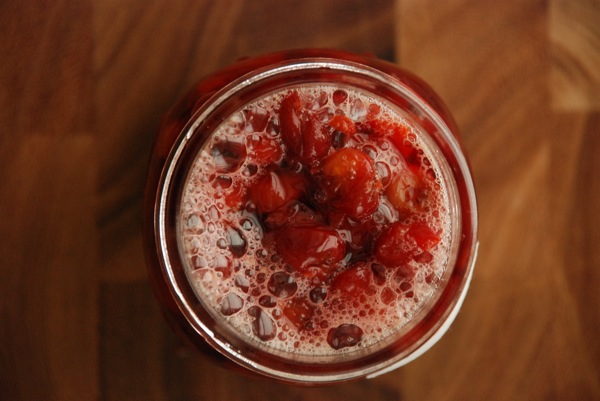
For now, there's this lovely compote, which you should make not next week, not tomorrow, but right now, before sour cherries vanish. It all happens so quickly, and I don't want you to miss out. The beauty of this compote is that it's a cinch to make, and it'll keep in your fridge for weeks, extending the fleeting season of my favorite summer fruit.

DSC_0477
DSC_0477

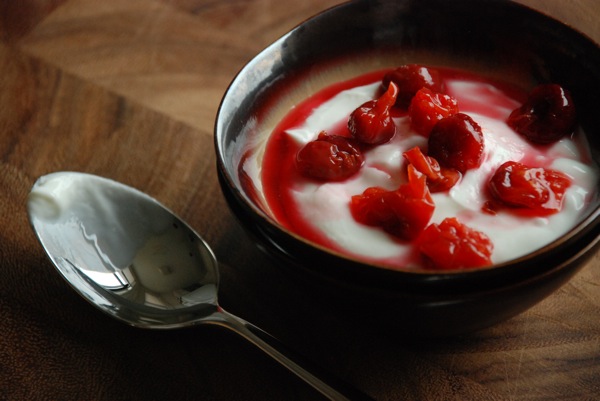
You might wonder when you'll have occasion to use a compote, but trust me: if it's in your fridge, you'll suddenly find ample uses. Over scones or pancakes; alongside grilled meats; swirled into yogurt; spooned over vanilla ice cream. If those possibilities aren't sufficient, you could eat it straight from the jar. Or use it in these wonderfully sloppy sour cherry pies. Think of fruit compote as a headstart to all other desserts. Crumbles, pies, muffins, ice creams -- all of these would benefit from some compote mixed in.

DSC_0453
DSC_0453
DSC_0486
DSC_0486

Sour Cherry Compoteadapted from Karen DeMasco's The Craft of Baking

4 cups (1 lb.) stemmed, pitted sour cherries (fresh or frozen) 3/4 cup sugar juice of 1 lime (or lemon)

Set a strainer over a metal bowl.

Combine cherries, sugar, and lime juice in a small saucepan and set over medium high heat. Cook -- watching carefully, because it will inevitably bubble over the minute you turn away -- until mixture bubbles and starts to foam, and cherries are soft, about 7 minutes. Pour mixture into strainer set over bowl; cherries will separate from syrup. Pour syrup back into sauce pan, and transfer cherries to the metal bowl.

Cook syrup over medium-low heat (you're looking for a simmer here) until reduced by half, about 10 minutes. Remove from heat and cool about 10 minutes more.

Put cherries into a glass jar, and pour syrup over cherries. Refrigerate. Compote will keep in the fridge for a few weeks, if it lasts that long.

In condiments, dessert, easy
7 Comments

Gujarati Mango Soup

May 27, 2011 Rivka
DSC_0039
DSC_0039

Initially posted on The Jew and the Carrot: www.jcarrot.org.

Walk into any Jewish household on a Friday night, and you'll have an instant window into that family's food legacy. The Syrian table is piled high with ka'aks, zucchinis and eggplants stuffed with lamb and beef, beautiful molded rice with blanched almonds, and my favorite, lahmacun, those wonderful flatbreads topped with tamarind-and-tomato drenched ground meat. The Eastern Europeans have lokshen and cabbage, noodle kugel, gefilte fish, and of course, cholent. But come over to my house, and you might be confused: we'll start with, say, a Moroccan soup called harira. The pièce de résistance, if I'm lucky, is huachinango a la Veracruzana, my favorite preparation of red snapper in a Mexican tomato sauce with onions, olives, currants, hot peppers, and cinnamon. A side of the Indian eggplant curry baingan bartha might round out the meal, and for dessert, my mother's homemade chocolate croissants. If you're following along, that makes one American Jew, born and raised in Washington, DC, with relatives from across Eastern Europe, who, along with her mother, is building a cooking legacy on Indian curry, Mexican fish, Moroccan soup, and French pastry.

I don't come from a strong cooking tradition. It's possible my great grandmothers slaved over some top-notch borscht, or -- in the case of the piece of my family that's been in the US for seven generations -- some excellent apple pie. But I wouldn't know. My grandmother, who grew up in Chicago, didn't cook much at all. My Bubby, who grew up in New York and has spent most of her life in Richmond, VA, used to make an excellent Thanksgiving dinner, but her cooking didn't have a particular perspective or core list of key ingredients.

DSC_1037
DSC_1037

Color me jealous: I've always wanted to come from one of those families with a strong culinary tradition. I've longed for native staples - the sorts of ingredients you always have on hand in multiple forms and in massive quantities, that find their way into everything: the Italians' olive oil and tomatoes; the Indians' garlic, ginger, and chilies; and so on.

So we weren't bequeathed a strong culinary heritage by our relatives or our culture; that hasn't stopped us from building our own. My mother has spent years accruing knowledge of different cultures' cuisines, acquiring a taste for spice, learning to achieve that balance of spicy, sour, salty, and sweet that makes food -- of any origin -- great. And ever since I learned to cook, I've been trying to follow in her footsteps. Yes, we're creating our own culinary legacy. Our legacy uses lemon in copious quantities; it doesn't skimp on the chile; it favors things with pools of zesty tomato-based sauces to be sopped up with good bread; and it always includes something sweet to finish things off.

DSC_1029
DSC_1029
DSC_1033
DSC_1033
DSC_1034
DSC_1034

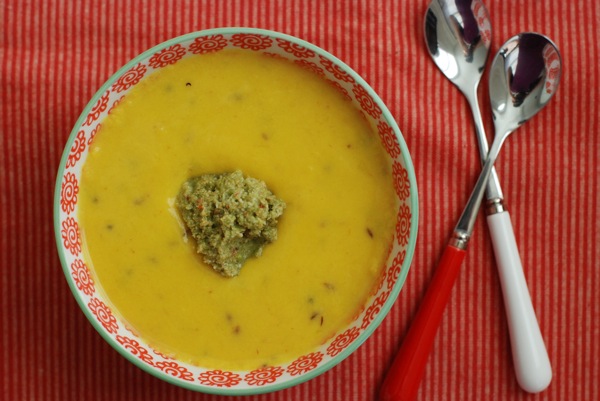
But there's more. We love olives, capers, and anchovies, individually or all together in a tapenade that'd make a cook in Provence swoon. And we love Indian flavors; we've spent many a meal tasting curries two, three, four times in a row, to decipher their ingredients one by one. As I served an Indian-spiced chilled mango soup to my guests on Friday night -- its pale orange surface flecked with black mustard seeds and buoying a dollop of spicy green chutney -- I felt connected to a cooking heritage. The people may not be my own people, but the legacy of Indian cooking -- the boldness with flavors, the embrace of real, sweat-inducing spice, the mixing of hot and cold together in the same dish -- is one I have come to love, and to take as my own. Not being born into a strong cooking tradition may be a blessing in disguise, after all.

DSC_0019
DSC_0019

Gujarati Mango Soup with Green Chutney Adapted from a recipe in Amanda Hesser's The New York Times Essential Cookbook

After initially making this soup, I was concerned it would be cloying, even in small doses. I'd added some lime juice, but it still tasted quite sweet. On a whim, I made this green chutney (below), and its fresh, green heat complements the soup perfectly.

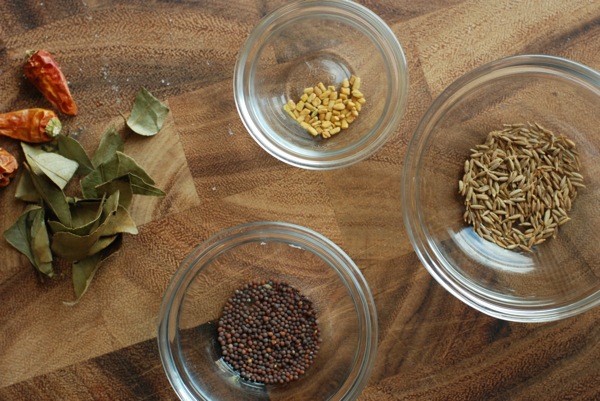
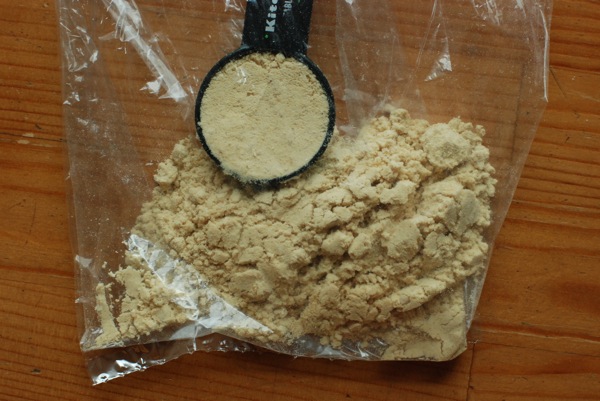
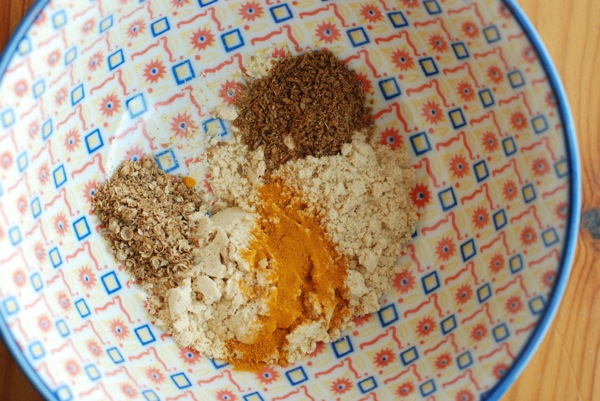
2 tablespoons chickpea flour 1/8 teaspoon ground turmeric 3/4 teaspoon ground cumin 3/4 teaspoon ground coriander 1/2 cup plain whole milk yogurt (Greek is best) 3 cups canned mango pulp or mashed fresh mango pulp (1 mango yields between 3/4 and 1 cup of pulp) 1 1/4 teaspoons salt 1/2 teaspoon sugar (may need more if using fresh mangos) 1 jalapeno pepper, chopped (I used all the seeds. If you prefer less spice, omit seeds and membrane) 2 tablespoons peanut or corn oil Generous pinch ground asafoetida 1/2 teaspoon whole brown mustard seeds 1/2 teaspoon whole cumin seeds 2 whole hot dried red chilies 1/8 teaspoon whole fenugreek seeds 10 fresh curry leaves (optional) Juice of 1 lime

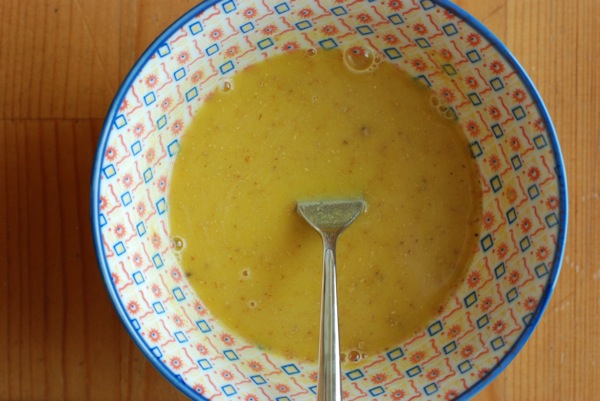
Put the chickpea flour, turmeric, and ground cumin in a bowl. Fill a measuring cup with 1/2 cup of water, and add a couple tablespoons to the flour mixture, stirring carefully until the flour is a smooth paste with no clumps.

Add more water very slowly, ensuring an even consistency as you stir.

Once enough water has been added that the chickpea flour has been fully incorporated into the liquid with no lumps, add the rest of the water and stir to combine. Whisk in yogurt, mango, and 2 more cups water. Add salt, sugar, and fresh chilies. Mix well.

Put oil in a heavy-bottomed medium pot over medium heat. When oil is very hot, add the asafoetida, and then — in quick succession — the mustard seeds, cumin seeds, dried chilies, fenugreek seeds, and curry leaves (if using). Have a splatter screen on hand: the mustard seeds will pop almost immediately after being added.

As soon as you have added the above ingredients, remove from heat and add mango mixture. Stir to combine, return to medium heat, and simmer for 5 minutes, stirring. Then remove from heat, cover, and allow to steep for 30 minutes.

At this point, you can either reheat the soup to serve warm, or do as I did, and refrigerate it to be served cold. Either way, strain the soup through a coarse sieve, then spoon some of the smaller seeds from the strainer back into the soup. Immediately before serving, stir the lime juice into the soup.

Serve soup in small bowls, with a spoonful of the chutney in each.

Spicy Green ChutneyAdapted from a recipe by Madhur Jaffrey

2 tablespoons lemon or lime juice (lime is preferable) 1 small tomato, diced 3/4 teaspoon salt 3 fresh hot green chilies, such as bird’s eye or jalapeno (can start with 2 and add to taste) 2/3 cup fresh chopped cilantro 1/3 cup fresh chopped mint 1/2 cup grated coconut, fresh or frozen and defrosted

This chutney can be made rustic in a mortar and pestle, or smooth in a blender.

Combine 3 tablespoons water, lime juice, tomatoes, salt, and chilies. Mash or blend until combined or smooth.

Add cilantro and mint; mash together or blend until smooth.

Finally, add coconut and blend or mix more, until chutney is fully mixed or completely smooth. Serve cold.

Chutney will keep in the refrigerator for a few days, but will keep for months in the freezer.

Many of the ingredients in each of these recipes are available online at Kalustyans.com.

In appetizers, condiments, soup, easy, healthy
5 Comments
← Newer Posts Older Posts →

Subscribe by email:

  • books (1)
  • crisps and crumbles (1)
  • frozen (1)
  • toys (2)
  • gifts (3)
  • egg whites (5)
  • fried (5)
  • how to use--- (6)
  • drinks (10)
  • menus (11)
  • travel (11)
  • fish (12)
  • kosher for passover (14)
  • thanksgiving (14)
  • vegan (20)
  • snacks (21)
  • techniques (21)
  • soup (26)
  • bread (28)
  • pies and tarts (28)
  • cake (33)
  • events (34)
  • condiments (36)
  • various and sundry (39)
  • uncategorized (42)
  • cookies and bars (46)
  • weekday lunch (47)
  • appetizers (48)
  • salad (51)
  • gluten-free (56)
  • comfort food (61)
  • breakfast and brunch (77)
  • sides (81)
  • dessert (90)
  • main dishes (100)
  • healthy (139)
  • easy (155)
  • vegetarian (180)

| LATEST |

Featured
Blue Chair Fruit's Black Raspberry Jam
Thai Grapefruit Salad
Mango Sticky Rice
Winter 2016: Odds and Ends
Povitica: The Best Babka Ever
Persimmon Walnut Bread
Sprout Chaat Salad + New Site!
Maple Walnut Squares
How to Give Thanks
Croissants (really, I made croissants) + other croissant-ish things

| hEALTHY |

Featured
Sprout Chaat Salad + New Site!
Fennel frond pesto + what to do with those pesky stalks
Asparagus Toasts with Pistachios and Mint
Eggplant-Walnut Pâté + Passover Ideas
1-DSC_0861-600x401.jpg
Lentils and Rice with Tamarind Sauce and Dukkah
Big Kale Salad with Pomegranate and Feta
Punchy Crunchy Ginger Salad

| BreakfAST |

Featured
Povitica: The Best Babka Ever
Croissants (really, I made croissants) + other croissant-ish things
Mushroom and Kale Breakfast Strata
Barley Porridge with Orange and Black Sesame
Ramps 'n' Eggs Biscuit Sandwiches
Asparagus Toasts with Pistachios and Mint
Apple-Cheddar Scones with Sage
Menemen - Turkish Eggs with Tomatoes and Peppers
You must select a collection to display.

© 2016 Rivka Friedman. All Rights Reserved.