Oven-Dried Tomatoes

Hi friends! Long time no see. I'm taking some time to let marriage soak in, and that means less time to blog. While I'm away, my friend Jeremy Brosowsky is sharing his method for preserving the last of summer's bounty. And DC folks -- Jeremy has a fantastic new company called Compost Cab, the perfect solution for us urban folk who want to compost but don't have a garden. Check it out.

Gather ye rosebuds, my friends. And by rosebuds, I mean tomatoes. We'll likely get another head-fake day or two, when the warm air makes it feel like summer even though the quality of the light is glaringly fall. But make no mistake: summer's over. Last-gasp time, folks.

For the next week, maybe two, you're going to see sad, lonely crates of tomatoes looking out of place among the hardened bounty of early fall at your local farmers' market. No, they're not as good as their mid-summer cousins, the ones so vibrant you want to bite into them like they're apples. These fall tomatoes need to be coaxed out. But, oh, is it worth it.

For much of the past couple of weeks, I've been plowing through 100 pounds of tomatoes -- that's two bushels, if you're keeping score at home. Most got sauced. But some 25 lucky pounds got oven-dried. It's the apotheosis of the fall tomato. And it couldn't be much easier.
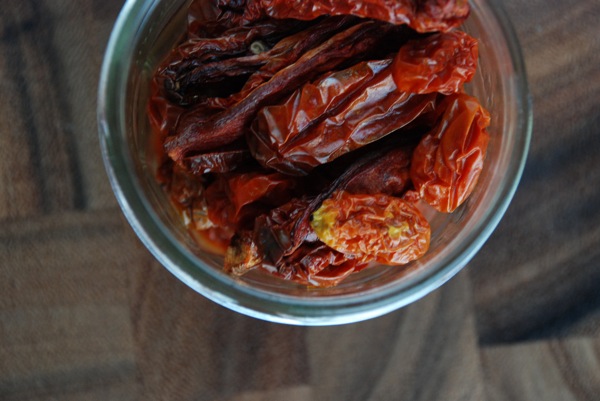
The ingredient list is mercifully short. Tomatoes. Olive oil. Salt.

Tomatoes shrivel as they dry, so don't get caught up in looks -- seconds work just fine. You can use any kind of tomato you want -- it's a free country! But you're looking for sugar here, and plum tomatoes are the classic for a reason. When the February doldrums roll around and I'm aching for a taste of summer, I pop one of these suckers in my mouth, grin a stupid grin, and mumble something about how f**king happy I am that I made these oven-dried tomatoes way back before Halloween.

(I also make oven-dried grape tomatoes, which are awesome, too. Same process as below, but I leave them whole with a little burst of juice left inside.)

Most people use a baking sheet, but I've discovered that the tomatoes dry more quickly and uniformly when I cook them on a cooling rack. Another benefit of the rack is that you avoid any pooling of oil. I line a baking sheet with foil, place the rack on the sheet, and brush or spray the rack with oil.

I sort the plums by size to maximize the chance of each batch drying consistently. I wash and dry them. Then, working along the length of the tomato, I quarter the larger ones, and cut the smaller ones in half or thirds. Use your judgment. Place them on the rack as close together as possible without touching.

You're going to use precious little olive oil, just enough for an ultra-thin coating -- almost a sheen -- on the tomatoes. Because we use so little, and because the taste of the finished product is so straightforward and pure, I break out the good stuff from McEvoy Ranch (http://www.mcevoyranch.com/html/oil_vars.html). But whatever you have on hand will work fine. Use a brush.

I like kosher salt, but if all you have is table salt, that's cool. Either way, sprinkle evenly and judiciously.

Some people tell you to set your oven at the lowest possible setting, usually 170F or so. Others say you can go as high as 200F. I split the difference, set my oven to 185F, and don't worry about it. Put your tomatoes in the oven, and leave them be for six hours. At that point, start checking in on them. I aim for just on this side of leathery, which usually takes 10-12 hours. Remove them from the heat when they're what your looking for. And please, please, please don't forget about them -- it's just so sad when a batch morphs from candy-sweet to metallic-burnt because you fell asleep on the couch.

Once these little beauties cool, put them in a jar in the fridge and they'll keep for months. Little bites of summer. Love it. You will, too.
Kimchi

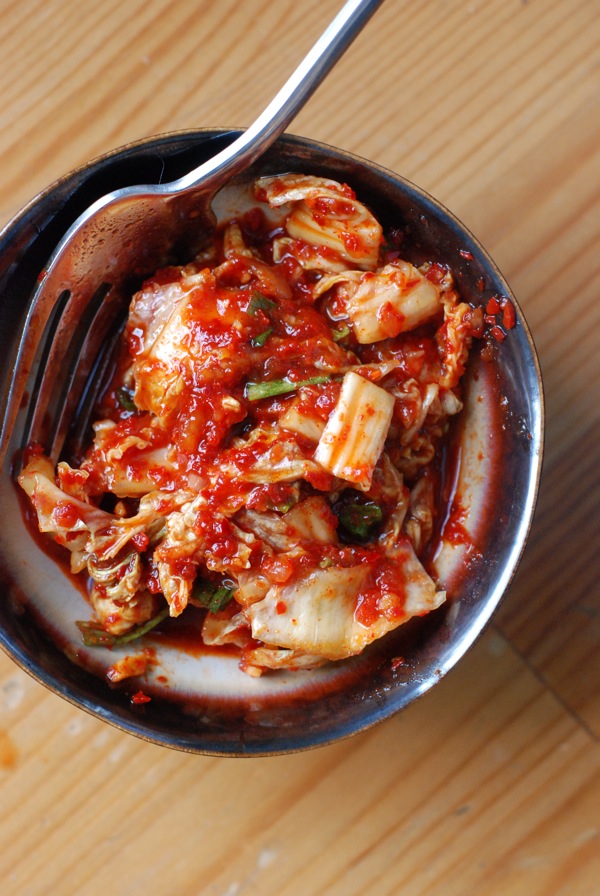
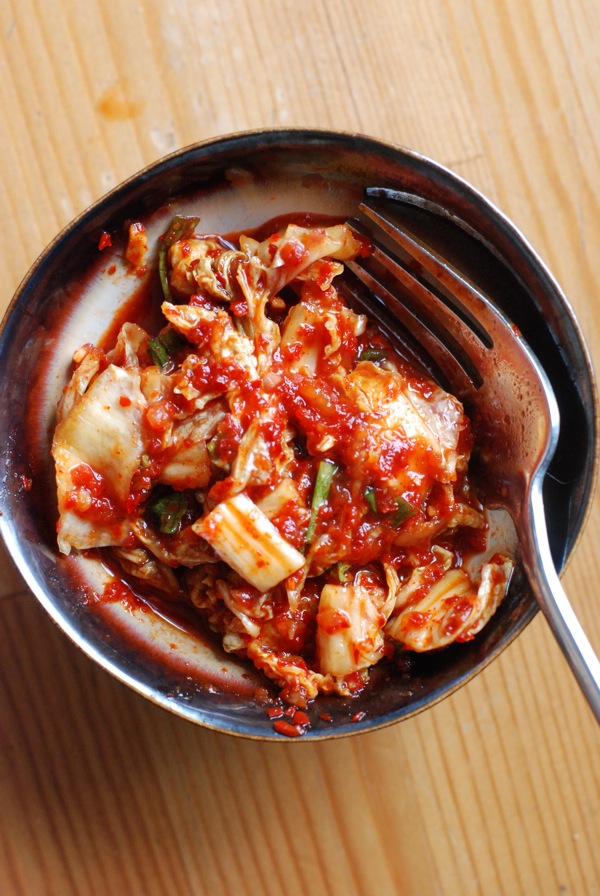
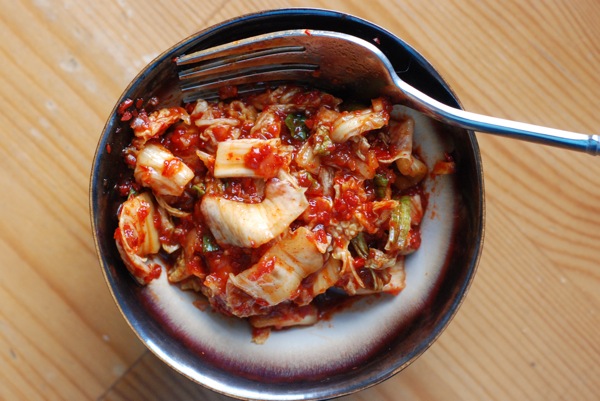
Sometimes, a post writes itself. As I was piling the big heap of pickled cabbage into my largest mason jar, I thought of all the times I'd pigged out on Kimchi in the past, all those times I'd been absolutely sure there was no way to make this stuff at home. I remembered the moment I'd received David Chang's Momofuku cookbook, how excited I was to discover that there was a recipe for kimchi -- a very easy, very doable recipe, involving no more than ten minutes of active prep time. I recalled how few recipes on this site are inspired by East Asia, how frustrated that's made me over the years, considering how prominently East Asian flavors figure into my home cooking and, to an even greater extent, my eating out. And I knew that as soon as work calmed down and Rosh Hashana had passed, I'd be telling you about this one-bowl dish that's quickly become a staple in my kitchen.

Like lacto-fermented pickles, the things that make kimchi so delicious are (mostly) environmental. Exposure to air and time turn the mixture of cabbage, chili, fish sauce, salt, and sugar into something much more intriguing than the individual components might suggest. Some of the kimchi I've had at restaurants has been overly pungent or funky, too sharply salty or sour, without proper balance. My favorite kimchi in the DC metro area, from the Annandale restaurant Ye Chon, is very good, but it sometimes lacks that hint of sweetness that balances the sour, salty, and spicy flavors and keeps your chopsticks coming back for more. Chang's kimchi gets that balance just right.

The most time-intensive part of this recipe is the shopping. If you don't already have fish sauce, you'll need to buy some. Don't be seduced by the tiny bottles they sell at Whole Foods; to make this properly, you'll need the stuff that comes in the big bottle (a bottle usually has between 3-6 cups worth). Yes, it's another thing to store in the fridge, and I get that that's a turn-off. And yes, I'm aware that fish sauce can smell like dirty socks. Have you already clicked away? No? I promise that kimchi reins in the funk of the fish sauce, and that the result will smell nothing like the locker room. My favorite fish sauce brands are Squid and Three Crabs, but anything you find at Hmart or an Asian grocer will be totally fine.

Another key ingredient is Korean chili powder, also called Kochukaru. I went to Hmart (the Asian grocery) in search of something by that name, and saw only pounds and pounds of "chili powder." Turns out, all the chili powder in the Korean aisle at Hmart is kochukaru. If you ask, the ladies behind the register will tell you it's what they use to make kimchi. You want the coarsely ground stuff. The last special ingredient is jarred salted shrimp, which I didn't use (I keep a kosher home, which means no shellfish). My kimchi was still delicious.

Other than that, we're talking basics. Cabbage, salt, sugar. Garlic and ginger. Soy sauce. Scallions and carrots round out the vegetables in this kimchi, and I've been known to dig to the bottom of the jar for some of those irresistible pickled scallion bits.

I've said before that my goal with this blog is convincing myself, along with you, that good food really isn't so hard to make. Yes, sometimes it requires ingredients that aren't exactly staples. Sometimes we end up needing to teach ourselves new tricks. But with one trip to the somewhat-obscure grocery store and a couple minutes of advance reading, something like kimchi -- which once seemed impossible to make at home -- can be in a mason jar, on your tabletop, in your mouth in practically no time. When good food is this simple, fear of cooking seems like a waste, doesn't it?

Kimchi Adapted from David Chang's Momofuku

1 small to medium head Napa cabbage, discolored or loose outer leaves discarded 2 tablespoons kosher or coarse sea salt (don't use table salt -- it's too harsh) 1/2 cup plus 2 tablespoons sugar 20 garlic cloves, minced 20 slices peeled fresh ginger, minced 1/2 cup kochukaru (Korean chile powder) 1/4 cup fish sauce 1/4 cup usukuchi (light soy sauce) 2 teaspoons jarred salted shrimp -- I didn't use this, and my kimchi came out great 1/2 cup 1-inch pieces scallions (greens and whites) 1/2 cup julienned carrots

Cut the cabbage lengthwise in half, then cut the halves crosswise into 1 inch wide pieces. Toss the cabbage with the salt and 2 tablespoons of the sugar in a bowl. Let sit for several hours or overnight in the refrigerator.

Combine the garlic, ginger, kochukaru, fish sauce, soy sauce, shrimp if using, and remaining 1/2 cup sugar in a large bowl. If it is very thick, add water 1/3 cup at a time until the brine is just thicker than a creamy salad dressing but no longer a sludge. Stir in the scallions and carrots.

Drain the cabbage and add it to the brine. Cover and refrigerate. After 24 hours, the kimchi will taste great. Don't eat it all right then and there, though -- it'll taste even better after a week of sitting, and at its prime 2 weeks out. It will still be good for another couple weeks after that, though it will grow stronger and funkier.

Apricot Basil Ice Cream

Admittedly, it all started with apricot curd. I know, I know...more curd? You must think I've gone mad. But consider the humble apricot, whose thrilling tang and sultry sweetness lies pretty much dormant until cooked. Rhubarb is much the same, and you'll remember how that turned out - so can you blame me for trying again? No, you can't. And let me tell you, that apricot curd was really, really good.

But then it got really, really hot in DC. When it's 100 degrees out with 99% humidity, it's hard to rationalize making anything but cold soup and ice cream. So I turned back to my humble apricots, wondering if I could turn them into something sweet, tangy, and frozen.

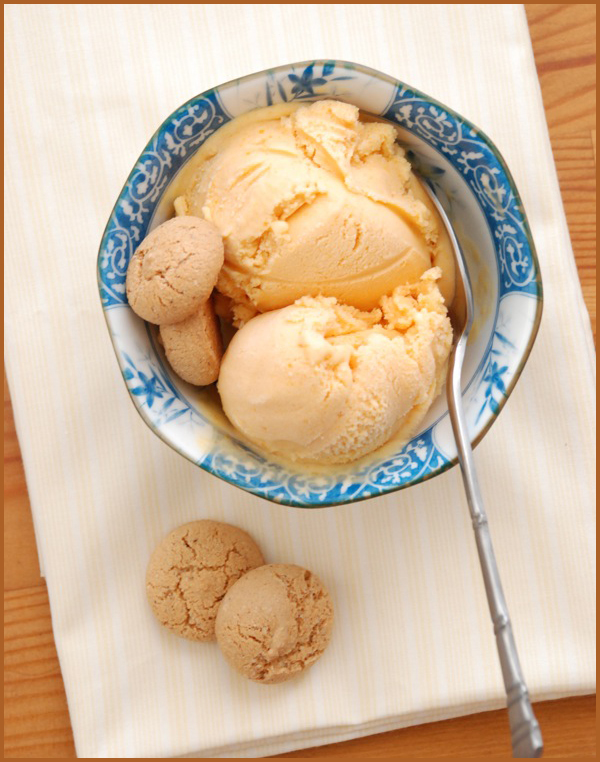
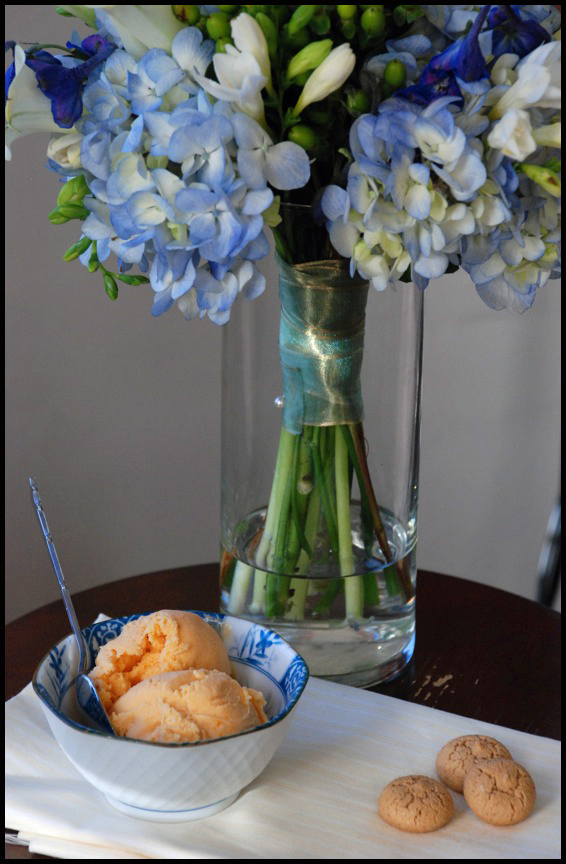
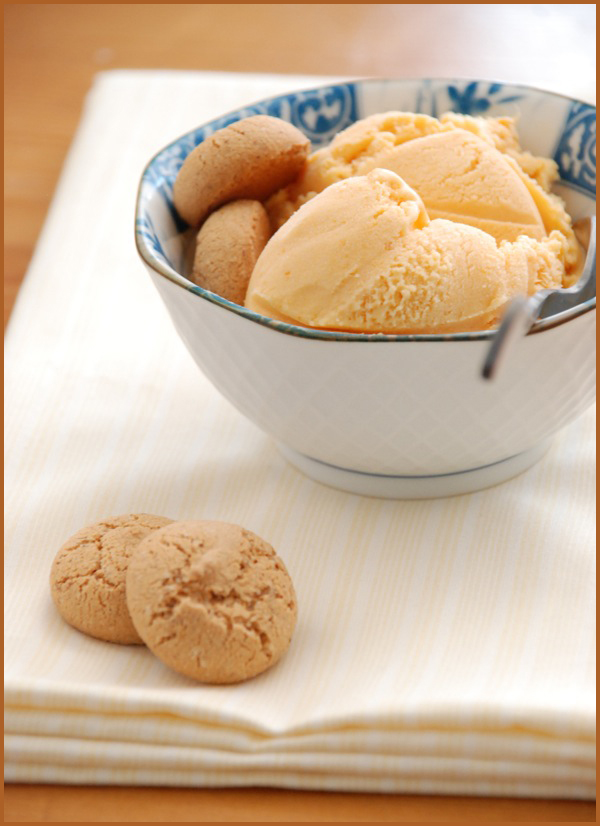
I did so with the help of my summer partner in crime, the ice cream king himself, David Lebovitz. Of course, David has an apricot ice cream recipe. But his is eggless, and after tasting that amazing curd, I knew I wanted my ice cream be similarly rich and yolky. I figured with all that richness, I'd need some contrast, so I decided to add in some basil. From there, things sort of figured themselves out. Now there's apricot basil ice cream in the freezer, and it's taking my every ounce of self control not to polish it off right now. You know wha.....

Um...

...Oops.

Apricot Basil Ice Cream

1/2 cup water 1/2 cup plus 2 tablespoons sugar 10 small basil leaves (use the plant's inner leaves, which have a more delicate flavor); if using larger leaves, use only 5 1 pound fresh apricots (I needed 9 sizable fruits) 1 cup heavy cream 2 egg yolks juice of a small lemon wedge

In a small saucepan over medium heat, simmer water, sugar, and basil leaves until sugar melts and basil goes limp, about 5 minutes. Turn off heat and let sugar-water mixture steep 15 minutes.

Meanwhile, halve the apricots by slicing along their dimple all the way around. Remove the pits, which should slip out easily. Slice each half into 2 or 3 pieces. By now the basil mixture should be finished; remove basil leaves, pressing against the side of the pan with the back of the spoon to coax all the flavor out of them. Discard basil.

Transfer apricot pieces into saucepan containing basil-infused syrup. Return heat to medium, and cook until apricot pieces are soft and tender, about 8 minutes. Set pan aside and bring to room temperature.

If you have a hand blender, use it to puree the apricot mixture right in the pan until smooth. Alternatively, puree apricots in blender or food processor. Transfer apricot mixture to bowl of double boiler or, if you don't have one, transfer apricot mixture to a metal bowl, and add egg yolks one at a time, mixing well after each addition. Set bowl over a small saucepan with a couple inches of water in it, turn heat to medium, and begin heating apricot mixture over water, stirring thoroughly and often. After about 7 minutes over the simmering water, apricot mixture should begin to thicken. It will only thicken slightly, never getting as viscous as creme anglaise or pudding. The whole thing should be done after 10 minutes. Remove from the heat and stir in lemon juice.

Pour cream into large bowl and set strainer over the bowl. Pour apricot custard through strainer into cream. Press on any solids left behind, then discard. Stir custard and cream together until they turn a uniform shade of light orange. Chill thoroughly.

Process ice cream in ice cream maker according to manufacturer's instructions.

Flourless Recipes, for Passover and Year-Round

When it comes to Passover and any other diet-restricting events or circumstances, I'm a firm believer in eating things you'd enjoy any other time. Forget matzah-meal muffins and "Passover rolls." I'd rather eat undressed lettuce and oranges for a week straight than endure those lame excuses for bread. Gluten-free folks may feel differently, since their restrictions aren't temporary; for the rest of us, I strongly recommend sticking to recipes for delicious things that happen not to call for flour.

For our eating pleasure, I've compiled a small list of flourless baked goods. These are recipes I've gathered over the years -- one as recently as last week -- that help ease the annoyance of going without bread for a week (or more).

Chocolate Puddle Cookies

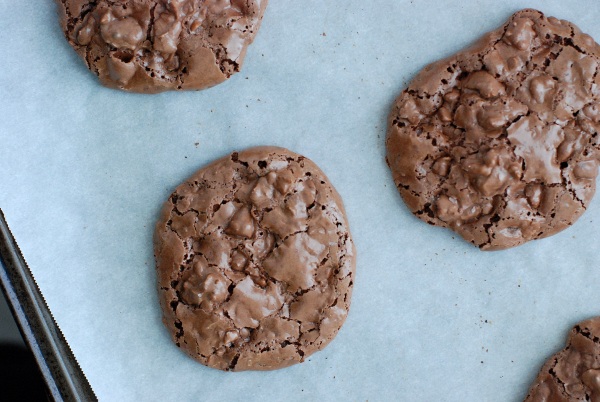
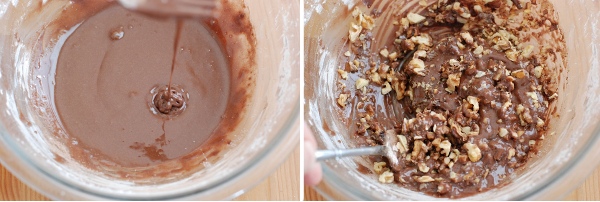
Courtesy of the lovely Heidi at 101cookbooks, the batter for these cookies looks like, well, a big puddle, but the blobs bake up into crackly, tender morsels. They take approximately 15 minutes, start to finish, and are the perfect answer to a sudden cookie craving.

3 cups / 11 oz / 310 g walnut halves, toasted & cooled 4 cups / 1 lb / 453 g confectioner's (powdered) sugar 1/2 cup plus 3 tablespoons / 2 oz / 60 g unsweetened cocoa powder scant 1/2 teaspoon fine grain sea salt 4 large egg whites, room temperature 1 tablespoon real, good-quality vanilla extract

Preheat oven to 320 degrees. Line three rimmed baking sheets with parchment paper.

Make sure your walnuts have cooled a bit, then chop coarsely and set aside. Sift the confectioner's sugar and cocoa powder together. Stir in the walnuts, then add the egg whites and vanilla. Stir until well combined.

At this point you have two options: you can either add the salt to the batter and stir, or you can sprinkle a bit of salt atop each cookie. I like the second option, because you get a more prominent hit of salt with each bite.

Spoon the batter onto the prepared sheets in mounds of about 2 tablespoons each, allowing for PLENTY of room between cookies. Don't try to get more than 6 cookies on each sheet, as the cookies expand a lot in the oven. For the same reason, don't scoop the batter too close to the edge of the pan.

Bake about 12-15 minutes, watching carefully at the 12-minute mark: the tops should be glossy and cracked. If your oven is very uneven, rotate pans side to side and/or back to front halfway through. My cookies didn't need a second longer than 12 minutes.

Slide the cookies still on parchment onto a cooling rack, and let them cool completely. They will keep in an airtight container for a couple days.

Makes 18 large cookies.

Italian Chocolate Almond Torte

From Alice Medrich's wonderful book Pure Dessert, this cake is sophisticated and elegant, finished with a dusting of cocoa and topped with a dollop of unsweetened whipped cream. Your guests will never know its main ingredients are almond flour and egg whites. Another lovely surprise is the flakes of ground, not melted, chocolate running through the batter. I've spent the past three weeks searching for my images of this torte, but I'm afraid they've been lost in the tangle of pictures that is my laptop. Imagination will have to suffice.

Italian Chocolate Almond Torte adapted slightly from Alice Medrich's wonderful book, Pure Dessert

1 cup (5 oz) blanched or unblanched whola almonds 7 oz. high-quality bittersweet chocolate, roughly chopped 3/4 cup sugar, divided 1/4 teaspoon salt 7 large egg whites (about 1 cup) 1/4 teaspoon cream of tartar powdered sugar or unsweetened cocoa powder for dusting unsweetened whipped cream for serving

Position a rack in the lower third of the oven and preheat to 350 degrees. Grease the bottom and sides of a 9-inch round springform pan, and line the bottom of the pan with parchment paper.

In a food processor, combine almonds, chocolate, 1/4 cup sugar, and salt and pulse until almonds and chocolate are very fine but "not completely pulverized." Alternatively, you can use almond flour and just pulse the chocolate -- but grinding fresh almonds will give this cake a great texture.

In a very clean, dry bowl of a stand mixer or a large metal bowl using a hand mixer, beat egg whites and cream of tartar until soft peaks form. Gradually add remaining 1/2 cup sugar to egg whites, and continue beating until egg whites form stiff peaks but are not dry. Gradually add almond mixture to egg whites, in thirds, folding the two together with a spatula.

Scrape the batter into the springform pan and use spatula to smooth out the top. Bake until the torte has risen and is golden brown on top, and a toothpick inserted comes out with nothing more than some melted chocolate on it, 25-30 minutes (mine took 25 exactly). Set the pan on a rack to cool for 10 minutes, then slide a knife around the perimeter of the cake and carefully remove the sides of the pan. Invert the cake onto the rack -- or, if the grates on your rack aren't fine enough, use a plate -- and remove the bottom of the pan and then the parchment liner. Use two plates to flip the cake rightside up again, and cool completely. Cover the cake or tightly wrap it, and store for up to 3 days at room temperature.

To serve, dust with cocoa, and top each slice with a dallop of unsweetened whipped cream.

Meringues

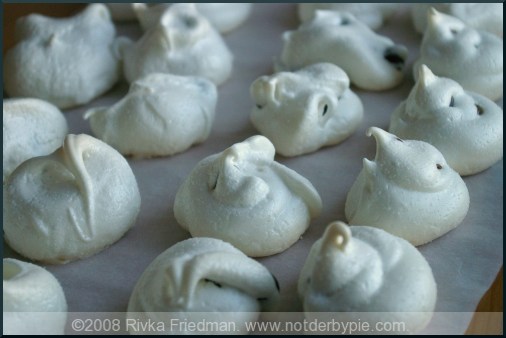
Meringues are, in my opinion, the ultimate Passover dessert. They're flourless, thoroughly enjoyable, and highly customizable. Last year, my mom and I made some several varieties. One had chopped walnuts and a bit of coffee (they were divine), another had plenty of vanilla and a sprinkle of chocolate chips. The possibilities here are limited only by your imagination. Try adding lemon or orange zest to a batch with pecans, or almond extract and a bit of cocoa for a totally different flavor. I've already written out the recipe for meringues here.

Macarons

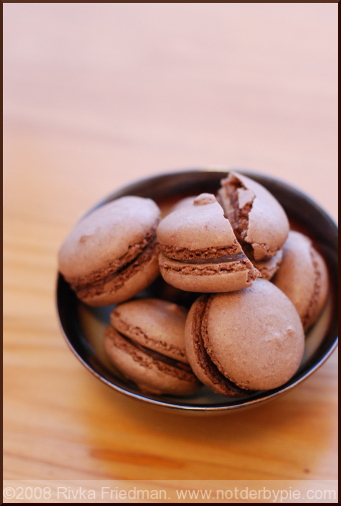
The ultimate in flourless delicacies, Macarons are having a moment in the spotlight these days. They're a pain in the derriere to make, but when you put these out at the end of your Seder or dinner party, guests will know you're their biggest fan. Recipe and detailed instructions for macarons can be found here.

But hold up! We're already talking about dessert and you haven't even finished making dinner! I hear ya. If you're still trying to sort out the rest of your Passover menu, here are a few ideas: