Pasta Primavera

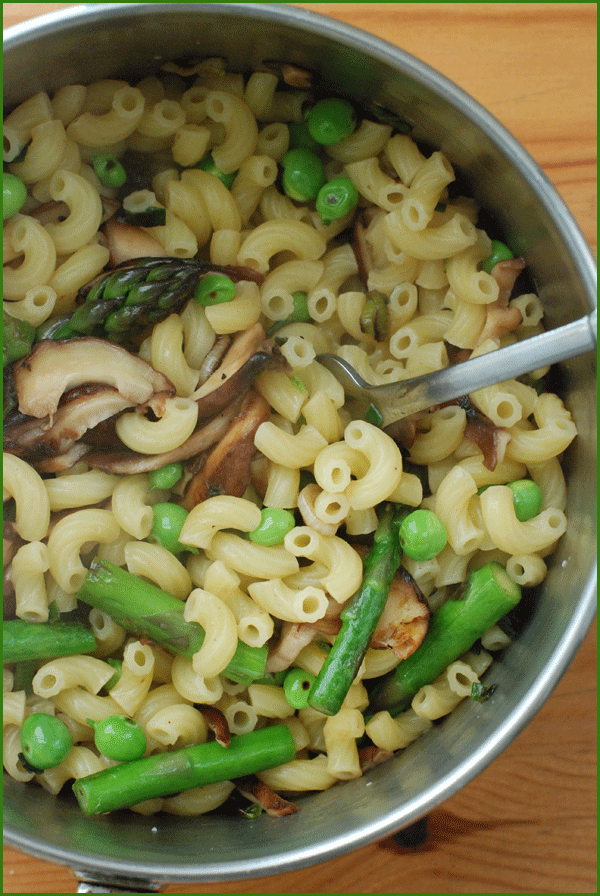
Forget that crap they serve in bad Italian restaurants. (All year round, mind you. Does anyone else see the irony in that?) This is the real thing. It's spring (did you hear?), and this is a pasta dish that shows off the season's finest. It's a dead-simple preparation that doesn't skimp on flavor, and it takes mere minutes to throw together.
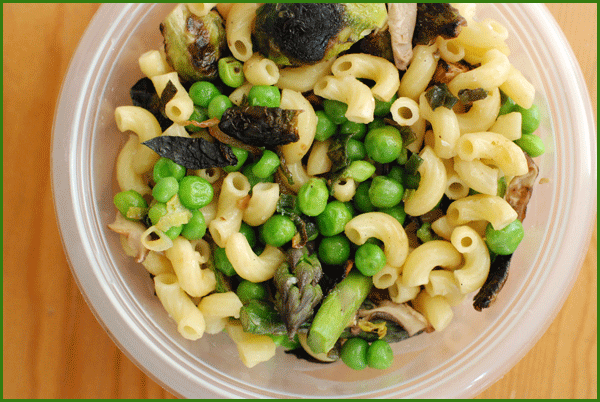
It's hardly a recipe, I confess. But that's mostly because it can be made any which way, with whatever spring vegetables are in your fridge now. If you see this and think, "I need this right now," I gotcha. Variations of this recipe have been my lunch 5 days out of the past two weeks. I started with asparagus, mushrooms, and peas. When I roasted some late-season brussels sprouts one night for dinner, I added the leftovers to my pasta for the next day's lunch. If you have other vegetables -- favas, carrots, whatever -- they'd be lovely here as well. And yes, I tossed in a forkful of the caramelized onions I keep in the fridge. What's pasta primavera without'em?

And one more tip for this lovely Friday: many spring vegetables, including peas, asparagus, mushrooms, scallions, and favas, have bits that you discard, be they tough stems, or pods. Instead of simply throwing them away, along with their wonderful flavor, here's a fresh idea for what to do with them: stick them in a big pot of boiling water, add a whole onion, and maybe a few stems from your basil or mint leaves, plus some salt. Bring to a simmer, and cook for about 20 minutes. Let cool overnight in the fridge, then strain through a strainer lined with either cheese cloth or 2 paper towels (yes, it really works). Pour the strained liquid into ice cube trays, and freeze. Now you've got the most flavorful, aromatic spring vegetable broth, stored in easy-to-use ice cubes. I have a gallon-size bag full of these cubes, and they're the perfect addition to pasta primavera.
Pasta Primavera serves 4, or 2 hungry people plus weekday lunch leftovers

1 pound any kind of pasta; I've used penne, macaroni, and shells, all great olive oil caramelized onions, if you've got'em 2 scallions, chopped finely 1 1/2 pounds any of the following: asparagus, peas, mushrooms, brussels sprouts, fava beans, or other spring vegetable 1/2 cup vegetable broth or water 2/3 cup grated parmigiano reggiano or pecorino cheese a couple pieces fresh mozzarella or spoonfuls fresh ricotta, optional salt and pepper a couple leaves fresh basil, mint, or both

If using fava beans, remove beans from pod, boil for about 5 minutes, and remove beans from waxy coating. Reserve; you'll add them to the finished dish.

Boil pasta.

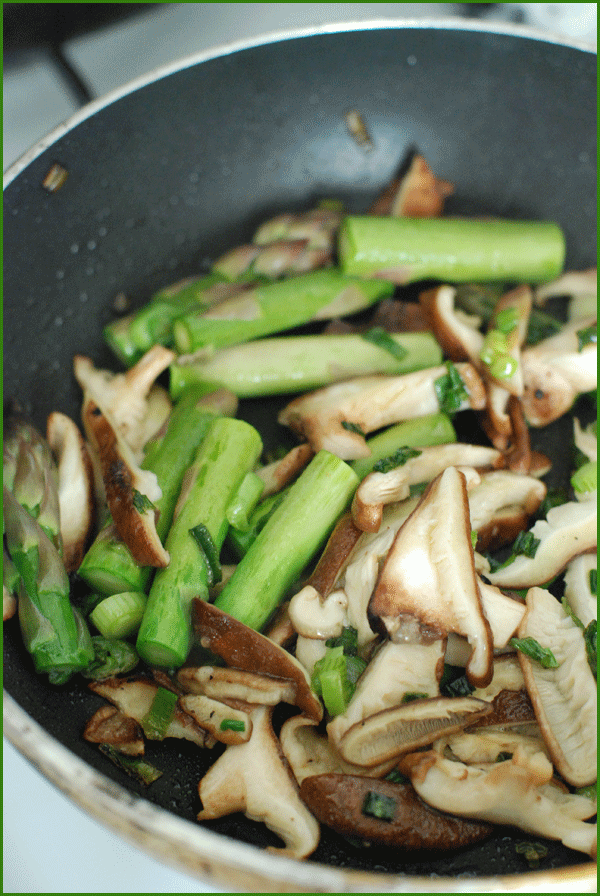
Meanwhile, drizzle a couple tablespoons olive oil in a wide saute pan and heat on medium-high. Add caramelized onions and/or scallions and stir to soften, 2 minutes. Then add mushrooms -- you want them to really fry up and release their flavor. When mushrooms have sizzled, sizzled some more, and finally released their juice, sprinkle a pinch of salt. Leave heat around medium-high. (If you're in a rush, as I was one night, you can skip this step and add everything all together.)

If you're doing this in stages, add the slower-cooking vegetables, like brussels and asparagus, next. If you need a drizzle more olive oil, go for it. When the asparagus and sprouts have been coated in the oil and have started to develop some color on the underside, turn heat down to medium. Add about 1/4 cup broth or water to the pan; it will boil vigorously, then calm down. Add a pinch of salt.

When asparagus are starting to soften, add extra broth if pan is dry, and then add peas. You'll cook the vegetables for about 3 minutes after peas are added, just long enough to warm them through. At this point, pasta will be done -- drain and reserve.

Add the pasta to the pan with the vegetables, and use tongs to toss pasta and "sauce" together. Add cheese, toss to coat, and serve immediately.
White Pizza with Ramps

In the five-plus years that D and I have been together, I think she'd probably say she's learned that vegetables aren't half bad. Hell, she really does enjoy them sometimes. Does she love asparagus? No. Ditto brussels sprouts. But I make 'em, she eats' em, and we all come out alive.

It's not a one way street, either. D's got plenty to teach me about the wonder of simplicity. I may love my arugula salads dressed with nothing more than lemon and olive oil, but that girl knows her mac and cheese. She's got the Subway sandwich situation down to a science. And she's the reigning expert on homemade pizza.

I never used to want to make pizza, but these days, I seemingly can't get enough of it. I always used to marvel at what a wood oven and ten minutes could do to a lump of dough; since giving homemade pizza a whirl, I can marvel at the fact that my modest little oven produces a damn good pie.

I generally prefer red sauce pizzas, and that's certainly D's flavor of choice. But there are some pretty awesome-sounding pies out there, and when I read about their ingredients, I think I could eat them happily and not miss the red sauce at all.

Take the sardine pizza I had at Two Amys a couple weeks back. Okay, so it had tomato sauce. But you know what it didn't have? Cheese. At all. And I absolutely loved it, which tells me that unconventional pizzas can be really great.

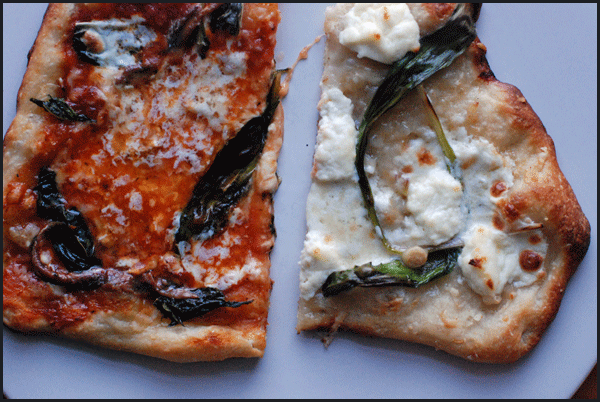
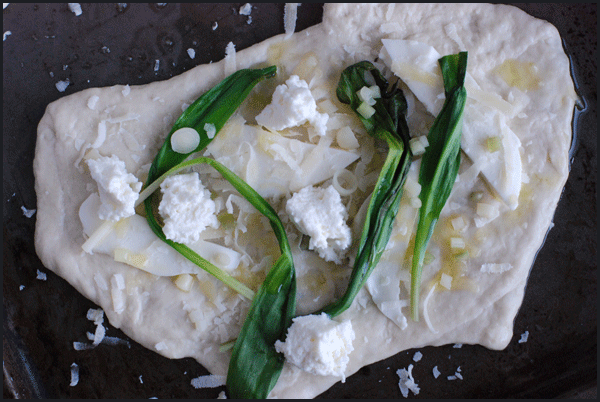
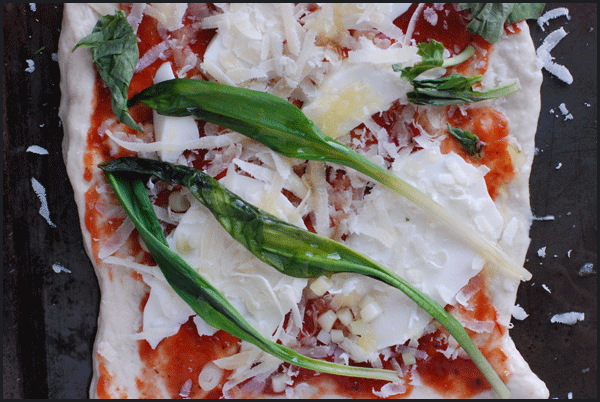
The idea of ramp pizza is certainly not new; Otto in New York is known for their version, a classic margarita pizza with plenty of charred ramps and (sometimes) a poached egg on top. I made two pizzas last night: the first was my take on Otto's, with red sauce, fresh mozzarella, parmesan, and charred ramps. (that covered half of my red pie; the other half I prepared in my all-time favorite fashion, with tomato, basil, mozzarella, parmesan, and salt-cured anchovies....yea.) The other pie was a more pared-down version, a white pizza boasting three cheeses: stretchy mozzarella, tender ricotta, and nutty parmesan. The ramps themselves play a supporting role, giving the pizza a smokey flavor. And you know what? I'm slightly addicted to it. The best part? You don't even need a pizza stone. Which is a good thing, 'cause I don't have one.

White Pizza with Ramps 5 1/3 cups plus a couple tablespoons all-purpose flour 2 teaspoons salt 1 teaspoon yeast 2 tablespoons sugar, honey, or agave nectar (I used agave) 2 cups plus 2 tablespoons water, room temp 2 tablespoons olive oil, plus more for drizzling

Combine flour, salt, yeast, honey, water, and 2 tablespoons olive oil in stand mixer or large bowl and mix, using wooden spoon or paddle attachment, for 1 minute or until blended. Let rest 5 minutes.

Switch to dough hook and mix on medium-low speed 2-3 minutes (or continue mixing by hand) until dough is soft, and somewhere between tacky and sticky.

Spread 1 tablespoon olive oil on kneading surface and turn dough out onto surface. Stretch dough out and fold over itself. Do the same from the opposite end, then from side to side, for a total of four stretch-and-folds. Divide dough into the number of pies you plan to make: I initially divided into 5, as Reinhart recommends, then later realized I wanted 3 big pies instead of 5 personal ones. Form each piece into a ball and either put each into an oil-sprayed plastic bag, or set them atop parchment-lined baking sheets and cover tightly with plastic wrap. Refrigerate overnight or upto 4 days, or freeze upto several months.

90 minutes before making the pizzas, remove dough balls from refrigerator. With oiled hands, stretch and fold each piece into a tight ball, then let rest on lightly oiled baking pan loosely covered with plastic wrap.

1 hour before baking, set a rack in the lowest rung of the oven and turn heat as high as it will go.

Meanwhile, prepare ramps: rinse in several changes of water, pat dry, and remove bulbs from leaves. Slice bulbs into thin disks, and slice leaves lengthwise into 2 or 3 slices. Heat a small pan with a couple inches of water over medium heat until water boils. Blanch bulb slices for 45 seconds, then leaves for 30 seconds, removing each immediately with slotted spoon and setting aside.

Coat your hands with flour. Choose one dough ball, sprinkle a bit of flour on top, then flip over onto baking sheet and use your thumbs to slowly coax the edges of the dough into a larger circle. Work from the edges, not from the middle; the middle will spread as the edges are drawn out. Keep turning and stretching, turning and stretching, about 13 times (according to my pizza hero Jim Lahey), until dough is quite thin. If dough resists or shrinks back, let it rest a few minutes, then return. Do your best to preserve the little gas bubbles in the dough as you stretch it; they'll make lovely charred lumps in your pizza.

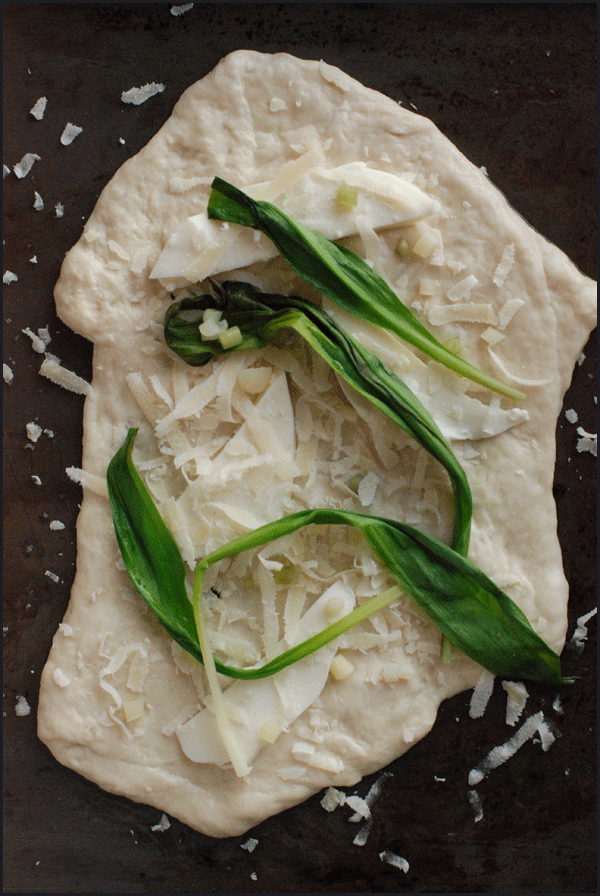
At this point, you're ready to top your pizzas. Start with mozzarella slices. Then grate parmesan onto pies. Top with ramp bulbs and leaves, and dot fresh ricotta overtop. Finish each pizza with a swirl of olive oil and a light sprinkle of flaky salt.

Bake on the lowest rack of the oven for about 10 minutes, rotating pans halfway through. Pies are done when the crusts are very charred and the cheese is bubbling (oh yes, it will bubble). Remove pies, and try to wait a couple minutes before taking a bite, or the roof of your mouth will not be happy!

Smothered Cabbage Risotto

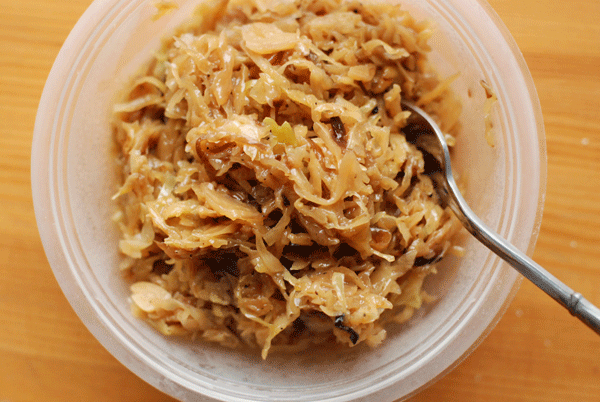
Among the oft-neglected cookbooks on my shelf is a big, light green volume called Essentials of Classic Italian Cooking. It's by Marcella Hazan, the justly venerated Italian cookbook writer notorious for her particularity, her precision, and her deep understanding of proper Italian cuisine. While the recipes reflect that precision (you can practically hear her preemptively chiding you for matching pasta with the wrong sauce), some of them are really quite simple. Case in point: smothered cabbage. A whole head of cabbage is shredded thinly, then braised low and slow with olive oil, onion and garlic, salt and pepper, and a shake of red wine vinegar. To say it's simple is to understate it a bit.

If you have extra cabbage (though really, why would you? I made a double recipe so I wouldn't be forced to choose), Hazan offers a modest recipe for Rice and Smothered Cabbage Soup. It's basically chicken broth, rice, the cabbage, and a dusting of permigiano reggiano cheese. A one-pot wonder.

The night I made the cabbage was dark and rainy -- nothing like the beautiful spring weather that's suddenly appeared this week. My sweatshirt and I were in the mood for something substantive and comforting, but also a bit luxurious. No sweat: I used basically the same ingredients in Hazan's soup to riff a bit and make risotto. If you're one of those people who think risotto is mighty difficult, hark! It's just not. Watch as I spell out the instructions in less than 50 words:

Sweat onions in oil. Add rice and salt. When hot, add wine. Then add broth by the ladelful, stirring intermittently. replenish broth as rice absorbs it. Taste at 12 minutes. Adjust for salt. When cooked but still al dente, with thickness of polenta, remove from heat. Add cheese. Eat.

And that's almost exactly what I did -- except that instead of wine, I added a couple tablespoons red wine vinegar. And I added the cabbage at the end. People, would you please just make this already? It's a miraculously luxurious dish made from downright humble ingredients. I guarantee it won't disappoint.

Smothered Cabbage Risotto inspired by Marcella Hazan

For the cabbage:

* 2 pounds green or Savoy cabbage * 1/2 cup chopped onion * 1/4 cup olive oil * 1 tablespoon chopped garlic * salt * freshly ground pepper * 1 tablespoon red wine vinegar

Clean cabbage and discard tough outer layers. Slice cabbage in half lengthwise, and shred as finely as possible using either a sharp knife or a mandoline. Be sure to remove the inner core of the cabbage -- it's too tough to cut.

Heat oil in a large saute pan over medium heat. Add onion and cook, stirring regularly, until golden, about 5 minutes. Add garlic. When garlic takes on some color, add cabbage. Using tongs, turn cabbage once or twice to incorporate it with the oil and onions, and cook until wilted.

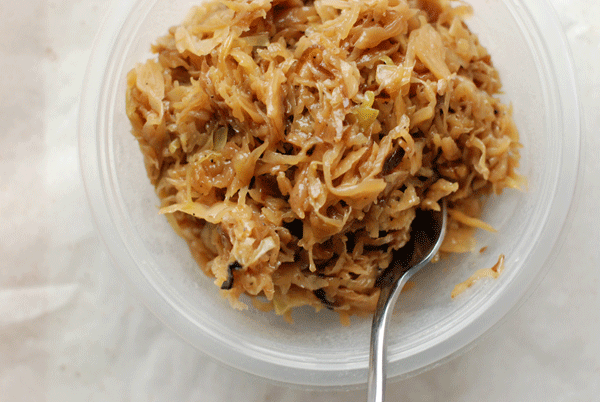
Add vinegar, salt, and pepper. Turn heat to lowest possible setting, cover pot, and cook at least 1.5 hours, stirring occasionally, until soft, tender, and practically melted. If at any point the cabbage looks dry or it looks like the bottom may burn, add a tablespoon of water to moisten. When cabbage is fully cooked, taste and adjust for salt, pepper, and vinegar. You want the cabbage just a very little bit tangy -- mostly sweet and soft and buttery. When cabbage is ready, transfer to a bowl and wipe out pot.

For the Risotto:

* olive oil * 1.5 cups Arborio rice * 6 cups homemade chicken or vegetable stock, simmering on the stove * half a recipe or more of the Smothered Cabbage * 2 tablespoons red wine vinegar, divided * 2 tablespoons butter * 1/3 cup parmesan cheese

Swirl a couple tablespoons of olive oil in the same pot you used to make the cabbage. Heat over medium. Add rice and use a wooden spoon to stir and evenly coat the kernels with the olive oil. When rice is hot to the touch, add 1 tablespoon red wine vinegar and 1 ladle of stock. Lower heat to medium-low and cook, stirring continuously, until stock evaporates. Add more starch and continue stirring. As you continue adding stock and stirring, the rice will emit some of its starch, which will thicken the risotto and make it silky. Around 10 minutes into cooking, add two ladles of cabbage. Stir to incorporate and continue stirring and adding stock as before. At around 13 minutes, begin tasting the risotto; adjust seasoning and add more cabbage if desired. Continue cooking, adding stock as necessary, until rice is done but ever so slightly al dente. Add some or all of remaining tablespoon red wine vinegar to add slight tang. Off the heat, add butter and parmesan cheese. Stir to incorporate and serve immediately.

Thin Crust Pizza

I've tried making pizza on several occasions. Every time, as I bite into a not-quite-crunchy crust and get a lick of too-thick tomato sauce on my tongue, I wonder why we didn't just hop on the 96 bus and get off at Two Amys, the best pizza in town. Well, all that's changed. Armed with not one, but two excellent pizza recipes, I'm here to assure you that homemade pizza really is within reach.

I recently indulged in a couple new cookbook purchases. Peter Reinhart's Artisan Breads Everyday" and Jim Lahey's My Bread have joined the party on my cookbookshelf, and I've spent the better part of the last several weekend mornings tucking into their recipes, devouring their advice. I've been making Lahey's No Knead Bread for quite some time now, both plain and with all sorts of add-ins. His book offers all that and more: imagine his bread dough, studded with fruit and infused with spices, then baked wrapped in banana leaves. Or the same dough, flavored with coconut and chocolate, baked in that hot oven so that some of the chocolate crusts on the outside of the bread. The pictures in this book animate already-delicious-sounding recipes. I'm thrilled to have it on my shelf, and his pizza recipe is just one more reason. Ditto Reinhart, who offers many solid recipes for sandwich breads, challah, and even a cinnamon chocolate babka, sitting on my counter now and the subject of a future post. But I'm getting carried away: let's talk about pizza.

Last Sunday, we watched the oscars with a few friends, so I decided to put all this learning to use, and make a bunch of pies for dinner. After reading both pizza recipes through thoroughly, I opted for Reinhart's "popular" pizza dough recipe, which calls for honey or agave nectar to flavor the dough.

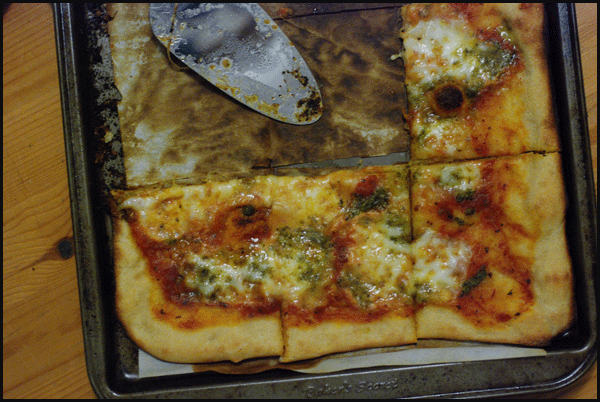
While I had grand plans for toppings, including a white pie loaded with mushrooms and a yuppie pie with raw arugula on top, I ended up (wisely) sticking to the standard sauce-and-cheese combo, always a crowd pleaser. I used some buffalo mozzarella from the farmers' market and a jar of good Italian pizza sauce. I added mushrooms and caramelized onions on one pie and snuck some pesto onto another, but that was it.

If you're wondering whether you need any special tools to bake these pizzas, the answer is a definitive NO. I have neither a pizza stone nor a peel, and I baked these pies to crispy perfection on a couple of ordinary baking sheets, no sweat. The key is to crank that oven up as high as it will go, and really give it time to heat up completely before sticking the pizzas inside.

What else can I tell you? Once you make this dough, you will never again question the value proposition of sitting on your couch, holding a plate of your own homemade pizza. Even when faced with the alternative of heading out to your nearest pie place, homemade pizza is worth the trouble.

Thin Crust Pizza based on Peter Reinhart's recipe in Artisan Breads Everyday

5 1/3 cups bread flour 2 teaspoons salt 1 teaspoon yeast 2 tablespoons sugar, honey, or agave nectar (I used agave) 2 cups plus 2 tablespoons water, room temp 2 tablespoons olive oil

Combine everything in stand mixer or large bowl and mix, using wooden spoon or paddle attachment, for 1 minute or until blended. Let rest 5 minutes.

Switch to dough hook and mix on medium-low speed 2-3 minutes (or continue mixing by hand) until dough is soft, and somewhere between tacky and sticky.

Spread 1 tablespoon olive oil on kneading surface and turn dough out onto surface. Stretch dough out and fold over itself. Do the same from the opposite end, then from side to side, for a total of four stretch-and-folds. Divide dough into the number of pies you plan to make: I initially divided into 5, as Reinhart recommends, then later realized I wanted 3 big pies instead of 5 personal ones. Form each piece into a ball and either put each into an oil-sprayed plastic bag, or set them atop parchment-lined baking sheets and cover tightly with plastic wrap. Refrigerate overnight or upto 4 days, or freeze upto several months.

90 minutes before making the pizzas, remove dough balls from refrigerator. With oiled hands, stretch and fold each piece into a tight ball, then let rest on lightly oiled baking pan loosely covered with plastic wrap.

1 hour before baking, turn oven as high as it will go. If you have a pizza stone, heat it in the oven. Those with stones will prepare pizzas on a peel (a large, spatula-shaped surface used to transfer pizzas in and out of the oven). The rest of us will just use baking sheets.

Coat your peel or baking sheet and your hands with flour. Choose one dough ball, sprinkle a bit of flour on top, then flip over onto peel or baking sheet and use your thumbs to slowly coax the edges of the dough into a larger circle. Work from the edges, not from the middle; the middle will spread as the edges are drawn out. Keep turning and stretching, turning and stretching, about 13 times (according to Jim Lahey), until dough is quite thin. If dough resists or shrinks back, let it rest a few minutes, then return.

At this point, you're ready to top your pizzas. I like a spoonful of tomato spread thinly, several pieces of fresh mozzarella, a couple pieces of basil or drops of pesto, and a swirl of olive oil. Do as your stomach commands.

Bake about 4-7 minutes, depending on heat of the oven, rotating halfway through. Let cool for one minute before serving.