Cook a Duck, Part 2: How to Make Confit

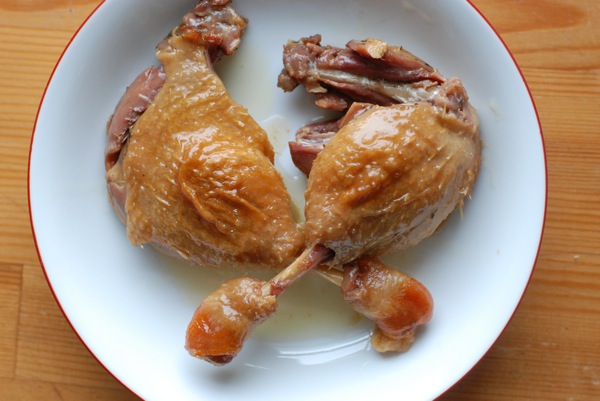
So you've rendered all the fat one duck can pack. You've got a few cups of the stuff in the fridge, and you made yourself a mighty nice salad with some cracklings on top. The breasts, legs, and thighs (not to mention the wings and the carcass!) await their delicious fates. Why yes: it's cook-a-duck week here on NDP. Today's lesson: making duck confit.

Among the many things about duck confit that thrill me are a) that making it was, no joke, a cinch; b) that my house smelled like an honest French bistro as I made it; and c) that the process makes duck taste like someone rubbed its body with butter each day and sang it to sleep every night. There simply is no better treatment for duck legs than a slow, gentle cooking bath of its own fat. If that sounds gross to you, I don't know what to say. If you're salivating right now, step into my office.
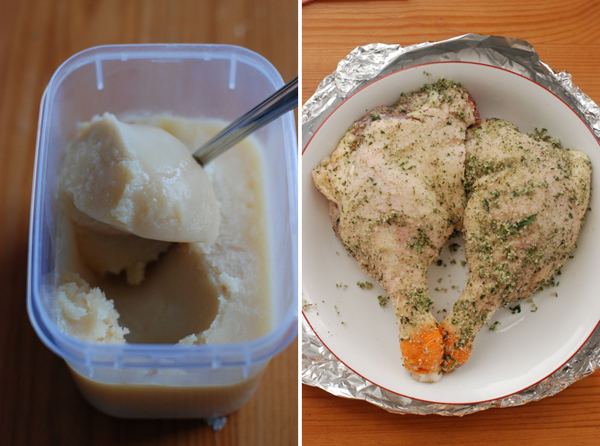
As we discussed in Part 1, ducks' skin is incredibly fatty -- so much so that there's usually enough fat on a duck to confit both of its legs, no sweat. This is convenient, because it means you shouldn't need to buy extra fat for the confit process. However, if you're nervous about running out, just ask your local butcher for some extra skin.
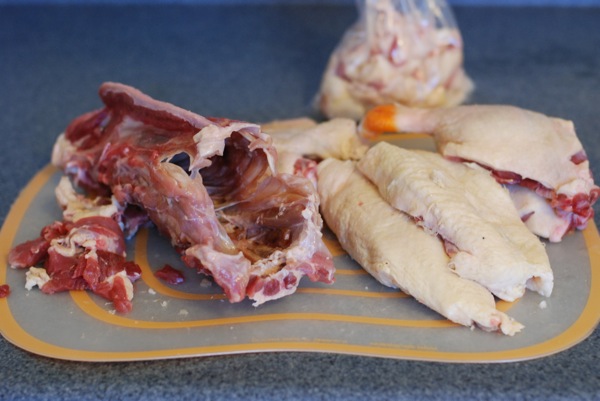
Either way, before making your confit, you'll need to butcher the duck. This is a great video tutorial for breaking down a duck -- the first method, separating the breast and leaving leg and thigh intact, is the one I used (though I started with leg and thigh, and I also did a bit of a hack job -- first time, and all that.) Once you've separated your duck into parts, you'll want to strip the skin from the carcass and any parts you don't plan on cooking whole. In my case, I stripped skin from the carcass and from part of the wings, since I knew I would be using both of those parts for stock. I left the skin on the breasts mostly intact, just trimming the edges where there was excess. As you can see in the picture above, I gathered all my skin into a little plastic bag, to be rendered into fat that I'd use for confit (see this tutorial to learn about rendering the skin.) I had plenty of fat for the confit process without the fat from the breasts, but again, if you're worried you won't, ask your butcher for some extra fat.
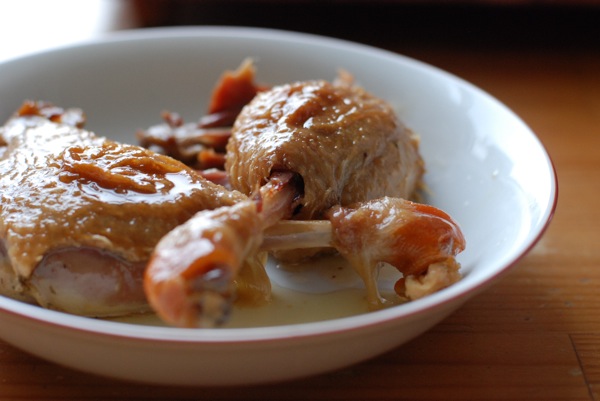
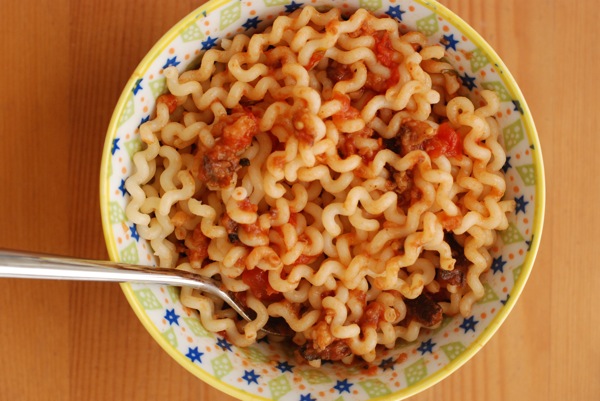
The uses for duck confit are many. You can eat confit as is, with a nice frisee salad on the side. I'm thinking I might add some stock and mirepoix to the confited meat and serve it over tagliatelle, a dish I've eaten at several local restaurants and always wanted to make.

And with that, we're half-way through the Cook a Duck series. Stay tuned for parts 3 and 4, where I make sure no part of my duck is left un-delicious-ized. You heard me.
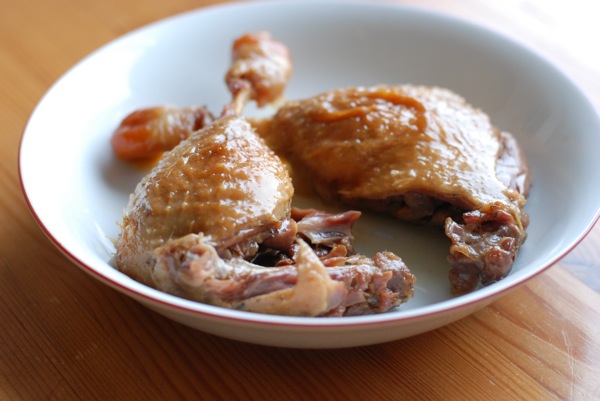
How to Confit a Duck Leg/Thigh

note: I used a kosher bird for my confit, which had been salted for a couple hours as part of the kashering process. If you're using a traditional bird, make the cure as instructed. If you're using a kosher bird, halve the amount of salt in the cure recipe below.

2 duck legs about 1 3/4 cups duck fat 1/8 cup kosher salt 1/2 tablespoon light brown sugar 1 bay leaf, broken into pieces 1/2 tablespoon thyme 1 1/2 tablespoons packed flat-leaf parsley

special equipment: oven thermometer

Combine salt and herbs in spice blender and process until well combined. Set aside.

Clean duck legs of any excess fat and skin -- be sure to leave about 1/4-inch overhang of skin on each leg.

Weigh the duck legs so you know how much cure to use: you want 2 tablespoons of herb salt for 1 pound of duck legs. (Each of my legs weighed about 1/2 a pound.) Rub about 1 tablespoon of herb salt over each leg, and put the legs flesh side up in a single layer in a baking dish that holds them comfortably. Cover with plastic wrap and refrigerate for 24 hours.

Preheat the oven to 190 degrees F. You'll need an oven thermometer, because ovens tend to fluctuate -- especially at this low temperature -- you'll want to check and calibrate the temperature accordingly.

Rinse the duck legs thoroughly (you want to remove as much of the salt as possible so the legs aren't overly salty when cooked), dry thoroughly, and place them in an ovenproof pot with a lid. Add enough melted duck fat to cover the legs, and heat over medium heat just until fat is warmed.

Cover the pot, transfer to the oven, and cook for 8-10 hours. Check a duck leg for doneness at 8 hours by carefully lifting it and piercing it with a knife. The meat should be meltingly tender. If needed, continue cooking for up to 2 more hours, being careful not to overcook them.

Carefully remove the legs from the fat and transfer to a storage container. Cover with plastic wrap and transfer to the refrigerator.

Cool the fat in a separate container. Once the fat has cooled (at least overnight in the fridge), use a spoon to carefully scrape the fat off the juices, which will have jelled. The jelled duck juice makes the most fabulous base for sauces and soups, so save it! Once the fat has been separated from the juice, add the fat to the container with the duck legs, smooth the fat so it surrounds the legs, and refrigerate. Duck legs will keep for at least a month. Keller says 6, but I'm not capable of leaving duck confit uneaten in the fridge that long.
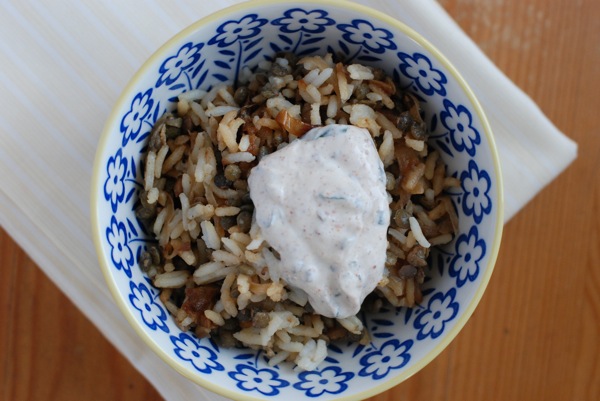
Mujaddara with Yogurt Sauce

Happy New Year!

In anticipation of my first post in 2011, I looked back at my last posts in 2009 and my first in 2010, to jolt my memory about where I was and what I was doing the last time I rang in a new year. Turns out, I was in Israel. Lucky me. I'm stateside this year, which, if you factor in the 12 hours I won't spend on a flight to get there, ain't half bad. We brought in 2011 with cocktails (lychee martinis, bourbon gingerale, the fancy stuff!) and appetizers (all sorts of delicious: we're talking lahmajoun, deli sliders, chicken wontons, coconut corn fritters, the works). I'm chasing the debauchery and excess of December 31st with a healthy, wholesome 1/1/11. This here is a recipe even the most stern-faced New Years resolution-makers will be able to enjoy.

Appropriately enough, my journey to the perfect mujaddara started with my two years in Israel. While I lived in Jerusalem, one of my favorite restaurants was an unassuming cafe attached to a small museum near the Old City. A sort of precursor farm-to-table eating, it specialized in local and organic food, but quietly and unpretentiously so. Nowhere on its menu did it say the restaurant was organic, but if you asked, you'd find out that the milk was from a local farmer, the eggs sometimes laid the same day they were eaten, and so forth. I don't know what it's like these days, but back then, it was a charming restaurant.

The restaurant's menu put modern spins on traditional dishes. I most adored their mujaddara, a Middle Eastern dish of long-grain rice and lentils with loads of caramelized onions. Though not particularly traditional, the restaurant's version included a bit of chutney and this amazing cumin-spiked yogurt. Try as I might to diversify my orders, once I had tried the mujaddara, I found it difficult to order much else. With yogurt, the mujaddara headed the way of great Indian buffet food. A little of this, a little of that, some chutney and raita, all mixed together on the plate. Perfection.

While my yogurt is slightly different in flavor than theirs -- more cinnamon, more citrus, no saffron -- it's addictive in its own right. Mujaddara is a minimalist's dish: it has no added spices. The lentils and rice, when adequately salted, need little more than soft, caramelized onions. But I find this yogurt adds just the right amount of tang to contrast the sweetness of the onions and prevents mujaddara from seeming too heavy. Plus, yogurt plops this dish squarely in healthfood territory. It's the perfect nightcap to this delicious, delightful year.

Update: I just learned that my Mujaddara has been selected as a finalist for the Food52 "best lentils" contest -- huzzah! To view the entry and vote, click over to Food52: www.food52.com.

Mujaddara with Spiced Yogurt

For the Mujaddara:

2 tablespoons butter 3 tablespoons olive oil 6 cups onions (about 3 medium onions), halved and thinly sliced 1 cup jasmine rice 3/4 cups puy lentils (aka French lentils, the tiny dark brown ones) 1 teaspoon salt, divided

For the yogurt:

1/2 cup greek yogurt 1/2 teaspoon cinnamon 1/2 teaspoon cumin (freshly ground, if possible) 1/2 teaspoon coriander (freshly ground) 1/2 teaspoon spicy paprika or aleppo pepper 3 tablespoons chopped fresh mint juice and zest of on half a lemon 1/4 teaspoon salt

Preheat the oven to 400 degrees.

Put lentils, 1/2 teaspoon salt, and 4 cups water in a large pot and bring to a boil. Reduce heat and simmer lentils until soft but not mushy, about 20 minutes. Drain lentils and set aside. Rinse pot.

Add rice, 1/2 teaspoon salt, and 1 1/2 cups water to the pot, set over medium heat, and bring to a boil. When water begins to boil, cover pot, transfer to oven, and cook for 17 minutes (the tried-and-true Amanda Hesser method!) until perfectly cooked. Remove from oven, uncover, and fluff with a fork. Set aside.

While rice cooks, set a wide, deep saute pan over medium-low heat and add butter and 2 tablespoons olive oil. When butter has mostly melted, add onions and toss to incorporate with butter and oil.

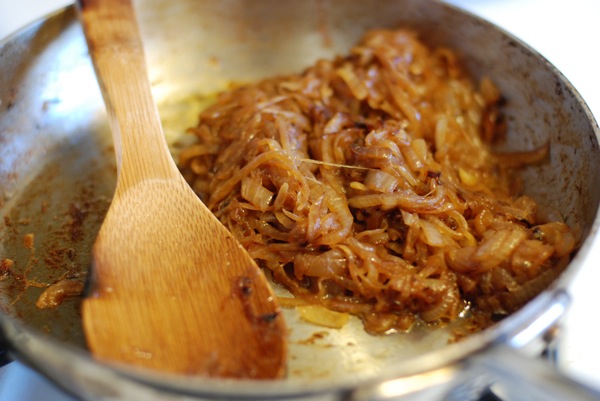
After 5 minutes, onions will have softened slightly and started to release their liquid. Raise heat to medium and cook about 10-12 minutes more, until onions are very soft and browned. Add water by the tablespoon if pan gets too dry or if onions start to stick. When onions are well browned, add last tablespoon of olive oil and raise heat to high. Cook another 3-4 minutes, until bottom layer of onions has charred and crisped; try not to stir too much, or onions won't crisp up.

Combine rice, lentils, and most of the onions in large serving bowl and let sit for at least 15 minutes, to marry the flavors together. (Truth be told, this dish improves with age.) Taste, and add more onions if desired. Meanwhile, make the yogurt: mix all ingredients together in a small bowl. (Yes, it's really that simple.)

If mujaddara has cooled significantly, reheat in a low oven or even in the microwave for a couple minutes. To serve, plate a big scoop of mujaddara and top with a dollop of yogurt.

Marcella Hazan's Pasta with Eggplant Sauce

For most of you, this weekend was chock full of great food. I may not have had Christmas dinner, but I had a southern feast of fried chicken, pulled smoked beef, and collards that rivals the best Chinese takeout of my storied Jewish-Christmas past. Still, as I think back on the past couple weeks of eating, I tell you this with little hesitation: long fusilli with Marcella Hazan's Tomato-Eggplant sauce is the single best food item I've eaten in weeks.
Rewinding a bit, here's a confession that may come as a surprise, given my new obsession: I don't much like eggplant parmesan. If the casserole goes from the oven to my plate without passing go, I can get into the soft eggplant, the pool of sauce, the bubbling cheese. But as it cools, the eggplant firms up, the cheese congeals, and I'm pretty much done.

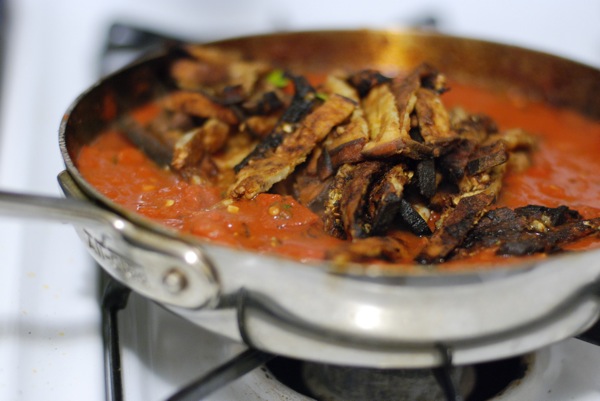
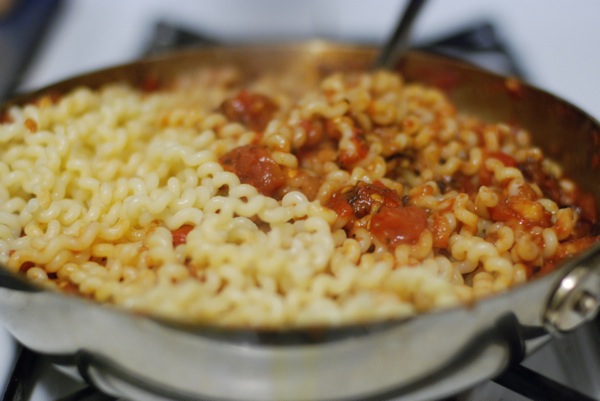
Everything bad about eggplant parm disappears in this sauce: no hardened melted cheese, no unappealing eggplant texture. What you're left with is eggplant, lightly breaded and fried, then cut into strips and folded into a clean, bright tomato sauce. The eggplant strips thicken the sauce and give it body; more than simply coating the pasta, it clings in big chunks and little bits, the texture somewhat uneven in the best way. For you by-the-book types, Marcella recommends spaghettini; I find this sauce is the perfect foil to those long fusilli that I love so much.

Since by now surely you know I'm not the best at following instructions, I can confess that I read this recipe wrong and floured my eggplant before frying. I'm here to tell you that flouring the eggplant is something you do for the recipe below this one in the book which, ironically?, is eggplant parmesan. Ignore my pictures; don't flour your eggplant.

Some people like mac'n'cheese, others go for matzah ball soup; this is my version of comfort food, and I could eat it for nights on end without a complaint. Here's hoping you like it as much as I do.

Marcella Hazan's Eggplant Sauce with Tomato and Red Chili Pepper serves 4 for Italian-style primi portions, 2 plus leftovers for a main course

1 large eggplant (about 1 pound) salt vegetable oil for frying

3 tablespoons extra virgin olive oil 1 1/2 teaspoons chopped garlic 2 tablespoons chopped parsley 1 3/4 cups good quality (Marcella says Italian!) canned tomatoes, cut up, with their juice chopped hot red chili pepper, to taste (can sub dried chili flakes) 1 pound pasta

Trim ends off eggplant and peel it. Slice into 1/2-inch slices.

Set a colander in the kitchen sink or in a large bowl. Stand one layer of eggplant slices upright against the inside of the colander and sprinkle (not too generously, but not timidly either) with salt. Stand another layer of slices against the first layer, sprinkle that layer with salt, and continue until all eggplant has been salted. Let salted eggplant stand for 30 minutes.

After 30 minutes, blot eggplant slices thoroughly dry with paper or cloth towels.

Set a large frying pan with sides at least 2 1/2 inches high over high heat. Add enough vegetable oil to come 1 1/2 inches up the sides of the pan. Line a large plate with paper towels.

Test the oil by dipping one slice of dried eggplant into the oil. If it sizzles, the oil is ready for frying. Slip as many slices of eggplant into the pan as will fit in a single layer. Cook to a golden brown on one side, then turn them and cook the second side. When both sides are golden, use a slotted spoon or spatula to transfer them to the towel-lined plate. Repeat until all eggplant is done. If the oil becomes so hot that the eggplant starts to burn, reduce it slightly.

When all eggplant has been cooked and is cooling on the plate, drain the pan and wipe it clean. Add olive oil and garlic to pan, and turn heat to medium. Cook and stir the garlic until it colors lightly. Add parsley, tomatoes, chili (start with a little, add to taste) and a pinch or two of salt, and stir thoroughly. Adjust heat so that the sauce simmers gently, and cook about 25 minutes, until oil separates from sauce and floats free.

Cut eggplant into strips about 1/2 an inch wide. Add to the sauce, cook another 2-3 minutes, and stir once or twice to incorporate. Taste and correct for salt and heat.

Advance prep: Sauce and eggplant can be made up to 4 days in advance. Keep eggplant separate from sauce. Reheat sauce while pasta cooks, and add eggplant just before combining sauce and pasta.

Cook pasta 1 minute less than package directions. Drain and add to sauce. Use tongs to incorporate. Serve immediately.

Spiced Chicken and Rice

I know the big T is just under two weeks away, and I get why everyone's talking cranberry relish and turkey like it's their job. But we've all gotta eat between now and then, and this is one damn good way to get nourished.

Last week, we had the first cold weekend in DC. Now my immune system is starting to feel like the Little Engine that Could. I'm teetering on the brink of a mighty cold, and no amount of OJ or echinacea or (ick) Emergen-C has helped. Not to mention, somehow I didn't get the email about the free flu shot clinic at work, so I'm totally exposed to the best of winter's illness smorgasbord. Surely, I'm not alone in my unfortunate predicament. (Right?)

I'm starting to think fighting the cold is overrated. Let's face it: I'm going to get sick sooner or later. And when I do, I'm going to to curl up on the couch, wrap myself in the sweatshirt-blanket, and tuck into a deep bowl of something warm and comforting. My will to not get sick may also be diminished by the fact that, lastweekend, I made the best chicken and rice I've ever had. If I've gotta go down, I'd like to do so over a bowl of this stuff.

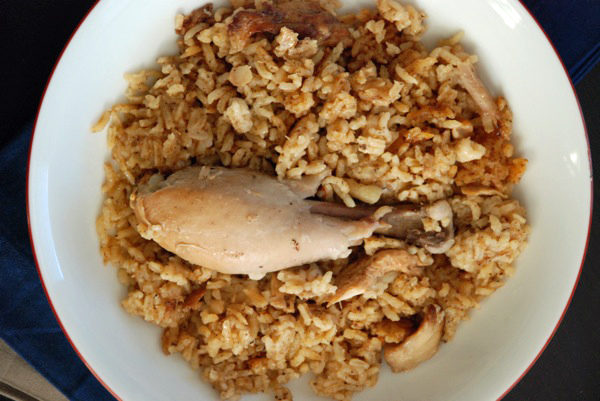
I don't even like chicken all that much. But for weeks, I've been craving a big pot of rice, perfumed with chicken stock and warm fall spices, perfectly cooked and piping hot. That's just what this is: a filling, soothing one-pot meal that's easy to make and highly craveable. The aromas alone -- cumin, cinnamon, smoked paprika, and homemade chicken stock -- had me hooked; but when I caught people reaching their fingers into the bottom of the pot to scrape up one last morsel, I knew the dish was a keeper.

To my taste, the spices here strike the perfect balance of warmth and spice without being overly sweet or strong. I made extra of the spice blend, and now I'm glad I did. However, if you've got your heart set on different flavors -- curry, for example -- please don't hesitate. There's as much method in this recipe as there is proportion, and you could easily make this dish with whatever spice blends you've got in the pantry. If your spice blends are unsalted, figure 1 teaspoon salt for every teaspoon of spices. Alternatively, salt your bird first, as you normally would, then rub with spices.

You don't hear me gushing over chicken so often, but this one's worth the oohs and ahhs. It's the stuff of a cold fall day, the sort of food you want to tuck into with good friends and plenty of red wine. Needless to say, I'll be making this again. I hope you will, too.

Spiced Chicken and Rice

A note to those hoping to make this in a slow cooker or a low, slow oven: it's possible, but it requires some adjustments. First, don't use white rice. You can't really cook white rice in a slow cooker, because it turns to mush. Substitute either brown rice, some other grain entirely (barley, spelt, or wheatberries would all be great), or use converted rice, which is brown rice that's parboiled and made to taste more like white rice. It tolerates low, slow heat better than white rice. Second, hold back on about 1/2 a cup of the liquid. You may end up needing it, but I needed 1/2 a cup less when making it in a low oven, and I wouldn't want the whole dish to end up waterlogged. Otherwise, everything else is the same.

For the spice rub: 1 teaspoon cumin seeds 1/2 teaspoon cinnamon 4 green cardamom pods 7 black peppercorns 1 teaspoon smoked paprika 1 tablespoon brown sugar 1 teaspoon salt

For the chicken: 2 tablespoons olive oil 2 broiler chickens, cut into pieces (I separate drumstick from thigh and halve breasts) 1 onion, halved and sliced 1/2 cup tomato puree 2-3 cups chicken stock 2 cups water 2 cups rice

Blend spices, sugar, and salt in spice blender until finely ground. Set aside.

Rinse chicken pieces and pat dry. Sprinkle half the spice mix onto chicken and rub into skin.

Preheat oven to 300º.

Heat a dutch oven (mine is 5-1/2 quarts) or a heavy-bottomed pot over medium-high heat. Add olive oil. When oil shimmers, add half the chicken, skin-side down, and cook about 3 minutes, until well-browned. Turn chicken pieces and cook on the other side for 3-4 minutes more, until browned. Chicken pieces should remain pink inside; they'll cook fully later on. When chicken pieces are sufficiently brown, transfer to a plate and continue cooking the second batch of chicken pieces in a similar manner. Fond (the flavorful brown bits) will start sticking to the bottom of the pot; this is good.

When all chicken has been cooked and transfered from pan to plate, add onions to pan with half the remaining spices. Cook until onions develop color and spices are fragrant, about 4 minutes.

Add tomato puree and 1 cup stock to pan, and use a wooden spoon to scrape up fond from bottom of pan. Liquid should immediately start to boil. After about 5 minutes, liquid will have reduced somewhat and should be brown from the fond. Add chicken pieces back into pan. Liquid should come about halfway up pieces of chicken. If liquid level is lower, add extra 1/2 to 1 cup stock, for a total of 1-1/2 to 2 cups. Cover pot and place in oven. Cook at 300º for about 1 hour, until chicken is soft but fully cooked. At this point, you should have some remaining liquid in the pan.

Remove pot from oven. Raise oven heat to 400º and bring a few cups of water to a boil. When water boils, add 1 additional cup stock and 2 cups boiling water to chicken pot. Add rice, and stir to incorporate raw rice into chicken pieces. As soon as oven reaches 400º, replace cover on pot and return to oven for 17 minutes, until rice is fully cooked. Remove dish from oven and leave covered, so rice will steam and fluff as much as possible. Serve hot.