The long-awaited day has arrived! I am officially a Daring Baker (see the logo and info on the right side panel). Daring Bakers is a baking group, started by two bloggers, Lis of La Mia Cucina and Ivonne of Cream Puffs in Venice, just over a year ago. Since then, it's grown astronomically. There are hundreds of DBers, and the group is still growing. Here's how it works: every month, our host chooses a recipe. We all make that exact recipe, schmooze with each other about our experiences, and then we all post the recipe on the same day. To check out some of my favorite fellow DBers, check here, here and here.
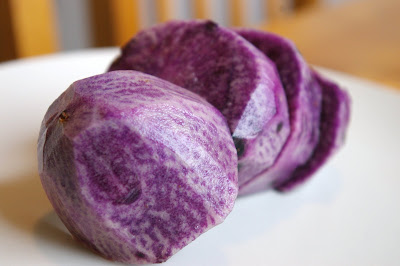
Anyhow, this month's recipe was for "tender potato bread." It comes from a fantastic book called "Home Baking: the Artful Mix of Flour and Tradition Around the World." Now, if you're like me and you just thought of tasteless ghetto food, think again. Potatoes are a shockingly good dough ingredient. Once their boiled and mashed, as the recipe describes, they become light and tender; the dough, which contains lots and lots of potatoes, is almost as fun to play with as oobleck was in second grade. So fun, in fact, that I had to remind myself I was making bread; over-kneading results in a tough loaf. Some people complained that the dough was too soft and hard to work with; actually really enjoyed how easy it was to work with. I added flour by the half-handful, until I hit almost 8 cups, at which point it was perfect. I added more after the first rise, and by the time it was ready, my dough wasn't too sticky to shape.
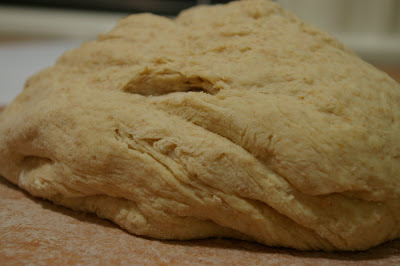
If you're a loyal NDP reader (and boy, I hope you are!) you've surely noticed my inexcusable but unapologetic laziness when it comes to precision, consistency, and other recipe-related adjectives. I don't like recipes and I rarely follow them to the letter: stay tuned for my next blog post, which will elaborate why this seemingly irresponsible and lazy way of cooking is actually ideal.) However, the rules of Daring Bakers clearly state that no alterations are to be made to the month's recipe unless allergies or other equally valid reasons prevent a baker from following the recipe. I'm pretty sure laziness doesn't count as a valid reason in the DB rule book, so ladies and gentlemen, I actually did what the recipe said to do, all the way to the end.
The result?
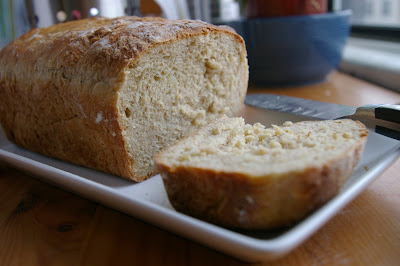
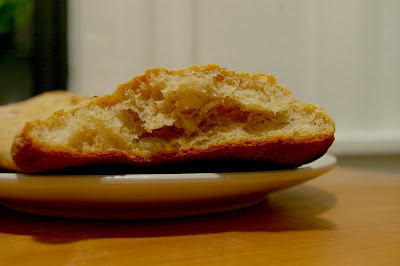 Delicious, tender-when-warm but perfectly-crusty rolls, and a not-as-stellar but still-completely-acceptable loaf. The crust is perfectly thick and crunchy, the innards glutinous but not overly dense, and the flavor rustic. Is your mouth watering yet?
It is imperative that you eat one of the rolls right out of the oven; as Mario Batali said, "hot, it's a whole other ballgame." They go really well with jam, butter, pesto and more -- you name it.
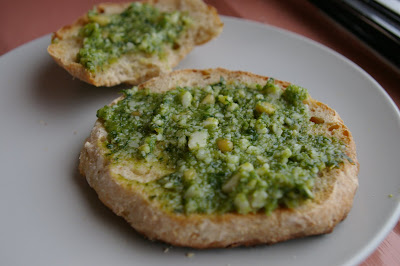
I did alter the recipe a bit to add some zing: I boiled and mashed one garlic clove along with the potatoes, which I'd definitely do again (maybe even add a second one); I added a dash of chili powder and a Tbsp of buckwheat honey to the dough before the first rise, and a teaspoon of chopped fresh rosemary before the second rise. The flavors are subtle, but the buckwheat honey and rosemary really come through. I will most certainly be making this again. Thanks so much to Tanna and DB for broadening my bread horizons! :)
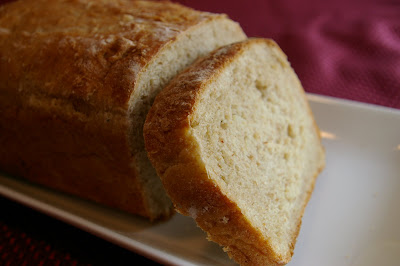 Tender Potato Bread
from "Home Baking: the Artful Mix of Flour and Tradition Around the World"
Ingredients:
4 medium to large floury (baking) potatoes, peeled and cut into chunks.
Tanna's Note: For the beginner bread baker I suggest no more than 8 ounces of potato; for the more advanced no more than 16 ounces. The variety of potatoes you might want to use would include Idaho, Russet & Yukon gold, there are others.
4 cups(950 ml) water, reserve cooking water
1 tablespoon plus 1 teaspoon salt
2 teaspoons active dry yeast
6 ½ cups to 8 ½ cups (1 kg to 1350g) unbleached all-purpose
1 tablespoon unsalted butter, softened
1 cup (130g) whole wheat flour
Making the Dough (Directions will be for making by hand):
Put the potatoes and 4 cups water in a sauce pan and bring to boil. Add 1 teaspoon salt and cook, half covered, until the potatoes are very tender.
Drain the potatoes, SAVE THE POTATO WATER, and mash the potatoes well. Tanna Note: I have a food mill, so I will run my potatoes through to mash them.
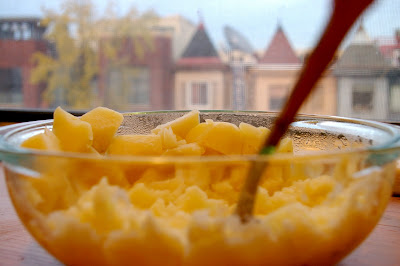
Measure out 3 cups(750ml) of the reserved potato water. Add extra water if needed to make 3 cups. Place the water and mashed potatoes in the bowl you plan to mix the bread dough in. Let cool to lukewarm (70-80°F/21 - 29°C) – stir well before testing the temperature – it should feel barely warm to your hand. You should be able to submerge you hand in the mix and not be uncomfortable.
Add yeast to 2 cups all-purpose flour and whisk. Add yeast and flour to the cooled mashed potatoes & water and mix well. Allow to rest/sit 5 minutes.
Note about Adding Yeast: If using Active Dry Yeast or Fresh yeast, mix & stir yeast into cooled water and mashed potatoes & water and let stand 5 minutes. Then add 2 cups of flour to the yeast mix and allow to rest several minutes. If using Instant Dry Yeast, add yeast to 2 cups all-purpose flour and whisk. Add yeast and flour to the cooled mashed potatoes & water and mix well. Allow to rest/sit 5 minutes.
Sprinkle in the remaining 1 tablespoon salt and the softened butter; mix well. Add the 1 cup whole wheat flour, stir briefly.
Add 2 cups of the unbleached all-purpose flour and stir until all the flour has been incorporated.
Tanna Note: At this point you have used 4 cups of the possible 8 ½ cups suggested by the recipe.
Turn the dough out onto a generously floured surface and knead for about 10 minutes, incorporating flour as needed to prevent sticking. The dough will be very sticky to begin with, but as it takes up more flour from the kneading surface, it will become easier to handle; use a dough scraper to keep your surface clean. The kneaded dough will still be very soft. Place the dough in a large clean bowl or your rising container of choice, cover with plastic wrap or lid, and let rise about 2 hours or until doubled in volume.
Turn the dough out onto a well-floured surface and knead gently several minutes. It will be moist and a little sticky.
Forming the Bread:
Tanna Note: It is at this point you are requested to Unleash the Daring Baker within. The following is as the recipe is written. You are now free to follow as written or push it to a new level.
Divide the dough into 2 unequal pieces in a proportion of one-third and two-thirds (one will be twice as large as the other). Place the smaller piece to one side and cover loosely.
To shape the large loaf:
Butter a 9 x 5 x 2.5 inch loaf/bread pan. Flatten the larger piece of dough on the floured surface to an approximate 12 x 8 inch oval, then roll it up from a narrow end to form a loaf. Pinch the seam closed and gently place seam side down in the buttered pan. The dough should come about three-quarters of the way up the sides of the pan. Cover with plastic wrap and let rise for 35 to 45 minutes, until puffy and almost doubled in volume.
To make a small loaf with the remainder:
Butter an 8x4X2 inch bread pan. Shape and proof the loaf the same way as the large loaf.
To make rolls:
Butter a 13 x 9 inch sheet cake pan or a shallow cake pan. Cut the dough into 12 equal pieces. Shape each into a ball under the palm of your floured hand and place on the baking sheet, leaving 1/2 inch between the balls. Cover with plastic wrap and let rise for about 35 minutes, until puffy and almost doubled.
To make focaccia:
Flatten out the dough to a rectangle about 10 x 15 inches with your palms and fingertips. Tear off a piece of parchment paper or wax paper a little longer than the dough and dust it generously with flour. Transfer the focaccia to the paper. Brush the top of the dough generously with olive oil, sprinkle on a little coarse sea salt, as well as some rosemary leaves, if you wish and then finally dimple all over with your fingertips. Cover with plastic and let rise for 20 minutes.
Baking the bread(s):
Note about baking order: bake the flat-bread before you bake the loaf; bake the rolls at the same time as the loaf.
Note about Baking Temps: I believe that 450°F(230°C) is going to prove to be too hot for the either the large or small loaf of bread for the entire 40/50 minutes. I am going to put the loaves in at 450°(230°C) for 10 minutes and then turn the oven down to 375°F (190 °C) for the remaining time.
Note about cooling times: Let all the breads cool on a rack for at least 30 minutes before slicing. Rolls can be served warm or at room temperature.
For loaves and rolls:
Dust risen loaves and rolls with a little all-purpose flour or lightly brush the tops with a little melted butter or olive oil (the butter will give a golden/browned crust). Slash loaves crosswise two or three times with a razor blade or very sharp knife and immediately place on the stone, tiles or baking sheet in the oven. Place the rolls next to the loaf in the oven.
Bake rolls until golden, about 30 minutes. Bake the small loaf for about 40 minutes. Bake the large loaf for about 50 minutes.
Transfer the rolls to a rack when done to cool. When the loaf or loaves have baked for the specified time, remove from the pans and place back on the stone, tiles or baking sheet for another 5 to 10 minutes. The corners should be firm when pinched and the bread should sound hollow when tapped on the bottom.
For foccacia:
Place a baking stone or unglazed quarry tiles, if you have them, if not use a no edged baking/sheet (you want to be able to slide the shaped dough on the parchment paper onto the stone or baking sheet and an edge complicates things). Place the stone or cookie sheet on a rack in the center of the oven and preheat to 450°F/230°C.
If making foccacia, just before baking, dimple the bread all over again with your fingertips. Leaving it on the paper, transfer to the hot baking stone, tiles or baking sheet. Bake until golden, about 10 minutes. Transfer to a rack (remove paper) and let cool at least 10 minutes before serving. (Levitating bread!)
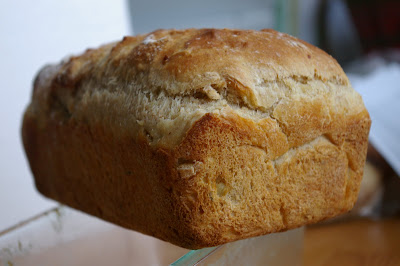
Levitating Bread!


