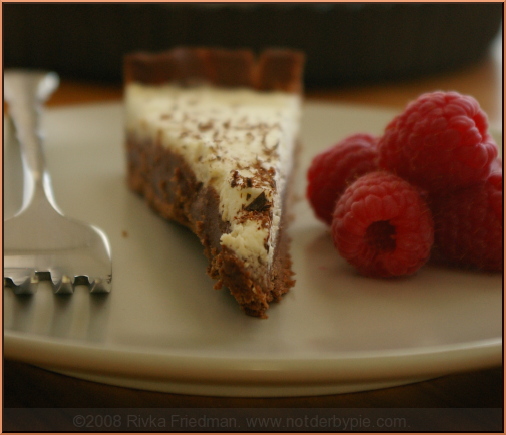
Chocolate Coffee Mascarpone Tart

coffeetart1.jpg Mandy had a very big birthday a couple weeks back, and I made her this tart because every big birthday deserves a Sunday morning assault of chocolate, coffee, and mascarpone cheese. Did I hear you ask for a slice? Sorry folks, this one's not for sharing.

What this tart lacks in sweetness, it more than accounts for in richness. Put less subtly, this cake isn't overly sugary, but it packs a fatty punch, yes it does. And lest you think only two bites will be enough, I assure you that real tart fans will have no trouble at all finishing every last bite of one (cough two) slices. And they'll be licking the crumbs from their plates in between helpings. coffeetart2.jpg
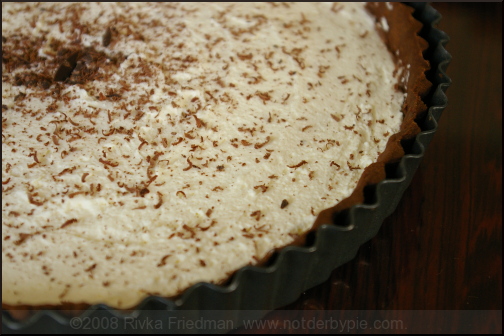
I originally made a chocolate crust for this tart, which was very popular with Mandy and her family. If you're more of a purist (though I don't even know what that means when we're talking coffee, chocolate, mascarpone) feel free to substitute a more traditional tart dough, or as the French call it, pâte sucrèe. That recipe can be found here, when I made a strawberry-rhubarb tart. But I digress.

coffeetart3.jpg

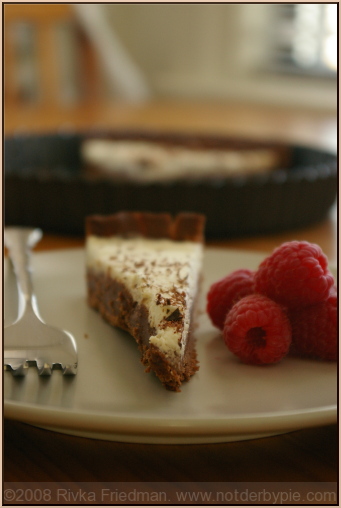
If you've got some serious chocoholics around or simply need to satisfy your own craving for what are obviously three of the world's great culinary discoveries, try this one on for size. As for decoration, I grated some bittersweet chocolate overtop; you could also shave chocolate with a peeler to create longer, more curly pieces, and if you happen to have some whole roasted coffee beans on hand, those, too, would make a delightful garnish. Come to think of it, why not have both?
coffeetartlast.jpg

Chocolate Coffee Mascarpone Tart serves 8.

Tart Dough:

  • 1 1/4 cups flour
  • 1/4 cup cocoa (substitute with an equal amount of flour if making pâte sucrèe)
  • 1/2 cup powdered sugar
  • 1 stick plus 1 Tbsp. butter, chilled and cut into small chunks
  • 1 egg yolk
  1. Blend dry ingredients with a hand or stand mixer, or better yet, a food processor. I find the processor allows dough to come together most easily.
  2. Add butter and blend until mixture resembles coarse meal, with little "pearls" of butter running throughout.
  3. Add egg yolk; blend until the dough comes together. Wrap in plastic, and refrigerate while preparing ingredients for the tart. After about half and hour, the tart dough should be just chilled enough that it rolls nicely. Place dough between two sheets of plastic wrap or parchment paper and roll out into a circle slightly larger than the size of your tart pan. (I use a round fluted tart pan with a removable bottom, but any shallow baking pan will do.)
  4. Peel off the top layer of plastic wrap. Hold the dough from the layer of plastic wrap beneath, and carefully turn onto your pan. Once your dough is on the pan, remove the top layer of plastic and start fitting your dough to your pan, pushing it delicately into the crevices and corners without changing the thickness of the dough too much. Trim the ends, and make a decorative outer lip if you desire.
  5. "Dock" your dough to the pan by spearing it with a fork in several spots, and bake for 20-ish minutes at 350, until crust is crisped. This will ensure that the crust holding the (liquidy) ingredients will still taste flaky, and not mushy. Do check to ensure that the crust doesn't burn, though.
  6. While the tart crust cools, make the mousse to go inside.

Chocolate Coffee Mascarpone Mousse (adapted from Tartelette):

  • 1 1/2 cups heavy cream
  • 600 grams bittersweet chocolate, chopped
  • 2 Tbsp. coffee
  • 1 egg
  • 1/2 cup mascarpone
  • 1 cup heavy or whipping cream
  • grated chocolate, coffee beans, or other garnish, optional
  1. Melt the chocolate in a makeshift double boiler (a metal bowl over a pot with a couple inches of boiling water in it).
  2. In a heavy saucepan, bring the heavy cream to a boil, add the coffee and let infuse for 5 minutes.
  3. Strain the cream through a fine sieve and pour it over the dark chocolate. Stir until completely incorporated.
  4. After allowing to cool for at least 5 minutes, add several spoonfuls to your beaten egg to temper the egg.
  5. Now, add the egg mixture to the chocolate. Reposition it on the pot of boiling water, and allow to thicken, stirring at regular intervals, about 5 minutes.
  6. Once the chocolate has thickened, move it from the heat to the fridge and let it cool for about 30 minutes. After it cools, mix in 1/2 cup mascarpone, and spread the mixture into the crust.
  7. Using a hand or stand mixer (or good old fashioned arm strength), whip up the remaining cup of cream until it holds soft peaks, and spread overtop the mousse. Top with garnishes of your choice, and serve immediately. Leftovers will keep, covered and refrigerated, for upto 1 week (if you can keep it around for that long.)
Vintage Breakfast Biscuits

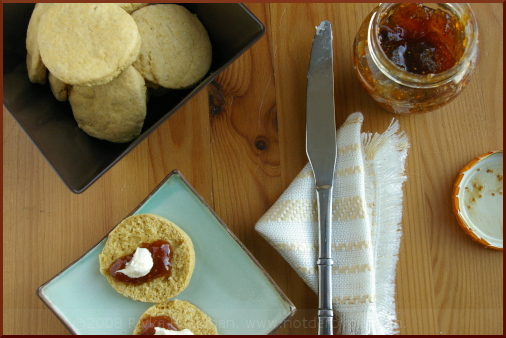
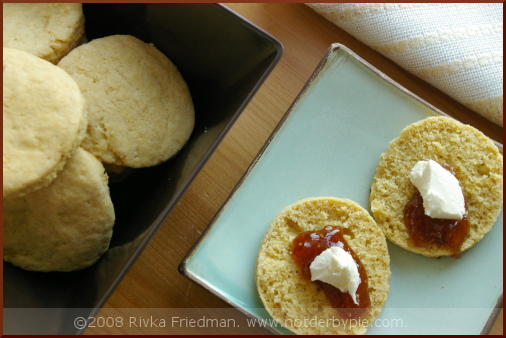
vintage1.jpg I'm gonna go out on a limb here and say that everyone loves a good buttermilk biscuit. What's not to love? buttery rich flavor and mouthfeel, flaky texture, piping hot innards, and now I have to stop because I'm salivating. Back in Israel, D used to get super excited at the prospect of biscuits for breakfast. Now that I've discovered my absolute favorite buttermilk pancake recipe, biscuits get less airtime in our house, but I haven't totally forgotten about them.

vintage2.jpg

This weekend, I decided rather impulsively to throw a batch together. Mind you, this wasn't an 8am inspiration I had -- it was the middle of the afternoon. We don't do biscuits for dinner in my house, and likely wouldn't be eating the bulk of them until the next day (or even -- eek! -- the day after.) But I still couldn't resist. I decided to compromise by making a more durable biscuit, one that could serve as a crumpet or scone equivalent for an afternoon snack with tea.

vintage3.jpg

Buried deep in my never-stack of must try recipes, many of which I print out four to a page and stack above my cookbooks (yep, D loves that little stack of papers that never disappears), was a lovely recipe for Vintage Jam Tarts from Heidi at 101 cookbooks. Heidi's recipe was from her grandma -- hence the "vintage" in the title -- and her tarts looked appetizing and unfussy. The method behind vintage jam tarts was to make a simple biscuit dough, cut circles out of the dough, and remove a smaller circle from half of the biscuits. Heidi stuck some jam in between, baked them off, and voila! -- easy tarts.

vintage5.jpg

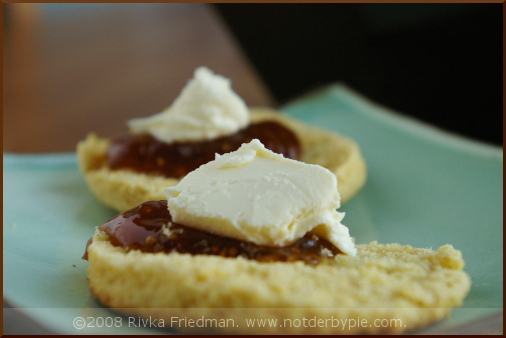
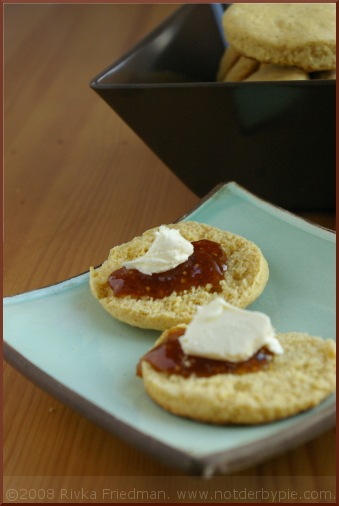
As I wanted biscuits, I halved the recipe and skipped the sandwiching step, leaving me a rather generous batch of thin, flaky biscuits. As the taste and texture of these biscuits were more subtle and delicate than usual, I skipped my old standby of raspberry jam and opted instead for some fig spread and clotted cream. (Note: clotted cream is a delightfully thick cream, so dense it's spreadable as butter. It's available at Whole Foods and other specialty markets, or here, at Amazon. I should probably call them crumpets at this point, sounding as British as I do.

vintage4.jpg

Vintage Breakfast Biscuits

  • 1 cup finely-ground cornmeal
  • 1 cup whole wheat pastry flour
  • 2 cups all-purpose flour
  • 1 1/2 teaspoons finely ground sea salt
  • 2 tablespoons baking powder
  • 3 tablespoons sugar
  • 1 cup unsalted butter, chilled, and cut into 1/4-inch chunks
  • 1 1/2+ cups milk
  • 1 egg, just the egg white
  • 1/3 cup jam (any flavor(s) you like)

Preheat your oven to 425 degrees.

Into a large bowl, or preferably, a food processor add the cornmeal, flours, salt, baking powder, sugar. To the dry ingredients add the butter. Using a pastry cutter or 30-35 quick pulses of the food processor, blend the mixture until it resembles tiny, sandy pebbles.

Dump the mixture into a medium bowl, add 1 1/2 cups of milk and with a fork stir just until everything is combined. You are going to roll out the dough, so if it is too wet, stir in a couple extra tablespoons of flour, if it is too dry stir in an extra tablespoon or two of milk. You don't want to overwork the dough, or your tarts will be tough, so stir only as much as you have to.

Dump the dough out onto a well-floured surface, pull it together into one large mound, and roll out until it is about 1/3-inch thick. Pat with more flour if things get sticky - sticky dough is your enemy in this recipe. Cut the biscuit dough with a medium cutter (the one I used was about 2-inches across), then cut into half the rounds with a slightly smaller cutter if you're making tarts.

Brush the large rounds with a bit of egg white - this will give the tarts that nice golden color. Place the outer rings on top, brush those with the egg white, and fill with a bit of jam.

Place the tarts on a rimmed baking sheet and bake for 10-13 minutes - I found that 10 minutes was enough for the biscuits. The rimmed baking sheet is important to use if you're making tarts because they tend to have a bit of runoff, and you want to prevent a mess in your oven.

Makes about 1 - 2 dozen tarts, depending on the size of your cutters.

Edamame with some Latin flair

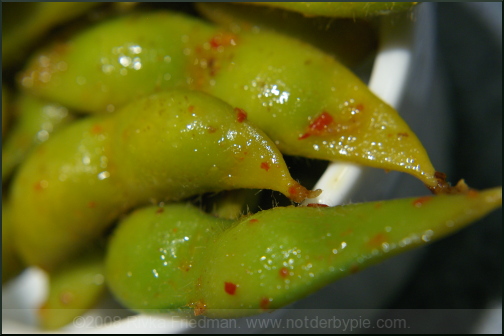
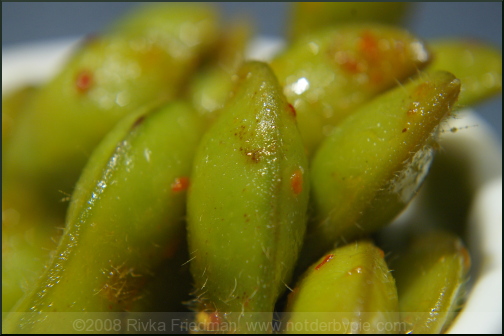
edamame11.jpg Edamame rarely find their way into my kitchen, and I really don't know why. They're a perfect addition to salads, an easy and elegant appetizer, and a perfect snack, but I can't think of the last time I bought them. No, really, I don't think I've every bought them. The ones in these pictures were leftover from my birthday party. Dina, another one of the birthday girls, made this easy recipe and I've been trying to figure out how to recreate it ever since.

See, Dina used sesame oil and this wonderful spice blend called Tajin; but she got the Tajin from Mexico, and it's not like I get to Mexico so often. (Update: in true American style, this stuff sells on Amazon for under four bucks; click here or on the link above to purchase. It's well worth a try.) In advance of posting this recipe, I attempted to recreate tajin with what I had around, and while I came pretty close, there are definitely some secret ingredients in the real thing that make it different. I used hot chili pepper, lime juice, and sea salt, which is a pretty good combo. And really, this recipe couldn't be easier -- or more addictive -- so give it a try.

edamame2.jpg

Edamame

  • 1 package edamame
  • about 1/8 cup sesame oil, or even less
  • tajin, or a mix of 2 Tbsp. chili flakes, 6 Tbsp lime juice, and 1 1/2 Tbsp. sea salt

Cook edamame according to package directions, until cooked through but still green. Transfer immediately into ice bath so that they keep their color. Transfer to a large bowl; toss with sesame oil to coat, and sprinkle with tajin to taste. Serve immediately. (They keep quite well in the fridge, for up to 2 weeks.)

Shakshuka

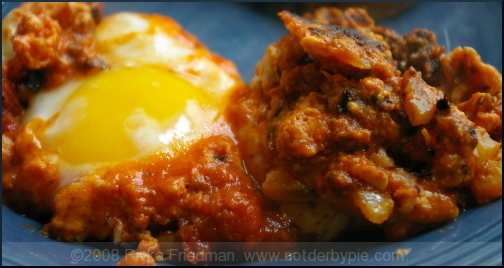
shakshuka4.jpg To say I love shakshuka is both a huge understatement and slightly misleading. How's that? Well, I more than love shakshuka; it's one of my absolute favorite breakfasts, lunches, and dinners, and hell, snacks. When D and I can't agree on what to put in the omelet or pancakes, I just say "shakshuka?" and everyone shuts up. (Usually.)

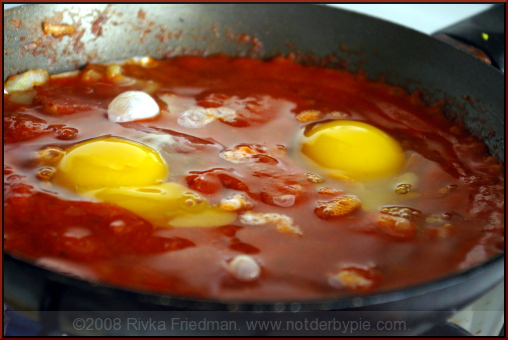
However, I like shakshuka my way. And my way is... well, my way is delicious, but it's not really shakshuka. Traditional shakshuka is an Israeli dish comprising sunny-side-up eggs in a spicy, onion-y tomato sauce. That's how I make it for D, but not for me. Please don't yell or scream or call me a fake foodie, but I don't like runny eggs. I know they're delicious and wonderful and life-changing for many-a-gourmet, but I'll have my eggs rubbery as leather and burnt on the outside, thank you very much. Scoff if you must.

shakshuka1.jpg

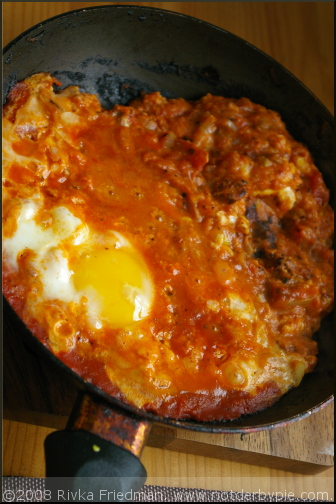
Shakshuka is easily fixed to my liking: about 2/3 of the way through the cooking process, after the egg has developed what know-it-alls call a skin, I go at it with a fork and break up the scary bits of ooziness into the sauce. Some of it mixes in with the sauce, and some stays separate; the end result is a bit of scrambled egg in a fantastically thick tomato sauce. And a happy Rivka.

Until yesterday, I'd been making shakshuka with whatever tomato sauce I had lying around and few, if any, additions. However, recently I took a field trip during my lunch break to Penzey's Spices (only the best freakin' spice shop ever ever ever, in my humble opinion. But don't trust me -- just ask the experts.) Among my treasures was a bottle of aleppo pepper, which has got a nice bite, lovely fruity and floral aromas, and an addictive flavor. I added some to my shakshuka this morning and will be doing so from now on -- it was a wonderful addition to an already great dish! If you don't have aleppo pepper just lying around your house, tsk tsk. Kidding. Just use some other chili flakes or powder, or skip it entirely; it's hard to make shakshuka taste bad.

shakshuka2.jpg

Shakshuka

  • 2 eggs
  • 2 cups tomato sauce
  • 2 Tbsp. chopped onion or shallot
  • 1/4 tsp. aleppo pepper
  • 1 Tbsp. olive oil
  • salt

In an omelet pan, sweat the onion in the olive oil over medium heat until translucent, stirring constantly, about 1 minute. Try not to let the onions burn -- though if they brown a bit it's no biggie.

Add the pepper and toss to coat; add the tomato sauce all at once, have an apron on so that it doesn't pop all over you, and stir to incorporate the onions.

Crack the eggs, one by one and side by side, into the tomato sauce. Turn up the heat to medium high. Cover the pan with a piece of tin foil or a larger pan. Leave be for a minute.

When you uncover the pan after a minute or so, you'll notice that the eggs have started to develop a skin; if you prefer your shakshuka cooked incorrectly, as I do, start to break up the yolks with a fork and stir into the sauce. Otherwise, just leave them as they are. Use a spatula or fork to scrape the burnt bits of sauce from the bottom of the pan.

After about 4 minutes, your eggs should be fully cooked and salmonella free. Traditionally, the shakshuka would be brought to the table in the pan, and people would scoop portions onto their plates there. Alternatively, scoop one egg and a fair amount of sauce onto each person's plate, and serve good, crusty bread alongside.

shakshuka5.jpg