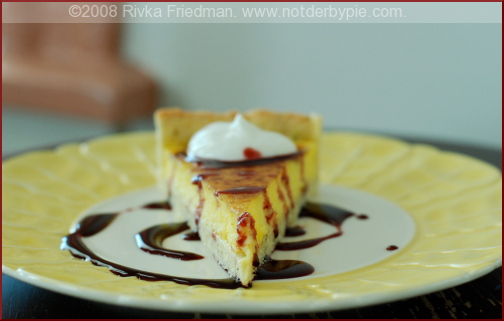
Cherry Almond Biscotti

almondcherrybiscotti6 Two wrist-slaps for me: I made these so long ago, I can't even remember when at this point. And I was oh-so-sure I blogged about them. But you know what? I didn't. I realized this yesterday, when I was poking around a great blog I recently discovered (which, in coincidence of coincidences, belongs to an acquaintance of mine from college), and came across a post about biscotti that's so good, it begs not to be dipped in chocolate. "I make those, too!" I thought, at which point I started poking around my own little blog for any mention of what are, without a doubt, my favorite biscotti ever. Nothing.

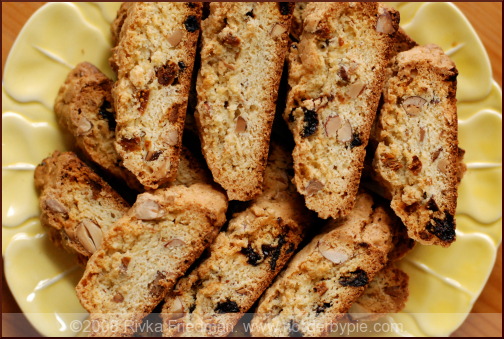
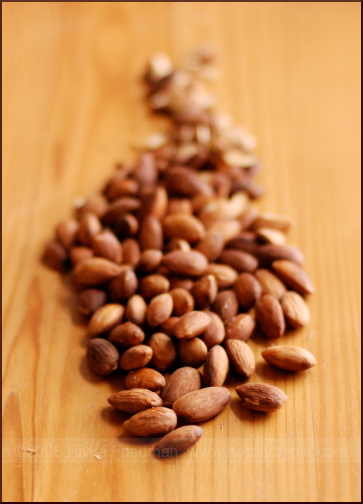
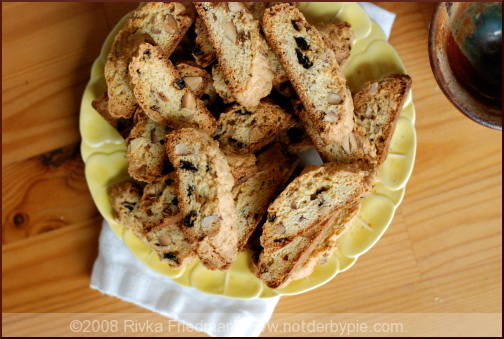
My goldfish-memory aside, I'll now remedy that situation. These biscotti are truly the best I've ever made. They've got a healthy handful of dried cherries, chopped home-toasted almonds, and just the right amounts of cinnamon and sugar to make them subtly sweet and spicy, not overly so. You know what else? They're mighty good for you, in the not-bad-for-you kind of way. almondcherrybiscotti2
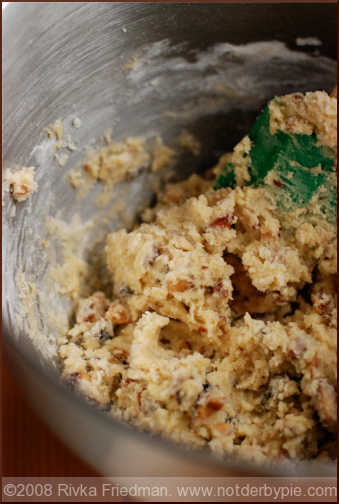
I developed my ideal recipe by starting with some basic recipes from a go-to cookbook on my shelf, The New Best Recipe, and consulting the cookbook's advice on how different proportions of egg yolk and butter affect the final product. I like my biscotti dry, crisp, and so crunchy they could (almost) crack a tooth, so I use only egg whites and no butter. If you prefer them less crunchy, more cakey, or more cookie-like, see the note at the beginning of my recipe.
almondcherrybiscotti3

almondcherrybiscotti4

As far as flavorings and add-ins, almost anything goes. TNBR offers orange-almond, lemon-anise, and cinnamon-spice as options, but any dried fruit, nut, seed, spice, or extract would be lovely.
almondcherrybiscotti5

Cherry Almond Biscotti adapted from The New Best Recipe

As I mentioned above, I used 3 egg whites and no butter to produce a very crunchy cookie. For slightly less crunchy biscotti, use 2 eggs instead. For a more cookie-like texture, use 2 eggs and 4 Tbsp. butter. For cakier biscotti, use 2 eggs and 2 egg yolks, an extra 1/4 cup of flour, and 1/2 a teaspoon of baking soda.

2 cups flour 1 tsp. baking powder 1/4 tsp. salt 1 cup sugar 3 large egg whites 1/2 tsp. vanilla 1/2 tsp. cinnamon 1/4 tsp. nutmeg 1 Tbsp. zest from an orange or lemon 3/4 cup whole almonds with skins, toasted, cooled, and coarsely chopped 3/4 cup cherries, raisins, or currants

Preheat the oven to 350 degrees. Line a large baking sheet with parchment paper. Whisk flour, baking powder (and soda if using), and salt together in a medium bowl and set aside.

Whisk the sugar, zest and eggs (whatever part of them you're using) in a large bowl until light yellow. Add in vanilla. Sprinkle dry ingredients over egg mixture and fold until just combined. Add in almonds and cherries, and fold until just incorporated.

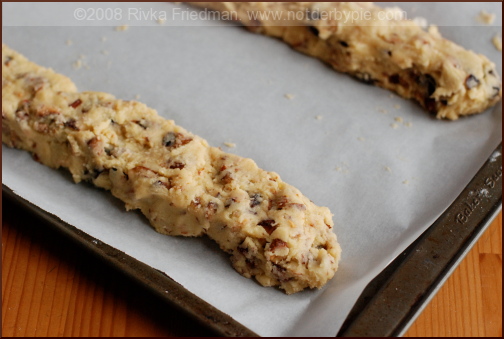
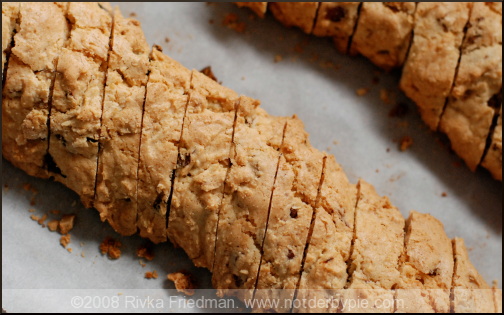
Halve the dough and turn both portions onto the baking sheet. Using floured hands, quickly stretch each portion of the dough into a rough 13 by 2-inch loaf. Place the loaves about 3 inches apart on baking sheet and bake until golden and just beginning to crack, about 35 minutes, turning sheet halfway through baking. Remove from oven, transfer loaves to cutting board using large spatula, and turn oven down to 325. Cut loaves on a diagonal into 1/2-inch-thick slices. Place about 1/2 an inch apart on baking sheet and return to the oven. Bake until golden all over, about 10 minutes, turning cookies over halfway through. Cool on a wire rack. Biscotti will keep in an airtight container for up to 1 month.
almondcherrybiscotti1

Miso Chicken with Braised Fennel

chickenfennel1 Boneless chicken breasts are one of those things I cope with for the sake of my relationship. If I had my way, you'd never see them in my fridge or freezer: I find them flavorless and boring (unless breaded and fried -- no complaints about homemade chicken fingers from this lady). But D loves those chicken breasts -- especially when coated in cornflakes and eaten with applesauce -- so once in a while, I throw some on the stove or in the oven and call it dinner. I try to make 'em interesting, though I should mention that in doing so, I've ruined several perfectly boring but fine chicken breasts with bad-tasting sauce. Tonight, however, was one of those nights when the boneless chicken breasts found themselves on both of our plates, topped with a sauce that was pretty darn delicious, and I thanked my lucky stars that I'd given D yet another chicken fix while making something that I also enjoyed eating.

chickenfennel2

My recipe is loosely based on a recipe I saw on epicurious, originally published in SELF Magazine, for a miso-marinated chicken. I made the marinade called for in the recipe but found it pretty flat, so I added some more things. The result was something I can recommend unequivocally; it was sweet but not overly so, salty in the wonderful way that miso and soy sauce are, tangy from rice wine vinegar, and zippy from fresh ginger and wasabi. The breasts were well-browned (I like'em with a hefty crust) and the sauce was properly reduced so as to be thick and drizzly. Also, I used homemade chicken stock, which really did make a bit of a difference. As for the braised fennel, I had the aforementioned chicken stock, as well as some drinkable white wine and ingredients for mirepoix (onions, carrots, celery -- the aromatics used as a base in many French and other dishes), so I decided to make a classic braise using all of the above to flavor browned, then softened, Fennel bulbs. D doesn't much like fennel, and you know what? Neither do I -- never was a fan of those licorice flavors. But the flavor of the fennel is so mellow in this braised dish as to be (almost) unassertive. It's like someone tazed the fennel or got it drunk or something. Get my drift? Braised fennel=good, =not as strong as licorice-y raw fennel. =Tasty, very tasty.

chickenfennel3

Along with some sushi-inspired, vinegar- and sugar-spiked white rice, the chicken and fennel made for a delectable meal. If you wanted to serve this set of dishes for company, I'd recommend starting with a seaweed salad, which D and I had at a lovely Friday night dinner, and by which I was totally blown away. Just ask my fridge: I've paying the leftover salad regular visits.

Miso Chicken adapted from SELF

1/2 cup white miso paste (found at health food stores) 1/4 cup sugar 1/4 cup chicken broth 1/8 cup rice vinegar 1 1/2 Tbsp soy sauce 1 Tbsp minced ginger 1/4 tsp wasabi paste, optional

Combine all ingredients except chicken; stir to combine. Don't worry if the miso clumps a bit. Add chicken, coat with marinade, and let sit in the fridge for at least 10 minutes.

Preheat skillet with 2 Tbsp oil over medium heat. Lift one chicken breast out of the marinade, letting excess drip off; transfer to skillet. Repeat, making sure not to overcrowd the pan. Cook about 8-9 minutes per side, until well-browned and cooked through. Alternatively, roast in a 375-degree oven for approximately 20 minutes, until cooked through. Transfer chicken to a plate to cool, about 5 minutes.

Transfer remaining marinade to skillet, raise the heat to med-high, and reduce about 6-7 minutes, until fully cooked and thick enough to coat a wooden spoon. Spoon over chicken and serve.

Braised Fennel serves 4

3 fennel bulbs, cored and quartered, fronds reserved 1 small onion, diced 3 individual stalks (not full heads) celery, diced 2 small carrots or 1 large carrot, diced olive oil 2/3 cup white wine 2/3 cup chicken broth juice of 1/2 a lemon salt and pepper

Halve fennel bulbs; remove core with two diagonal cuts in a V toward the center. Then quarter the bulbs. In a large skillet with a lid, heat 3-4 Tbsp olive oil. Add mirepoix (celery, onion, carrot) and cook 5-6 minutes over medium heat, until browned and softened. Clear some room and add fennel pieces, and some more olive oil if necessary. Cook another 6 minutes, until bottoms of the fennel quarters are browned. Add chicken stock and wine, lower heat to a simmer, and cover skillet. Cook about 15-20 minutes, until fennel is soft all the way through. Add a bit of broth, wine, or water and use a wooden spoon to scrape up the "fond" -- any flavorful brown bits that have accumulated at the bottom of the skillet. Serve hot, warm, or even room temperature (though I prefer hot).

Bouchon-Inspired Lemon Tart

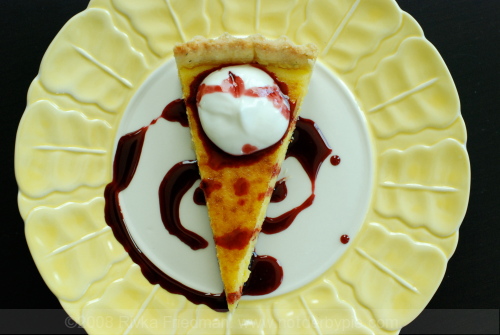
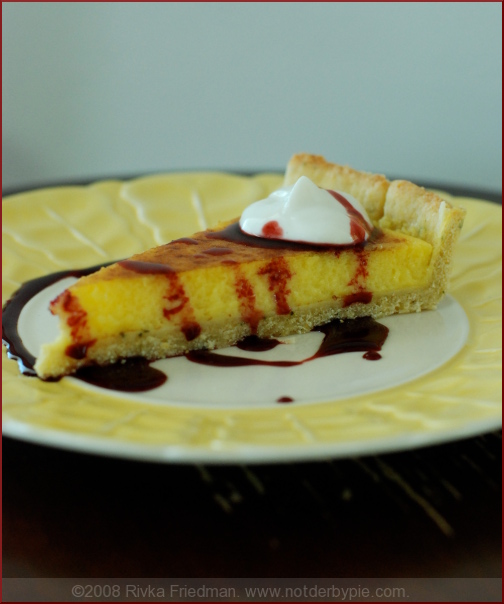
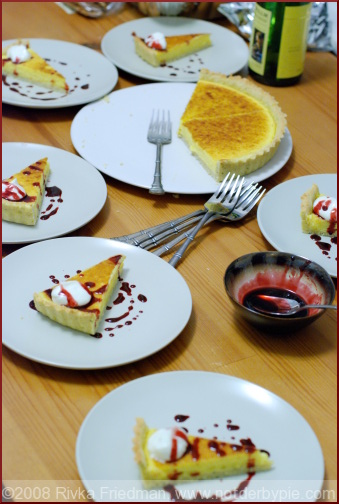
lemontart1 On my last trip to New York, I stood on the third floor of the Time Warner Center for about an hour just waiting to get into Bouchon Bakery. It didn't work out -- the person we were meeting was on a tight schedule -- so we ended up eating salads at Whole Foods. Ever since, I've been dreaming of Bouchon. Have you tried their chocolate bouchons? Oh, man. Delish.
lemontart5

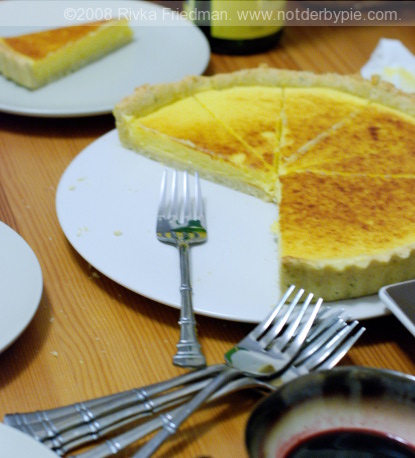
In full stalker mode this Friday, I started googling Bouchon recipes and came across this little treasure, via Epicurious. It's a pretty traditional lemon tart, with two exceptions: one, the crust is a pine nut crust. Two, the lemon curd is actually a sabayon. That means that instead of warming the lemon juice and sugar, adding the eggs, and heating until thickened, the eggs and sugar are whisked vigorously while being warmed over a double boiler, and lemon juice is added in stages as the custard thickens. lemontart3

The result is something less pudding-like, more creamy, and just sweet enough. My arm may have been ready to fall off by the time the sabayon was done, but if I'm one step closer to Michelle Obama's fantastic biceps, I'm certainly not complaining.

lemontart4

As for the crust, I knew for a fact that a few of my diners (read: D) didn't like pine nuts, so I opted instead for a cornmeal-sage crust. If you like that sort of thing, it's a great crust recipe: again, not too sweet, with the distinct texture and fruitiness of cornmeal and faint herbal flavor from the chopped fresh sage. I imagine the pine nut crust is delicious -- and pine nuts and lemon are truly a winning combination -- but the cornmeal crust is a great alternative. I've included both recipes below.

lemontart6

Next up: maybe a salmon recipe (the sauce is so good I ate the leftovers straight, with a spoon), maybe an easy olive appetizer. We'll see.

lemontart7

Bouchon-Inspired Lemon Tart from Bouchon, by Thomas Keller, via Epicurious

Lemon Sabayon: 2 large eggs, cold 2 large egg yolks, cold 3/4 cup sugar 1/2 cup fresh lemon juice 6 tablespoons (3 ounces) cold unsalted butter, cut into 6 pieces

For the sabayon: Bring about 1 1/2 inches of water to a boil in a pot that is slightly smaller than the diameter of the bowl you will be using for the sabayon. Meanwhile, in a large metal bowl, whisk the eggs, yolks, and sugar for about 1 minute, or until the mixture is smooth.

Set the bowl over the pot and, using a large whisk, whip the mixture while you turn the bowl (for even heating). After about 2 minutes, when the eggs are foamy and have thickened, add one-third of the lemon juice. Continue to whisk vigorously and, when the mixture thickens again, add another one-third of the lemon juice. Whisk until the mixture thickens again, then add the remaining lemon juice. Continue whisking vigorously, still turning the bowl, until the mixture is thickened and light in color and the whisk leaves a trail in the bottom of the bowl. The total cooking time should be 8 to 10 minutes.

Turn off the heat and leave the bowl over the water. Whisk in the butter a piece at a time. The sabayon may loosen slightly, but it will thicken and set as it cools. Pour the warm sabayon into the tart crust (recipes below) and place the pan on a baking sheet.

Preheat the broiler. While the sabayon is still warm, place the tart under the broiler. Leaving the door open, brown the top of the sabayon, rotating the tart if necessary for even color; this will take only a few seconds, so do not leave the oven. Remove the tart from the broiler and let it sit for at least 1 hour before serving. Serve at room temperature or cold.

Pine Nut Crust: 10 ounces (2 cups) pine nuts 1/3 cup sugar 1 pound (3 cups) all-purpose flour 8 ounces unsalted butter, at room temperature 1 large egg 1 teaspoon pure vanilla extract

Place the pine nuts in a food processor and pulse a few times. Add the sugar and flour and continue to pulse until the nuts are finely ground. Transfer the mixture to a large bowl.

Add the butter, egg, and vanilla extract and mix to incorporate all the ingredients (the dough can be mixed by hand or in a mixer fitted with the paddle attachment). Divide the dough into three equal parts. Wrap each piece in plastic wrap and refrigerate for at least 10 minutes before using. (The extra dough can be frozen, wrapped well, for up to 1 month.)

Preheat the oven to 350°F. Generously butter and flour a 9-inch fluted tart pan with a removable bottom and refrigerate it while the oven preheats.

Remove the tart pan from the refrigerator. Use your fingertips to press the chilled pine nut dough evenly over the bottom and up the sides of the pan. Trim off any excess dough.

Bake the crust for 10 to 15 minutes, then rotate it and bake for another 10 to 15 minutes, or until it is golden brown. Remove the crust from the oven and let it cool while you make the filling. (There may be some cracks in the crust; they will not affect the finished tart.)

Sage Cornmeal Crust from Martha Stewart

2 1/4 cups all-purpose flour, plus more for work surface 3/4 cup coarse yellow cornmeal 3 tablespoons sugar 1 tablespoon plus 1 teaspoon finely chopped fresh sage 1 1/2 teaspoons salt 1/2 teaspoon finely grated lemon zest 3/4 cup (1 1/2 sticks) cold unsalted butter, cut into small pieces 3 large egg yolks 5 tablespoons ice water

Pulse flour, cornmeal, sugar, sage, salt, and lemon zest in a food processor until combined. Add butter; pulse until mixture resembles coarse meal. Whisk egg yolks and ice water in a small bowl. With machine running, add to flour mixture through feed tube; process until dough just holds together.

Turn out dough onto a work surface. Divide in half, and shape each portion into a disk. Wrap in plastic, and refrigerate 30 minutes (or up to 2 days).

On a lightly floured work surface, roll out 1 disk to a 10-inch round. Fit into a 9-inch tart pan with a removable bottom; trim edges flush with rim. Refrigerate until firm, at least 1 hour (or up to 1 day). Reserve remaining dough for another use (it can be frozen up to 3 months). Preheat oven to 375 degrees. Prick bottom of tart shell with a fork. Bake until golden brown, about 25 minutes. Let cool.

Oven-Roasted Olives

ovenolives1 In recent years, a slew of upscale pizza places have sprouted up to sate the ever-growing yuppie appetite for $13 (or $15, or $20) pies. Just look at Manhattan and Brooklyn: they're bursting with fancy pizza points, from the old-school Lombardi's and my favorite Grimaldi's to the newer Roberta's and Co., dreamt up by the breadmaster Jim Lahey. Washington is following suit, in its own more muted way, and by now we've actually got a few great spots for the ultimate Neapolitan treat.

One such spot, Two Amys, is a standby in this house. We pop over there at least once a month, and by now we're buddy-buddy with a waitress, we know our favorite wine on the menu, and we've even found a bus that takes us, literally, from door to door.

We go to Two Amys for pizza, but two other things on the menu are just as much of a draw: the suppli -- fried balls of risotto laced with tomato sauce, with some piping hot mozzarella in the center -- and the oven-roasted olives. Granted, D has no interest in the olives (in olives of any kind, for that matter -- but I'll say, they're one of the cheapest appetizers in town. For $4.95, you get a large bowl of olives roasted with really good olive oil, spices, and maybe some garlic. The little jewels simply burst in your mouth. They even come with a couple slices of crusty bread to soak up all that olive oil deliciousness (if you've got room, between the soupli and the pizza).

ovenolives2

After two years of snacking on these olives, I finally came to my senses and realized that, with minimal effort, I could whip some up at home. I browsed my usual cache of websites for some inspiration, but it turns out that recipes were altogether unnecessary. I simply took out a rimmed sheet pan, drizzled it with some olive oil, and into the olive oil I scattered a mix of olives -- picholine, manzanilla, and kalamata, in my case, but any will do. Overtop go any mix of fresh and dried herbs that suits your fancy. I used several sprigs of fresh thyme, some dried basil and oregano, and lots of freshly-cracked black pepper. I threw in a couple slices of lemon as well, for some much-needed acidity.

...Um, did you expect more steps? Sorry to disappoint you. Pop the whole thing in a 350-degree (or other temperature if you're cooking something else) oven for about 15ish minutes until olives are soft and bursting. Serve warm with crusty bread.