Tamarind-Cherry Meatballs

Short post today, but I wanted to offer a recipe that puts the tamarind puree I recently posted to good use. These meatballs are really a cinch to make; they're studded with rich, nutty pine nuts, and the sweet-tart sauce, with fresh and dried sour cherries and plenty of tamarind, is downright addictive. The recipe is a combination/adaptation of two recipes, both from Aromas of Aleppo, that beautiful Syrian Jewish cookbook I mentioned in my post on tamarind puree. Sour cherries are done for the season here in DC; if they're over in your area as well, you can substitute frozen sour cherries, available at some grocery stores, or replace the fresh ones with more dried cherries, and add a bit of extra apple cider or wine or even water to compensate for smaller amount of cherry juice.

I served these with saffron rice, which provided both flavor and color contrast to the meatballs. The combination was perfect, and I highly recommend it.

Sour Cherry Meatballs adapted from Aromas of Aleppo

1 pounds ground beef, preferably NOT lean (if lean, add a couple Tbsp. olive oil) 1/2 cup chopped pinenuts a couple sprigs of parsley, leaves removed and chopped 1 1/2 teaspoons allspice, divided 3 onions, diced 1 pound sour cherries or 2 cans/jars pitted cherries, including liquid (NOT pie filling!) 3 tablespoons tamarind puree juice of 1 lemon 1 tablespoon sugar 1 cup red wine 1/2 cup crushed tomatoes 3 tablespoons vegetable or olive oil, divided

Combine beef, pine nuts, parsley, and 1/2 teaspoon allspice in a medium mixing bowl. Using a fork and a light hand, break up ground beef and incorporate other ingredients; do not overmix or press too hard, as you want beef to stay light and airy.

In a medium saucepan, saute meatballs in 2 tablespoons olive or vegetable oil over medium heat, until lightly browned, turning gently to brown on all sides. Remove meatballs and set aside.

Using the same saucepan, saute the onions in the remaining tablespoon oil over medium heat until translucent, about 5 minutes. Add liquid from cherries (if fresh, use 1/2 cup water or apple cider instead), lemon juice, tamarind puree, red wine, 1 teaspoon allspice, and crushed tomatoes. Stir to combine; bring to a boil. Add meatballs and cherries back into the pan. Cover, reduce heat to low, and simmer for 1 hour, or until sauce has thickened.

Serve hot, either over pita or over saffron rice.

Tamarind Puree

tamarind11 The single best thing (the single good thing, actually) about pulling late nights at work is ordering Indian on the firm's tab. The office coordinates with one of those online delivery systems where you can order dinner and have the bill automatically charged to the company, but frankly, the pickins are slim and they charge you a delivery fee which really cuts into your allotted budget. I almost never order off the site, opting instead to be my own middle man. A bunch of us go in on a big order from Heritage India up the street, and I usually volunteer to take care of ordering and submitting receipts for reimbursement. My colleagues seem to think it's because I embody the spirit of generosity; the truth? I like to ask for lots of extra tamarind chutney.

You'll rarely find my fridge without tamarind concentrate. Tamarind is slightly sweet, but it's the zippy tang that elevates the flavor of meats, pad thai, and even tomato sauce. It's used in many Indian and Thai dishes, and you'll often get some as a dipping sauce for samosa. Perhaps lesser known, tamarind is a key ingredient in Syrian cuisine. Ever since snagging an invite to a dinner party at a Syrian friend's place while I was in college, I've been fascinated by Syrian food. For starters, there's so damn much of it! I ate until I was stuffed at that dinner, and just as the food coma set in, out came the main course. But beyond the copious quantities, I just can't get enough of the interplay between sour and sweet that's fundamental to Syrian cooking. We're talking tamarind-laced tomato sauce, or meatballs cooked in a sweet-tart cherry sauce. It's some pretty good stuff.
tamarind2

I bought my first jar of tamarind concentrate at an Indian grocer near my old office, and it lasted me for nearly a year. It was good, but its texture was similar to pomegranate syrup, and its flavor was somewhat harsher than the tamarind chutney I'm used to eating with my samosas. I thought to get more, but since I no longer work out in the boonies and also don't have a car, Indian groceries aren't exactly accessible. So this fearless blogger decided to make her own.
tamarind3

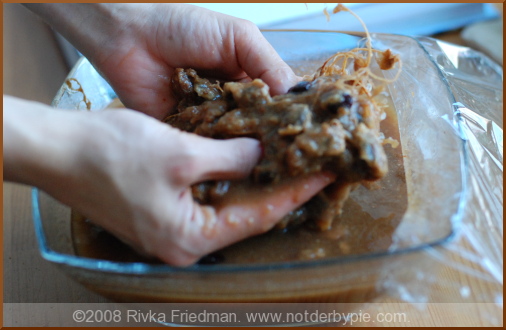
I didn't go it alone, though: I took on tamarind puree armed with Aromas of Aleppo, one of my new favorite cookbooks to read and ogle over. It's a tall, heavy book, written by a woman named Poopa Dweck (Poopa! What a name!), and it's all about the food of the Syrian Jews. (The book really is stunning, and would make an amazing gift - Julia, who lent it to me, got it for her wedding.) The emphasis is on meat, and when I say emphasis, I mean there is nary a recipe for vegetables on their own; every last one is stuffed with the classic Syrian meat-and-rice filling. Not that I'm complaining. In addition to meat, every single recipe calls for tamarind puree. I've been planning to make something from the cookbook for a while, but until last week, I hadn't gotten past the ogling stage. They just all look very complicated. So imagine my surprise, when I finally bit the bullet and made my own tamarind puree, that the process was really much more painless than I'd anticipated.
tamarind1

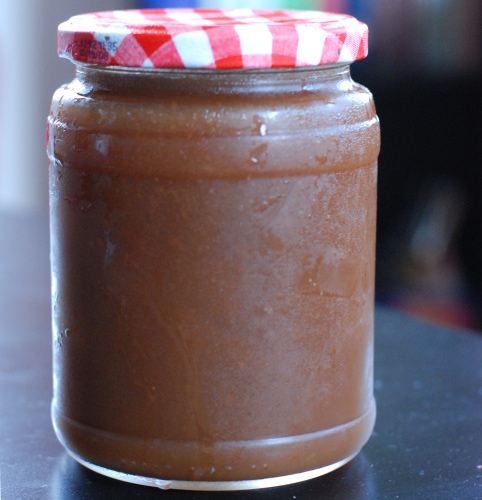
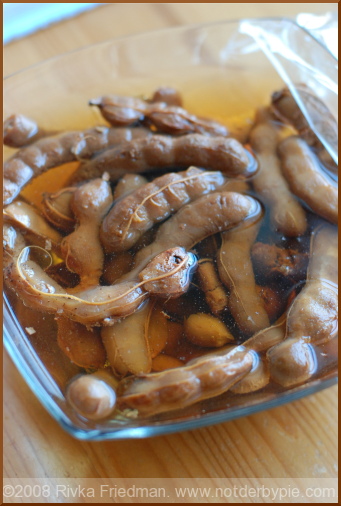
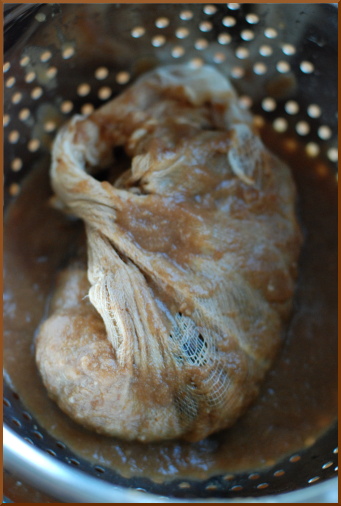
Tamarind is relatively hard when it's dry, the pulp having gathered and solidified around those smooth, center seeds -- but let it soak in water overnight, and it becomes as soft as applesauce. At that point, you can easily separate out the seeds and fibrous membranes from the pulp. After a good strain or two through some cheesecloth, all you need to do is boil the puree down and add some sugar, and that's it. Plus, once the puree is made, it'll keep in a jar at room temperature for upto a year. If it lasts that long.

Tamarind Puree Adapted from Aromas of Aleppo

3 pounds tamarind or tamarind pulp (sold in a hard block) 1 1/2 pounds sugar 1 1/2 tablespoons freshly-squeezed lemon juice 2 Tbsp. citric acid

If using whole tamarind, peel the hard outer shell away. Submerge tamarind (or tamarind pulp block) in about 6 cups of water, and let sit about 8 hours, until pulp has the texture of applesauce and is easily separated from seeds and membranes.

Line a colander with cheesecloth, and set over a large mixing bowl. Pour tamarind mixture into colander, and press firmly against the sides of the colander to extract the tamarind liquid and leave behind the seeds and membranes, as well as any pieces of shell.

Transfer the strained pulp from the colander into a clean mixing bowl, and submerge in more fresh water (about 3 cups). Work to pull it apart again, releasing any remaining pulp, then strain again and transfer the extracted liquid into the bowl that holds the liquid from the first straining.

Pour the reserved liquid through the cheese cloth one last time, wringing out cheesecloth to extract as much liquid as possible.

Pour the tamarind liquid into a large saucepan and bring to a boil over high heat. Reduce heat to low and simmer liquid until reduced by half. Then add sugar, lemon juice, and sour salt to the tamarind liquid.

Increase heat to medium and boil slowly until the mixture develops a silky, almost shiny consistency. Let the mixture cool some, then transfer to a large glass jar. Puree will keep several months -- refrigerate after opening.

Perfect Blueberry Buttermilk Hotcakes

blueberryhotcakes1 The NDP kitchen is swimming in blueberries. They were a mere $1.25 a pint at today's market, so I couldn't resist buying just a few 5. I ate half a pint on the way back from the market, because they're so sweet! And I'm a grown up so I can! So there! I'll freeze 2 of the pints, and the other 2 (er, 1 1/2) will work their way into salads and crisps and maybe even some hand pies. After trying Sarah's bourbon peach and sour cherry hand pies at our office bakeoff, I'm dying to try my hand at making them. I'm pretty sure her recipe was from Deb at Smitten Kitchen, and no surprise there -- the crust was perfectly flaky, and the sprinkling of rock-sugar on top of the not-really-sweet crust made all the difference. And those cherries! I'm still mourning the end of sour cherry season, so you'll have to bear with my whining. If anyone sees sour cherries this week, pullease leave a tip on the blog about where one can find them.

blueberryhotcakes2

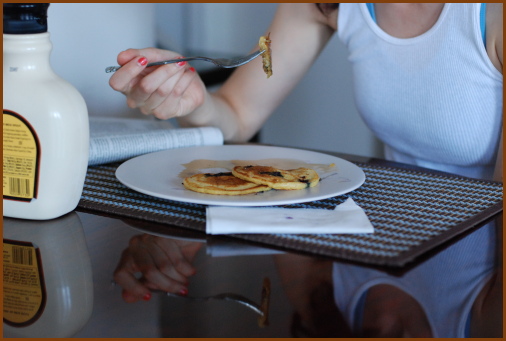
But I digress. Because here I go, planning where all my blueberries will find themselves, when in truth I've already put 1/4 pint toward a very noble cause: perfect blueberry hotcakes. I don't make pancakes often, so when I do, I tend toward the luxurious end of the pancake spectrum. My go-to recipe calls for 6 Tbsp. of melted butter that are then incorporated into buttermilk and egg yolks for a tangy, rich batter. Whipped egg whites are folded in just before cooking to lift the batter and make the hotcakes uber-light, and fresh blueberries lend color and zing that contrast perfectly with the sweet, sloshy puddles of maple syrup. These hotcakes were the antidote to my very busy week. If Friday night partying isn't your way to ring in another weekend, let these be the sign that Saturday is finally here.

blueberryhotcakes5

Perfect Blueberry Buttermilk Hotcakes adapted from Beltane Ranch, via Food and Wine

serves 4-6

Ingredients 1 1/2 cups unbleached flour — I use half whole wheat 2 tsp. baking soda 1/2 tsp. salt 2 cups buttermilk 6 Tbsp. unsalted butter, melted and cooled 2 large eggs, separated and at room temperature 1/4 pint fresh blueberries maple syrup

In a medium bowl, mix flour, baking soda and salt. Set aside.

In a large bowl, whisk together buttermilk and egg yolks. Add butter and stir until well incorporated. Add the dry ingredients to the wet ingredients and stir just until combined. Add blueberries and fold into batter to incorporate.

In the bowl of a stand mixer fitted with the whisk attachment or in a medium bowl using a hand mixer, whip egg whites until stiff peaks form. Using a rubber spatula, fold in egg whites gently, and stir just until combined.

Heat a lightly buttered castiron or heavy stainless steel skillet over moderately low heat. Using a ladle or a 1/4-cup measure, put two-three pancakes in the pan.

Let hotcakes cook for about two minutes, or until top begins to set around the edges. Flip and cook 1 minute longer, then transfer to a 280-degree oven to keep warm while you cook the rest of these beauties.

Serve with good maple syrup and a big appetite.

Summer Succotash

succotash1 Round next of my weekday lunch series, where I post about dishes that'll put PB&J to shame.
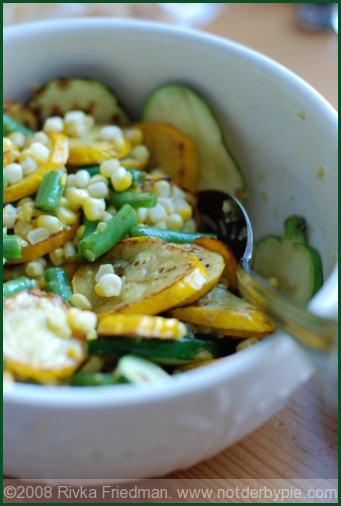
I love the flavor of buttery, salty, corn on the cob. I love it even more now that I've discovered the sweetest corn ever, from Toigo Orchards. Toigo sets up shop at the Dupont farmers' market; their corn has apparently won "best at the market" several years in a row. The last time I bought it, I was told it was picked the day before; it doesn't get much fresher than that. And having tried other ears, they really don't compare. Some are too starchy, and others have a thick, almost leathery skin around the kernel, whereas Toigo's ears are sweet, the thin-skinned kernels practically bursting with juice.

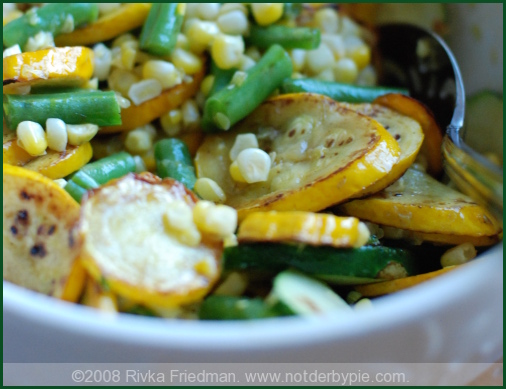
Having bought quite a few ears last week, I was searching for new things to do with them come week's end. For dinner on Friday night, I served this succotash dish -- a very simple play on that classic Southern staple. It's got the flavor of sweet, salty cob corn but with just a drizzle of olive oil instead of the usual butter. I bulked up the succotash with some chopped green beans, which I left on the raw side, and panfried zucchini, which I essentially seared in a smoking but oil-less castiron pan, then allowed to soften in the serving bowl. The succotash gets a boost from freshly-squeezed lemon juice and a bit of the lemon's zest, but other than that, olive oil, salt, and pepper are its only seasoning. When the produce is this good, you don't want to doctor it up much more than that.

succotash2

Summer Succotash serves 4

3 summer squash (I used a mix of long yellow squash and stubby green pattypan, but anything will work -- you're going for between 1.5 and 2 pounds.) 3 ears of corn, husks and strings removed, kernels cut from cob 1 lb. green beans, trimmed and cut into thirds 1 lemon 4 tablespoons olive oil

Slice squash on bias into 1/2-inch slices. Heat a large, well-seasoned castiron pan or a nonstick pan over medium-high heat (If using stainless steel, add a bit of olive oil to lubricate.) When pan is very hot, place some of the squash slices in the pan in a single layer and cook until browned, about 3 minutes. Flip and repeat with flip side, 3 minutes more. Sprinkle liberally with sald, then transfer to a large non-reactive bowl; squash will not feel completely soft, but they will soften as they sit. Continue cooking squash in batches until all slices have been cooked.

Next, add 2 Tbsp. olive oil to pan, and add corn. Cook, stirring constantly, about 1 minute; salt, and transfer to bowl with squash. Add remaining 2 Tbsp. olive oil and green beans to pan; cook about 1-2 minutes, salt, and transfer to bowl.

Stir vegetables until well-distributed. Grind some fresh black pepper into the bowl, and zest and squeeze the lemon overtop. Serve warm or at room temperature.