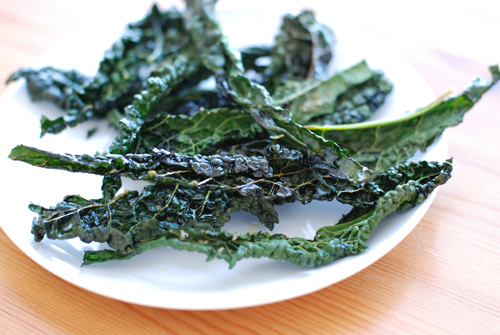
Crispy Kale Chips

Hello there readers, and hello 2010! I'm back from Israel and hope you enjoyed the dispatches from abroad. In truth, there's so much more to tell: a dear friend took D and me on a fabulous tour of the Old City's Christian Quarter, where we ate amazingly fresh hummus, climbed down to secret underground cisterns, and visited a tucked-away Austrian hospice for excellent cappucinos and Jerusalem's best apple streudel. And that was just one morning!

But now we're back to the grind, and besides, you must be tired of my rants about my travels. You come here for recipes, and I aim to please. So let's talk about kale chips, shall we?

I think I first read about crispy kale in the late Gourmet Mag. The recipe was as simple as they come -- kale, olive oil, salt, pepper -- and accompanying it were stunning photos of long, evergreen-colored leaves shooting out of a tall glass. Gourmet said the kale was the perfect cocktail party food, and looking at the pictures, I had to agree. I could envision these beautiful vases of kale chips placed on a long table, giving height to the usual array of flat cookie platters and cheese plates. Yum.

One evening, I had a bunch of kale to use up and decided to give the recipe a go. If it was a success, I figured, I'd make it at my next dinner party; the beautiful chips were certain to impress.

But then I ate one.

Can we discuss the fact that my entire mouth, like every single tooth, had green flecks all about? And flecks is an understatement. I might as well have colored my smile with green marker, it was that bad. Cocktail party food my #$@*^%!!! Kale chips are absolutely delicious -- they're crispy, and salty, and perfectly peppery, utterly addictive in short -- but they're something to be eaten at home alone, or with someone who really, really likes you. Either way, be prepared to laugh.
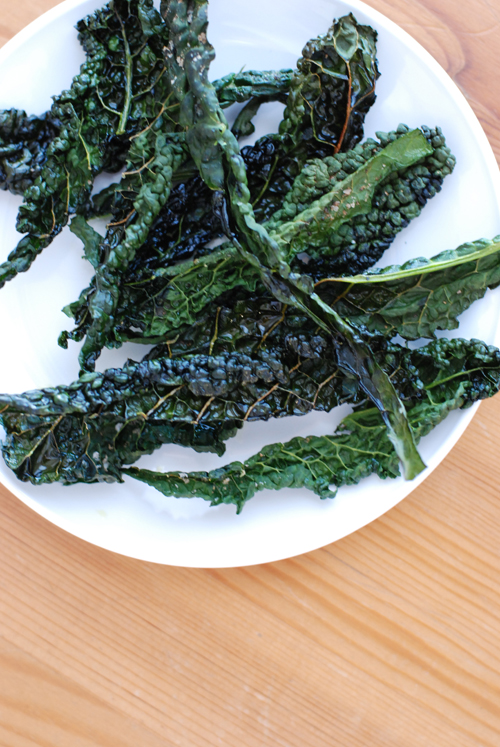
Don't let me green teeth scare you away completely, though: these kale chips truly are delicious. If any of you have made New Year's resolutions to eat more vegetables, consider this recipe a belated holiday gift. You can easily polish off an entire batch of kale this way.

Kale Chips adapted from Gourmet

These chips are delicious just so, but they really pop with a last-minute squeeze of lemon, if you have it handy.

1 bunch kale, cleaned and dried, center stems removed olive oil salt pepper wedge of lemon, optional

Put the kale in a large plastic bag, drizzle about 1/8 cup olive oil inside, and shake and massage to combine. Add more oil to the bag as needed until all leaves are coated in the oil. Spread kale leaves in a single layer on as many baking sheets as you need, and sprinkle generously with salt and pepper. Bake at 300 for 20-25 minutes, until kale is crispy all over. Cooking time depends on age and dryness of kale, so watch carefully and remove when every piece is crispy. Serve immediately, and squeeze lemon overtop just before serving, if desired.

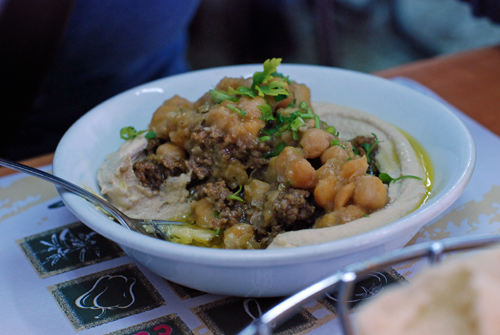
Morduch

Judging by its exterior, Morduch has developed its reputation entirely by word of mouth. The sign outside is small and dirty, and the restaurant is not much more than a hole in the wall, overshadowed in size and grandeur by its neighbor, the shuk (open air market). It's not the kind of place you notice just walking by; for Morduch to be full as consistently as it is, people must be talking about it. And I can assure you, they are. I actually sat down on the bus the day after I started writing this post, and sure enough, the two women next to me were discussing Morduch.

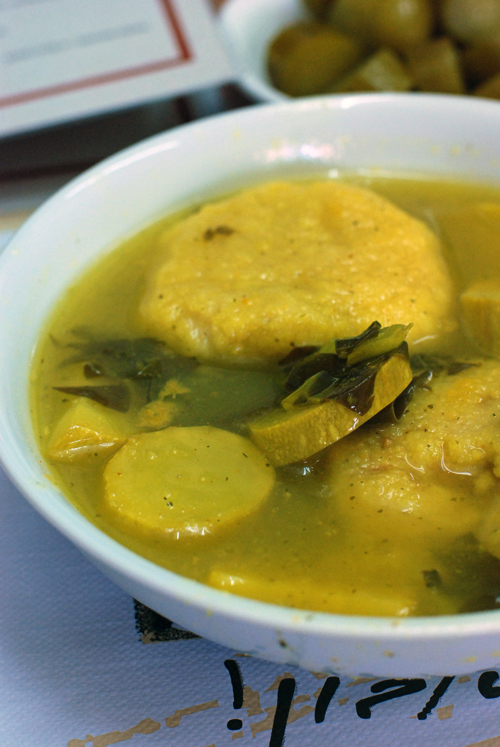
Morduch serves classic Israeli comfort food: warm hummus with whole chickpeas and ground beef, and kabobs with rice and tomatoes, are both menu staples. But they're known for their soup -- kubbeh soup, in particular.

There are three varieties of kubbeh soup at Morduch. The first is called "marak kubbeh adom," or red kubbeh soup. It's a mildly-spiced tomato broth with celery, a couple other vegetables, and big kubbeh, or meat-filled semolina dumplings that have been boiled in the soup. Marak kubbeh adom is generally regarded as the most basic soup; it's what your friend orders when it's his first time at the restaurant and he's still skeptical about the whole kubbeh thing.

The second variety is called marak kubbeh hamusta, and it had me at hello. I first ate kubbeh hamusta in 2004, and was immediately addicted to its mouth-twisting tartness (from sorrel leaves) and rich spicing (from the beef in the kubbeh). There are few things I adore more than hamusta soup.

Given my love of hamusta, I generally don't look at the menu -- I just sit down and order. As I was slurping the last of my bowl last week, I glanced at the menu for blog-reporting purposes and noticed a third soup on the menu: marak kubbeh siskeh. As it's described by the restaurant, siskeh is hamusta soup for the advanced palate: its spicing is more aggressive, its tartness more pronounced. Basically, an amped up bowl of the already-wonderful hamusta. I had in mind to head back and give it a shot, but there was too much else to do and not enough time, so siskeh will have to wait until my next trip. If you have it, you must let me know how it is!

The Shuk

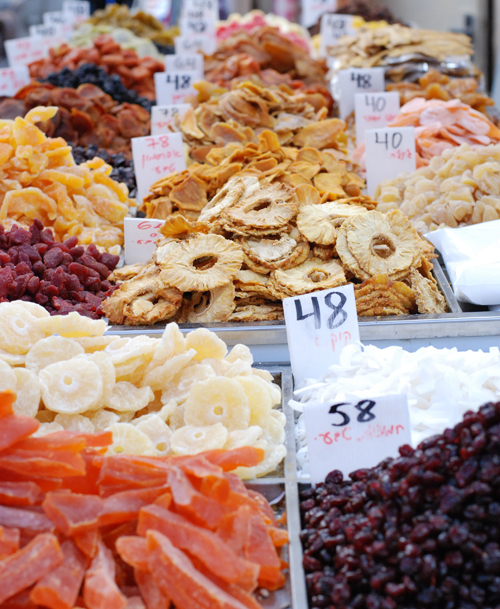
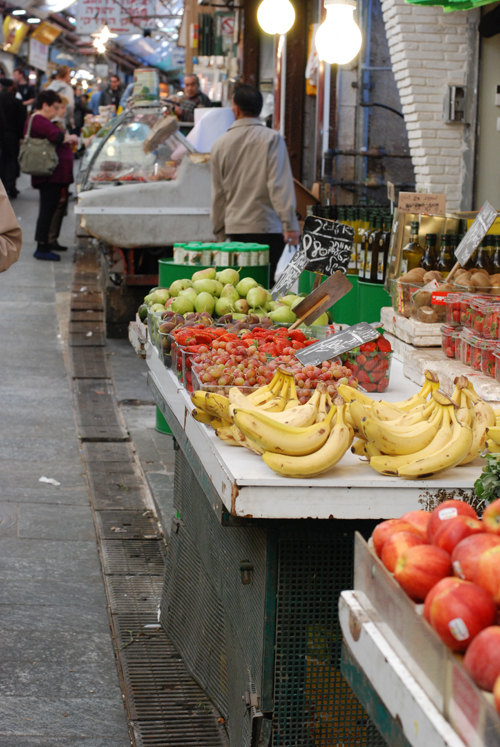
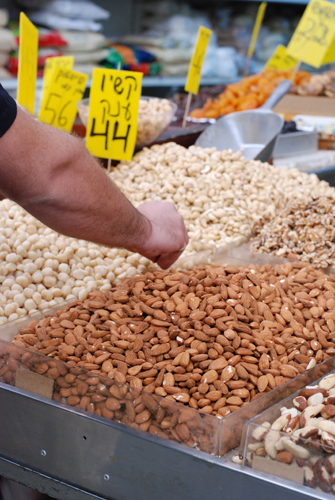
The central attraction of the downtown area is, without a doubt, the shuk, or the open-air market. Occupying two long square blocks, it has everything you could possibly want, from fresh fruit and vegetables to prepared foods to hundreds of kinds of cheese to fresh-squeezed juice to full-service cafes and restaurants...and more. It's one of my favorite places in all of Jerusalem, and I make a point to come at least once or twice every time I'm here.

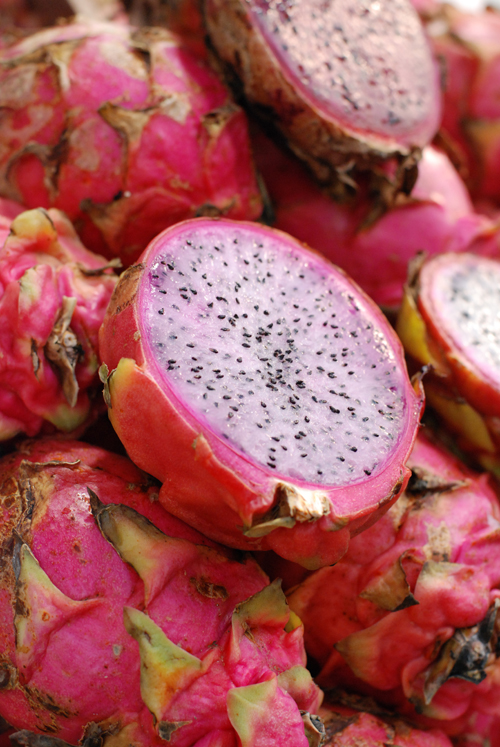
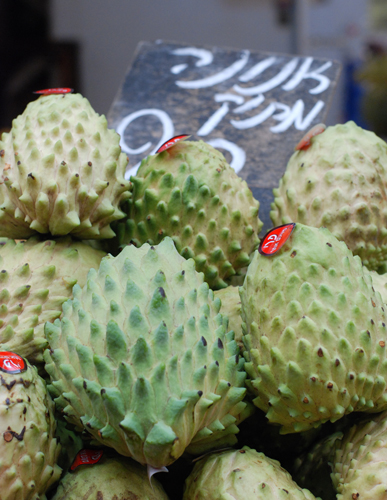
The produce at the shuk alone makes it worth the trip. Fruit and vegetables of every variety are available and shockingly affordable prices. You know those Middle Eastern cucumbers that cost $3 or $4/lb at your local farmers market? It'd be difficult to spend $2 on them here: they cost about 75 cents/kilo, or about 35 cents/pound. Aside from the prices, the variety is refreshing. It's not everywhere that you can get beautiful red tomatoes and even strawberries (!) in December. For those with an exotic streak, there are also sabras (mild-tasting fruit with hot pink exterior and innards ranging from white to purple), pumelos (a cross between a grapefruit, a lemon, and an orange with a hefty pith, a light yellow tint, and a sweet, tart flavor) and many other things.

Smack in the middle of the shuk's indoor strip is my favorite cheese shop. It's perpetually swarming with people angling for their tub of fresh ricotta, goat feta, Bulgarian cheese or labne (a thick, tangy yogurt). And in addition to the over 20 kinds of fresh cheese, the stand also has an unusually large assortment of imported cheeses, which can be hard to find in Jerusalem. Next door, the same folks own a meat stand, where they sell great hummus, meat cigars, and kubbeh (fried semolina dumplings stuffed with ground meat), as well as an assortment of ready-to-eat main dishes and sides. The fun never ends.

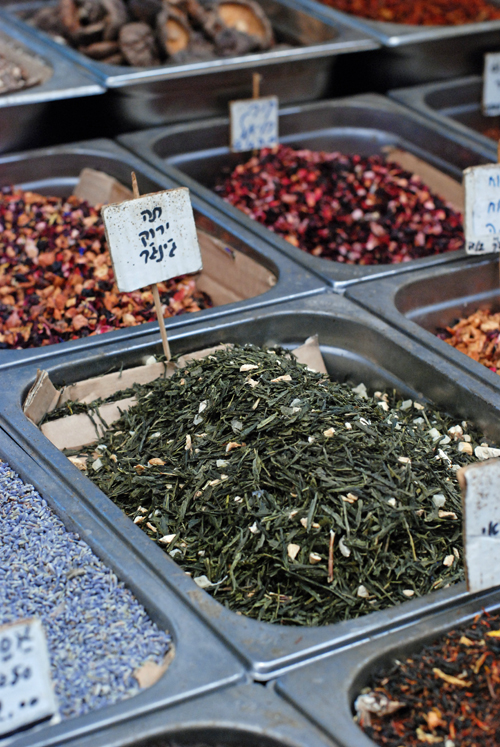
The spices! How could I forget the spices? Truthfully, the spice stands are hard to miss, a real stand-out with their mountainous piles of vividly-colored spices: the crimson paprika, the dark brick sumac, the bright orange tumeric and the oh-so-fragrant cumin. In addition to individual spices, these stands offer several blends, including my all-time favorite hawaij, made of cumin, coriander, cardamom, cloves, tumeric, and black pepper. They also have mixes of toasted nuts, dried onions, and various spices that are meant for sprinkling on salads or soup or cooking into rice.

I would be remiss if I didn't mention the pastries. Pe'er (my personal favorite) excels at making sweet, delicious challah; Marzipan (the tourist hotspot) makes rugelach filled with chocolate or cinnamon-sugar, the pastry so hot and soft it practically unravels in your hand. There are vendors

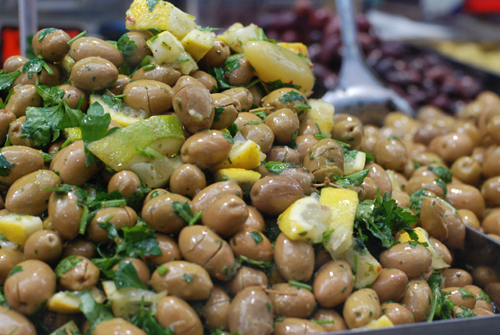
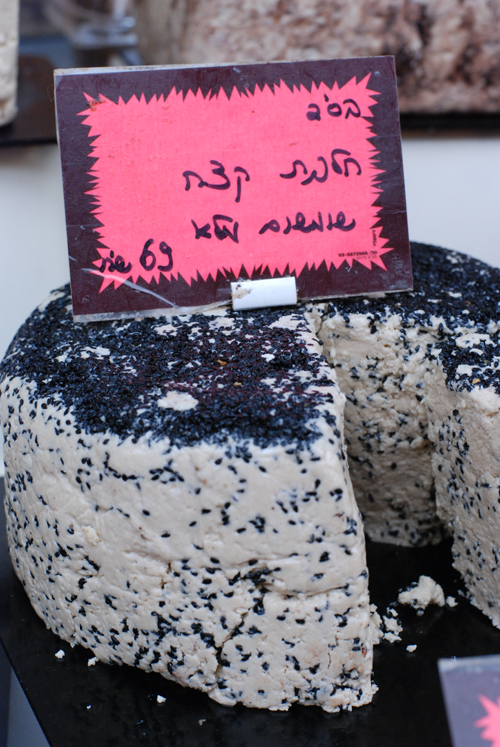
There are the guys that do everything. At one end of the indoor strip, there's a vendor that makes phenomenal, smoking-hot pita, and sells anything you'd stuff it with, including olives, pickles, hummus and tehina, and a large variety of sauces. He also has a full-service station of meat side dishes, in case pita and fillings aren't enough. Then there are the guys that sell only one thing and aim to make it perfect: about halfway down the indoor strip, there's a stall devoted exclusively to selling halva, that sweet, pasty sesame treat. They sell about a dozen flavors of the stuff, including regular, chocolate, vanilla mocha swirl, black sesame, and more. If you're lucky, they'll be doling out samples as you walk by.

All that shopping can make a person pretty exhausted. That's why there are several cafes inside the shuk, where shoppers and browsers can take some down time and mull over a cappuccino. My favorite is Mizrachi, tucked inside a little corner of the indoor shuk. It's a hotspot on Fridays, when everyone and their mother (literally) is doing some shopping. With good reason: Mizrachi not only makes a great cappuccino and a delicious "toast" (basically a panini), but it sells high-quality chocolate and coffee and selected funky kitchen supplies as well. It provides the perfect respite from the shuk's fast pace and large crowds.

That said, if all else fails, you're totally pooped, and need to get out of the madness, head north on Agrippas street. A few blocks down on your right, you'll find one of my favorite Jerusalem restaurants -- Morduch -- and one of my all-time favorite Middle Eastern foods: Kubeh Chamusta soup. But that, my friends, is a subject for another post. Stay tuned.

Home Sweet Home

I don't know what it is about this place that gets me every time.

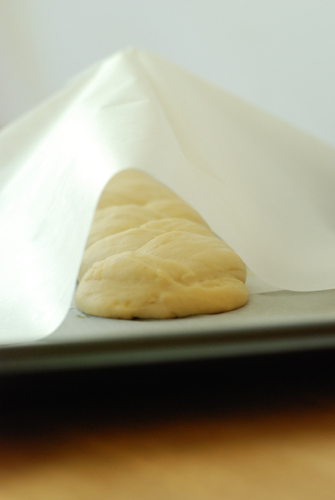
Partially, it's the food. There's hot, sweet challah in the oven right now, some really beautiful fruit on the counter, and onions and garlic browning on the stove.

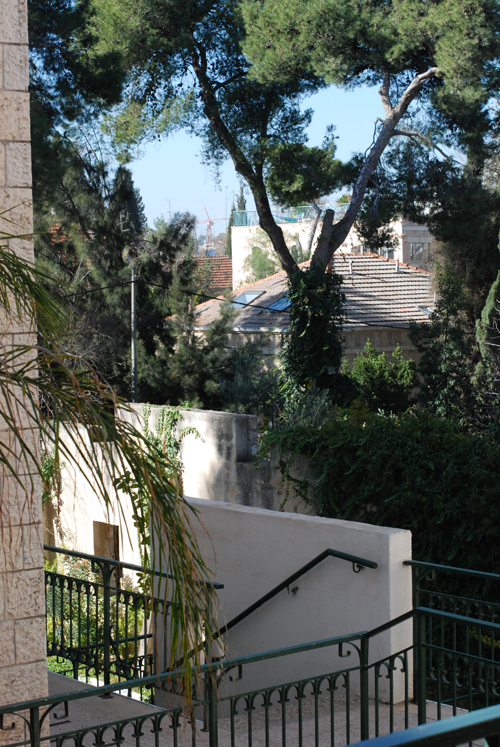
It's also the scenery. It's 65 degrees, there's not a cloud in the sky, and the view from our window is enough to make anyone swoon.

It all boils down to this: I'm only here once a year or so, but for some inexplicable reason, Jerusalem feels like a second home. I don't make itineraries like I do when I'm in other countries; I don't plan to see special exhibits or even make reservations at fancy restaurants. What's important to me here is seeing the people I love, soaking in the beautiful weather, eating as much fruit and vegetables as I can get my hands on, and walking around my old neighborhood for as long as my feet will stand. And of course, I've got my camera here with me, so I'll do my best to document my time here and share it with you.

I can promise some really, truly good eats -- the kind of local food whose recipes involve measurements by the handful and simply can't be matched. If I'm lucky, I'll even have some recipes to share. So tune in, enjoy, and to those of you celebrating today, Merry Christmas and Happy Holidays!