Spiced Chocolate Oat Cookies

I've been going on about spring now for a couple weeks. While I could do without the watery eyes and runny nose, I think these months are my favorite of the whole year. The earth is waking up from its nap; everything's in bloom, the produce is killer, and the markets are (my oh my!) very, very crowded.

It only makes sense, given my nonstop chatter about the end of winter, that I'd get a sudden and powerful molasses craving in the middle of April. It was undeniable: peas and asparagus be damned, this lady wanted ginger snaps.
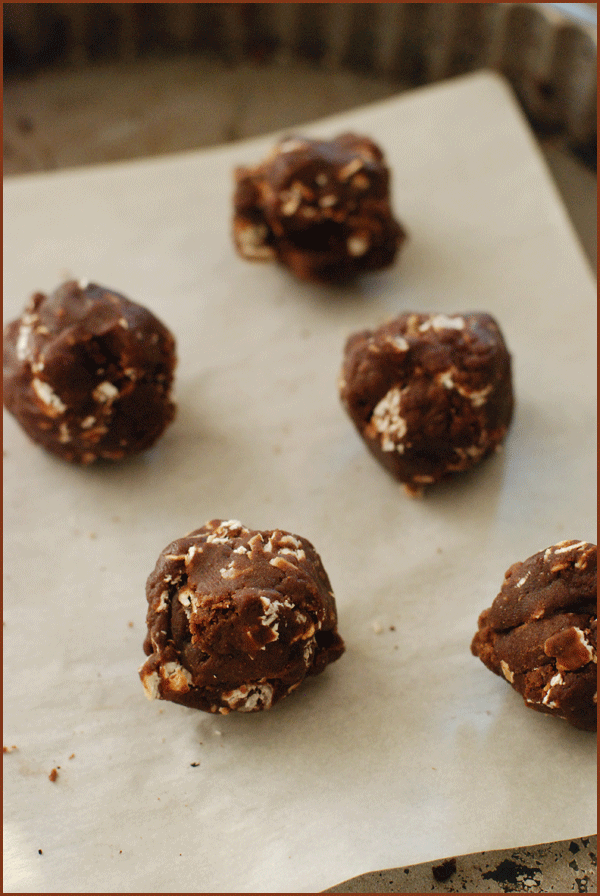
Well, I couldn't really go that far. The cold season has officially passed, and with it, the time for molasses chews and gingerbread and all those lovely things. But my molasses craving left me wondering if I couldn't find some creative way to spike a non-wintry dessert with the stuff.

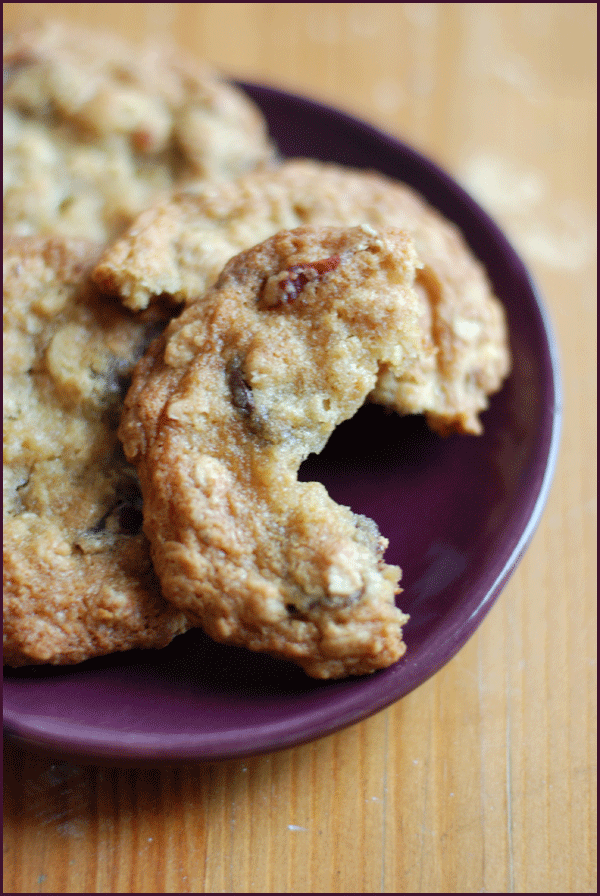
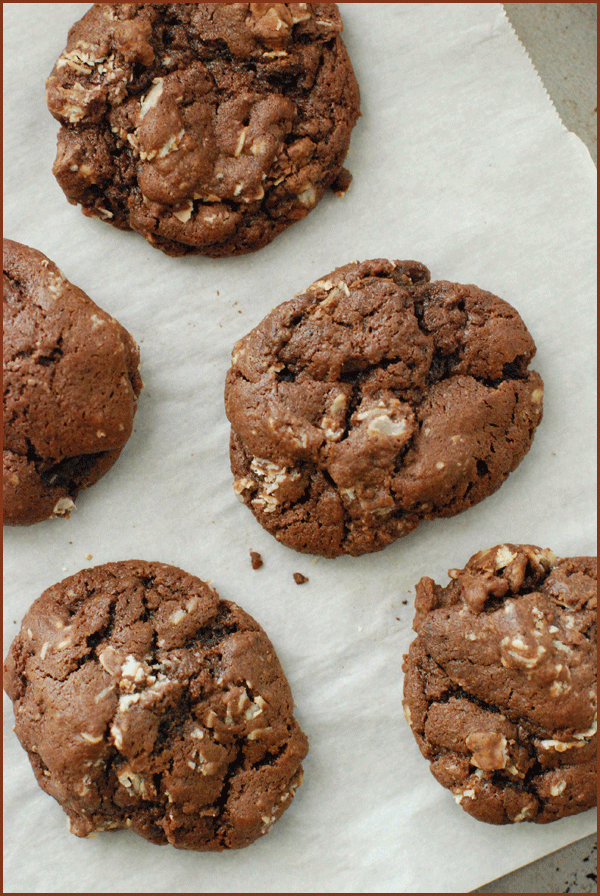
Enter these cookies, the love-child of molasses chew and chocolate-chocolate-chip, with some oats thrown in to acknowledge that other craving I have. These are no flabby cookies; they're thick, they're dense, and their innards are not unlike brownies. As you're taking them out of the oven, you'll give them a second look, your brow furrowed; they look underdone. Worry not: they firm up as they cool.
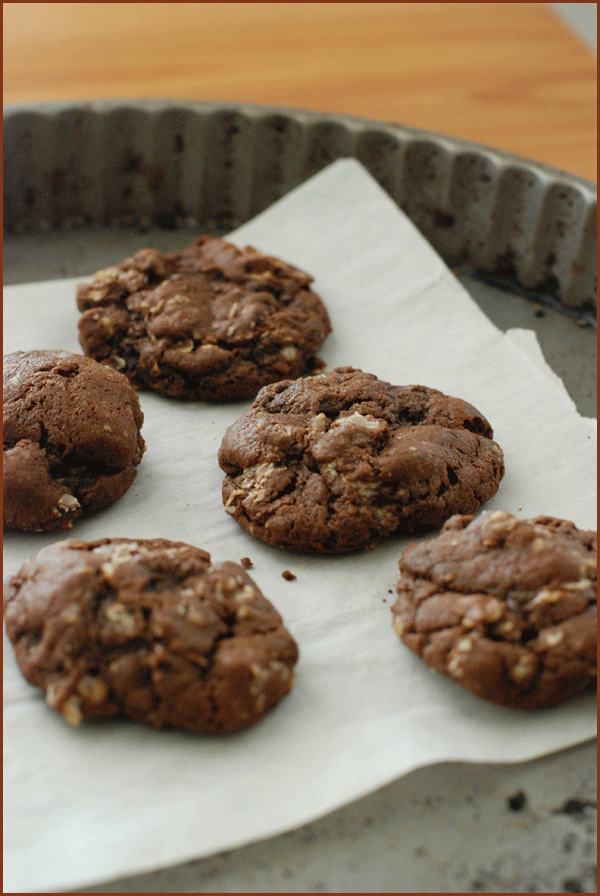
The result is a cookie that is at once comfortingly chocolatey and appealingly unfamiliar. The molasses and chocolate and oats combine into an almost gooey mix, and spices like cinnamon and ginger boost the molasses' flavor without nudging the cookies into winter territory.

One of the times I made these cookies, I used Equal Exchange's Spicy Cocoa in place of regular cocoa -- I loved the spiciness it added. Spicy cocoa is highly recommended: it really amps up the spice factor in these cookies.

I never thought I'd need a dose of winter in springtime, but these non-wintry cookies are the perfect cheat when the craving hits.

Spiced Chocolate Oat Cookies inspired by Dorie Greenspan's Baking from My Home to Yours

1 1/2 cups all-purpose flour 1/2 cup unsweetened cocoa 1/2 teaspoon baking soda 1/2 teaspoon salt 1/2 teaspoon ground cinnamon 1/4 teaspoon ground ginger 2 sticks unsalted butter 1 tablespoon water 1/4 cup turbinado or demerarra sugar (regular white will do in a pinch) 1 cup light brown sugar 1/4 cup molasses 8 oz bittersweet chocolate, coarsely chopped 2 large eggs 1 1/2 cups oats

In a medium bowl, mix flour, cocoa, baking soda, salt, cinnamon, and ginger.

In the bowl of a double boiler, melt butter and water together. When butter has mostly melted, add sugar, brown sugar, molasses and chopped chocolate. Stir just until everything is melted; you don't want the butter to separate or the chocolate to get chunky, so remove the bowl from the heat when everything has melted, even if the sugar granules haven't fully dissolved.

Off the heat, whisk in the eggs one at a time, whisking each time to incorporate. The mixture will start to look shiny. Add the dry ingredients, stirring just until they disappear. Add oats and mix just to incorporate. Scoop your cookies (by the tablespoon) onto parchment- or silicone-lined baking sheets, cover with plastic wrap and refrigerate at least 1 hour, up to several days. Bake at 350 degrees for 11-13 minutes until just done (they'll still look quite soft when you pull them out). Use a wide spatula to transfer cookies onto a rack, and cool to room temperature.
Cheesy Scones with Ramps

Here's a little something about me: I work in healthcare. Food is my hobby, my one love, but it's not, eh, my bread and butter. What actually pays the bills is doing research about healthcare reform. So you can imagine that with the passage of the new law, my professional life has jolted into high gear, and I've been workin' my little tuchus off like never before. Truthfully, work has been amazing lately. It's invigorating and empowering to work on something so relevant, so current, and so important. But it's definitely meant less time for the things and people I love. While I've tried to keep afloat posting new recipes, I probably haven't been as frequent a visitor to this space as I wish I could. I hope my posts haven't been too sparse; hopefully, things will calm down around mid-May, and I'll be back in the kitchen like it's my (dream-)job.

Meanwhile, let's talk about these awesome scones I made this weekend. I'll even share my foolproof trick for making scone dough, because I like y'all so much. That and more, after the jump.

One of the hallmarks of spring on the east coast is the sudden appearance, and almost-as-abrupt disappearance, of ramps. These onion-like greens, which grow wild for about five seconds at the start of the season, are treasured for their vegetal pungency and uber-freshness. They've got a tiny bulb at one end and a thin, delicate stalk at the other. They're fantastic in spring vegetable stir-fry, on crostini or focaccia, or in quiches and omelets. They're also the perfect addition to scones and biscuits, a would-be understudy for scallions that steals the show.

Now, I checked, and this is the first scone recipe I've posted on this site. Know why? Because so many scone recipes boast airy, light, flaky, buttery breakfast fare, but actually yield dense, brick-like concoctions that leave that horrid chalky sensation on the roof of your mouth after eating them. You know what I'm talking about. Why spend time perfecting scones when you can just....make biscuits?

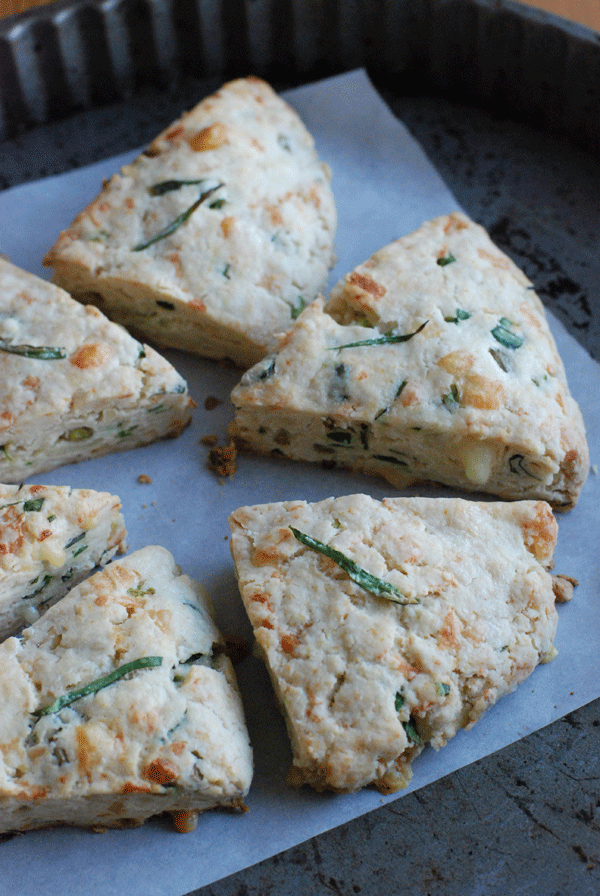
Well, I'm officially a scone convert. Or maybe I'm just a Karen DeMasco convert; DeMasco is the pastry chef at Locanda Verde in New York, and her book, The Craft of Baking, has yet to let me down. (Remember that blueberry tart? Yea.) Here's yet another successful recipe from her book, for scones so buttery, so flaky, so perfectly crunchy on the outside from the browned dough and crispy cheese bits, you'll never need another scone recipe again. With suggested modifications for savory versus sweet scones and explanations about the proportions of each ingredient, this recipe is versatile and thorough. I think, after last weekend, I'll be making scones much more often. I also think I'll be using this recipe every time.

Cheesy Scones with Ramps adapted from Karen DeMasco's The Craft of Baking

As I mentioned above, DeMasco offers modifications and proportions for sweet vs. savory scones, as well as a variety of possible add-ins. Because you really, truly should buy this book, I'm including only the actual recipe that I made. The tips for making other scones are worth the price of the book alone -- and trust me, there's so much more where this came from.

I used mostly cream with just a splash of buttermilk, but the cup of milky liquid can be as much or as little of one or the other as you like. DeMasco calls for 1/2 cup add-ins total, but I cut the salt a bit in order to add extra cheese. Other than that, I pretty much followed her instructions. Have I mentioned the results were delicious?

Finally, my scone dough trick: no, I didn't forget! Keep reading.

1 3/4 cup flour, plus some extra for rolling 1 tablespoon & 1/2 teaspoons of baking powder 2 tablespoons sugar 1/2 teaspoon salt 1/2 teaspoon pepper 6 tablespoons cold butter, cut into small pieces 1/4 cup Appenzeller or other semi-soft Swiss cheese, cut into a small dice 1/4 cup chopped ramps, plus a few slivers to top scones (optional) 3/4 cup heavy cream, plus 2 tablespoons for brushing scones 1/4 cup buttermilk

In the bowl of a stand mixer fitted with the paddle attachment, mix flour, baking powder, sugar, and salt. Add the butter. Put bowl in freezer for 5 minutes to chill the flour. Then beat the mixture on low speed if using a mixer) until the butter is broken up into pebble-sized pieces, about 3 minutes.

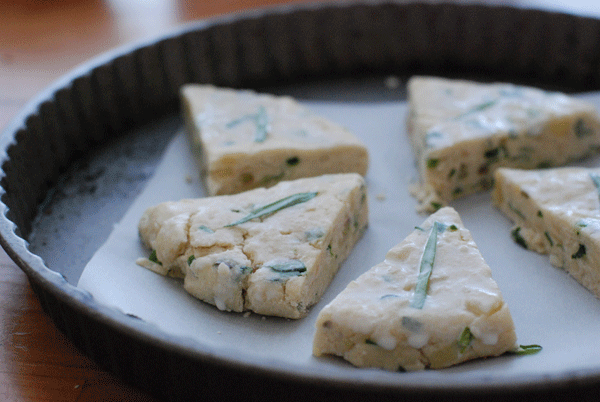
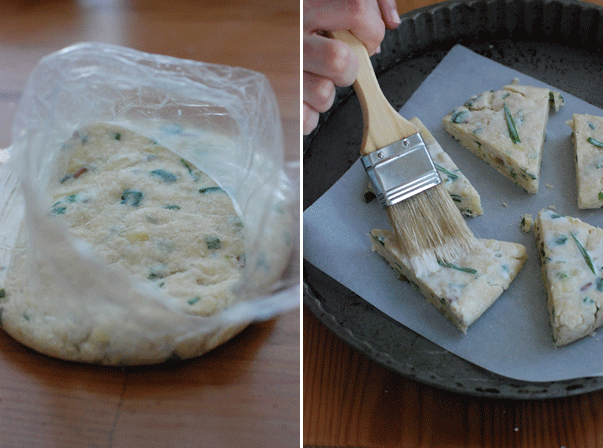
Add the cheese and ramps. Then pour heavy cream and buttermilk into the bowl and mix just until dough comes together. But these are scones, so the dough probably won't just "come together." In that case, (HERE'S MY SCONE TRICK!), empty the contents of the bowl into either 1 quart-sized bag or two sandwich baggies, and press the dough inside the plastic until it actually does come together and stay that way (this has the added benefit of keeping your hands clean!) Mold the dough into one or two disks (I made two, for more equilaterally shaped scones; one disk will yield scones the shape of pie slices) and refrigerate about 2 hours or stick in the freezer for 15 minutes.

Preheat oven to 375. Roll out disk on lightly floured surface to form one 7-inch round or two 3-4-inch rounds. Cut 12 slices from the large round or 6 wedges from each of the smaller rounds, and arrange on a baking sheet (no need to leave much room between the scones). Lay a sliver of ramp atop each scone, then brush with cream (this will aid the browning process).

Bake about 20 minutes, until golden on top and browned on the bottom. Serve warm, with plenty of butter and perhaps a bit of ramp pesto (yum!)

Oatmeal Cranberry Chocolate Chip Cookies

At this point, my quest to find the perfect oatmeal cookie has spanned several years. I've tried crisp, lacy varieties, which I find too unsubstantial. I've made those big, hunky ones -- the kind where two sticks of butter get you a mere six uber-bad-for-you cookies -- but they're so big, they're practically the blondies of oatmeal cookies: not what I'm looking for. I've tried raisins and chocolate chips, dried cranberries and dried cherries, even added pumpkin for a seasonal take on the classic. None has hit the spot.

My perfect oatmeal cookies are full of oats and studded with raisins. They're mighty crisp on the edges, but the middles have some height and a lot of chew. The batter has plenty of vanilla and a whiff of cinnamon. When you bite in, there's plenty of cookie to sink those teeth into.

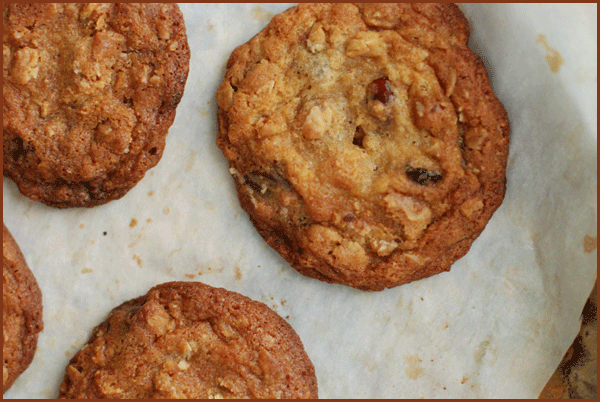
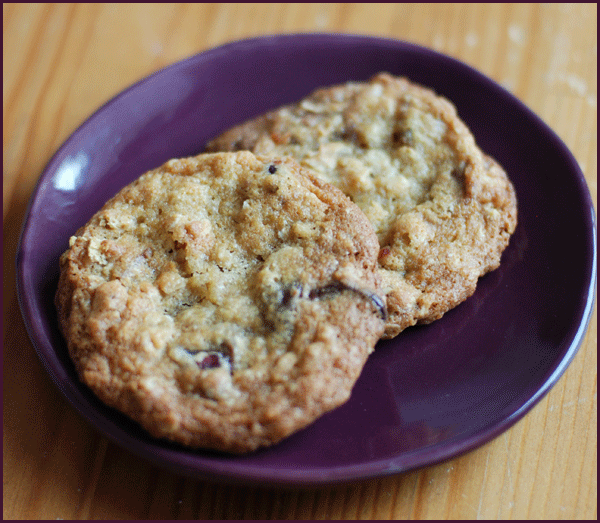
I'll spoil the end of the story now, and say unabashedly that the search continues. What I'm posting here is not the ideal oatmeal cookie. But you know what? It's okay. As oatmeal cookies they may score average, but as cookies, they're just wonderful. They achieve that perfect balance of softness and chew, the sugars practically caramelized from an unusually long mixing period and an extended stay in the oven. The oats -- more sparse than in traditional oatmeal cookies, but in just the right proportion here -- add heft and home-iness. The tart cranberries and sweet, bitter chocolate cut through the rich butter and caramelized sugar, both of which are present in great proportions. I'll say it: these cookies are kinda awesome.

In making these cookies, I used the now-famous recipe for "Compost Cookies" from Christina Tosi, baker-savant at David Chang's Momofuku empire. The recipe provides a backbone upon which any number of delicious combinations can be based. Tosi recommends quirky additions like crushed potato chips and salted pretzels. I confess that I made a round of this dough with those items, and that the cookies came out pretty damn good. That said, I favor these, with more wholesome ingredients. For the adventurous, I've included Tosi's recs below.

Oatmeal Cranberry Chocolate Chip Cookies adapted from Christina Tosi of Momofuku

1 cup (2 sticks) unsalted butter 1 cup granulated sugar 3/4 cup light brown sugar 1 tablespoon corn syrup, optional 1 teaspoon vanilla extract 2 large eggs 1 3/4 cups all purpose flour 2 teaspoon baking powder 1 teaspoon baking soda 2 teaspoons kosher salt 1/2 cup chocolate chips 1/2 cup chopped toasted pecans 1/2 cup dried cranberries 1 cup oats OR: instead of the oats, include 1.5 cups of crushed pretzels, potato chips, crackers, you name it instead of the pecans/chips/cranberries, use 1.5 cups rolos, snickers, reeses, m&ms, etc

In a stand mixer with the paddle attachment, cream butter, sugars and corn syrup on medium-high for 2-3 minutes until fluffy and pale yellow in color. Scrape down the sides with a spatula.

On medium-low speed, add eggs and vanilla to incorporate. Increase speed to medium-high and start a timer for 10 minutes. During this time the sugar will dissolve, and the mixture will turn pale yellow and double in size.

When 10 minutes are up, turn mixer to low and add flour, baking powder, baking soda and salt. Mix 45 - 60 seconds, until dough just comes together and dry ingredients disappear. Scrape down sides of the bowl with a spatula.

Still on low, add in oats and mix for 30 seconds, just to incorporate. Add in pecans, cranberries, and chips, mixing again on low speed until they are evenly distributed.

Using a 6 oz. ice cream scoop, portion cookie dough onto a parchment lined sheet pan. Set cookies about 2.5 inches apart.

Set a layer of plastic wrap over the cookie-filled sheet and wrap tightly. Refrigerate for a minimum of one hour or up to 1 week. Don't skip this step or your cookies will be runny!

7. Heat the oven to 400. Take the plastic off cookies and bake 9 to 11 minutes.

At 9 minutes, the cookies should be browned on the edges and just beginning to brown towards the center. Leave the cookies in the oven for the additional minutes if cookies still seem pale.

8. Cool cookies completely on the sheet pan before transferring to a plate or an airtight container At room temperature, cookies will keep five days.

Smothered Cabbage Risotto

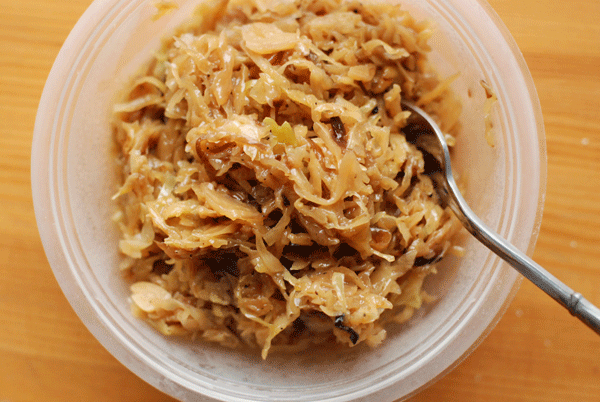
Among the oft-neglected cookbooks on my shelf is a big, light green volume called Essentials of Classic Italian Cooking. It's by Marcella Hazan, the justly venerated Italian cookbook writer notorious for her particularity, her precision, and her deep understanding of proper Italian cuisine. While the recipes reflect that precision (you can practically hear her preemptively chiding you for matching pasta with the wrong sauce), some of them are really quite simple. Case in point: smothered cabbage. A whole head of cabbage is shredded thinly, then braised low and slow with olive oil, onion and garlic, salt and pepper, and a shake of red wine vinegar. To say it's simple is to understate it a bit.

If you have extra cabbage (though really, why would you? I made a double recipe so I wouldn't be forced to choose), Hazan offers a modest recipe for Rice and Smothered Cabbage Soup. It's basically chicken broth, rice, the cabbage, and a dusting of permigiano reggiano cheese. A one-pot wonder.

The night I made the cabbage was dark and rainy -- nothing like the beautiful spring weather that's suddenly appeared this week. My sweatshirt and I were in the mood for something substantive and comforting, but also a bit luxurious. No sweat: I used basically the same ingredients in Hazan's soup to riff a bit and make risotto. If you're one of those people who think risotto is mighty difficult, hark! It's just not. Watch as I spell out the instructions in less than 50 words:

Sweat onions in oil. Add rice and salt. When hot, add wine. Then add broth by the ladelful, stirring intermittently. replenish broth as rice absorbs it. Taste at 12 minutes. Adjust for salt. When cooked but still al dente, with thickness of polenta, remove from heat. Add cheese. Eat.

And that's almost exactly what I did -- except that instead of wine, I added a couple tablespoons red wine vinegar. And I added the cabbage at the end. People, would you please just make this already? It's a miraculously luxurious dish made from downright humble ingredients. I guarantee it won't disappoint.

Smothered Cabbage Risotto inspired by Marcella Hazan

For the cabbage:

* 2 pounds green or Savoy cabbage * 1/2 cup chopped onion * 1/4 cup olive oil * 1 tablespoon chopped garlic * salt * freshly ground pepper * 1 tablespoon red wine vinegar

Clean cabbage and discard tough outer layers. Slice cabbage in half lengthwise, and shred as finely as possible using either a sharp knife or a mandoline. Be sure to remove the inner core of the cabbage -- it's too tough to cut.

Heat oil in a large saute pan over medium heat. Add onion and cook, stirring regularly, until golden, about 5 minutes. Add garlic. When garlic takes on some color, add cabbage. Using tongs, turn cabbage once or twice to incorporate it with the oil and onions, and cook until wilted.

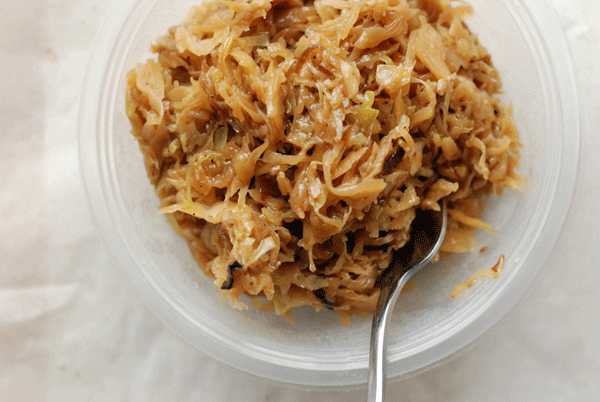
Add vinegar, salt, and pepper. Turn heat to lowest possible setting, cover pot, and cook at least 1.5 hours, stirring occasionally, until soft, tender, and practically melted. If at any point the cabbage looks dry or it looks like the bottom may burn, add a tablespoon of water to moisten. When cabbage is fully cooked, taste and adjust for salt, pepper, and vinegar. You want the cabbage just a very little bit tangy -- mostly sweet and soft and buttery. When cabbage is ready, transfer to a bowl and wipe out pot.

For the Risotto:

* olive oil * 1.5 cups Arborio rice * 6 cups homemade chicken or vegetable stock, simmering on the stove * half a recipe or more of the Smothered Cabbage * 2 tablespoons red wine vinegar, divided * 2 tablespoons butter * 1/3 cup parmesan cheese

Swirl a couple tablespoons of olive oil in the same pot you used to make the cabbage. Heat over medium. Add rice and use a wooden spoon to stir and evenly coat the kernels with the olive oil. When rice is hot to the touch, add 1 tablespoon red wine vinegar and 1 ladle of stock. Lower heat to medium-low and cook, stirring continuously, until stock evaporates. Add more starch and continue stirring. As you continue adding stock and stirring, the rice will emit some of its starch, which will thicken the risotto and make it silky. Around 10 minutes into cooking, add two ladles of cabbage. Stir to incorporate and continue stirring and adding stock as before. At around 13 minutes, begin tasting the risotto; adjust seasoning and add more cabbage if desired. Continue cooking, adding stock as necessary, until rice is done but ever so slightly al dente. Add some or all of remaining tablespoon red wine vinegar to add slight tang. Off the heat, add butter and parmesan cheese. Stir to incorporate and serve immediately.