Foodbuzz 24x24: A Sushi and Sake-Tasting Adventure

Much of the Japanese food in DC is eaten in one of two ways: out of plastic trays delivered to your dorm room or office, or at the bar at one of two high-end establishments, eye to eye with the chef, and at great expense. The Sushi Taro of yore, which struck the precise midpoint between these two extremes, has been replaced by a third expensive (and excellent) restaurant.

Taro and its ilk are reserved for special occasions (say, engagements), and the other places are wholly unremarkable. So what's a gal to do when she wants interesting Japanese food that doesn't break the bank? Where are the mid-range, high-quality, lively-atmosphered Japanese restaurants? As it happens, they're across town.
It seems my corner of Northwest is less of a destination for aspiring restauranteurs than it used to be. The new guys are setting up shop in NoMa -- North of Mass (or, as it's been diminutively tagged, NoMan'sLand). Why? Beats me. 5th and K isn't exactly the center of town. But judging by the crop of promising new restaurants in the area, I'm gearing up for more trips that direction in the future.

The new guys, in this case, include Kushi, and thanks to the kind folks at Foodbuzz, I ate there on Saturday night with a few friends. The trip was part of Foodbuzz's 24,24,24 event: 24 blogs, 24 cities, 24 memorable meals. Someone across the country probably hosted an Italian dinner party, and I was off to Kushi. The goal: wrap my head around sake, and see what all the fuss is about. Also: eat some really good fish.
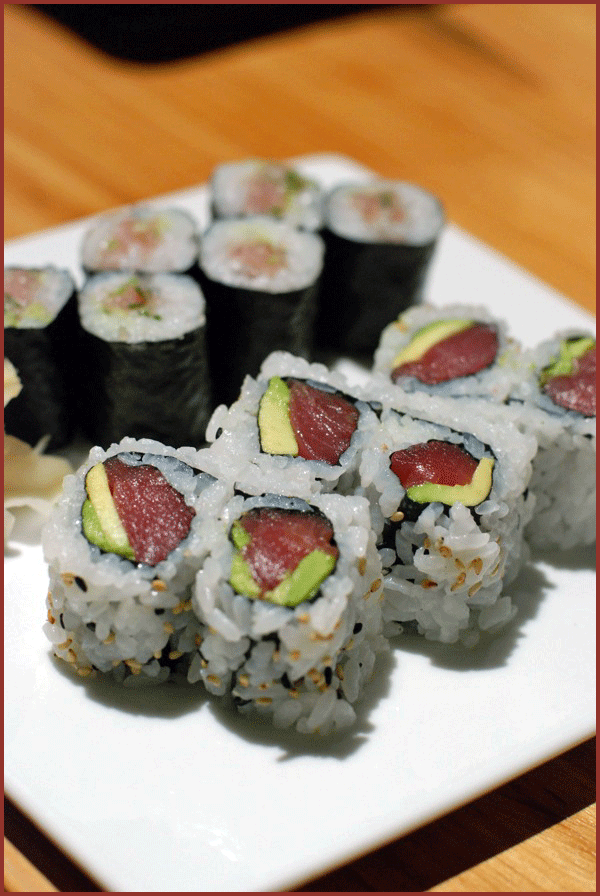
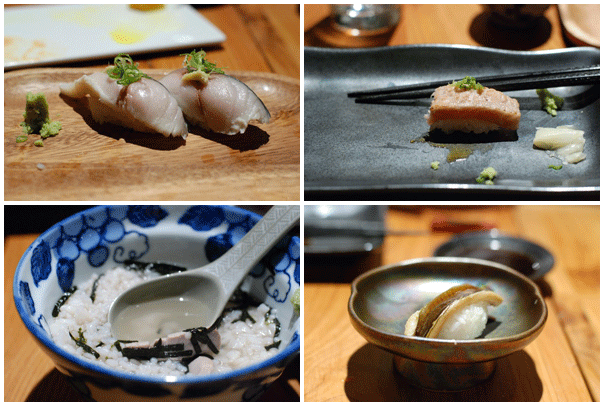
Saturday night is certainly not the ideal time to eat sushi, since fish deliveries happen Tuesday through Thursday. The freshness of the fish at Kushi would have you fooled, though. Yellowtail tasted like the ocean while retaining its distinctive tang, and a nigiri of saba, or mackerel, was slick and sweet but not the least bit oily, one of the best bites of fish I've ever had.

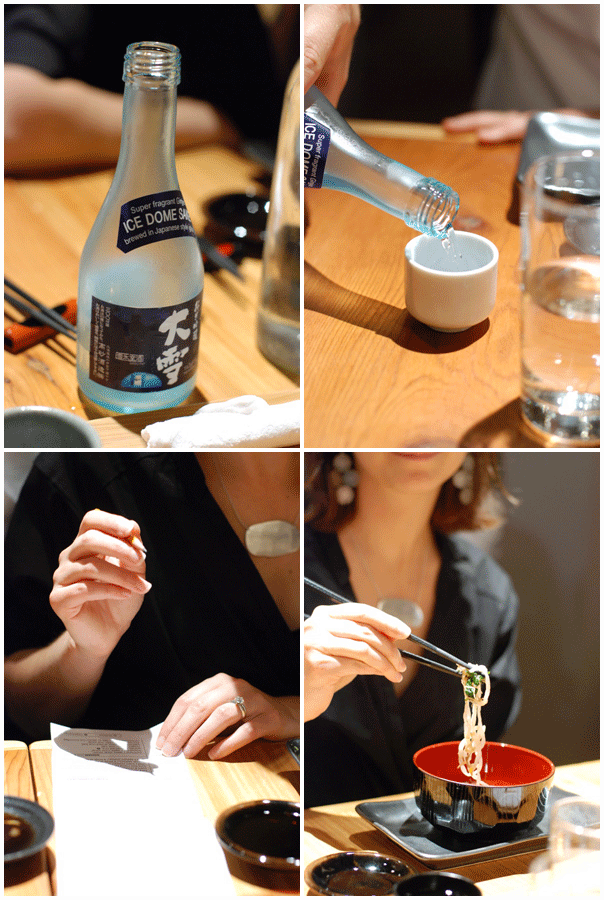
But let's back up. Before a piece of fish even passed our lips, we encountered the only gimmick of the evening: a server came by with a tray full of different sake cups, and let us each pick one. Shortly thereafter, we were sipping (actually, some of us were gulping) cups of cold, semi-sweet sake. Over the course of the evening, we worked our way from sweet sakes to drier ones, which, if you're used to drinking wine, seems counterintuitive. But sweet sake isn't actually all that sweet -- it's just lighter, less intense, more refreshing. The drier varieties stood up to the fish better than those early cups.
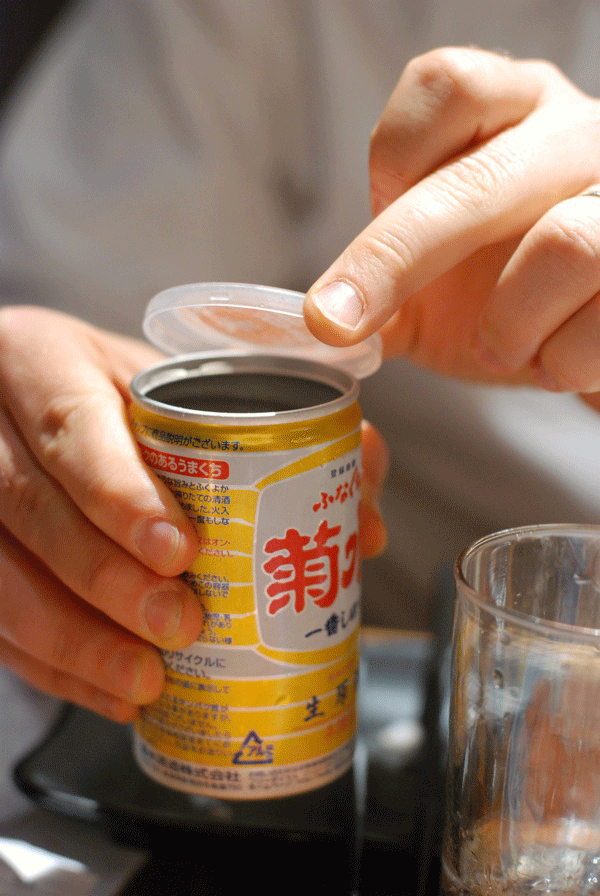
Here's another counterintuitive thing about sake: some of the nice stuff actually comes in a can. When our server set our last order of sake down on the table, we all watched in mild disbelief as she lifted the tab, spritzed it open, peeled back the metal cover more familiar on canned fruit cocktail, and replaced it with a plastic cap. When she saw our faces, she laughed; she probably gets that response often. The cans are underrated here in the States, she said -- she walks down the street in New York drinking one, and people assume it's soda. Good to know.

Whoever first thought to pair sushi and sake is a genius. The fish, slick and fatty, contrasts with the sweet tanginess of the rice, and the fermented, slightly bitter but very refreshing notes of the sake help wash it all down. Sake operates like pickled ginger, the pregnant pause between bites and a palate cleanser of sorts.

When you're alternating between smooth slices of salmon atop perfect logs of rice, humble "onigiri" rice balls with cooked fish tucked in the center, skewers of robata (charcoal-grilled protein and vegetables), braised daikon with three kinds of miso, crispy soy-glazed fried chicken, and more, those palate cleansers are key. They give the meal some flow, separating slurps of soup from bites of crispy, luscious duck leg. And I slipped "braised daikon" in there with nary an explanation -- an unjust treatment of one of my favorite dishes of the evening. The japanese white radish had been braised in dashi (fish and seaweed stock) until fall-apart tender, the small chunks of vegetable then cloaked in three types of sweet, mellow miso, all utterly addictive.

Dishes as complex as these deserve competent and unobtrusive service, and Kushi has that in spades. Our server was gracious and diligent, but casual and unpretentious. She chatted just enough to make us feel at home, but avoided the in-your-face "are you ready to experience genius at work?" shtick present at some other new restaurants in the area. This is straightforward good food. Actually, really good food. But feel free to show up in (nice) jeans. Nothing about Kushi is stuffy.
Filled to the brim with fish and sake galore, we ended our meal the way all meals should end: with ice cream. I think most of Kushi's selections come from Dolcezza, an excellent gelateria here in DC -- but at least one, the pineapple pepper sorbet, is made in-house. We had that, along with the meyer lemon-sochu, the ginger, and everyone's favorite -- sea salt. Yes, sea salt ice cream. A simple base of eggless vanilla is tempered with just enough sea salt that the ice cream is curiously, wonderfully savory, not too sweet, and not downright salty, as we'd worried it would be. I'll be trying this at home soon.

It probably goes without saying that our meal at Kushi was memorable. If you're ever in the area, don't be lazy...go to 5th and K and give it a try. Both the sushi and the sake won't disappoint.

Kushi Izakaya 465 K St, Washington (202) 682-3123
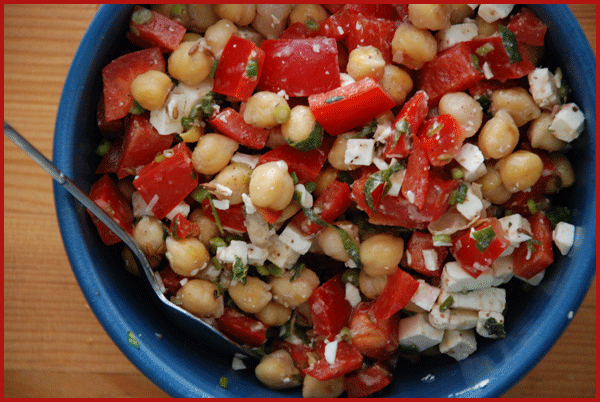
Mediterranean Chickpea Salad

It's Memorial Day weekend, and barbeque is king. No doubt you've seen more than enough burger recipes in the past 48 hours; don't worry, that's not what I'm sharing today. No, no. I'm here for the vegetarians and the newly-minted lessmeatarians. Let's make sure they (um, we) are well cared for this holiday weekend. And, while there are approximately several thousand potluck-friendly vegetarian recipes, another never hurts. Because we all know Monday's side dishes will be Tuesday's tupperware lunch and Wednesday's leftover dinner. So let's make'em good, shall we?

If you make nothing else this weekend, you'll be in great shape with this chickpea salad. It is dead simple to make, people. Embarrassingly so. I soaked and cooked fresh chickpeas, but if we're being perfectly honest, there's no need to go to all the fuss. Canned are absolutely fine here. And I know I often say what follows, but that's because it's true: this recipe is by no means set in stone. It can be altered in any number of ways, a few of which I list here. Don't get hung up if you're missing one or two of the ingredients. Green garlic can swap out for regular garlic, scallions for red onions, cumin seeds for the ground stuff, anardana for sumac, and now I'll stop listing. If all you've got is chickpeas, cumin, feta, and lemon juice, you're 90% of the way there. And while I'm sure tomatoes would be great in this salad the first time around, I really can't stand them once their refrigerated, as leftovers always are, so I've left them out. Feel free to add them back in, if you'd like. If you're cooking vegetarians, lessmeatarians, or plain ole' people who can't eat just burgers for 48 hours straight (yes, I recognize that that's not an all-inclusive category), I guarantee this chickpea salad will please across the board.

Also, because this should never go without saying: let's all take a couple moments this weekend to recognize those who have given their time, their energy, and their lives in service to our country. Our freedom owes in no small measure to their sacrifices. Say thanks with words, say thanks with chickpea salad; either way, let's all show our gratitude.

Mediterranean Chickpea Salad heavily adapted from a recipe in the New York Times

1 pound chickpeas, soaked and cooked; if using canned, rinse 1 large red bell pepper, cored, seeded, and coarsely chopped 2 scallions, chopped (can substitute1/4 red onion, chopped) 1/4 cup small kalamata or greek olives, halved (optional) 1 medium-sized hunk (about 4 ounces) feta cheese, cubed a handful various herbs, roughly chopped (I used thyme, tarragon, mint, and dill; basil and parsley would also be great)

juice and zest 1 lemon 1 tablespoon red wine vinegar (can substitute balsamic) 1 bulb and stem of green garlic, chopped (can substitute 1 clove regular garlic, chopped) 1/2 teaspoon cumin seeds, toasted in a dry pan over medium heat until fragrant (can substitute 1/2 teaspoon ground cumin) 1/2 teaspoon anardana powder (dried crushed pomegranate seed; can substitute 1/2 teaspoon sumac) 2 tablespoons yogurt salt and pepper to taste

In a medium serving bowl, combine chickpeas, pepper, onion, olives, feta, and herbs. In a small mixing bowl, combine lemon, red wine vinegar, green garlic, cumin seeds, anardana, and yogurt. Mix with a fork until combined. Add salt and pepper to taste. Pour dressing over salad and mix to distribute. Serve. (Salad will keep for several days.)

A Corn Soup for Summer or Winter

First, dear readers, a housekeeping item. The spot of press that I've gotten over the past couple months was truly unexpected; I've spent a couple years in this here little corner of the web, so when people started to take notice, I wasn't quite prepared. But as of yesterday, I've got a shiny new press page that shares links to places where NDP has gotten publicity, so that a) I don't forget about where the blog has been profiled -- I'm a bit forgetful -- and b) I can share the good news with you, my wonderful readers and chearleaders. Thanks in advance for checking it out!

Now onward and upward, because I've been meaning to tell you about this soup for months.

Frozen corn isn't exactly a staple in this house. We've got corn on the cob coming out of our ears (hehe), a freezer door full of six or seven different kinds of polenta, fancy heirloom hominy, and copious amounts of popcorn. But frozen corn rarely makes it through the door.

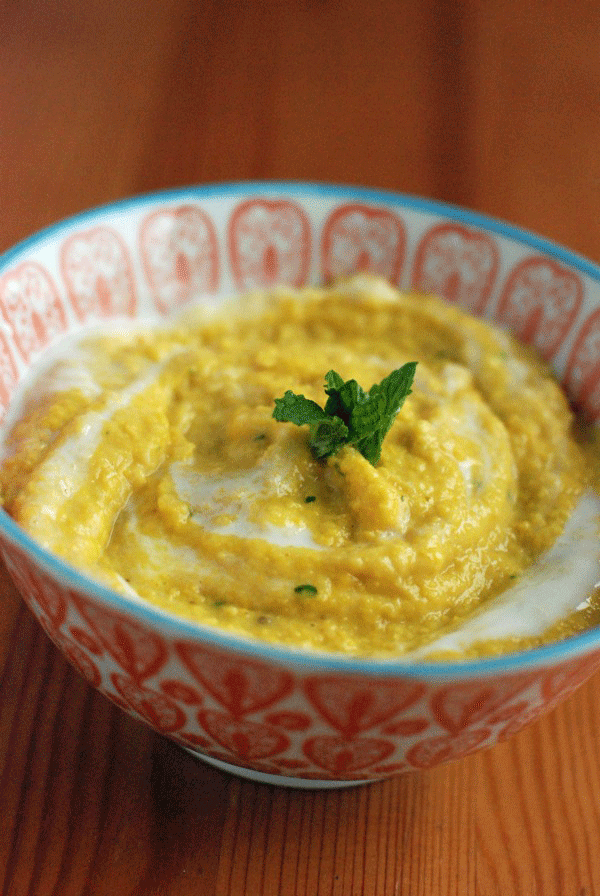
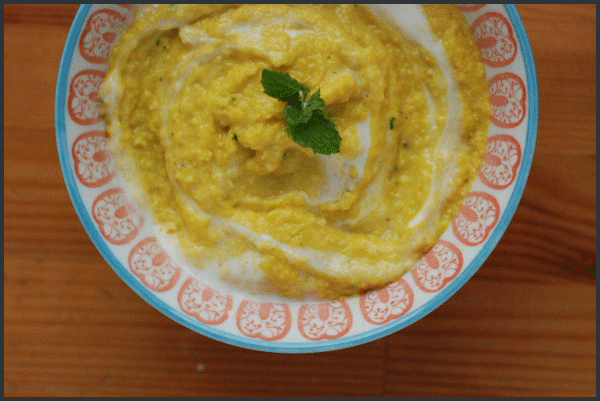
All that's changed, though. In the past couple months, I've made variations on this soup at least four times. It's a simple concept, really. Shallots are sauteed in butter (game over), corn and broth are added with plenty of good spices, and after a long 10 minutes on the stove, the soup is cooled, blended, and finished with buttermilk. Done.

But oh, you know me. I'm not one to leave a recipe alone. I've always got to tinker. So I tried adding coconut milk instead of buttermilk, for a Thai-inspired version. Then I added half coconut milk and half buttermilk (the perfect balance, if you ask me). I tried it with chicken broth and vegetable broth; I even tried it with plain water. (Not bad at all.) All said and done, it's pretty hard to go wrong with this soup. The weather hasn't even turned miserably hot, and already, it's a staple.

But by the way, don't wait for summer to make this, because truly truly, it's great both hot and cold. No excuses: make this one now.

Corn Soup With Curry and Mint adapted from F for Food's recipe on Food52

30 g shallot (about 2), chopped 2 tablespoons butter 1/2 teaspoon ground coriander 3 tiny dried red chilies, de-stemmed 1/4 teaspoon ground yellow mustardseed 1/2 teaspoon curry powder 1 teaspoon dried mint 1 tablespoon salt 10 ounces frozen corn (no need to thaw) 3 cups vegetable or chicken broth (I actually preferred vegetable) 1 cup coconut milk 1/2 cup buttermilk (feel free to substitute all buttermilk or all coconut milk, if you prefer) several baby leaves fresh mint, for garnish 1/4 cup creme fraiche, for garnish, optional (when I don't have any on hand, I just swirl in some buttermilk or yogurt)

In a large pot over medium heat, saute shallot in butter until translucent and fragrant, about 5 minutes. Add chilies and all other spices, and salt. Cook about 1 minute, until spices start to release their aromas. Add corn and broth and stir to combine. Turn heat to medium-high, and cook 10-15 minutes. Taste and adjust salt as necessary. Add coconut milk, and stir until combined.

If you have an immersion blender, turn off the heat and blend soup until relatively smooth. If you don't have an immersion blender, transfer the unblended soup to the refrigerator to cool off about 20 minutes, then blend soup in a blender or food processor. Don't skip the cooling step, because hot soup can easily explode out of the blender, and yikes...that would suck.

Taste and adjust seasoning again, remembering that if you're serving the soup cold, the spice and salt will be somewhat muted.

For serving the soup hot: if you blended using an immersion blender, add buttermilk and stir to combine, ladle into bowls, top with a dollop of creme fraiche and a sprig of mint, and serve immediately. If you had to let the soup cool before blending it, reheat, then follow above instructions.

For serving the soup cold: add buttermilk, blend or stir to combine, and refrigerate soup. Follow the same serving instructions as above. Soup may thicken once chilled, so add water or broth to thin out as necessary.

Vanilla Custard Strawberry Tart

I find it hard to put a finger on what makes vanilla so special. It's the girl next door to chocolate's cheerleader popularity, the "best supporting actor" to every winning cake. Vanilla is so subtle, so modest, it's easy to take it for granted. Well, don't.

Since spring produce is in abundance, I've been playing around with fruit. You've seen me make my new favorite staple, rhubarb curd, and I've also whipped rhubarb into a lovely puree with thyme, inspired by yet another recipe on food52. But last week, the season's first strawberries cropped up, so I shifted gears. I love strawberry season: it rings in the months of shortcake and jam (I made fantastic preserved strawberries with guajillo chilies, based on Amanda's recipe on Food52). But when the whole market smells like strawberries, it'd be a sin not to serve at least some of the crop fresh and unadulterated. So I made a tart to showcase the sweet tartness of the early berries.

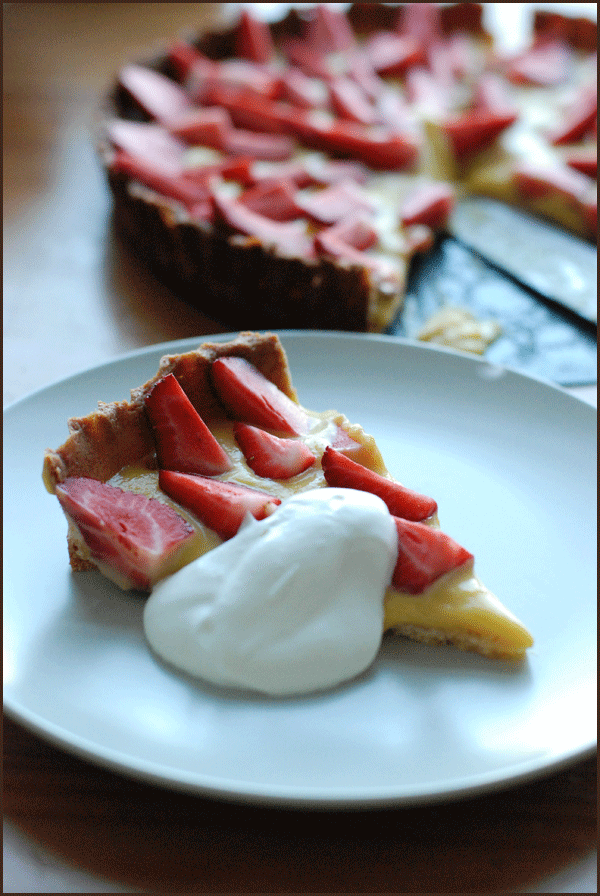
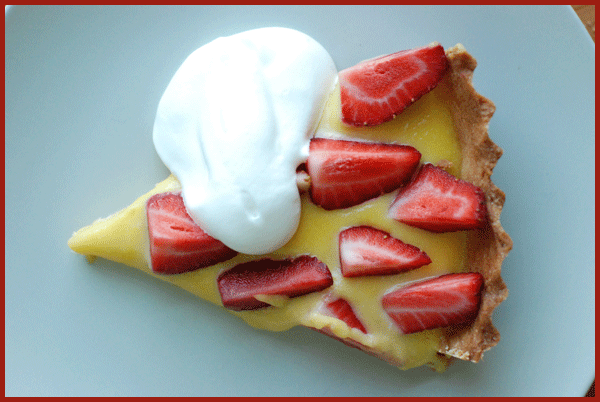
Since my rhubarb curd took home a win on Food52, I've been playing around with curds and custards, endlessly entertained by the ability of simple egg yolks to take on so many different forms and textures. I saw a recipe by Karen DeMasco (who is quickly becoming my dessert sensei) for a strawberry lemon curd tart, and decided to riff on the concept. First, I used a cornmeal tart crust (the leftover second half of the dough from this recipe). Second, instead of making straightforward lemon curd, which I find can overpower the gently tart strawberries, I made a vanilla curd, perfumed with a whisper of lemon zest and a drop or two of juice. The curd came out lovely, an ideal contrast to the strawberries. Topped with unsweetened whipped cream, it truly couldn't have been better.

No promises, but I think I've shaken my curd hang-up, for now. Have I passed along the bug?

Vanilla Custard Strawberry Tart

1/2 a recipe of the tart crust used here 1/2 cup whole milk 1/3 cup plus 1 tablespoon sugar 3 large eggs 3 egg yolks 1/2 teaspoon kosher salt 1 tablespoon lemon juice zest of one lemon 1 teaspoon vanilla seeds and pulp of one vanilla bean (reserve scraped bean for another use) 8 tablespoons unsalted butter, cut into small pieces, at room temperature

2 pounds (2 pints) fresh strawberries, hulled, rinsed, and halved (quartered if large)

Make crust according to the instructions shared here. On floured parchment paper, roll out dough to a 10-inch round. Transfer dough, on parchment, to refrigerator to chill 10 minutes. Then remove dough and transfer into an 8-inch tart pan, using the excess dough to patch any tears. Gently tuck dough into the crevices of the tart pan, and trim excess so that edge of dough is flush with edge of tart pan. Line with parchment or tin foil, fill with pie weights or beans or rice, and par-bake at 350 degrees for about 15 minutes, until the edges begin to turn golden. Remove the weights and foil or parchment lining, and bake 20 minutes more, until brown but not burned.

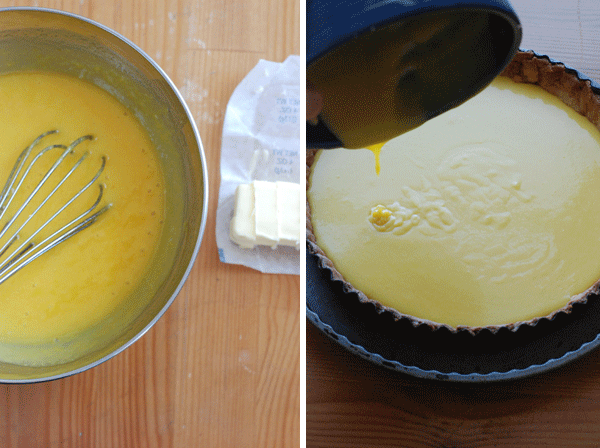
Meanwhile, in a medium saucepan, bring about 2 inches of water to a boil. In a medium heatproof bowl, whisk together milk, sugar, eggs, egg yolks, salt, lemon juice, lemon zest, vanilla, and vanilla bean pulp. Set the bowl over the saucepan and continue whisking as mixture heats up. After about 10 minutes of stirring, the mixture will have become thick enough that the mixing spoon or whisk will leave a trail. At this point, remove the bowl from the heat and let the curd cool slightly, about 5 minutes. Then whisk in butter, one tab at a time, until it has melted into the curd and the mixture is smooth.

Strain the curd through a fine-mesh sieve into the tart crust; use an offset spatula to smooth the top of the curd and distribute it evenly. Arrange the strawberries in concentric circles over the curd, starting on the outer rim and working your way inward. If not serving immediately, cover tart lightly with plastic wrap and keep in the refrigerator. Remove the outer ring of the tart pan to serve, and plate with a dollop of unsweetened whipped cream.