• Home
  • About
  • Recipe Index
  • Contact
Menu

Rivka Friedman

Street Address
City, State, Zip
Phone Number

Your Custom Text Here

Rivka Friedman

  • Home
  • About
  • Recipe Index
  • Contact

Pescado a la Veracruzana (Fish, Veracruz Style)

June 10, 2011 Rivka
DSC_0026
DSC_0026

I grew up in a dairy household. This fact always elicits some "huh"s, lotsa "really?"s and even a few "ugh!"s but that's the way it was, and I actually didn't mind it, mostly. About two times a year, I'd really crave meat - but the only real option was takeout from Royal Dragon, the local kosher Chinese joint. It was always eaten on paper, always lukewarm. I taught myself pretty quickly to be satisfied without it.

At Friday night dinner, most of our crowd served chicken, meatballs, brisket. We usually had fish. Salmon teriyaki, tuna with mango salsa, flounder with lemon herb vinaigrette. (Gosh, can you tell I grew up in the nineties?)

If these fish dishes made occasional appearances on our Shabbat table, there was one that was so regular in its appearances, and so beloved, it was practically a part of the family. That dish is Huachinango a la Veracruzana. My mom's version originated in an unassuming little cookbook called "Latin American Cooking." It's a scrawny little volume, doesn't look like much. The recipes in it are simple and straightforward, and in my totally-not-expert opinion, they seem authentic.
DSC_0012
DSC_0012
DSC_1085
DSC_1085
DSC_0014
DSC_0014

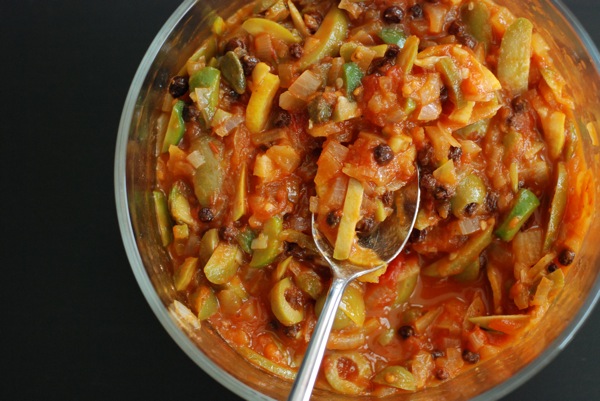
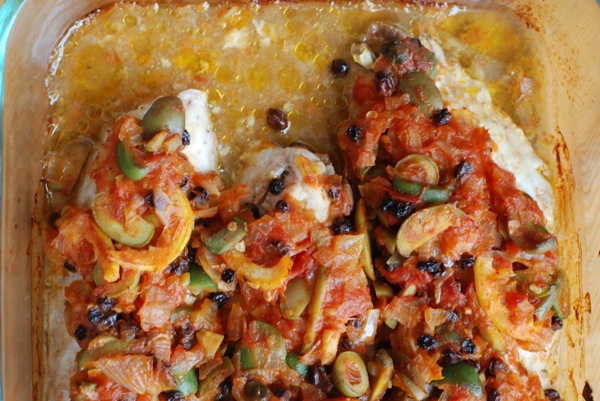
The best of the lot is my beloved huachinango. To my readers with delicate palates: for the faint of heart, this recipe is not! The snapper is baked in a plenty-spicy tomato sauce laced with capers, green olives and raisins. And, um, olive brine is one of the ingredients - so I guess this is a fish dish for those who like their martinis very, very dirty. (That's me.) It's sweet and spicy, sour and salty. It's addictive. I actually make extra sauce just to eat over rice.

Feeling curious? Try it.
DSC_0028
DSC_0028

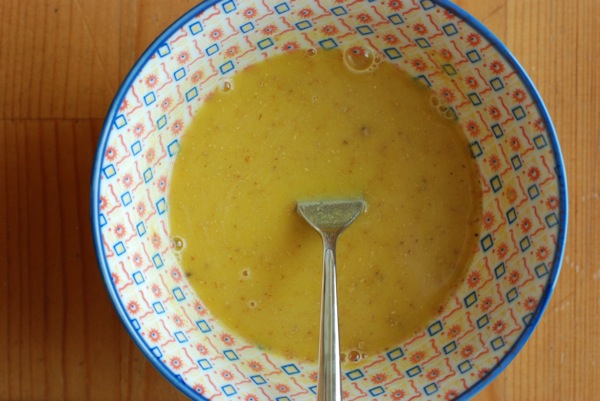
Huachinango a la VeracruzanaThis recipe is traditionally made with huachinango, or whole red snapper. I've had success making it with various kinds of white fish fillets - from tilapia to flounder and beyond - and it's a simpler dish that way, so that's what I recommend here.

As far as cooking, the recipe I've included is the more traditional - and more fussy - way to cook this dish, first pan-frying the fillets to crisp the skin, then making the sauce, and then combining the two in a sauce pan. When I'm making this for company, as I did when I photographed this recipe, I usually use the oven instead. For that method, you make the sauce first. Don't cook it all the way, since it'll have plenty of time in the oven: once you've added the jalapenos, olives, etc, skip the additional 5 minutes of cooking time and remove the sauce from the heat. Then, drain the raw fillets of their marinade, drizzle with some olive oil, spoon the sauce over the fish, and bake at 350 until a knife inserted into the middle of the fillet meets no resistance. My fillets took about 18 minutes; estimate around 8-10 minutes per inch of thickness, and check when the fillets should be close to done to ensure you don't overcook them.

3 cloves garlic, chopped 1 unsprayed lemon, juiced, peel reserved 1 unsprayed lime, juiced 3 tablespoons water 1 teaspoon cloves salt and pepper to taste 3 tablespoons vegetable oil 6 skin-on fillets red snapper, scaled and cleaned well 1/2 teaspoon cinnamon 1/2 cup vegetable stock 1 onion, halved and sliced 1 pinch dried oregano 1 bay leaf 1/2 cup raisins 1/2 cup tomato puree (fresh is best) 1 cup diced tomatoes, fresh if available about 5 pickled jalapenos, sliced (adjust to taste) 1 cup green olives, with pimento if available 1/4 cup olive brine 2 tablespoons capers 2 tablespoons fresh parsley or cilantro, chopped

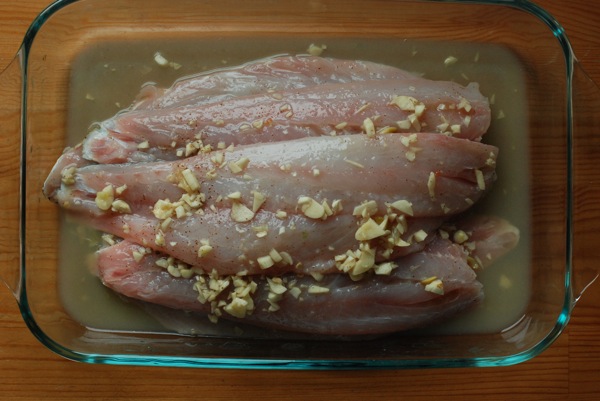
In large nonreactive bowl, combine garlic, lemon juice, lime juice, water, and cloves and mix to combine. Reserve the lemon rind -- you'll add that back in at the end. Add snapper fillets, coat each fillet with marinade, and leave to marinate in the fridge about 10 minutes.

In deep saute pan or shallow braising pan, preferably non-stick, over medium heat, add 3 tablespoons vegetable oil. When oil is hot but not smoking, add fillets skin side down, in a single layer, and cook until skin has crisped and released from pan, about 5 minutes. If necessary, do this step in batches -- you really don't want to crowd the pan.

When skin has crisped, transfer fillets to large plate and set aside.

Pour off any fat that has accumulated at bottom of pan above 1 tablespoon. Add onions, and saute until softened, 2 minutes. Add stock, bay, oregano, raisins, tomatoes, and tomato puree, and reduce heat to low. Cover and simmer about 10 minutes, until tomatoes have softened and flavors begin to come together. Add pickled jalapenos, olive brine, capers, reserved lemon rind, and half the olives. Cover and continue to simmer 5 minutes more.

Carefully add fillets back into pan in single layer, skin side up. Cook, uncovered, about 10 minutes, until fish is cooked all the way through but still tender and flaky. Add in reserved olives about 2 minutes before finishing; they should be warm, but retain that fresh flavor.

To serve, two options: Either bring the braising pan to the table and present the dish family-style, or spoon a scoop of sauce onto each plate and top with a skin side up fillet. Either way, sprinkle the chopped parsley or cilantro overtop and serve immediately.

In fish, main dishes, healthy
3 Comments

Fluffy Oat-Almond Pancakes

June 5, 2011 Rivka
DSC_0067
DSC_0067

I seem to have become infatuated with almonds in every form. I've been nibbling tamari almonds, a fantastic recipe from Mrs. Wheelbarrow, in between meals at work. I've put the lovely Mandelin almond paste I received from chefshop.com to use in some seriously good almond cakes. My latest experiment: pancakes, with almond flour. And you know what? they aren't even a little bit heavy.

DSC_0060
DSC_0060

Last weekend, the wife requested pancakes, and people, I'd have to be crazy to deny my lady pancakes even once. Usually, I make the best buttermilk pancakes, but lacking buttermilk, I used this as an opportunity to branch out.

DSC_0043
DSC_0043

Incidentally, another thing I've been doing: working my way through Amanda Hesser's NYT Essential Cookbook (as surely you know.) Paging through the breakfast section, I saw a recipe for hazelnut-lemon ricotta pancakes. It's an original Hesser recipe, developed with inspiration from the hazelnut waffles at Balthazar, the lemon ricotta pancakes at Four Seasons, and the cottage cheese pancakes from the Joy of Cooking. I didn't have hazelnut flour, but my almond flour called to me from the freezer.

I was worried I'd be missing something by cutting out the hazelnuts. They have a rich, buttery quality that almonds lack. I thought about trying to compensate -- more butter? -- but came up short on ideas, so instead, I decided to double down on the sweetness of the almonds by adding some oat flour to the batter.

DSC_0956
DSC_0956

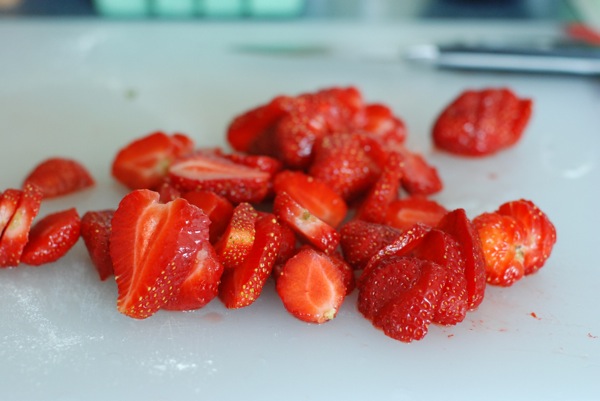
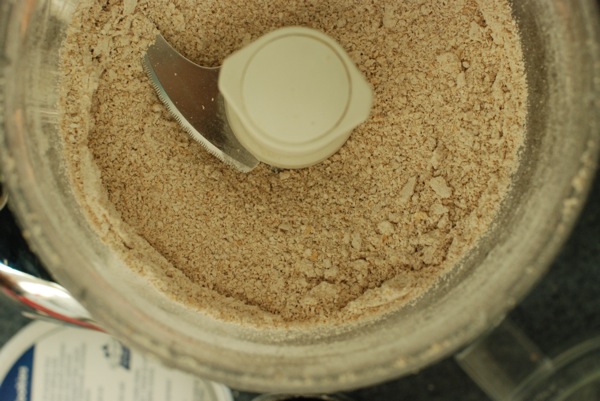
Kim Boyce's recent book, Good to the Grain, has a recipe for oatmeal pancakes, which I've made several times, that calls for both cooked oatmeal and ground oats (oat flour). I had some extra oat flour in the freezer, so I used it here, and I have to say, I think it was the clincher. The oats and almonds were both earthy but gently sweet, and they added pleasant rough texture and body to an otherwise etherial pancake. A definite winner. I'm not one to caution against drenching pancakes with maple syrup, but honestly, skip it here. A pile of strawberries, a dusting of powdered sugar or a drizzle of warmed honey is all they need.

DSC_0063
DSC_0063

Fluffy Oat-Almond Pancakesadapted from a recipe in the NYT Essential Cookbook Serves 4

If you don't have oats, you can use whole wheat flour. You can also eliminate the regular flour entirely and use all oat flour, for a more rustic but no less fluffy pancake i did that this morning and was thrilled with the results. Finally, Hesser suggests that you rub the lemon zest into the sugar, and let it infuse overnight. I made these about 5 minutes after discovering the recipe, so I skipped that step, and they still tasted plenty lemony.

Grated zest of 2 lemons 1/3 cup sugar 1/2 cup all-purpose flour 1/2 cup finely ground oats (roughly 2/3-3/4 cup whole oats) 1/2 cup finely ground toasted almonds 2 teaspoons baking powder 1/2 teaspoon baking soda 1 teaspoon kosher salt 1 cup milk 3 tablespoons melted butter 2 eggs, separated 1 teaspoon vanilla 1 cup ricotta, strained of any liquid

The day before, rub together the lemon zest and sugar in a bowl. Cover.

Mix the flours, lemon sugar, almonds, baking powder, baking soda and salt. In another bowl, whisk the milk, butter, egg yolks, vanilla and ricotta. Fold this into the dry ingredients. Whip the egg whites just until stiff, then fold them into the batter.

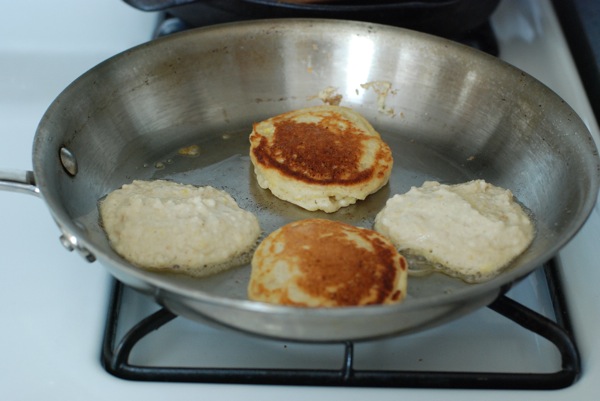
Heat a pancake griddle. Lightly coat the surface with butter, then use a 1/8-cup measure to scoop the batter. Cook until the pancakes appear dry around the edges, about 3 minutes, then flip them and cook for another minute or two. Serve with honey or dust with powdered sugar.

In breakfast and brunch
6 Comments

In the Small Kitchen: Noodles with Peanut Sauce

May 31, 2011 Rivka
DSC_0040
DSC_0040

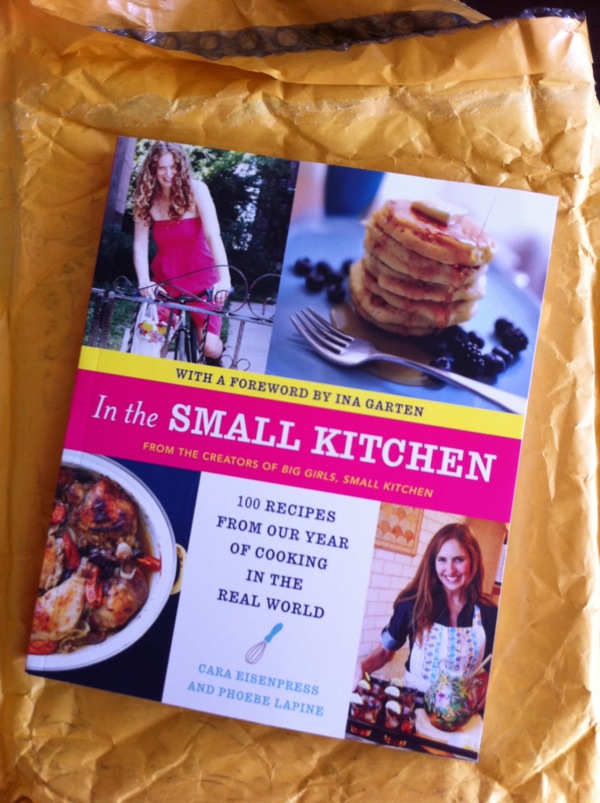
When a package arrived at my office earlier this week, I could hardly wait to tear it open. Inside was this gem:

IMG_0526
IMG_0526

Cara Eisenpress and Phoebe Lapine, the lovely ladies behind Big Girls, Small Kitchen, recently came out with a cookbook, and people? It is beautiful. The book charts Phoebe and Cara's first year of cooking "in the real world," offering recipes, tips, hosting ideas, and more for the just-out-of-college crowd. I can't think of a better gift for new grads.

Naturally, the night it arrived, I read In the Small Kitchen cover to cover. The book is organized by occasion, rather than by type of recipe, which is surprisingly utilitarian: finger-food and drinks are grouped together in the cocktail parties section, while grainy salads and sandwiches can be found in the very comprehensive section on potlucking. Thinking back to my years as a recent college grad, I'm pretty sure the ladies cover basically everything I wanted to know at that time: how to host a good party, get drunk, and eat enough good food to keep down the liquor.

But this book isn't just for the post-college crowd. Over the past couple years, I've cooked many of Phoebe and Cara's recipes -- mostly from Food52, where we met, but also several from their blog. From secret ingredient beef stew tochicken tagine and more, these ladies know how to cook. They write thoughtful, funny recipes, and their book puts that talent on display.

Eager to cook from the BGSK book, I thumbed through, looking for something I could make with ingredients I had on hand. Noodles with BGSK Peanut Sauce jumped out at me: I had nearly everything in my larder, and what I didn't have, I could improvise. That's another thing about this book: if you follow the recipes to the letter, you'll make great food -- but you certainly don't have to.

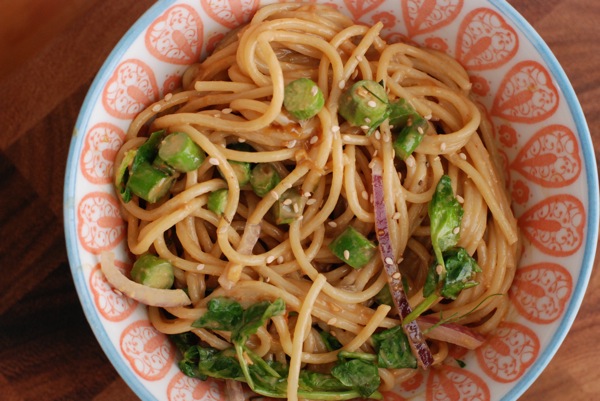
I had just used all my scallions (two bunches!) to make scallion oil the night before, so I didn't have any left to slice fresh for the noodles. I also didn't have any cucumber (which, by the way, I recommend not skipping: it keeps the noodles light). I did, however, have loads of asparagus and a nice bag of pea shoots, so I used those instead.

DSC_0037
DSC_0037

Lacking fresh scallions, I added some of the scallion oil to the sauce, which perfumed the noodles with that green, onion-y flavor. I started with about 3/4 of the sauce, which was plenty for me, and now I've got the leftovers in a jar for another day. Lots of the recipes in this book will make enough for leftovers, and when was that a bad thing?

College students everywhere are graduating. For those on the precipice of their first apartment, their first full-time job, and their first kitchen, I can't think of a better gift than In the Small Kitchen. Buy it, people!

...Ok. One of you won't have to buy it. We've teamed up with the awesome folks at HarperCollins to offer one lucky reader a copy of this book! Just leave a comment below describing your favorite post-college meal, and we'll select a commenter at random this Friday, June 3rd. Good luck!

Update: Julia E., you've won In the Small Kitchen. Congratulations! Hope you enjoy the book as much as I have.

Noodles with BGSK Peanut Sauceadapted from In the Small Kitchen

1 tablespoon fresh ginger, minced 2 cloves garlic, chopped 1/4 cup sugar 2 teaspoons chile paste/sauce (I used a mix of sriracha and sambal oelek; if you have neither, use 1 teaspoon chili flakes) 1/2 cup smooth natural peanut butter 1/4 cup soy sauce 2 tablespoons Worcestershire sauce 2 tablespoons rice wine vinegar 2-3 tablespoons sesame oil (start with less and add to taste) roughly 1/4 cup water

1/2 bunch asparagus, trimmed and sliced into 1-inch coins about 3/4 pound spaghetti, udon, or other noodles (soba would work well here too) 1 bunch scallions, chopped or 1/4 of a red onion, sliced into thin quarter-rings 1 large cucumber, julienned (I didn't have this but recommend including it) 1/2 cup coarsely chopped pea shoots (optional) 1 tablespoon sesame seeds

In a food processor or blender, pulse together the ginger, garlic, and sugar. Add the chile paste, peanut butter, soy sauce, Worcestershire sauce, rice wine vinegar, sesame oil, and water and process again until smooth.

Bring a large pot of water to a boil (no need to salt the water - the sauce is plenty salty). First, blanch asparagus: add to water, cook about 2 1/2 minutes, and use a slotted spoon to transfer to a small bowl. They'll cook a bit more out of the water, but still retain some of their crunch.

Next, cook noodles according to package directions. When noodles are al dente, strain, transfer to a large bowl, and add about 3/4 of the sauce to the noodles. Stir to combine, and taste. Adjust sauce quantity as desired.

Add asparagus, onions, cucumber, and pea shoots, and toss to combine. Portion noodles into serving bowls, and top with sesame seeds. Serve with additional chili paste on the side.

In books, comfort food, main dishes, sides
32 Comments

Gujarati Mango Soup

May 27, 2011 Rivka
DSC_0039
DSC_0039

Initially posted on The Jew and the Carrot: www.jcarrot.org.

Walk into any Jewish household on a Friday night, and you'll have an instant window into that family's food legacy. The Syrian table is piled high with ka'aks, zucchinis and eggplants stuffed with lamb and beef, beautiful molded rice with blanched almonds, and my favorite, lahmacun, those wonderful flatbreads topped with tamarind-and-tomato drenched ground meat. The Eastern Europeans have lokshen and cabbage, noodle kugel, gefilte fish, and of course, cholent. But come over to my house, and you might be confused: we'll start with, say, a Moroccan soup called harira. The pièce de résistance, if I'm lucky, is huachinango a la Veracruzana, my favorite preparation of red snapper in a Mexican tomato sauce with onions, olives, currants, hot peppers, and cinnamon. A side of the Indian eggplant curry baingan bartha might round out the meal, and for dessert, my mother's homemade chocolate croissants. If you're following along, that makes one American Jew, born and raised in Washington, DC, with relatives from across Eastern Europe, who, along with her mother, is building a cooking legacy on Indian curry, Mexican fish, Moroccan soup, and French pastry.

I don't come from a strong cooking tradition. It's possible my great grandmothers slaved over some top-notch borscht, or -- in the case of the piece of my family that's been in the US for seven generations -- some excellent apple pie. But I wouldn't know. My grandmother, who grew up in Chicago, didn't cook much at all. My Bubby, who grew up in New York and has spent most of her life in Richmond, VA, used to make an excellent Thanksgiving dinner, but her cooking didn't have a particular perspective or core list of key ingredients.

DSC_1037
DSC_1037

Color me jealous: I've always wanted to come from one of those families with a strong culinary tradition. I've longed for native staples - the sorts of ingredients you always have on hand in multiple forms and in massive quantities, that find their way into everything: the Italians' olive oil and tomatoes; the Indians' garlic, ginger, and chilies; and so on.

So we weren't bequeathed a strong culinary heritage by our relatives or our culture; that hasn't stopped us from building our own. My mother has spent years accruing knowledge of different cultures' cuisines, acquiring a taste for spice, learning to achieve that balance of spicy, sour, salty, and sweet that makes food -- of any origin -- great. And ever since I learned to cook, I've been trying to follow in her footsteps. Yes, we're creating our own culinary legacy. Our legacy uses lemon in copious quantities; it doesn't skimp on the chile; it favors things with pools of zesty tomato-based sauces to be sopped up with good bread; and it always includes something sweet to finish things off.

DSC_1029
DSC_1029
DSC_1033
DSC_1033
DSC_1034
DSC_1034

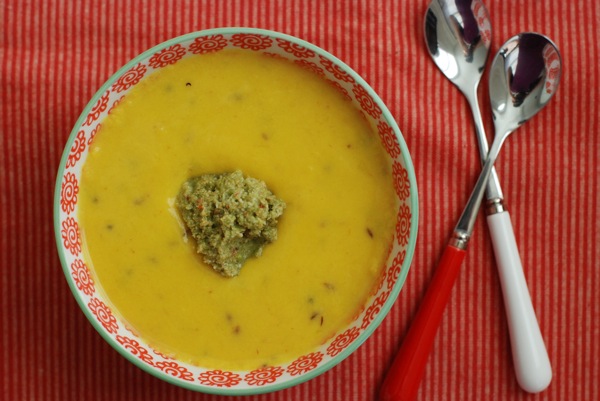
But there's more. We love olives, capers, and anchovies, individually or all together in a tapenade that'd make a cook in Provence swoon. And we love Indian flavors; we've spent many a meal tasting curries two, three, four times in a row, to decipher their ingredients one by one. As I served an Indian-spiced chilled mango soup to my guests on Friday night -- its pale orange surface flecked with black mustard seeds and buoying a dollop of spicy green chutney -- I felt connected to a cooking heritage. The people may not be my own people, but the legacy of Indian cooking -- the boldness with flavors, the embrace of real, sweat-inducing spice, the mixing of hot and cold together in the same dish -- is one I have come to love, and to take as my own. Not being born into a strong cooking tradition may be a blessing in disguise, after all.

DSC_0019
DSC_0019

Gujarati Mango Soup with Green Chutney Adapted from a recipe in Amanda Hesser's The New York Times Essential Cookbook

After initially making this soup, I was concerned it would be cloying, even in small doses. I'd added some lime juice, but it still tasted quite sweet. On a whim, I made this green chutney (below), and its fresh, green heat complements the soup perfectly.

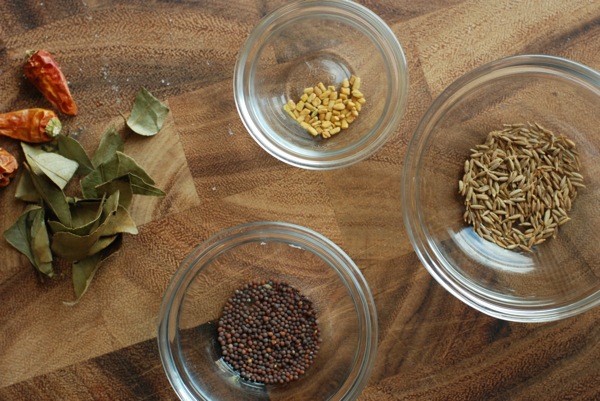
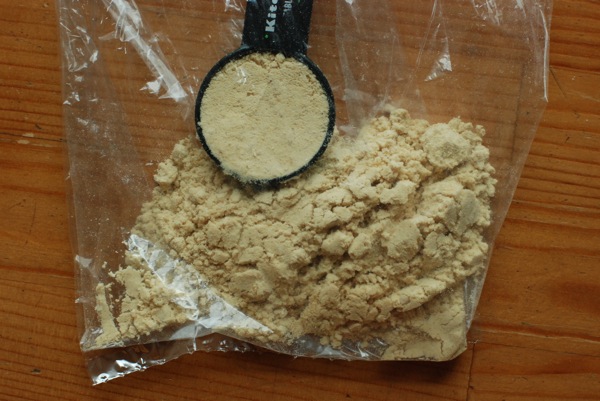
2 tablespoons chickpea flour 1/8 teaspoon ground turmeric 3/4 teaspoon ground cumin 3/4 teaspoon ground coriander 1/2 cup plain whole milk yogurt (Greek is best) 3 cups canned mango pulp or mashed fresh mango pulp (1 mango yields between 3/4 and 1 cup of pulp) 1 1/4 teaspoons salt 1/2 teaspoon sugar (may need more if using fresh mangos) 1 jalapeno pepper, chopped (I used all the seeds. If you prefer less spice, omit seeds and membrane) 2 tablespoons peanut or corn oil Generous pinch ground asafoetida 1/2 teaspoon whole brown mustard seeds 1/2 teaspoon whole cumin seeds 2 whole hot dried red chilies 1/8 teaspoon whole fenugreek seeds 10 fresh curry leaves (optional) Juice of 1 lime

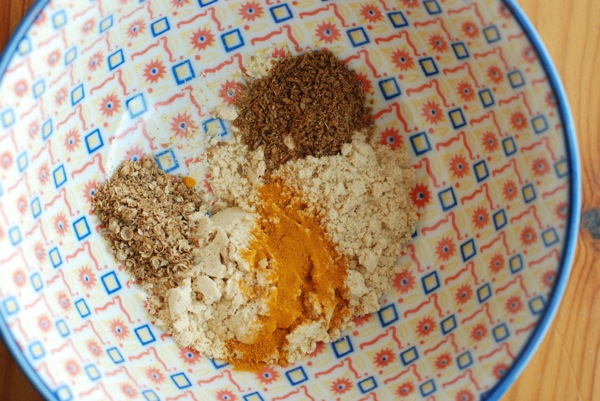
Put the chickpea flour, turmeric, and ground cumin in a bowl. Fill a measuring cup with 1/2 cup of water, and add a couple tablespoons to the flour mixture, stirring carefully until the flour is a smooth paste with no clumps.

Add more water very slowly, ensuring an even consistency as you stir.

Once enough water has been added that the chickpea flour has been fully incorporated into the liquid with no lumps, add the rest of the water and stir to combine. Whisk in yogurt, mango, and 2 more cups water. Add salt, sugar, and fresh chilies. Mix well.

Put oil in a heavy-bottomed medium pot over medium heat. When oil is very hot, add the asafoetida, and then — in quick succession — the mustard seeds, cumin seeds, dried chilies, fenugreek seeds, and curry leaves (if using). Have a splatter screen on hand: the mustard seeds will pop almost immediately after being added.

As soon as you have added the above ingredients, remove from heat and add mango mixture. Stir to combine, return to medium heat, and simmer for 5 minutes, stirring. Then remove from heat, cover, and allow to steep for 30 minutes.

At this point, you can either reheat the soup to serve warm, or do as I did, and refrigerate it to be served cold. Either way, strain the soup through a coarse sieve, then spoon some of the smaller seeds from the strainer back into the soup. Immediately before serving, stir the lime juice into the soup.

Serve soup in small bowls, with a spoonful of the chutney in each.

Spicy Green ChutneyAdapted from a recipe by Madhur Jaffrey

2 tablespoons lemon or lime juice (lime is preferable) 1 small tomato, diced 3/4 teaspoon salt 3 fresh hot green chilies, such as bird’s eye or jalapeno (can start with 2 and add to taste) 2/3 cup fresh chopped cilantro 1/3 cup fresh chopped mint 1/2 cup grated coconut, fresh or frozen and defrosted

This chutney can be made rustic in a mortar and pestle, or smooth in a blender.

Combine 3 tablespoons water, lime juice, tomatoes, salt, and chilies. Mash or blend until combined or smooth.

Add cilantro and mint; mash together or blend until smooth.

Finally, add coconut and blend or mix more, until chutney is fully mixed or completely smooth. Serve cold.

Chutney will keep in the refrigerator for a few days, but will keep for months in the freezer.

Many of the ingredients in each of these recipes are available online at Kalustyans.com.

In appetizers, condiments, soup, easy, healthy
5 Comments
← Newer Posts Older Posts →

Subscribe by email:

  • books (1)
  • crisps and crumbles (1)
  • frozen (1)
  • toys (2)
  • gifts (3)
  • egg whites (5)
  • fried (5)
  • how to use--- (6)
  • drinks (10)
  • menus (11)
  • travel (11)
  • fish (12)
  • kosher for passover (14)
  • thanksgiving (14)
  • vegan (20)
  • snacks (21)
  • techniques (21)
  • soup (26)
  • bread (28)
  • pies and tarts (28)
  • cake (33)
  • events (34)
  • condiments (36)
  • various and sundry (39)
  • uncategorized (42)
  • cookies and bars (46)
  • weekday lunch (47)
  • appetizers (48)
  • salad (51)
  • gluten-free (56)
  • comfort food (61)
  • breakfast and brunch (77)
  • sides (81)
  • dessert (90)
  • main dishes (100)
  • healthy (139)
  • easy (155)
  • vegetarian (180)

| LATEST |

Featured
Blue Chair Fruit's Black Raspberry Jam
Thai Grapefruit Salad
Mango Sticky Rice
Winter 2016: Odds and Ends
Povitica: The Best Babka Ever
Persimmon Walnut Bread
Sprout Chaat Salad + New Site!
Maple Walnut Squares
How to Give Thanks
Croissants (really, I made croissants) + other croissant-ish things

| hEALTHY |

Featured
Sprout Chaat Salad + New Site!
Fennel frond pesto + what to do with those pesky stalks
Asparagus Toasts with Pistachios and Mint
Eggplant-Walnut Pâté + Passover Ideas
1-DSC_0861-600x401.jpg
Lentils and Rice with Tamarind Sauce and Dukkah
Big Kale Salad with Pomegranate and Feta
Punchy Crunchy Ginger Salad

| BreakfAST |

Featured
Povitica: The Best Babka Ever
Croissants (really, I made croissants) + other croissant-ish things
Mushroom and Kale Breakfast Strata
Barley Porridge with Orange and Black Sesame
Ramps 'n' Eggs Biscuit Sandwiches
Asparagus Toasts with Pistachios and Mint
Apple-Cheddar Scones with Sage
Menemen - Turkish Eggs with Tomatoes and Peppers
You must select a collection to display.

© 2016 Rivka Friedman. All Rights Reserved.