• Home
  • About
  • Recipe Index
  • Contact
Menu

Rivka Friedman

Street Address
City, State, Zip
Phone Number

Your Custom Text Here

Rivka Friedman

  • Home
  • About
  • Recipe Index
  • Contact

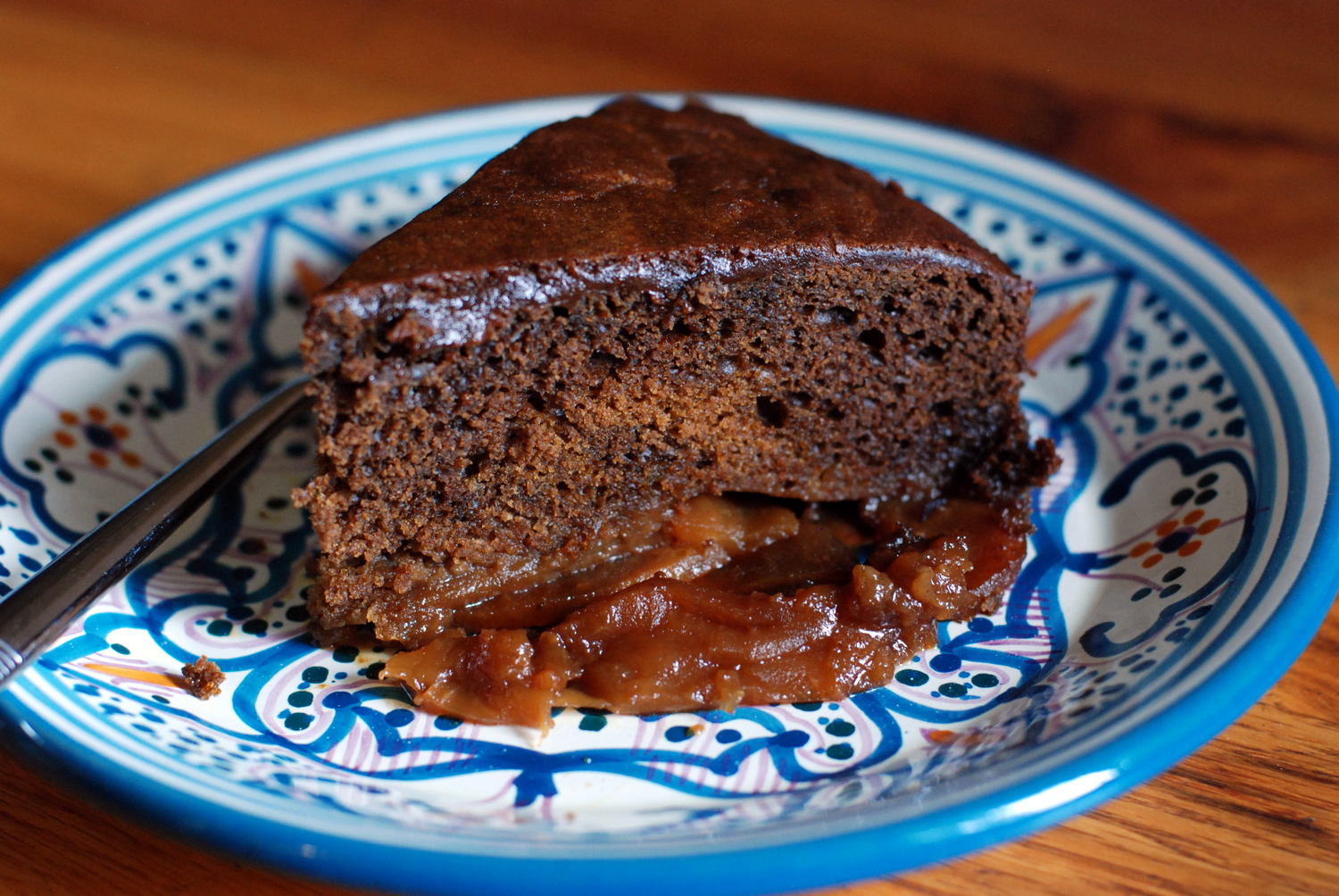
Gingerbread Apple Right-Side Up Cake

October 3, 2014 Rivka
1-DSC_0901
1-DSC_0901

'Tis the season for apple picking. Or, if (ahem) you're in denial about that certain season, and also about the veryveryimminent life changes you're anticipating, you might spend Sunday mornings gallivanting around the farmers' market in all-too-summery yoga clothes, enjoying the sun and stocking up on way too many "second" apples at 99 cents a pound. It's basically just like apple picking, only lazier. Either way, you wind up with a fridge full of apples, and a sinking sensation that what looked like such an amazing bargain! is now a very real item on the to-do list: make apple stuff. Oh, it's on your to-do list also? Welcome to the club.
1-rightside up cake
1-rightside up cake

So here's one "apple stuff" for you to make this weekend. An upside-down upside-down cake, where the upside-down bit is left right where it started. Can we call it a right-side up cake? Good. Don't worry: there's caramel involved. And the cake part isn't anything to scoff at, either: it's a beautifully feathery, well-spiced gingerbread that I can see baking up on its own in a loaf pan and serving with tea.
1-DSC_0589
1-DSC_0589
1-DSC_0596
1-DSC_0596

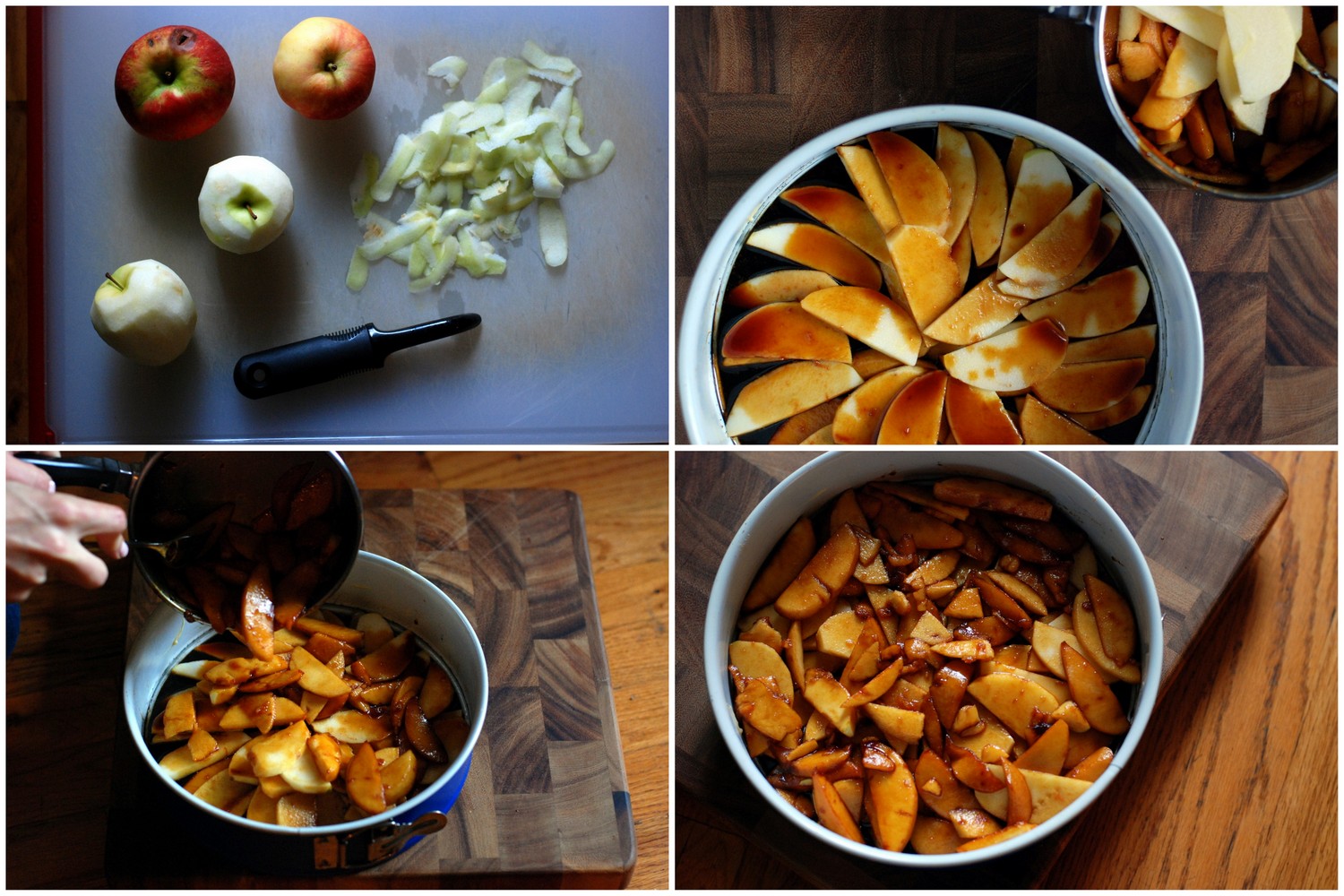
Do you have beautiful, burnished, spot-free apples? Great: save them for fancy company. This is a cake in which your 99-cent seconds can hide their blemishes and find a happy home.  The brown spots don't matter. Heck, it doesn't even matter what kind of apples you use. I had two golden delicious and two honeycrisps with plenty of spots in the drawer, and they worked great.
1-DSC_0604.jpg

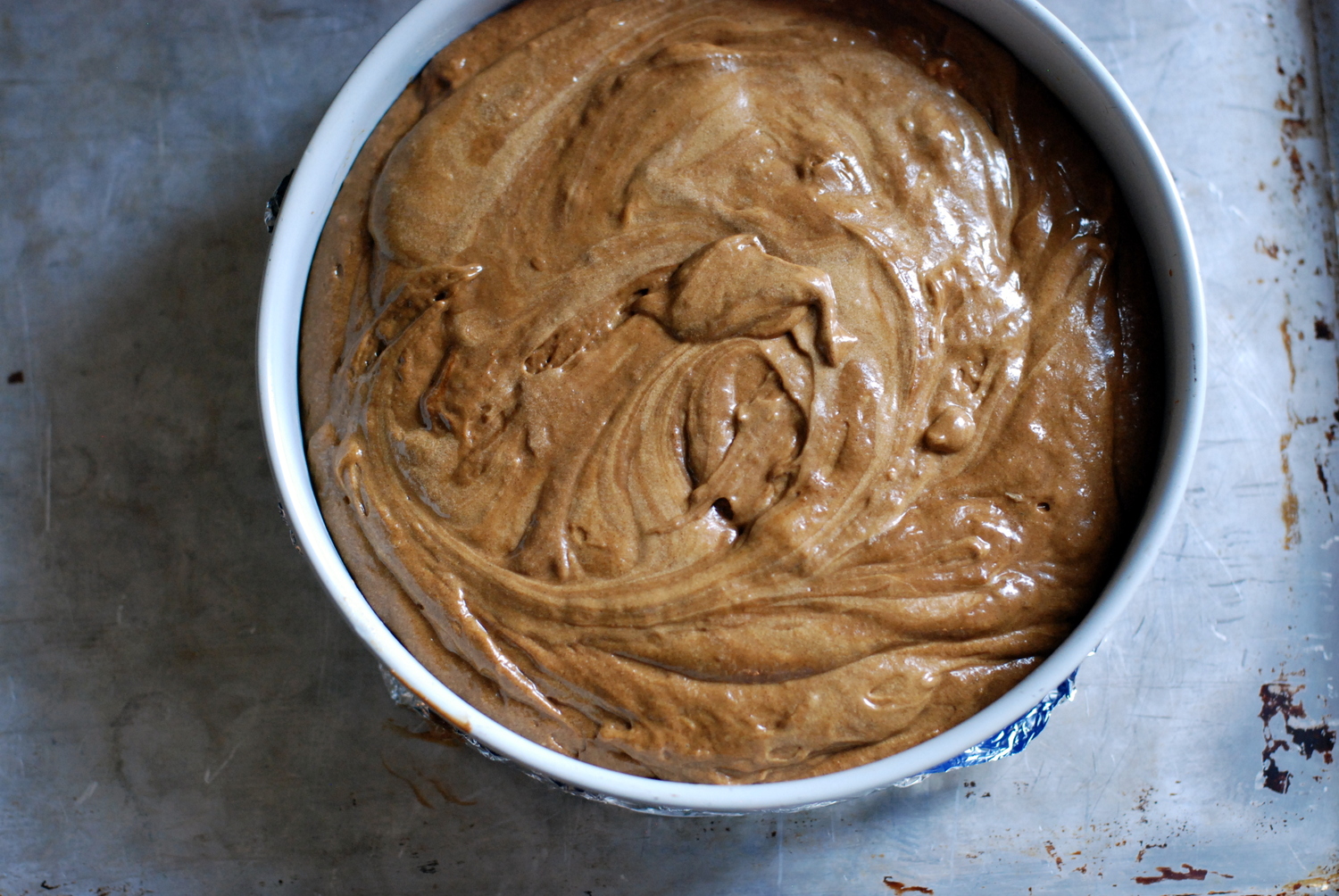
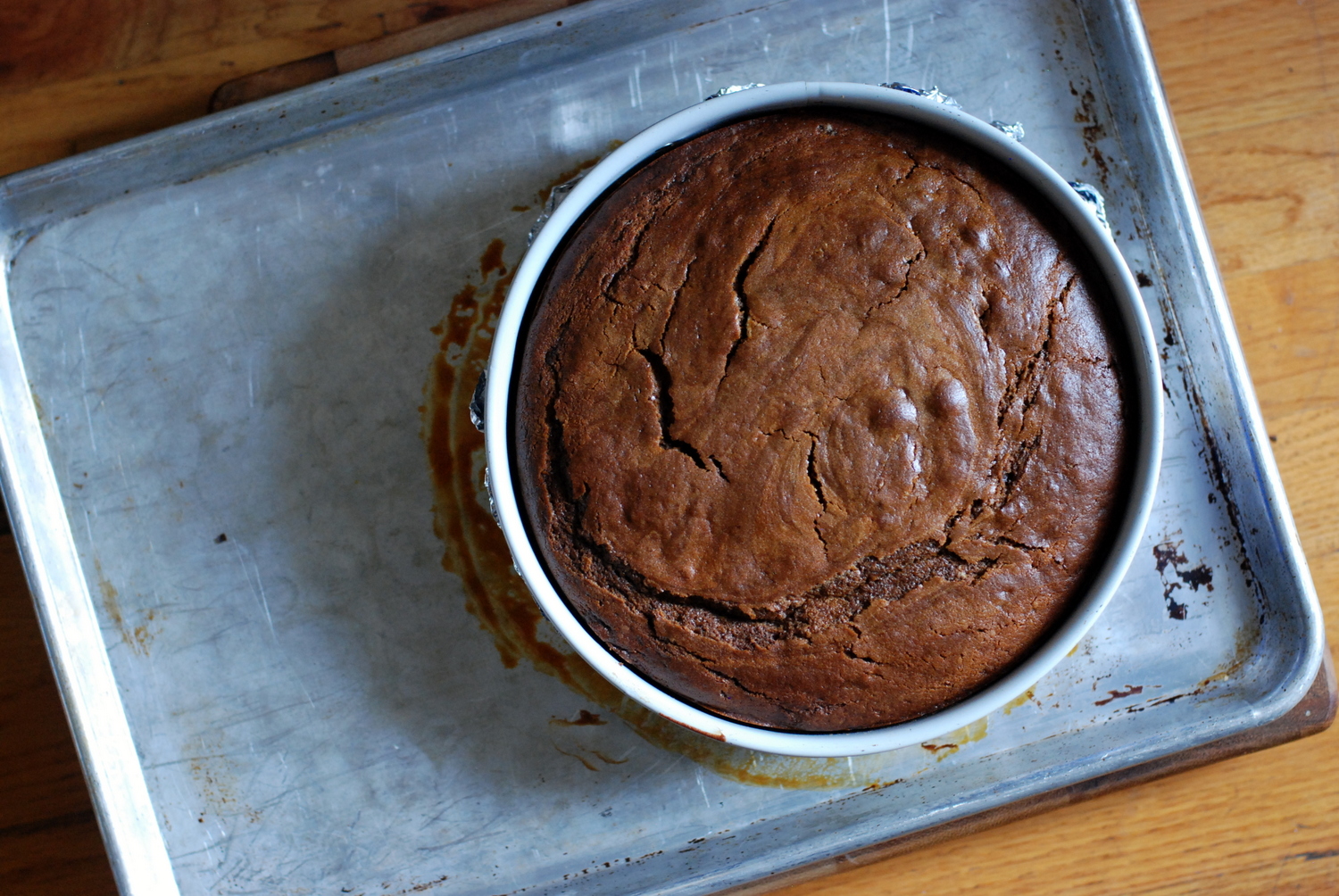
About the whole right-side up thing, because I know you're wondering: I get that it takes a rather peculiar disposition to go seek out a recipe for upside-down cake, then insist on serving it right-side up. I'd like to take credit for some creativity (or hey, peculiarity) but in truth, it all happened by accident. I put the apples in a pretty pattern, intending to display them when serving. I drizzled the caramel carefully and made a really beautiful cake bottom, but then the thing came out of the oven and I remembered that I really like crust.
1-DSC_0612.jpg

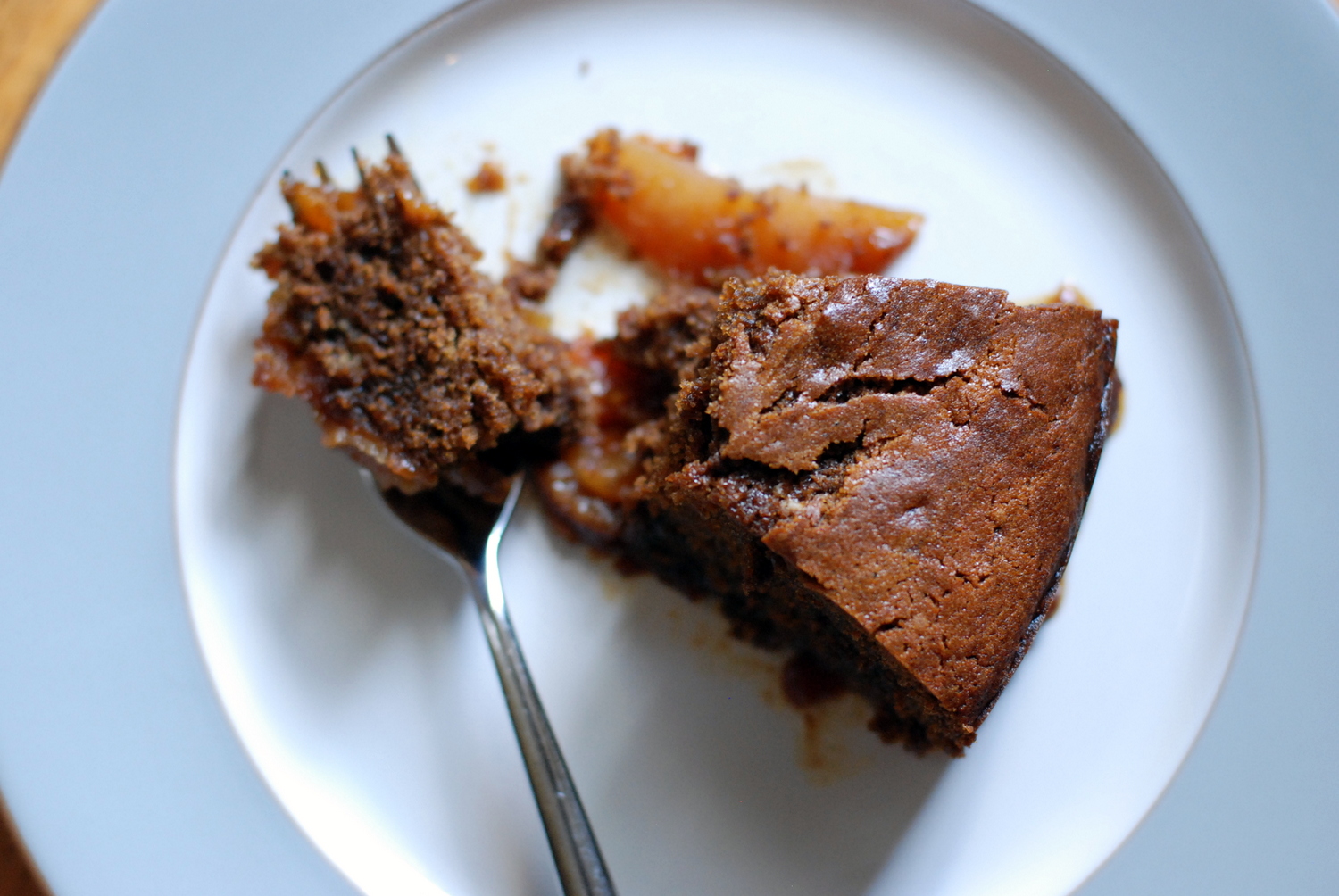
Judging by how many bakeries sell muffin tops these days, I'm guessing many of you do, too. And the top of this cake is a really good one, not unlike the crust of a good muffin, that I hesitated to give up just to show off its underbelly. Taste over beauty any day. Plus, if you ask me, this cake is still quite the looker, even if it's less inclined to flaunt the goods.
1-DSC_06511.jpg

Gingerbread Apple Right-Side Up CakeAdapted from Deb, who adapted it from Karen Bates at the Philo Apple Farm via the New York Times Serves 12

I made this in a 9-inch pan, instead of the 10-inch called for in the original recipe. While the baking time was much longer, I liked the taller cake and the (seemingly) more feathery crumb. Your choice; I've included instructions for both. But if you can avoid it at all, don't use a springform pan. I did, and I ended up having to wrap the outside in foil to help stop the caramel from leaking out.

If you decide to flip this cake upside-down after all, your apples will fare better if you cut them in wedges. I sliced mine more thinly, which made for a great underside, but the wedges will stay firmer.

Topping:
4 tablespoons butter, plus extra for greasing pan
1/2 cup dark brown sugar
Pinch of salt
4 apples (about 1 3/4 pounds), peeled, cored and cut into 1/4-inch wedges or slices

Batter:
1/2 cup (1 stick or 4 ounces) butter, slightly softened
1/2 cup sugar
1 large egg
1/3 cup dark molasses
1/3 cup honey
1 cup buttermilk
2 1/4 cups flour
1 teaspoon baking soda
1/2 teaspoon salt
1 teaspoon ground ginger
1 teaspoon cinnamon

Softly whipped cream, optional

Make the topping: Preheat oven to 325 degrees F. Grease a (non-springform) 9- or 10-inch round pan.

Heat butter in a small saucepan over medium heat. When butter has melted, add brown sugar, stir to combine, and simmer for four minutes, until deep brown, bubbly, and very fragrant.  Add the salt and remove from the heat.  Drizzle half the caramel into the bottom of your cake pan. Then layer the apple slices into the cake pan in a circular pattern, and drizzle the remaining caramel overtop.

Make the batter: Using a stand or electric mixer, blend butter and sugar until light and fluffy, about 2 minutes. Combine egg, molasses, honey, and buttermilk in one bowl, and the dry ingredients in another. Then, with the mixer on low speed, alternate adding wet and dry ingredients to the butter mixture, making sure to end with the dry ingredients.

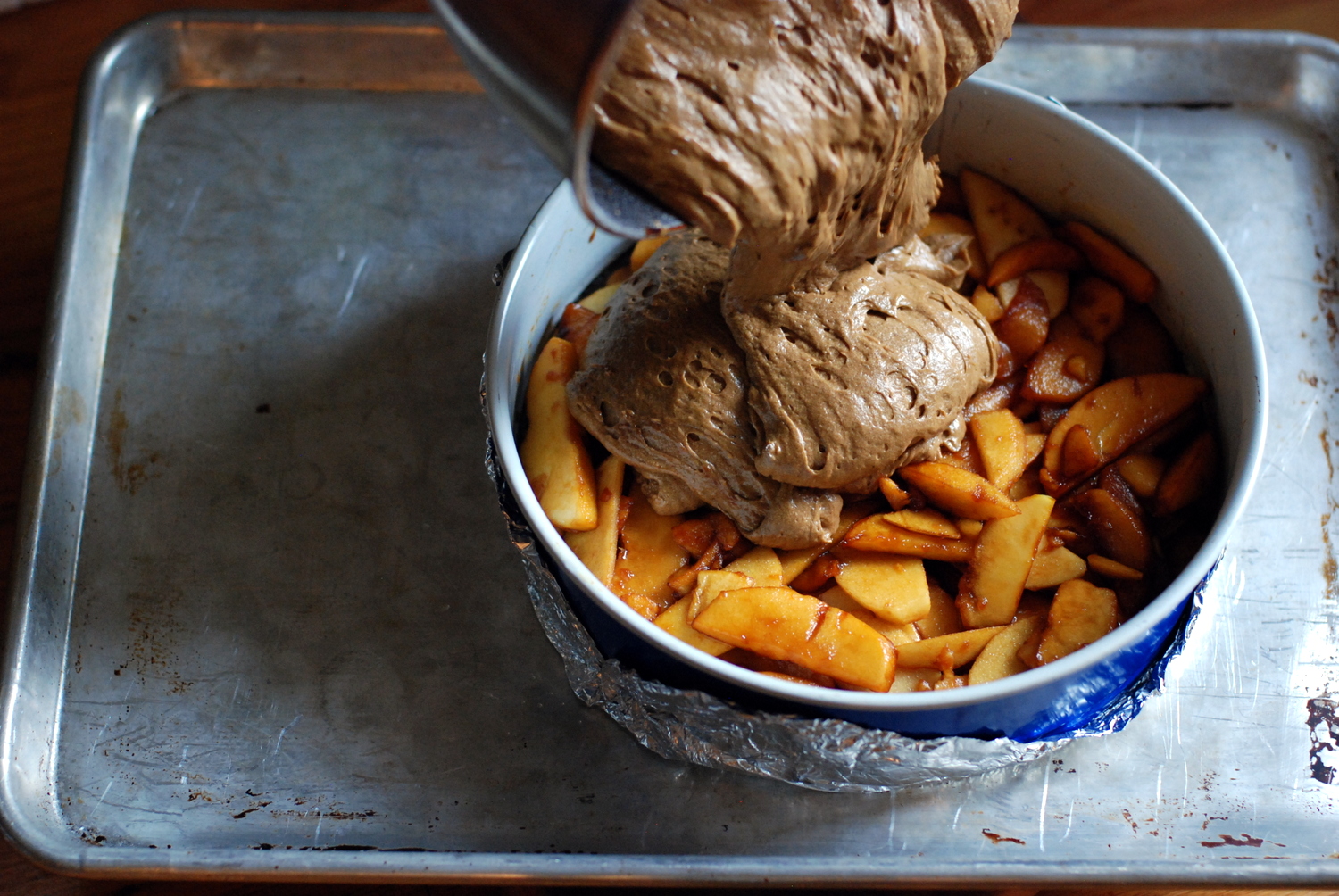
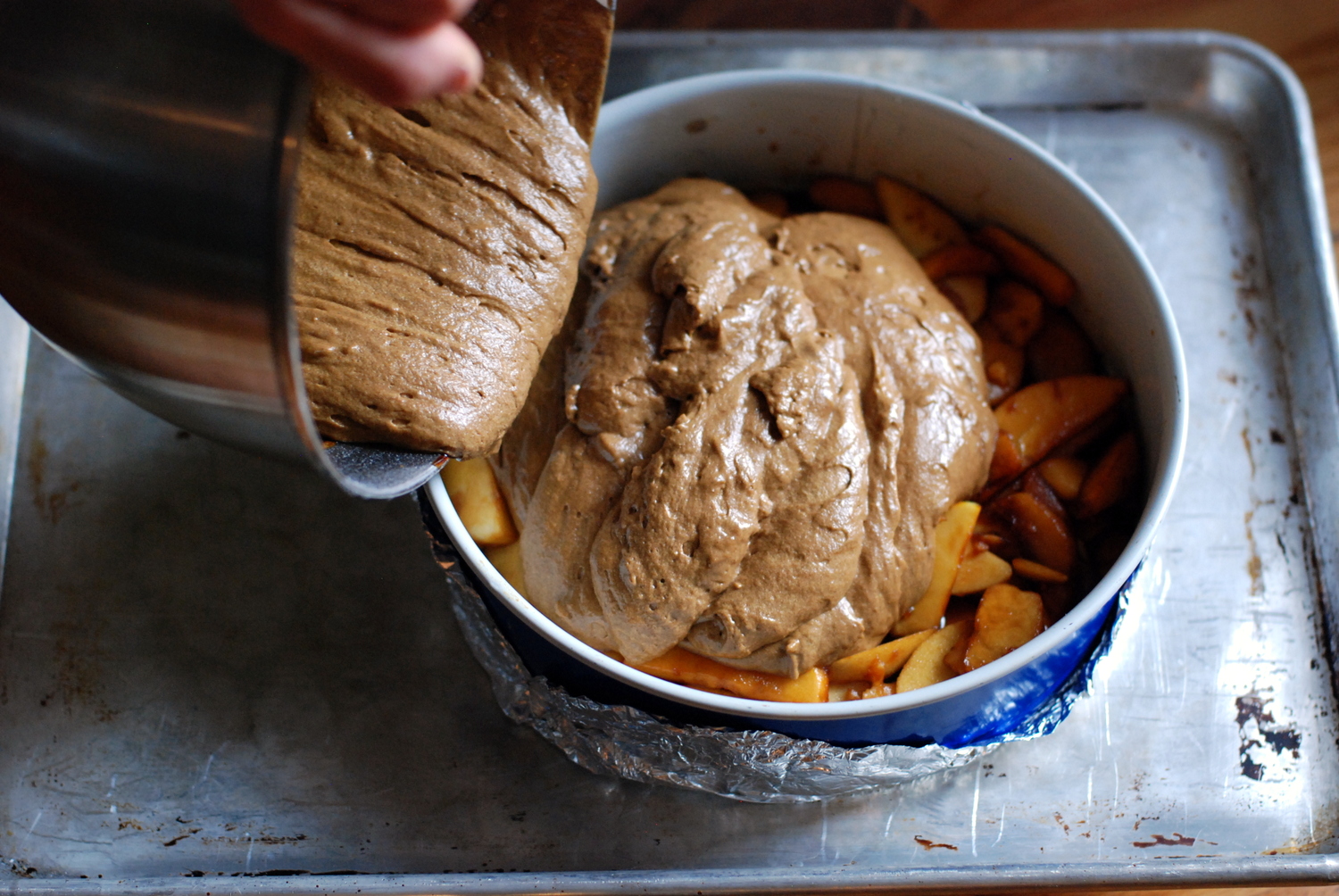
Pour the batter into the pan over the apples. For a 10-inch pan, bake for 45-50 minutes; for a 9-inch pan, bake 60-70 minutes (mine took the full 70), until a toothpick inserted into the center of the cake comes out clean. Cool the cake on a rack for 10 or 15 minutes, then either serve warm, or carefully flip onto a rimmed platter.

I served this plain, but Deb and Karen Bates both recommend softly whipped cream. It certainly can't hurt.
 

In cake
-4 Comments

Okra Curry

October 1, 2014 Rivka
1-DSC_0675.jpg

A long while back, I got into a major Indian food kick. I made dosas (but really, really good dosas), eggplant curry, sambar, mushroom muttar curry, and more. I bought and made chutneys and stocked way too much ghee and ate as much Indian food as I could get my hands on.

Summer seems to call for a hiatus from piping hot bowls of curry, but now that fall has arrived, I'm back on the bandwagon. It's still early for long-cooked food, but this okra comes together quickly and tastes fresh - the perfect transition into September.

1-DSC_0651.jpg

I posted about this on Instagram when I made it on a whim a while back, but since then it's become enough of a regular that I felt it deserved a proper post. I still see okra at most of our markets (not to mention growing from the pot on our walkway - my neighbor is quite the gardener!), so there's still time to make this before okra is gone.

1-DSC_0659.jpg
1-DSC_0668.jpg

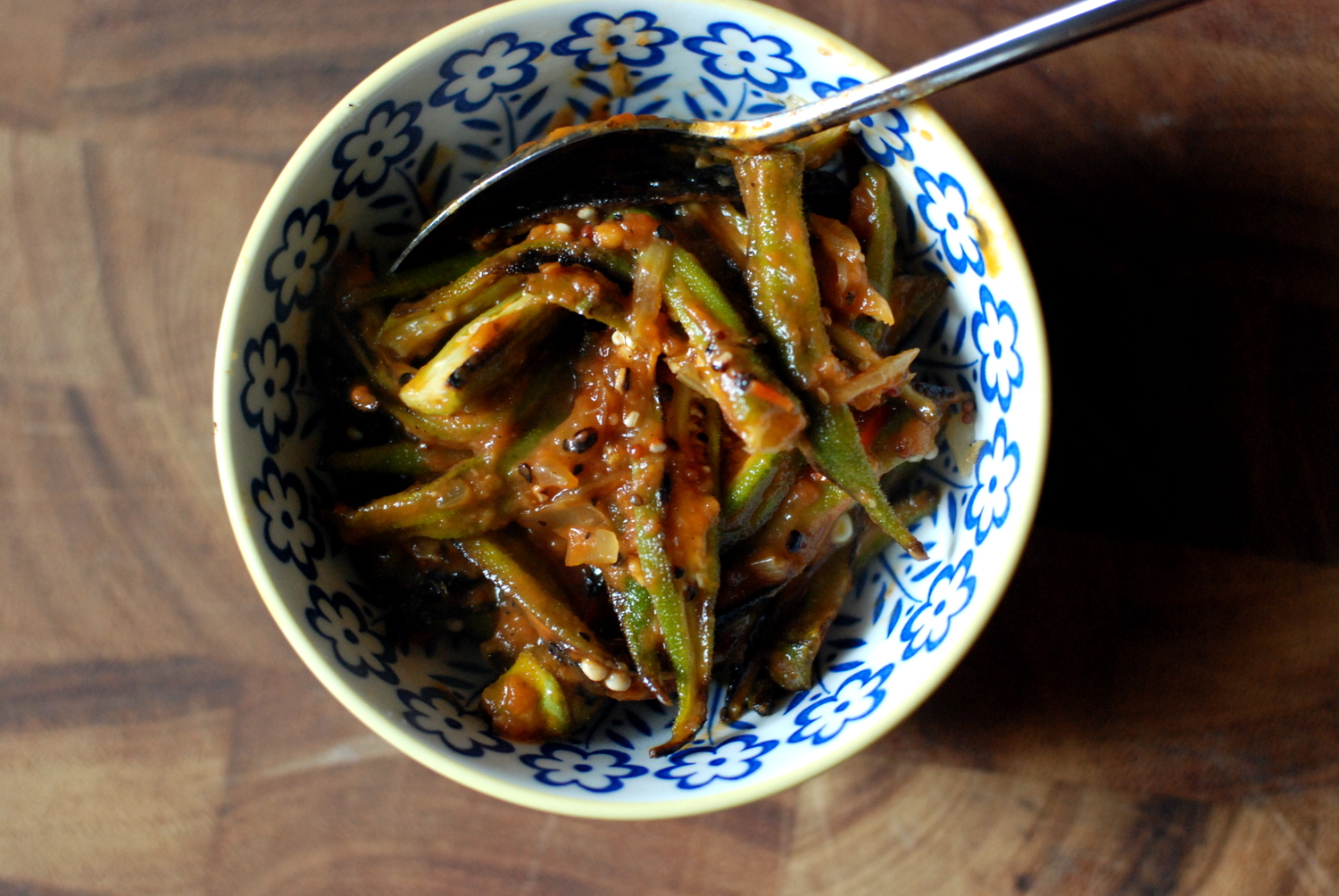
In case I lost you way back with scary thoughts of slime, rest assured: this curry is not slimy. Just look at the photo above - see mom? No slime! A few tips to avoid the goo:

  • I've found slime more likely in large okra and in okra that isn't super fresh. The smaller and fresher the pieces, the better.
  • When cutting your okra, keep a paper or cloth towel close at hand. Wipe the knife often - after every two or three pieces - and you'll minimize the goo.
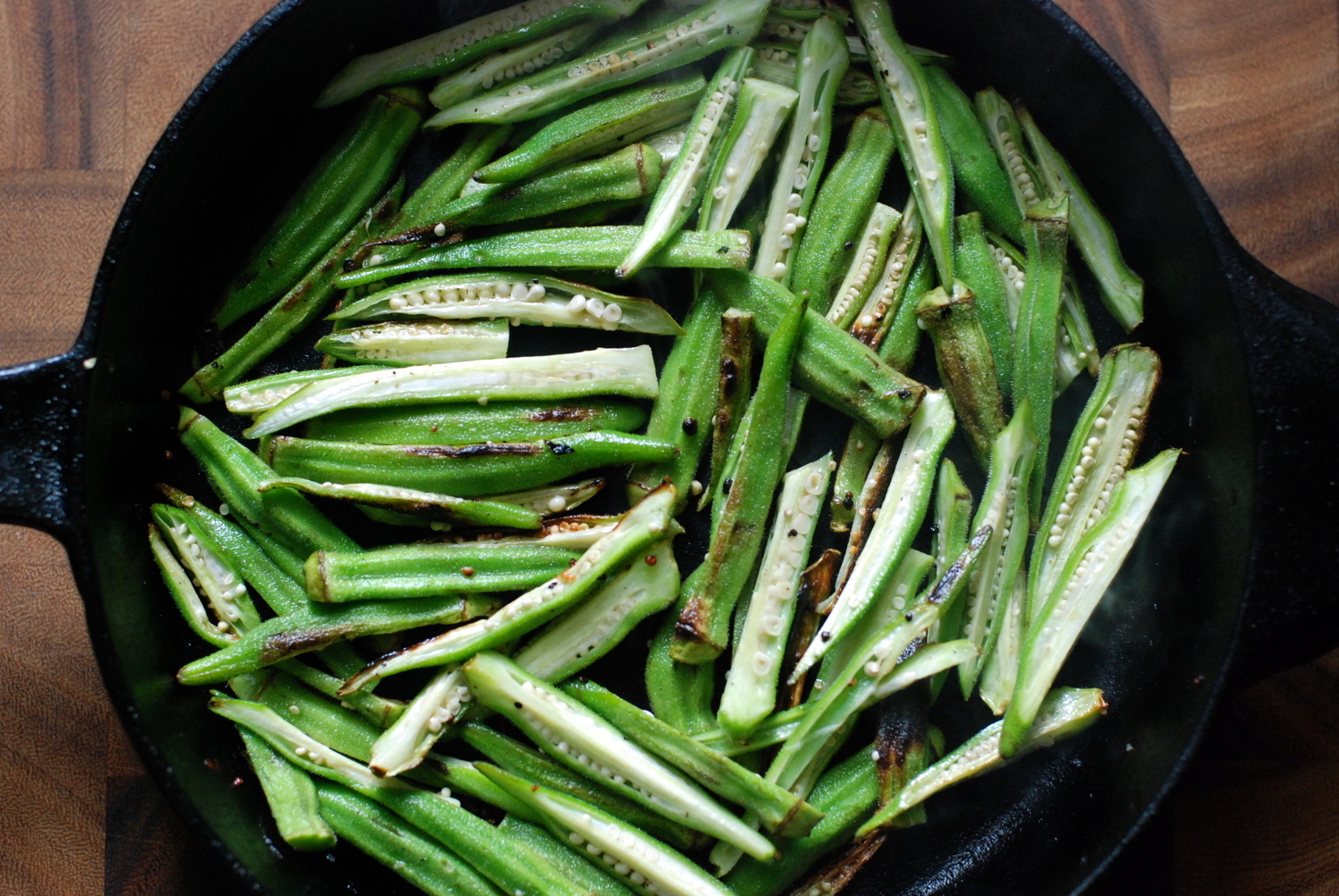
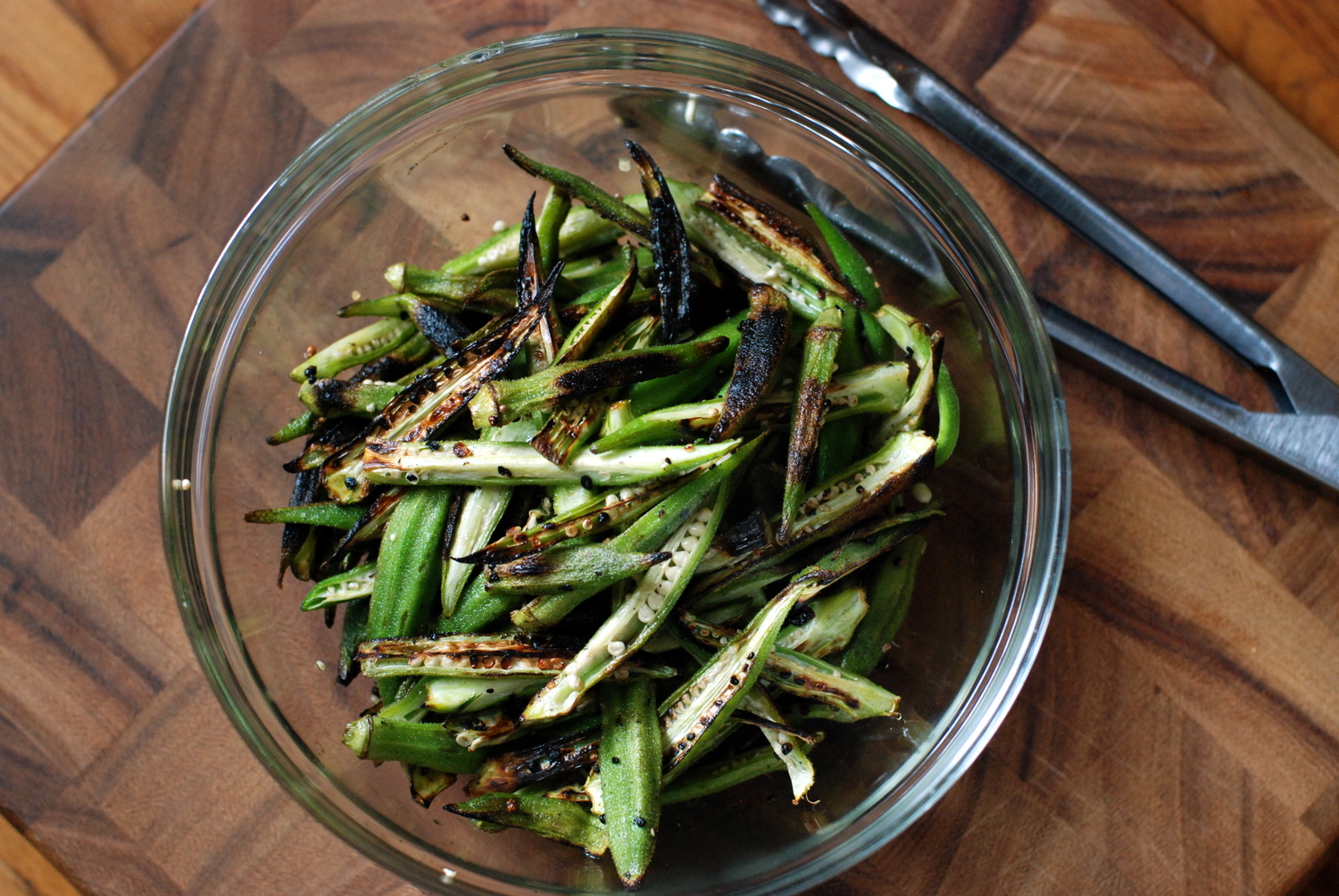
  • Lastly, and you'll see this in the recipe below, cook the okra all the way before adding the sauce. You want those pieces crisp and browned, maybe even a bit shriveled. By the time you add the sauce, there won't be any slime to speak of, and your okra will end up silky, but not gummy.
1-DSC_0680.jpg
1-DSC_0684.jpg

Off to the races, folks.

Okra Curry

As noted above, you want the okra to be fully cooked before it's added to the sauce. This will minimize slime in the curry. The only other thing I wanted to mention is that while a cast iron pan works great for cooking the okra, the sauce should really be made in a stainless steel pan, since acid can ruin the nonstick surface of good cast iron. -R

1 quart okra
3 tablespoons ghee or vegetable oil
1 medium onion, diced
1 thai chili (or use a serrano), seeded and diced
1 teaspoon black mustard seeds
1 1/2 cups tomato puree
2 tablespoons tamarind puree
1/2-inch knob fresh ginger, grated
salt

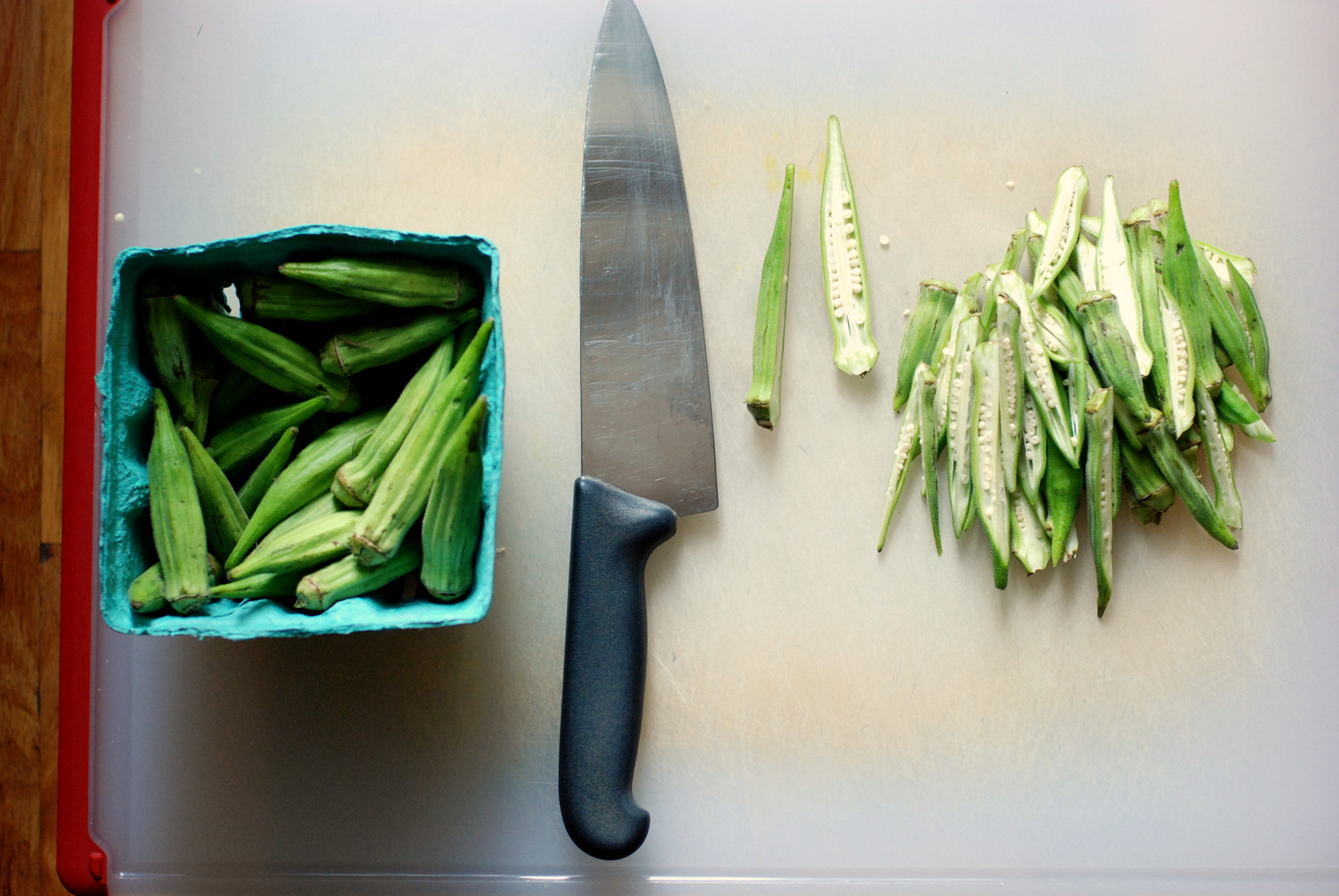
Trim stem ends of okra and slice lengthwise in half or quarters, depending on size. Keep a towel nearby as you slice; if you notice the knife getting slimy, wipe off your knife before continuing. This will help minimize slime in the final curry.

Heat 1 tablespoon of ghee or oil in a large saute pan (cast iron and stainless steel both work) over medium-high heat. Add enough okra to sit in a single layer in the pan; I found I needed to do this in two batches. Cook okra mostly undisturbed for about 3-5 minutes, letting it really brown on the first side before flipping it; you want to draw out the moisture (read: slime) and dry out the okra as much as possible.  If the pan smokes, turn down the heat a little bit, or just turn on your fan - try to keep that pan as hot as possible.

Flip the okra (this doesn't have to be an exact science; a few turns with a pair of tongs should get most of the okra turned) and cook on the second side for another 3-5 minutes or so. At this point, your okra should be very deep brown and mostly dry. Transfer to a heatsafe bowl, and repeat with another tablespoon of ghee/oil and the second batch of okra. Transfer second batch to the same bowl once it's been cooked. (I use two pans at once to minimize total cooking time.)

Add the third tablespoon of ghee/oil to a stainless steel saute pan and set over medium-high heat. Add diced chile (as much of it as you want - feel free to hold back and add more later), onion, and mustard seeds, and saute until onion has started to turn golden around the edges. Then add tomato, tamarind, and grated ginger, stir to combine, and reduce heat to medium. Cook until onions soften, 5-7 minutes.

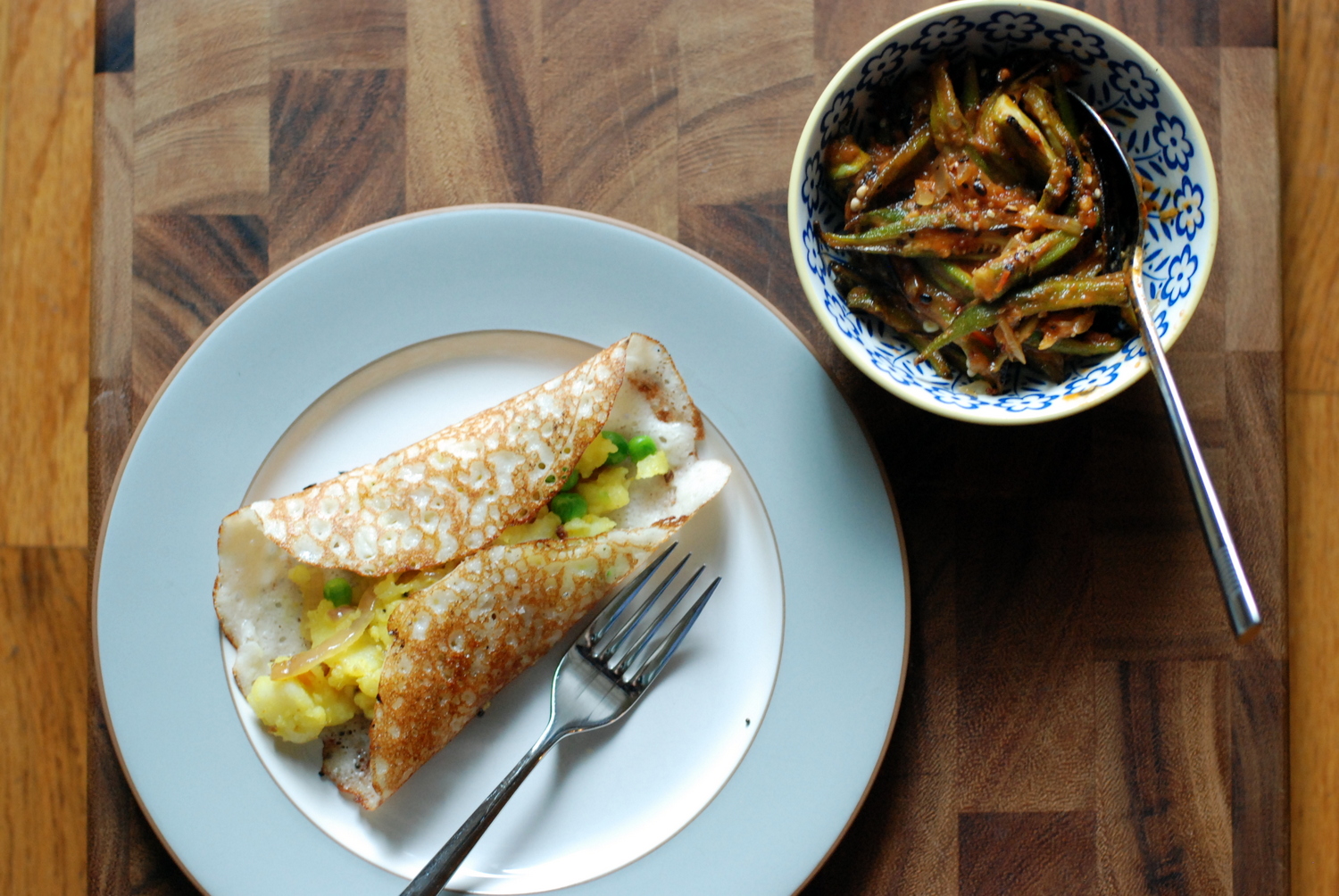
Add okra to the sauce and use tongs to coat every piece of okra with sauce. Toss a few times over the heat, just to incorporate, then serve hot with rice, naan, dal, dosa, or whatever else you feel like serving. This curry also reheats well.

In sides, vegan, vegetarian, easy, healthy
Comment

Chile Relleno Casserole

September 22, 2014 Rivka
1-DSC_0878.jpg

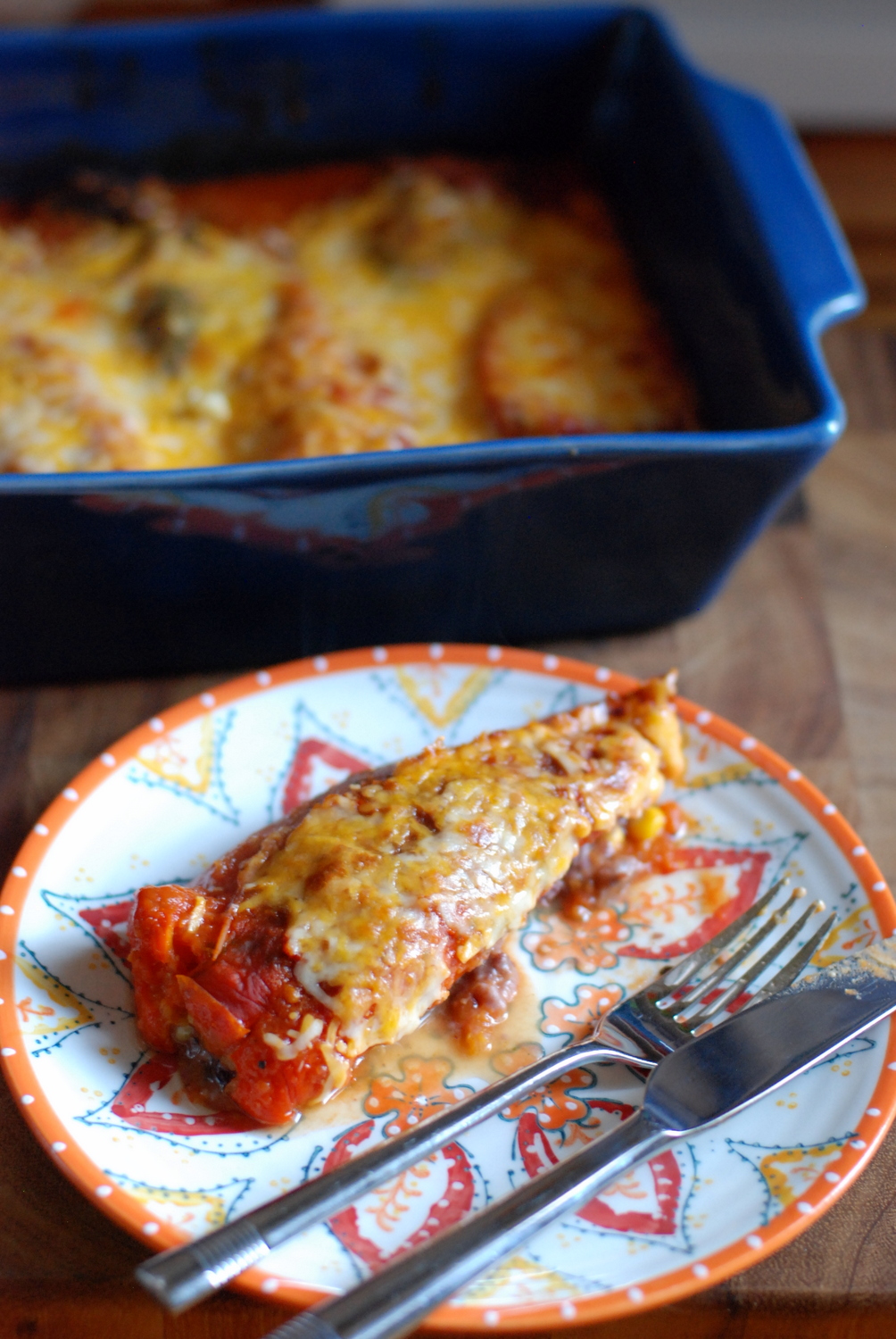
During our week on Hilton Head Island, my brother-in-law and I spent an afternoon bouncing around recipe ideas and exchanging high fives over recent cooking successes. I told him about my dosas and a particularly good peach slab pie, he told me about the ethereal cake doughnuts he'd recreated from an old family recipe. Then he told me about some slam-dunk chiles rellenos he made, and I started to get jealous. Or maybe just really hungry. I wanted those chiles rellenos, stat.

1-DSC_0824.jpg
1-DSC_0839-001.jpg

Stephen's version sounded pretty authentic. The chiles were deep-fried, and the sauce was a split-egg concoction that had to be timed perfectly. He nailed it and reaped the rewards. But I'm settling into a slightly lower-key mode of cooking, one that involves lots of casseroles and things I can make in advance. I also vaguely remembered an episode of a bobby flay show from back before I swore off the terrible food network, where a California restaurant called La Casita Mexicana made its famous chile relleno in the oven, instead of in the fryer. Between my faint memory and my very not faint appetite, I figured something could be done.

1-DSC_0851.jpg

Chiles rellenos casserole recipes abound, but they're almost all egg-based - like a massive frittata enveloping stuffed chiles. I wanted the chiles to stand out more, and  - shocker - I wanted the casserole to be saucy. So I riffed on the method for manicotti, basically swapping peppers in for noodles and Mexican stuff for all that ricotta.

1-DSC_0856.jpg
1-DSC_0866.jpg

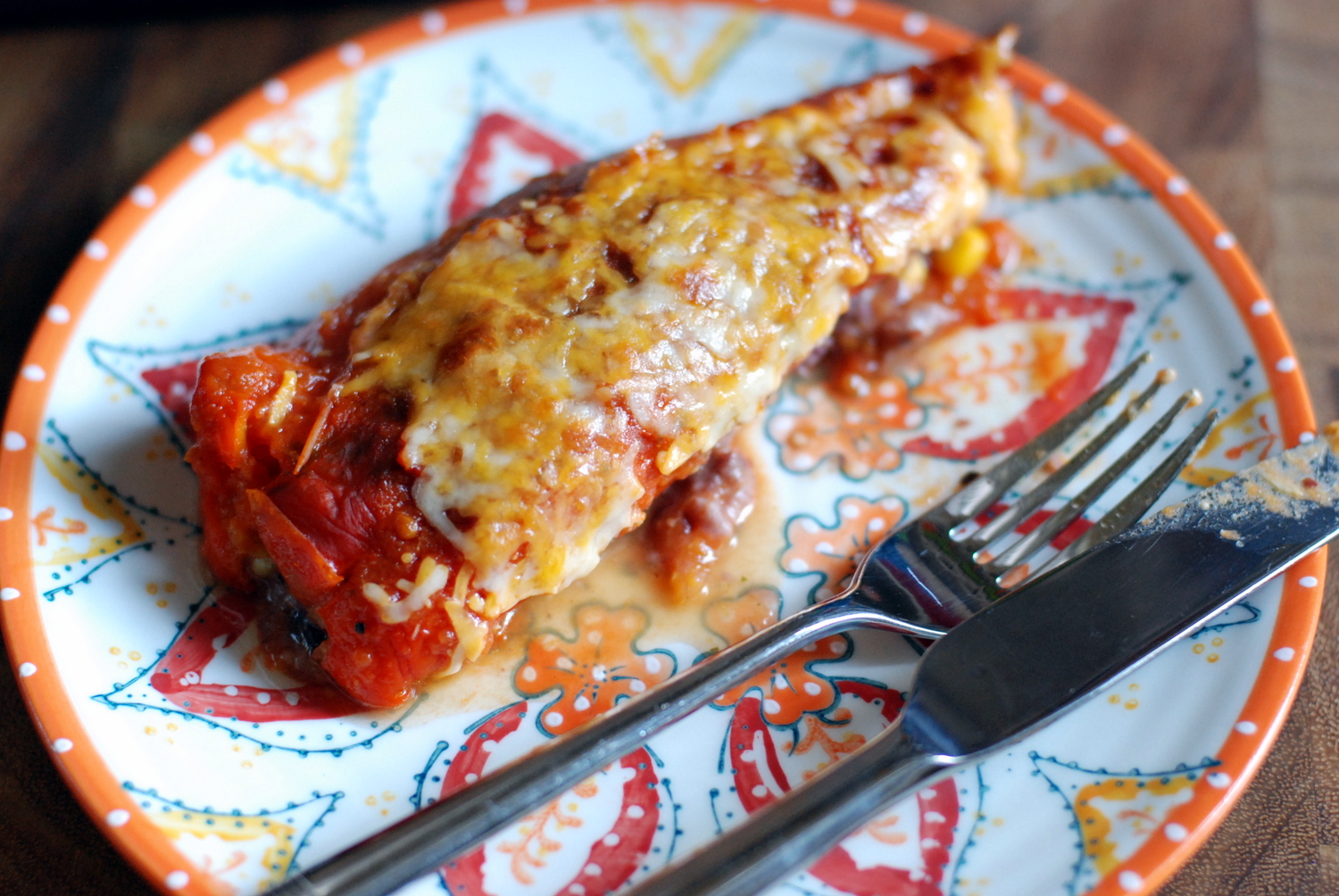
Here's where the road forks. I loved this dish. Next time, I'd make two pans full and freeze one unbaked - it's the perfect thing to have tucked away in the depths of the freezer for a lazy dinner at home. But D found the whole thing way too spicy, and she ended up taking out the leftover corn filling and making it into a quesadilla. Winners, losers. I think she just got a particularly hot pepper - mine was pretty mild. See below for some thoughts on avoiding the last-minute scramble and/or sad face due to heat.

1-DSC_0879.jpg

Notes on the fuss: Even though this is a casserole, it isn't the "dump everything in a pan and bake" kind of casserole. It's a bit on the fussy side. If you're feeling hesitant about the fuss, you can skip the tomatillos+tomatoes step and just use a large jar of whatever salsa you like. You can also probably skip blending the beans, and just toss them in with the corn; the result will be different, but no less tasty. Lastly, if you do bother to make the recipe, you might make a double batch. This is the sort of thing that freezes beautifully, and that way, it's twice the food for the effort.

Notes on the heat: One last note: poblanos are notoriously inconsistent in spice level. Some are as mild as bell peppers, and others are really quite hot. If you're nervous about the casserole being too spicy, you might consider substituting Anaheim chiles or even banana or bell peppers. Another nice option, though not widely available, are Jimmy Nardellos, which are shaped long and lean, but are not at all spicy.

Can I make this vegan? Definitely. Skip the cheese (or replace with soy cheese) and you're good to go.

Chile Relleno Casserole Serves 4 with leftovers

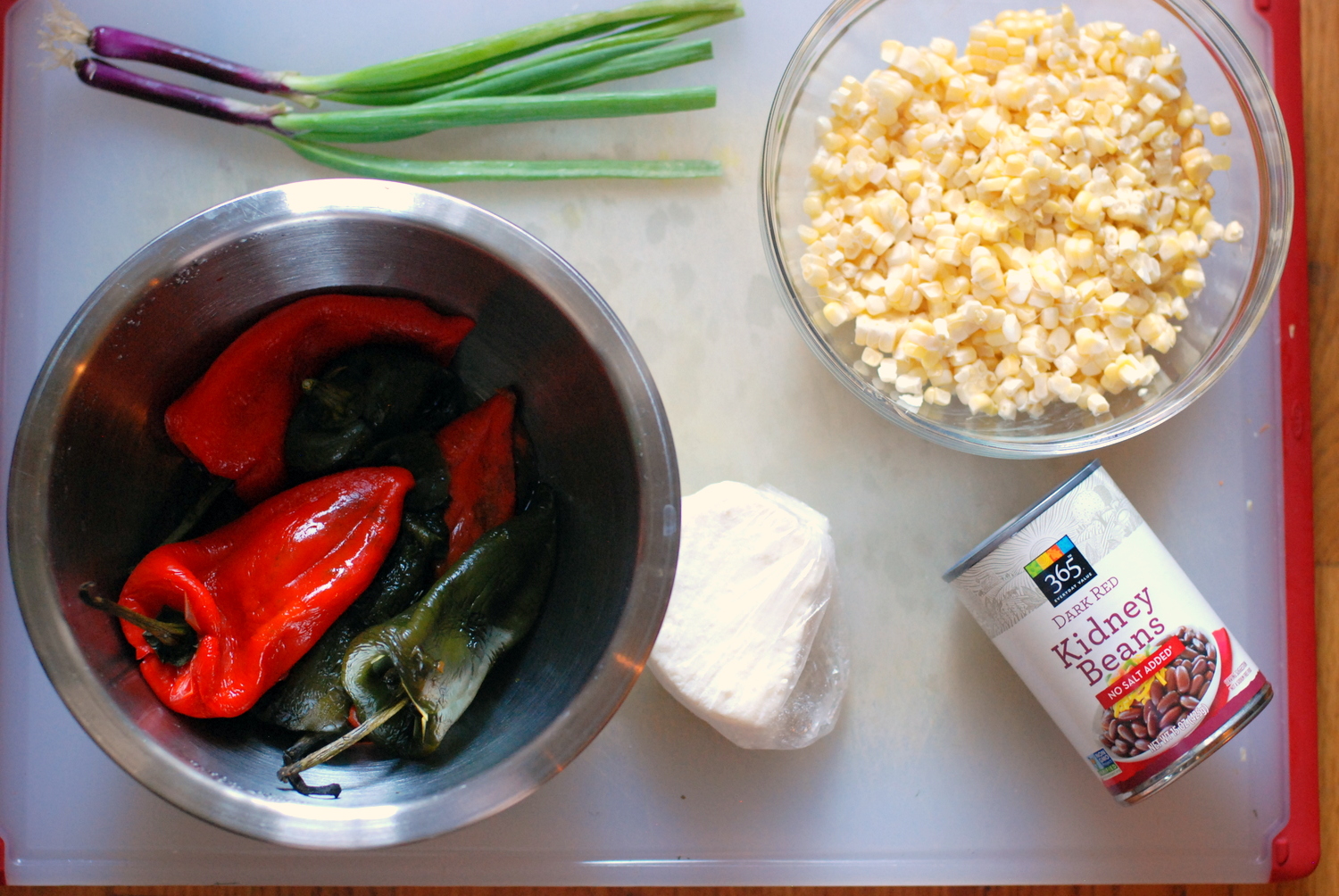
7 or 8 poblano chiles
3 tomatillos, husked and rinsed
12 oz. canned crushed tomatoes
1 canned chipotle in adobo (you may not need all of it)
1 can kidney beans
1 teaspoon epazote or dried oregano, divided
1 tablespoon olive oil or butter
kernels from 2 ears corn (about 2 cups)
2 scallions, sliced
salt
1/2 cup grated cotija cheese
1 cup grated cheddar or pepper jack cheese, or a mixture

Roast the peppers: Preheat the oven to 425 degrees F. Set the poblanos and tomatillos on a baking sheet lined with foil, and roast until blistered and soft all over, about 30 minutes total, turning peppers once halfway through roasting. Transfer peppers to a heatsafe bowl, cover with a piece of plastic wrap, and let the peppers steam while you prepare the sauce. Lower the oven to 350 degrees.

Prepare the sauce: Transfer tomatillos in the jar of a blender or a food processor (I like a miniprep). Add the tomatoes and half the chipotle, and blend until smooth. Taste, and add any salt and, if desired, more chipotle, as needed. Transfer to a bowl and set aside.

Prepare the fillings: Drain the beans, and add to the same blender or food processor container along with half the epazote or oregano. Blend until mostly smooth, adding water by the tablespoon if the beans won't blend. When beans are mostly smooth, set aside.

Heat the olive oil or butter in a saute pan over medium heat. When hot, add scallions, corn, and remaining epazote or oregano. Cook 5-7 minutes, until some of the corn has turned golden. Transfer to a bowl, add cotija cheese, and stir to combine.

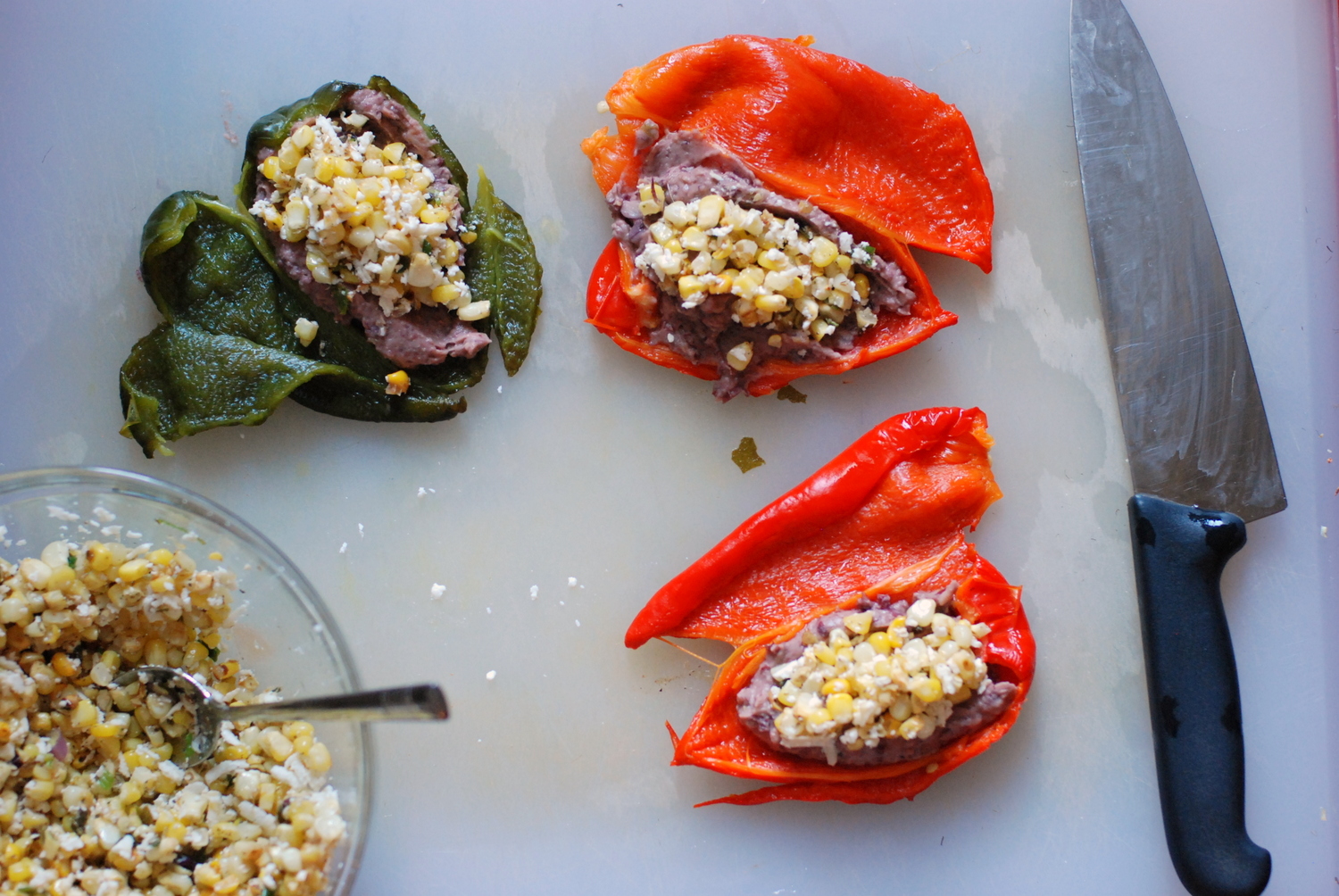
Assemble and bake casserole: By now, the peppers should have steamed enough that their skins slip right off. It's okay if little bits of skin remain, but try to remove as much as possible. Slit each pepper lengthwise down one side of the pepper, and scoop out the core and seeds from the pepper. Lay the slit pepper on a cutting board or work surface. Repeat with remaining peppers.

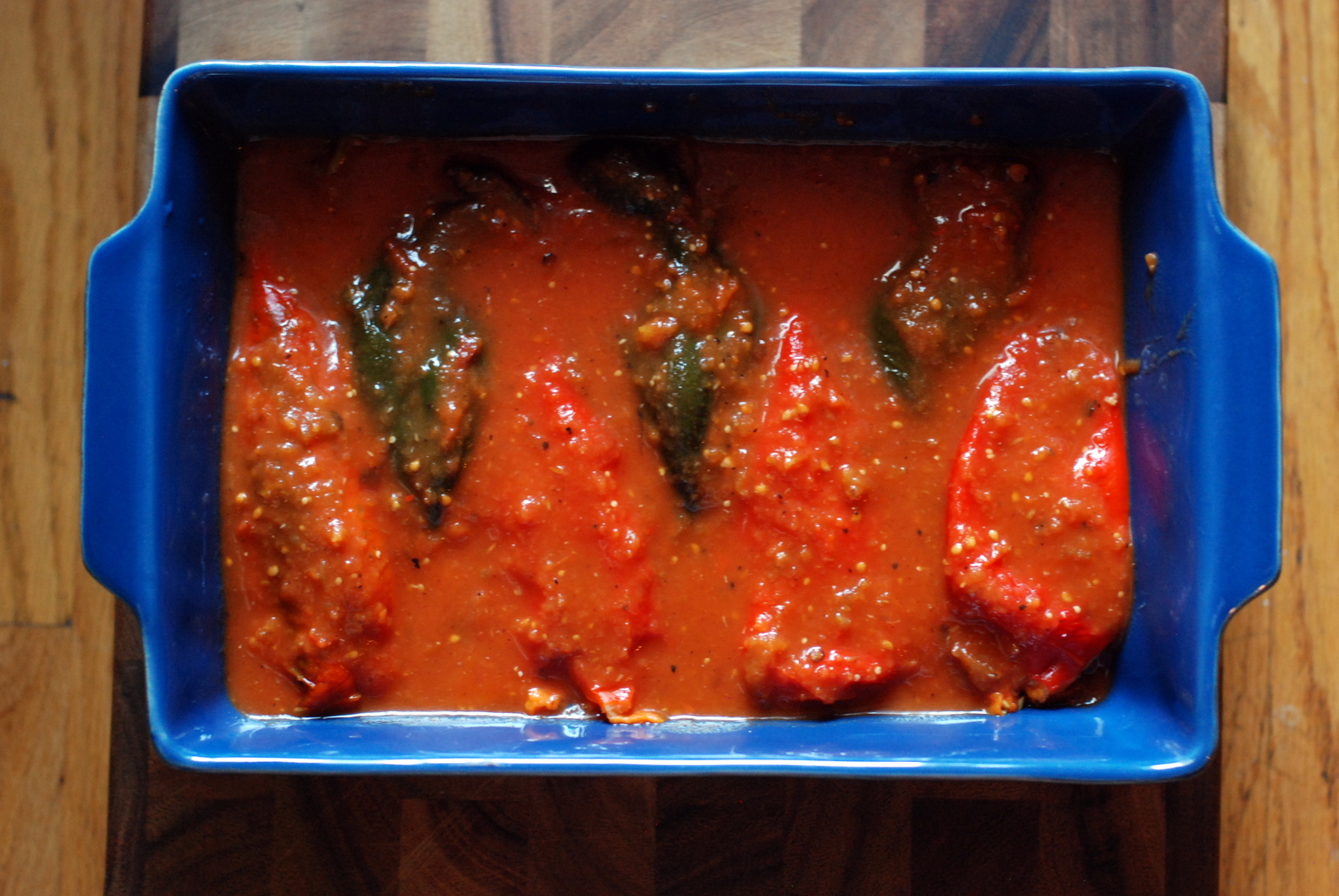
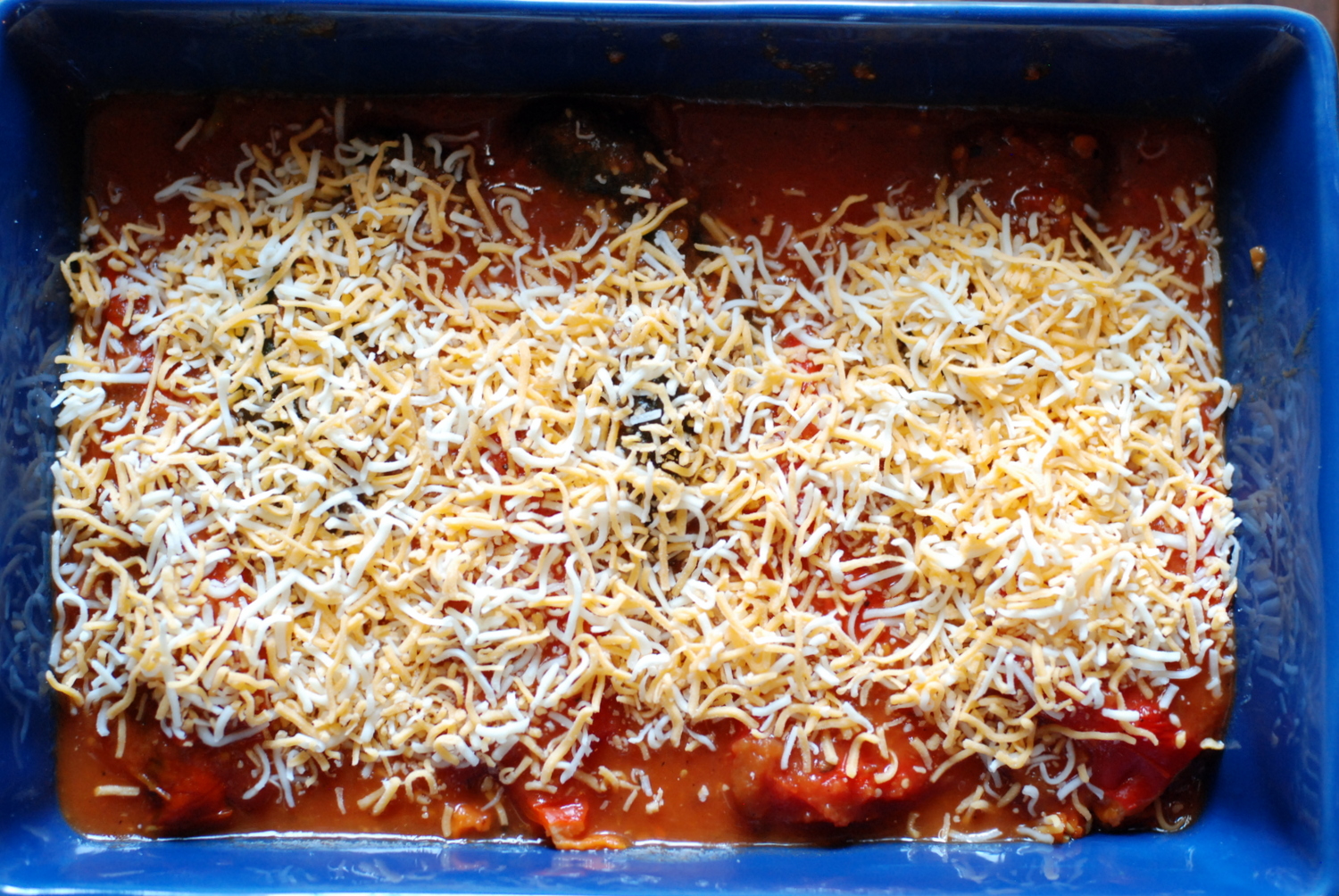
Pour 1/2 cup of the sauce into a 9x13" baking pan. Smear a large spoonful of the bean puree onto the inside of each pepper. Top with a couple spoonfuls of the corn-cotija mixture. Wrap the clean side of the pepper over the filled side, and transfer the filled pepper into the baking pan. Repeat with remaining peppers, laying peppers in the pan in alternating directions. You probably will have some leftover corn mixture; reserve it for stuffing quesadillas, or just eat it as is.

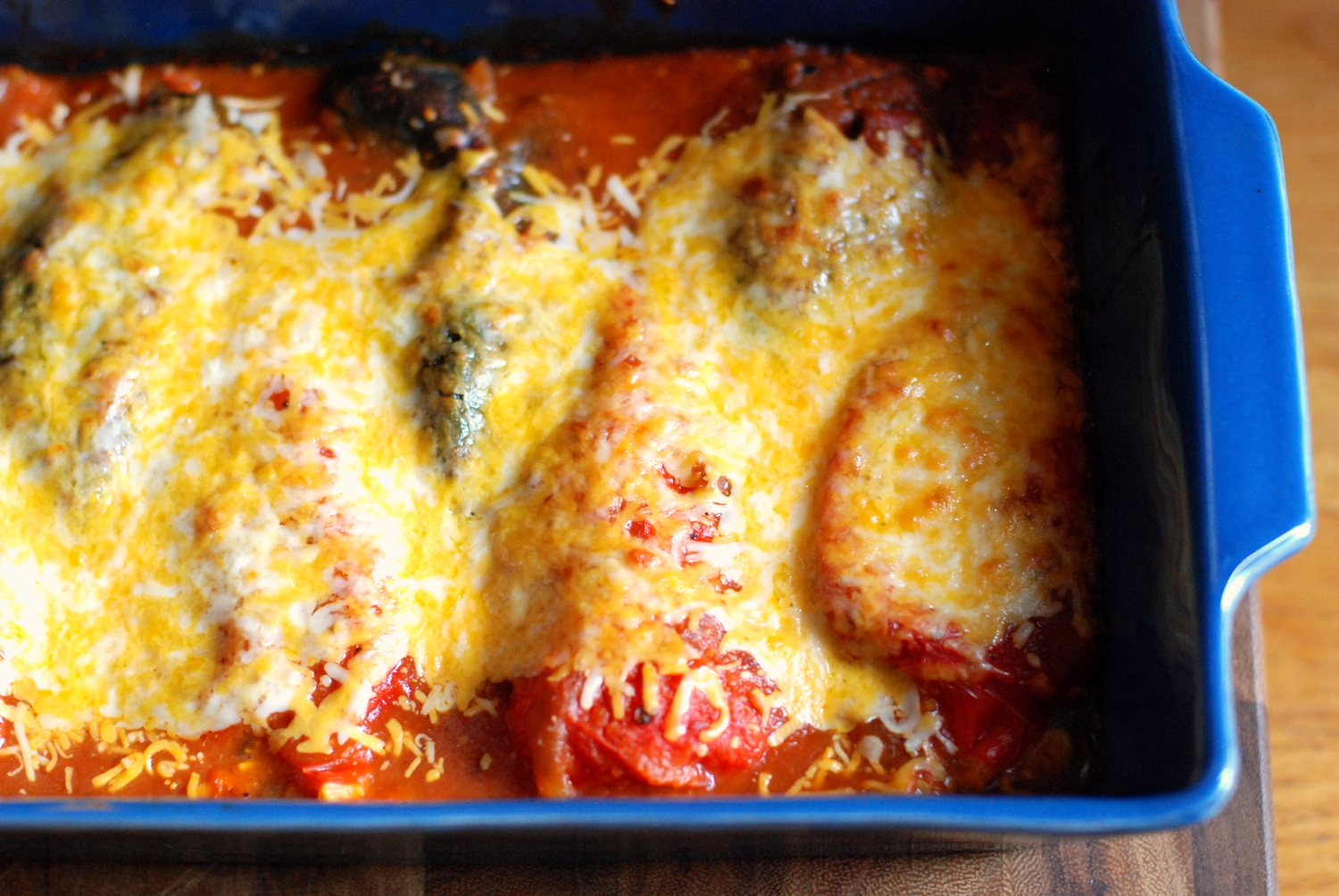
Spoon the remaining sauce over the peppers, and top with the grated cheddar or pepper jack cheese. At this point, the casserole can be frozen (preferably without the cheese), to be baked at a later date. Alternatively, transfer to the oven and bake for 25 minutes, until cheese is bubbly and melted. Let cool for 5 minutes before serving.

In main dishes, vegan, vegetarian, weekday lunch, healthy
Comment

Persian Stuffed Onions + Rosh Hashana Menus

September 17, 2014 Rivka
1-DSC_0816.jpg

This recipe isn't exactly my culinary Mount Everest. It's more like, say, pilates: the thing I know I'd like if I did it but can't quite get it up to try. Let's break it down: there's the separating of onions into layers, which looks at the outset like a royal pain. There's the filling, which involves meat and lots of spices and raw rice, which - would it really cook in the sauce? I couldn't be sure. And of course, there's that sauce, which calls for tamarind puree, which I don't always have just lying around the house. In sum, enough reasons to look longingly at a picture of the finished product, then turn the page -- again, and again, and again.

Perhaps we should chalk it up to the refreshed ambition that comes with the turn of a new year. Or perhaps, a more likely story, I'm looking down the road a couple months and seeing little other than nursing, and diaper changing, and maybe fingerscrossedplease some sleeping, but not a lot of cooking. Whatever the impetus, I had been convinced. If ever there were a time to see whether Persian stuffed onions are worth the fuss, it was now.

1-DSC_0749.jpg
1-DSC_0760.jpg

And you know what? They really are worth the fuss. First of all, they're not such a fuss. The onions, once boiled, are soft enough to separate easily. If you tear one of the layers (who me?), it doesn't matter in the least. The filling, which always looked like a pain, is actually quite the opposite: turns out, you don't need to cook it before stuffing the onions; it just cooks in the broth. (Lesson: snap judgment < actually reading the recipe.) And best of all, you can freeze the onions stuffed and uncooked, then bake them off at a later date. I'll be making a massive batch of these to stow away for the road ahead.

1-DSC_0782.jpg
1-DSC_0796.jpg
1-DSC_0805.jpg

Rosh Hashana Menu Planning: I've always flirted with Persian flavors for Rosh Hashana. For a few years running, I've served a main course of brisket with tamarind, and I almost always have some sort of sweet-sour vegetable to serve alongside. But this year, instead of just nodding toward the East, I'm building the entire menu around it.

The sweet and sour flavors of Persian cooking have always drawn me in. That they're so friendly to pomegranates, squash, and other fall produce only makes my job easier. So a couple weeks back, I started digging through The Food of Life, my guide to Persian cuisine, in search of ideas. I've settled (at least for now) on the following menu for dinner:

  • Deb's Fig and Olive Oil Challah
  • Persian Sumac Soup with Chickpea Dumplings (see Joan Nathan write all about those chickpea dumplings here)
  • Greens with Apples, Black Lentils, Celery Root, Walnuts, and Mustard Vinaigrette (a riff on this and this)
  • Tamarind Brisket (this year with lots of wine in the broth, because why not?)
  • Persian Stuffed Onions
  • Green Beans and Beets with Orange Segments and Sumac Vinaigrette
  • Apples and Honey Cake
  • A sorbet (either apple-bourbon, maple-almond, or a riff on one of these)

What are you making? I'd love to see your favorite recipes and menu ideas below - let's get the juices flowing.

Meanwhile, happy cooking, and happy new year. I hope the coming months are full of new adventures for all of us.

Persian Sweet and Sour Stuffed Onions Inspired by recipes in The Food of Life and Aromas of Aleppo Serves 4 as a main, 6 as a side dish

I'll be making two versions of these for our Rosh Hashana dinner: one vegetarian, one with ground lamb. I've given instructions for both versions below. One important note: the ratios here are hard to nail precisely, because every onion is different, and I don't know how many layers your onions will have. You are very likely to find yourself with either extra onion layers or extra filling after making this recipe. Don't sweat it. If you've got extra onion layers, dice them and add them to the sauce. If you have extra rice, cook it in a bit of broth and eat as a chef's snack, or freeze it for another time. Lastly, because the quantities vary so much, you may want to double the recipe, just to be safe. Leftovers freeze very well uncooked, and can be baked off and eaten at a later date.

For the vegetarian version:
3 large or 4 medium yellow onions
1 1/2 cups long-grain rice
1/2 cup golden raisins, chopped
1 tablespoon dried dill
1 teaspoon dried mint
1 teaspoon cinnamon
1/2 teaspoon ground cumin
1/2 teaspoon ground cardamom
1/4 teaspoon ground cloves
1 teaspoon salt
2 teaspoon pomegranate molasses
2 teaspoons tomato paste

For the meat filling: All of the above, but use only 1 cup of rice 1/2 pound ground lamb (or beef)

For the sauce:
2-3 tablespoons olive oil
1 1/2 cups tomato puree
2 cups vegetable or chicken broth
2 tablespoons tamarind puree or 2 teaspoons pomegranate molasses
2 teaspoons brown sugar
1/2 teaspoon cinnamon
1/4 cup dried apricots, coarsely chopped
1/2 teaspoon salt

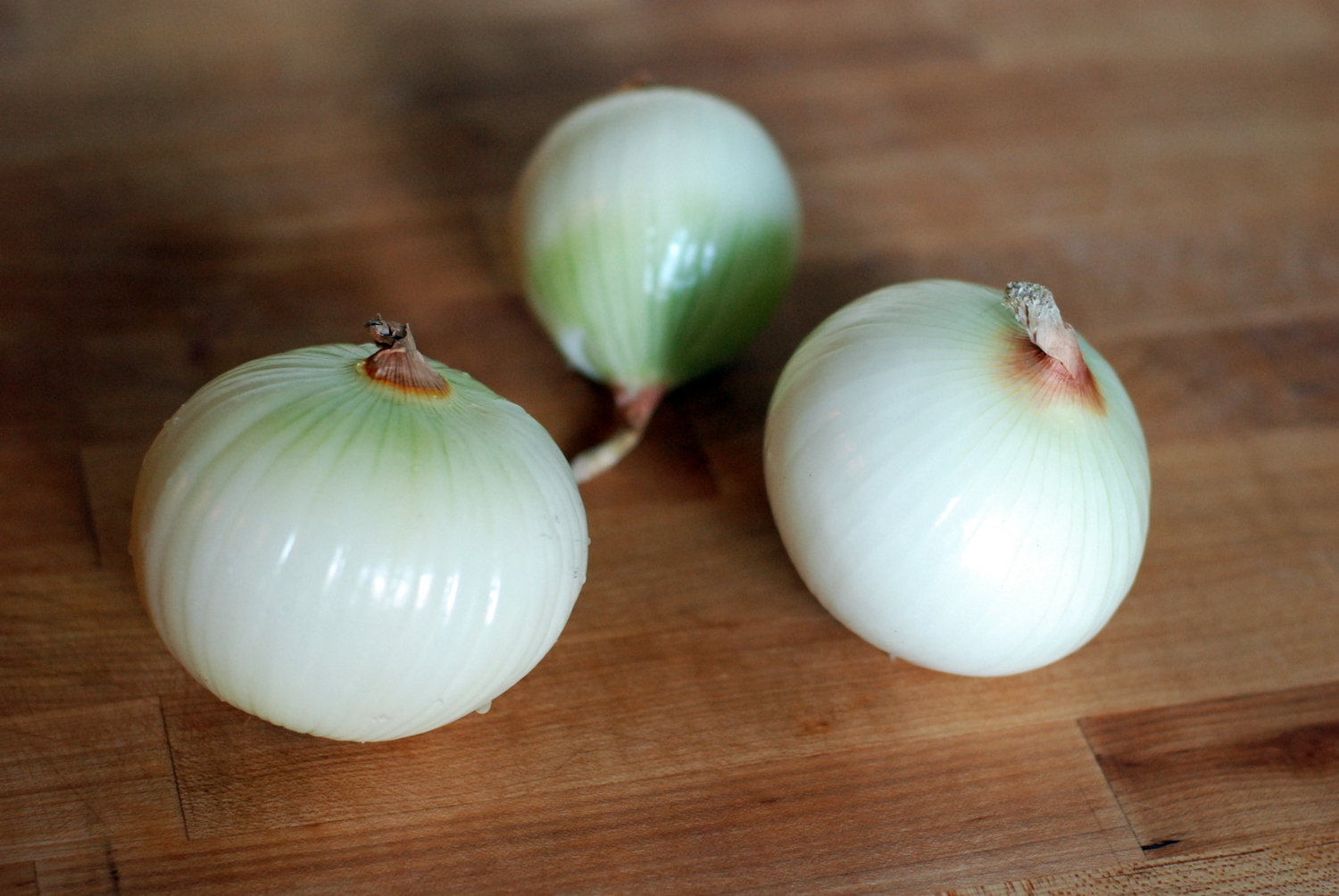
Prepare the onions: Bring a large pot of water to a boil over high heat. Meanwhile, use a paring knife to trim the very tip off of the non-root ends of the onions, and to scrape away the dry outer layers from the onions. Any layer that is even partially dried should be removed. Take care not to stab the onions' flesh, and leave the root end of the onions intact.

Add the onions to the boiling water, and simmer for 20 minutes (25 minutes for larger onions) until flesh is very soft. Strain onions and set aside to cool. (To accelerate cooling process, transfer onions to an ice bath to cool.)

Prepare the filling: Soak rice in cold water for 30 minutes. Strain rice, then combine all ingredients - including raw ground meat, if using - in a large bowl. Use a fork or your fingers to ensure that everything is evenly distributed.

Stuff the onions: Fill a medium bowl halfway with water. I find it easiest to store the onion layers in water while working, so they don't dry out. Set up a plate, tray, or other container to hold your filled onions.

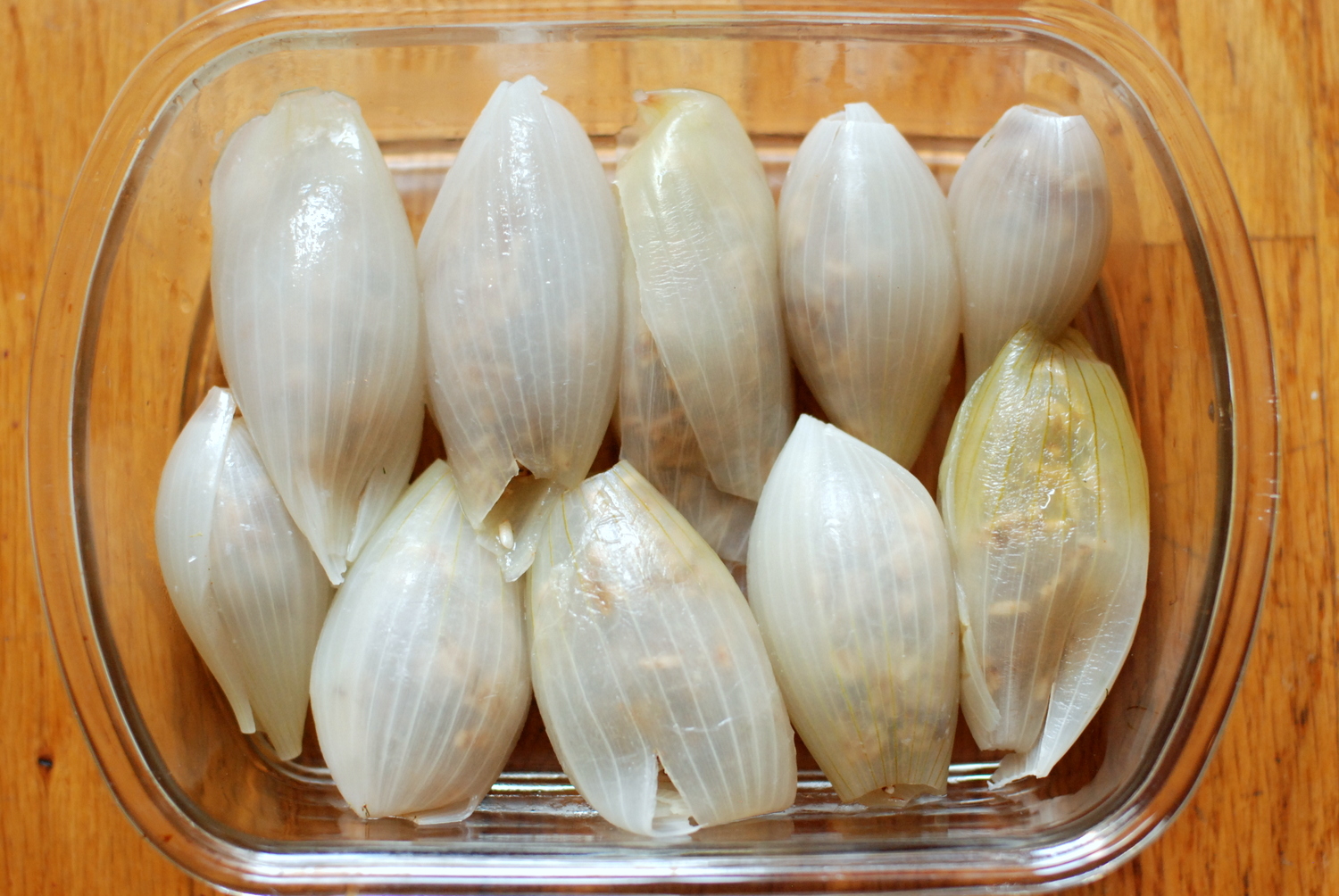
Take an onion in your hand, with the ends at top and bottom. Use the paring knife to slice a deep slit from end to end, cutting through about three layers of onion. The carefully remove the layers of onion, using your fingers to separate each layer. If a layer rips, don't sweat it - you can always patch over it once stuffed. Transfer onion layers to the bowl of water. If you can remove more sizable layers from the core of the onion, slice deeper with the knife and remove more layers. If not, set the core aside. Repeat with remaining onions.

Take an onion layer in your palm, fill it with a heaping tablespoon of filling, and wrap the layer around itself, loosely enclosing the filling. You want to leave room for the rice to expand, so don't wrap the layers too tightly. Transfer the filled onion layer to your plate or tray, and continue filling remaining layers of onions, lining them up on the tray as you go.

Freezing the onions: At this stage, you can wrap the filled onions tightly and freeze them for a few months. Thaw completely in the refrigerator before proceeding.

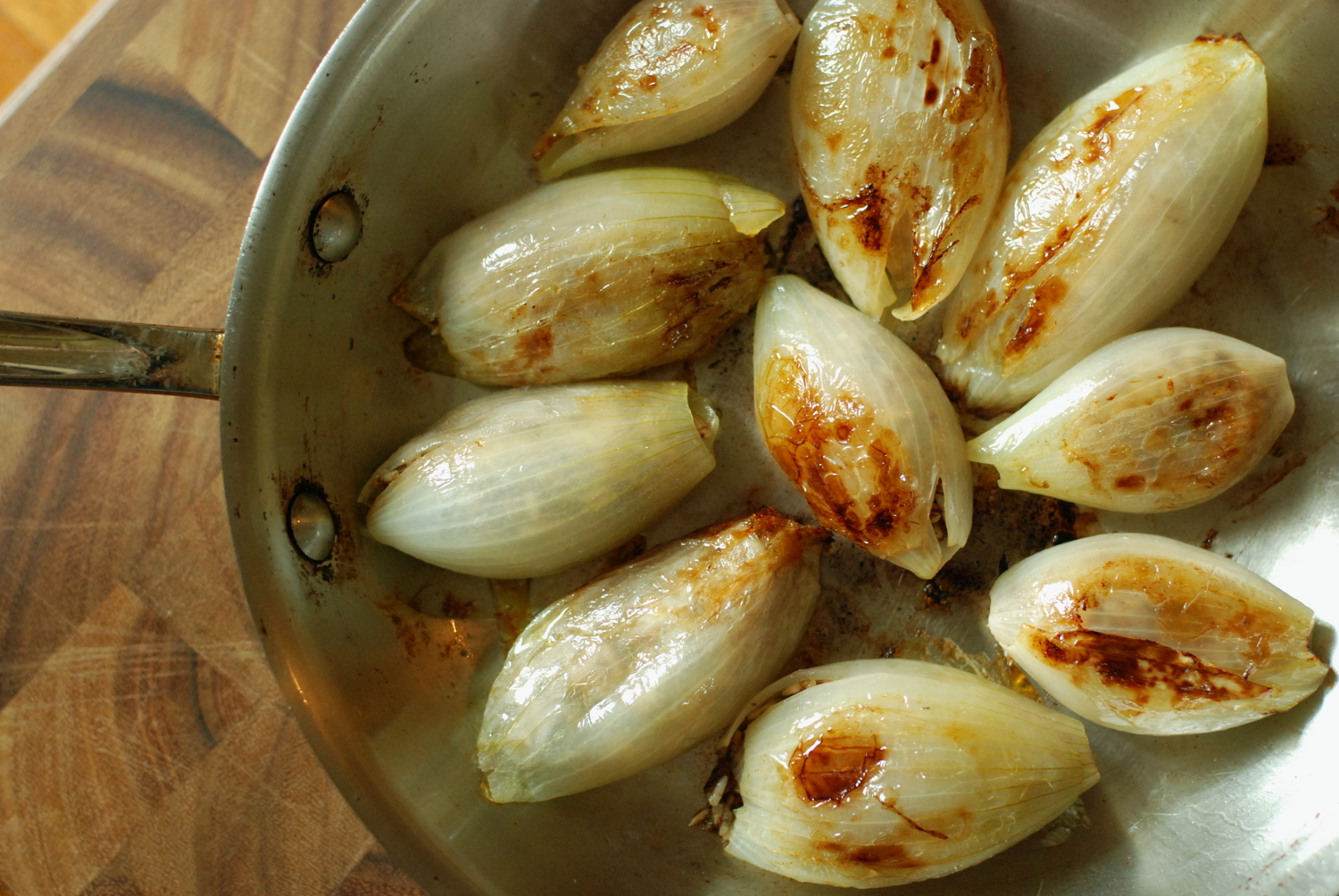
Cook the onions: Depending on the size of your pan, you may need to brown the onions in batches. If using a large roaster, all onions should fit in one batch. If using a sauce pan, brown the onions in 2-3 batches, using one tablespoon of the olive oil for each batch.

Pour olive oil into a large deep sauce pan or ovenproof roaster, and set over medium heat. When oil shimmers, carefully transfer as many stuffed onions as will fit in the bottom of the pan. Cook for 3-5 minutes, until golden, then turn and cook another 3-5 minutes on the other side. If using a sauce pan, transfer browned onions back onto your tray, and repeat with remaining onions until all onions have been browned.

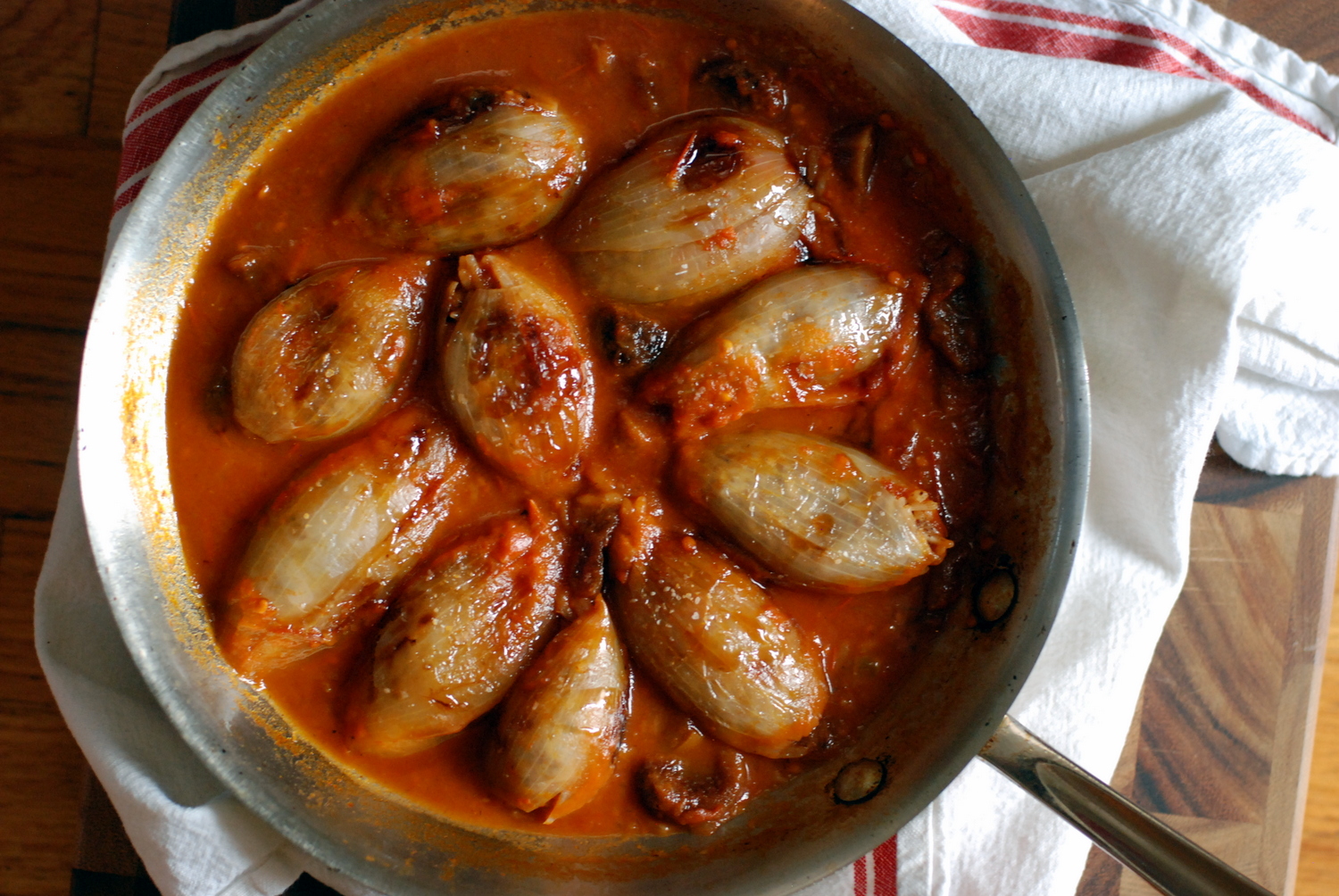
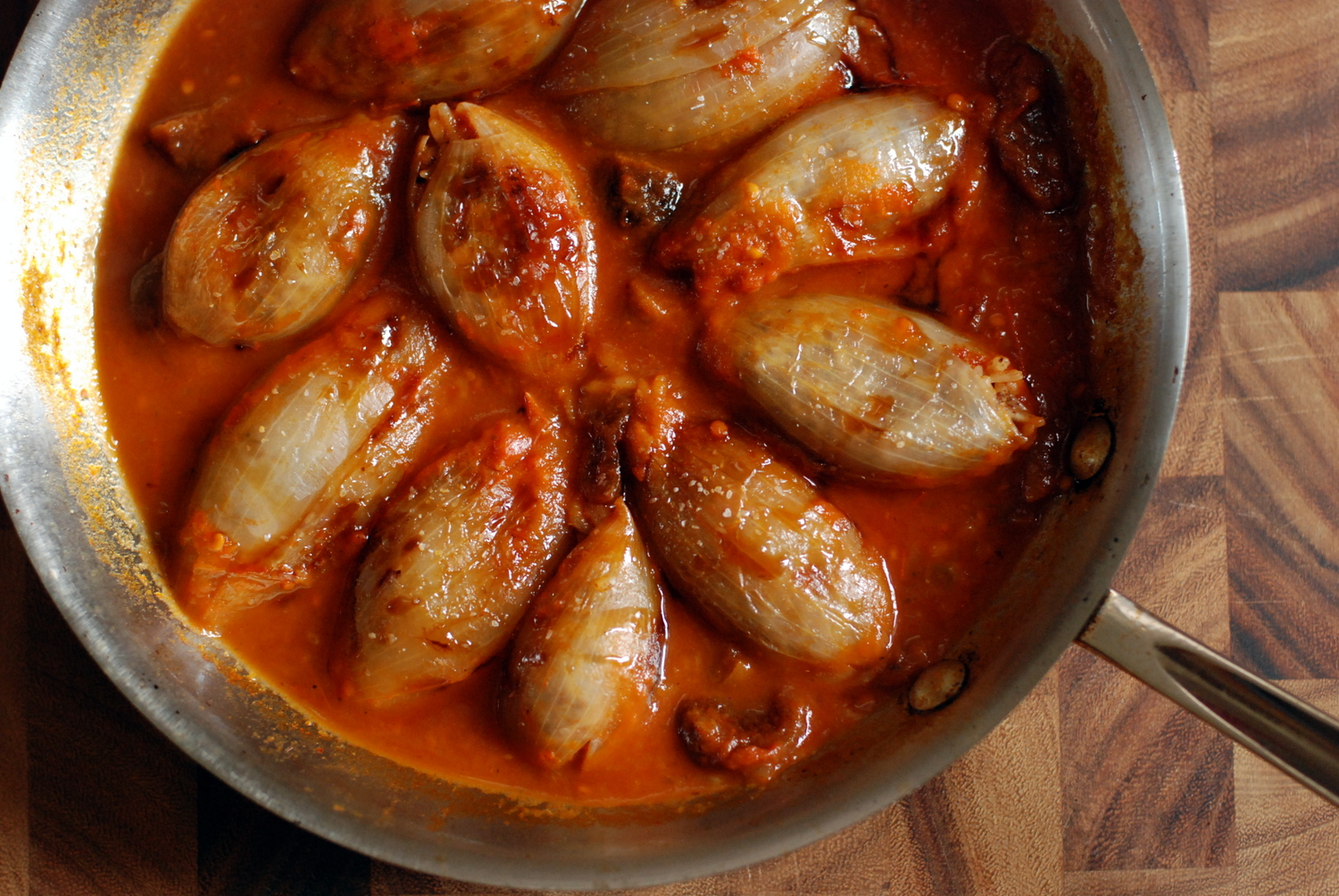
Once all onions have been browned, make your sauce in the bottom of the same pan - no need to remove the onions; they'll be cooking in the sauce. Add all the sauce ingredients, shake the pan a bit to distribute the ingredients, give a little stir around the onions to help blend the sauce, and add any onions from the tray back into the pan. Cover with a lid or tin foil, and simmer over medium-low heat for 20 minutes, until broth has thickened and filling has fully cooked. Check at the halfway point: if your stove is very powerful, your liquid may evaporate more quickly, in which case you may need to add a few tablespoons of water to keep things moving. Feel free to add as much water as you need to keep the broth from sticking.

After 20 minutes of simmering, slice into an onion layer to ensure that everything looks fully cooked; if not, add another few tablespoons of water, shake to distribute, and cook another 5-10 minutes.

Serve hot, with sauce ladled over onions.

In gluten-free, menus, sides, vegetarian
-1 Comments
← Newer Posts Older Posts →

Subscribe by email:

  • books (1)
  • crisps and crumbles (1)
  • frozen (1)
  • toys (2)
  • gifts (3)
  • egg whites (5)
  • fried (5)
  • how to use--- (6)
  • drinks (10)
  • menus (11)
  • travel (11)
  • fish (12)
  • kosher for passover (14)
  • thanksgiving (14)
  • vegan (20)
  • snacks (21)
  • techniques (21)
  • soup (26)
  • bread (28)
  • pies and tarts (28)
  • cake (33)
  • events (34)
  • condiments (36)
  • various and sundry (39)
  • uncategorized (42)
  • cookies and bars (46)
  • weekday lunch (47)
  • appetizers (48)
  • salad (51)
  • gluten-free (56)
  • comfort food (61)
  • breakfast and brunch (77)
  • sides (81)
  • dessert (90)
  • main dishes (100)
  • healthy (139)
  • easy (155)
  • vegetarian (180)

| LATEST |

Featured
Blue Chair Fruit's Black Raspberry Jam
Thai Grapefruit Salad
Mango Sticky Rice
Winter 2016: Odds and Ends
Povitica: The Best Babka Ever
Persimmon Walnut Bread
Sprout Chaat Salad + New Site!
Maple Walnut Squares
How to Give Thanks
Croissants (really, I made croissants) + other croissant-ish things

| hEALTHY |

Featured
Sprout Chaat Salad + New Site!
Fennel frond pesto + what to do with those pesky stalks
Asparagus Toasts with Pistachios and Mint
Eggplant-Walnut Pâté + Passover Ideas
1-DSC_0861-600x401.jpg
Lentils and Rice with Tamarind Sauce and Dukkah
Big Kale Salad with Pomegranate and Feta
Punchy Crunchy Ginger Salad

| BreakfAST |

Featured
Povitica: The Best Babka Ever
Croissants (really, I made croissants) + other croissant-ish things
Mushroom and Kale Breakfast Strata
Barley Porridge with Orange and Black Sesame
Ramps 'n' Eggs Biscuit Sandwiches
Asparagus Toasts with Pistachios and Mint
Apple-Cheddar Scones with Sage
Menemen - Turkish Eggs with Tomatoes and Peppers
You must select a collection to display.

© 2016 Rivka Friedman. All Rights Reserved.