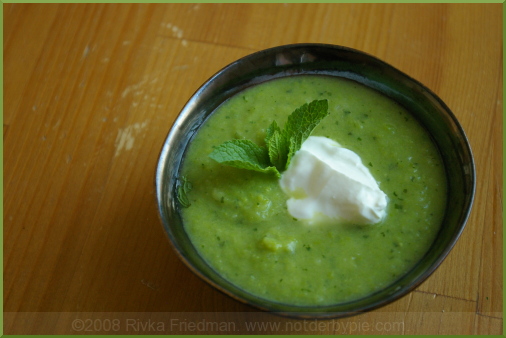
Chilled Leek and Pea Soup with Mint

peasoup1.jpg Summer doesn't take its time in DC. Blink, and before you know it, it's dripping down your back, glowing on your face, sticking the jeans you shouldn't have worn today to the back of your legs. Yep, awesome. In prepping for Washington's summer-o-sweat, I've been reminding myself to breathe deeply and contemplating ways to limit stove and oven use. But you can only eat so many salads before the sheer sight of baby greens makes you scream. The solution? Make now, eat later, chill in-between.

peasoup3.jpg

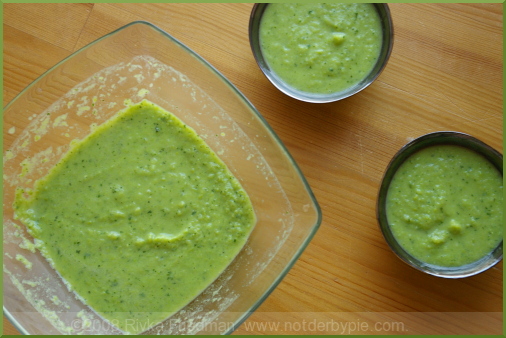
In these early days of summer, when evenings are cool enough to mitigate the unyielding humidity, I make a big pot of soup, pack it into containers, and stick half in the fridge, half in the freezer. Then, on hot days, I can pop a bowl of chilled soup right out of the fridge and eat it immediately, for some much-needed respite from the sun without a painfully hot cooking process. Same goes for iced coffee, which I make at night and drink the next day at work. Needless to say, freezing half is a strategic move to set us up for July and August, when nary a flame shall burn in this unfortunately insulated apartment.
peasoup2.jpg

On the topic of summer treats, coffee ice cubes are a fantastic way to chill your latte without diluting it. If you need a recipe, yikes.

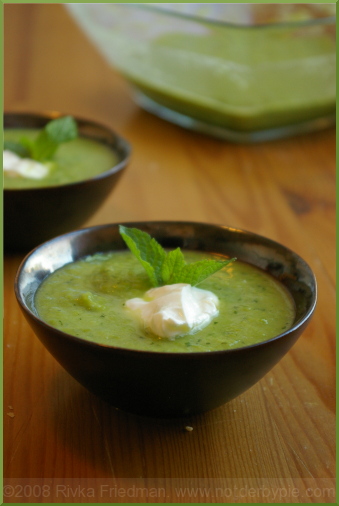
Here's a soup I've recently fallen in love with. It's been making its way around my neighborhood, and every cook has made her own changes. Shockingly, I'm no exception. I topped my bowl with a bit of lebne (or labaneh, a tangy cross between yogurt and sour cream) instead of creme fraiche, and garnished with mint instead of chives. I also adjusted the proportions a bit. Feel free to carry on the tradition, and change it to suit your preferences (or the contents of your fridge).
peasoup4.jpg

Chilled Leek and Pea Soup with Mint

  • 3 leeks, white and light green parts only, chopped
  • 1 yellow or white onion, chopped
  • olive oil
  • 16-oz. peas, fresh or frozen (not canned)
  • 4 cups chicken or vegetable broth
  • salt and pepper, to taste
  • 1 cup fresh mint
  • 1/8 Tbsp. nutmeg
  1. In a stock pot, heat olive oil over medium heat and saute nutmeg, leeks and onions with a bit of salt until translucent, about 4 minutes. The goal here is to let them develop some flavor without turning too brown or burning. Stir regularly.
  2. When leeks and onions have finished, add stock, and bring to a simmer. Then add peas, and cook, covered, for 10 minutes, until soft.
  3. Remove the soup from the heat, and add mint. Stir to combine. If you have an immersion blender, blend the soup til smooth. Alternatively, transfer soup to food processor in small batches to puree; if you overfill the processor, it'll spray hot soup all over you -- my personal version of hell, summer or not!
  4. After all the soup has been blended, transfer back into the pot, and chill. serve with a bit of creme fraiche, yogurt, sour cream, etc on top, and garnish with mint sprigs or chopped chives.
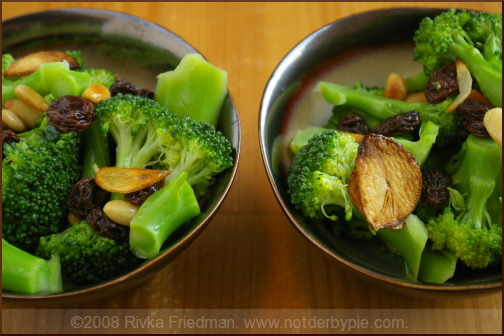
Broccoli with Pine Nuts and Raisins

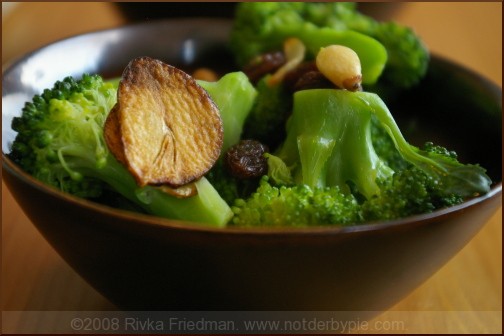
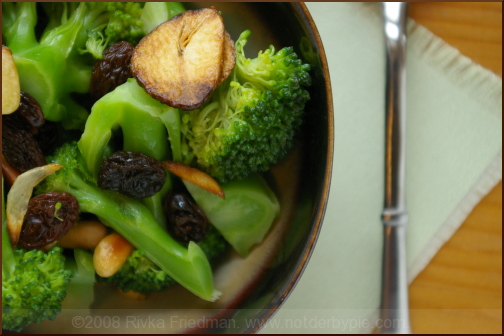
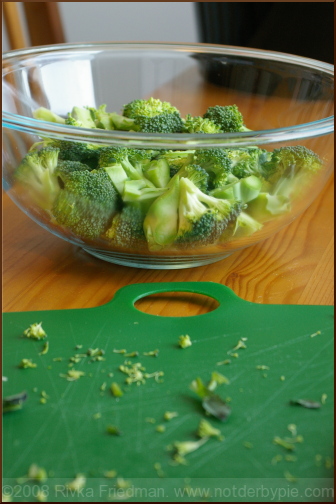
broccoli1.jpg Ever have a total jonesin' to make something that you had not intention of eating for a couple days? No, of course not. You're not crazy. Maybe it was the urge to blog that got me cooking this weekend, backwards as that sounds...but for whatever reason, I found myself chopping garlic, toasting pine nuts, and steaming broccoli and raisins, knowing full well that I was going out to dinner last night, out to a brunch baby-naming this morning, and ... well, out to dinner again tonight. The broccoli is still sitting in my fridge, save for the little bits I've been sneaking here and there. And now you all know what I'll be taking for lunch tomorrow. broccoli2.jpg

This broccoli couldn't be easier to make; its flavors are clean and pronounced, its colors fresh, and it can be eaten cold or warmed. Word on the street is that pine nuts and raisins are two of those "finicky foods" that picky eaters often don't like. Lucky for me, D dislikes both. You can be sure we won't be fighting over the last floret, 'cause it's all for me, every last bit.

broccoli3.jpg

I dreamt up this recipe after quick-sauteing some collard greens with similar ingredients. The greens, which retain a fair amount of bitterness even after cooking, balance the butteriness of the pine nuts and the sweet tartness of the raisins. I wanted to make more, but I only had broccoli in my fridge. Determined to make it work, I added some thinly sliced garlic "chips," which I browned in a couple tablespoons of oil. The chips imparted a bitter spiciness that helped round out the dish, and those 2 Tbsp. of garlic-infused oil were a perfect dressing for the broccoli.

broccoli4.jpg

The one other thing I did differently than in traditional recipes was to steam the raisins along with the broccoli, so that they plumped up. I'd definitely do this again.

I imagine this broccoli recipe would be delightful alongside some steamed cod, flounder, or other white fish, and of course some crusty bread to round out the plate. Alternatively, toss it with some pasta (cooked in salted boiling water) and sprinkle some romano cheese overtop for an easy, one-pot meal. I'll be eating it right out of the tupperware, which I imagine will be just fine.

broccoli5.jpg

Broccoli with Pine nuts and Raisins serves 2 as a side dish

  • 2 crowns of broccoli, florets separated and stems chopped into 3/4-inch slices
  • 1/2 cup raisins, preferably brown
  • 1/2 cup pine nuts
  • 1 clove garlic, sliced very thinly
  • 2 Tbsp. olive oil
  • salt and pepper to taste
  1. Preheat the oven to 350, and toast pine nuts in a single layer until they've turned golden, about 7 minutes.
  2. Place a steamer in the bottom of a big pot, and add water so that the water level comes just below the steamer. When water is boiling, add broccoli and raisins, cover, and cook until broccoli is softened but still firm and green, about 10 minutes (maybe less).
  3. If you're concerned about the vegetable turning brown, immediately transfer broccoli to an ice bath to stop the cooking. Mine was fine without the ice bath, and is still green after quite some time in the fridge.
  4. Meanwhile, slice the garlic, heat the oil on medium, and fry the garlic until it has turned golden. Try not to let it burn.
  5. Mix all the ingredients together in a large bowl, and drizzle oil and garlic chips overtop. Season with s and p as necessary. Serve warm or cold.

Whole Wheat Leek and Onion Tart

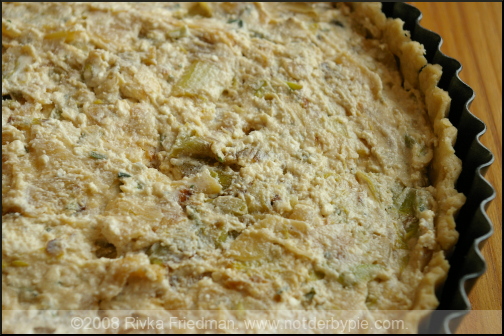
leektart1.jpg File this under "unexpectedly delicious." When I developed the recipe for this tart, I purposefully avoided making the center quiche-like. I wanted a cheesy filling laced with caramelized leeks and onions; a quiche, eggy and milky, is a whole different thing. That said, eggs make things hold together and puff a bit in the oven, so I was concerned that my eggless tart filling would be dense and soggy, and might even disintegrate once sliced. Not so, my friends, not so. This was truly an unanticipated success, and perhaps the best thing on my dinner table last Friday night.

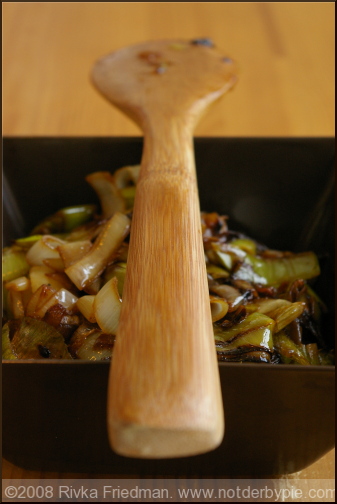
The key was caramelizing the hell out of onions and leeks; I'm talking half an hour over low heat, first covered, then uncovered, so that the onions shrunk into a big ole' pile of sweet brown goo (gosh, that sounds appetizing) and the leeks also emitted their natural sugar. This step was the longest and most annoying, as it essentially consisted of watching a pot, but I got to stir every once in a while to keep from falling asleep.

leektart3.jpg

After the onions and leeks were fully caramelized and cooled, I added them and a bunch of chopped herbs to 2 cups of soft, curded cheese. My preference is a mix of farmer cheese and ricotta (mostly farmer cheese). If you use ricotta, you may want to set it in a strainer lined with paper towels for 1/2 and hour or so, to let some of the moisture drain out. Since farmer cheese is essentially drained cottage cheese, it's relatively dry.

leektart2.jpg

As for the crust, I used a recipe for basic pie dough, and altered it so that 1/2 the flour was whole wheat. Overall, the crust tasted good and had the right flaky-crunchy consistency; however, even though I blind-baked it before adding the filling, the bottom of the crust got a bit, uh, less-than-crunchy by the time I served it. You'll be happiest with your results if you fill the crust just before baking and serving it. But do make this one, because it won a fan base quickly and I imagine I'll be making it again soon. Friday night guests, stay tuned.

leektartlast.jpg

Whole Wheat Leek and Onion Tart serves 8

For the crust(adapted from a recipe on chow.com):

  • 3/4 cup all-purpose flour
  • 3/4 cup whole wheat flour
  • 1/2 teaspoon kosher salt
  • 8 tablespoons cold unsalted butter (1 stick), cut into small pieces
  • 4 to 5 tablespoons ice water
    Combine flour and salt in a mixing bowl. Using a pastry blender, stand mixer, or your hands, cut butter into flour until the butter is dispersed throughout and the mixture is in pea-sized bits.
  1. Add 4 Tbsp. ice water and mix just until dough comes together; only add the 5th Tbsp. if you need to, and do not overwork the dough or it will become tough.
  2. Shape the dough into a disk, wrap with plastic, and refrigerate at least 30 minutes.

For the Filling:

  • 2 medium white onions, chopped
  • 2 medium leeks, white and light green parts only, sliced lengthwise and chopped into half-moons
  • 1 tsp. fresh thyme (or half tsp. dried)
  • 2 tsp. fresh marjoram (1 tsp. dried)
  • 1 Tbsp. fresh parsley (1/2 Tbsp. dried)
  • 2 cups soft curded cheese, drained if necessary
  • salt and pepper
  1. Caramelize onions and leeks in a fair amount of olive oil (enough to generously coat a heavy-bottomed skillet) and a bit of salt, over low heat for at least 1/2 an hour. Start with them covered, which allows them to soften from the steam; after 20 minutes or so, uncover them and stir regularly, until they have shrunk considerably and have turned caramel-brown.
  2. After cooling the onions and leeks, add them and all the herbs to the 2 cups of cheese. Salt and season to taste.
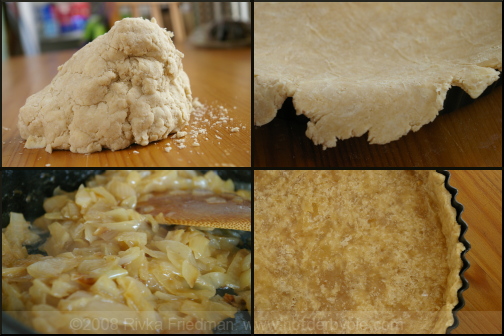
  3. Meanwhile, prepare the crust: remove from the refrigerator, and roll on a floured surface until the dough is about 1 1/2 inches wider than your tart pan.
  4. Wrap the dough over the rolling pin, transfer to the tart pan, and carefully lay it inside.
  5. Delicately press the dough into the crevices of the pan, and use a knife to trim the edges of the crust.
  6. Fill the crust with uncooked rice or beans, pie weights, or another pie dish, and bake in a 350-degree oven for 20 minutes.
  7. Set out on a counter, uncovered, to cool completely.
  8. Before serving, fill the crust with your cheese mixture, bake at 350 for 15 minutes, and serve immediately.

Shakshuka

shakshuka4.jpg To say I love shakshuka is both a huge understatement and slightly misleading. How's that? Well, I more than love shakshuka; it's one of my absolute favorite breakfasts, lunches, and dinners, and hell, snacks. When D and I can't agree on what to put in the omelet or pancakes, I just say "shakshuka?" and everyone shuts up. (Usually.)

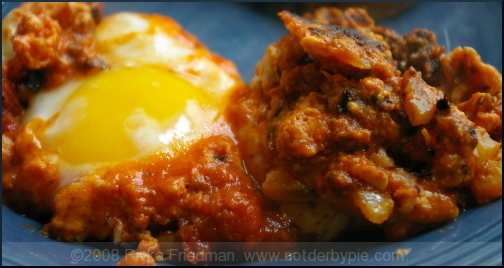
However, I like shakshuka my way. And my way is... well, my way is delicious, but it's not really shakshuka. Traditional shakshuka is an Israeli dish comprising sunny-side-up eggs in a spicy, onion-y tomato sauce. That's how I make it for D, but not for me. Please don't yell or scream or call me a fake foodie, but I don't like runny eggs. I know they're delicious and wonderful and life-changing for many-a-gourmet, but I'll have my eggs rubbery as leather and burnt on the outside, thank you very much. Scoff if you must.

shakshuka1.jpg

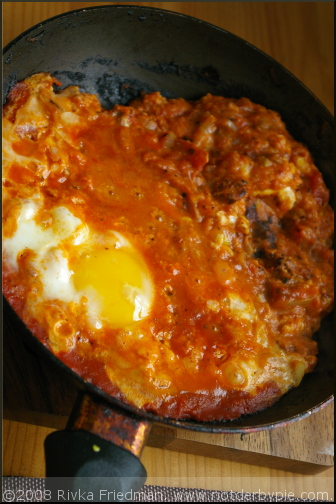
Shakshuka is easily fixed to my liking: about 2/3 of the way through the cooking process, after the egg has developed what know-it-alls call a skin, I go at it with a fork and break up the scary bits of ooziness into the sauce. Some of it mixes in with the sauce, and some stays separate; the end result is a bit of scrambled egg in a fantastically thick tomato sauce. And a happy Rivka.

Until yesterday, I'd been making shakshuka with whatever tomato sauce I had lying around and few, if any, additions. However, recently I took a field trip during my lunch break to Penzey's Spices (only the best freakin' spice shop ever ever ever, in my humble opinion. But don't trust me -- just ask the experts.) Among my treasures was a bottle of aleppo pepper, which has got a nice bite, lovely fruity and floral aromas, and an addictive flavor. I added some to my shakshuka this morning and will be doing so from now on -- it was a wonderful addition to an already great dish! If you don't have aleppo pepper just lying around your house, tsk tsk. Kidding. Just use some other chili flakes or powder, or skip it entirely; it's hard to make shakshuka taste bad.

shakshuka2.jpg

Shakshuka

  • 2 eggs
  • 2 cups tomato sauce
  • 2 Tbsp. chopped onion or shallot
  • 1/4 tsp. aleppo pepper
  • 1 Tbsp. olive oil
  • salt

In an omelet pan, sweat the onion in the olive oil over medium heat until translucent, stirring constantly, about 1 minute. Try not to let the onions burn -- though if they brown a bit it's no biggie.

Add the pepper and toss to coat; add the tomato sauce all at once, have an apron on so that it doesn't pop all over you, and stir to incorporate the onions.

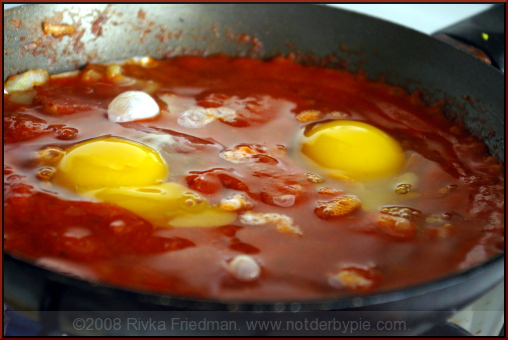
Crack the eggs, one by one and side by side, into the tomato sauce. Turn up the heat to medium high. Cover the pan with a piece of tin foil or a larger pan. Leave be for a minute.

When you uncover the pan after a minute or so, you'll notice that the eggs have started to develop a skin; if you prefer your shakshuka cooked incorrectly, as I do, start to break up the yolks with a fork and stir into the sauce. Otherwise, just leave them as they are. Use a spatula or fork to scrape the burnt bits of sauce from the bottom of the pan.

After about 4 minutes, your eggs should be fully cooked and salmonella free. Traditionally, the shakshuka would be brought to the table in the pan, and people would scoop portions onto their plates there. Alternatively, scoop one egg and a fair amount of sauce onto each person's plate, and serve good, crusty bread alongside.

shakshuka5.jpg