Summer vegetable (and fish) stew

stew1.jpg If you're anything like me, your fridge is swimming with zucchini and corn, your counters teeming with beautiful tomatoes. Not that I'm complaining, mind you -- I wouldn't dare, with summer produce this close to done -- I'm just saying, I've got three bumper crops and I don't even have a garden. What's a girl to do?

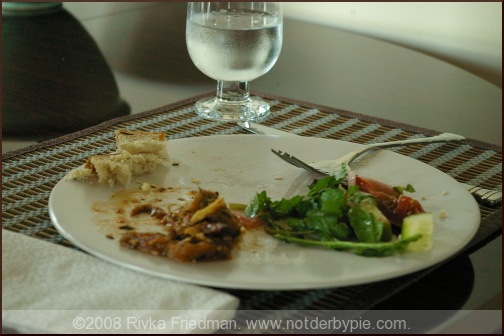
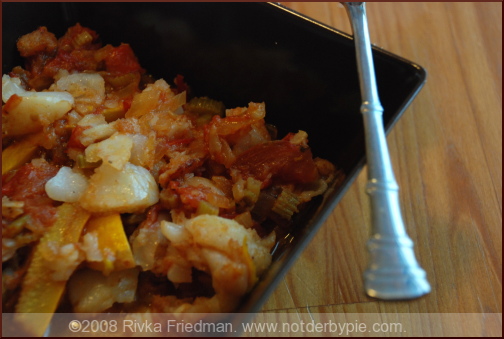
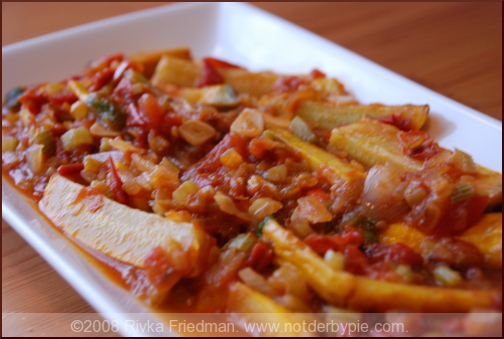
Not fret, that's for sure. I've found countless] great sources for ideas to use up the big three. Not to mention the inner-workings of my own crazy imagination...which led to this summer vegetable (and fish) stew. The fish in () because it's optional. (Not that everything in this recipe isn't optional -- hell, you could change the stew entirely for all I care -- but I've been told by my friends that I need to be more assertive and instructive, less "just do what you want"ish. I'm trying.) You want to know a secret? I didn't plan on making this a fish stew at all. I planned on making braised zucchini-ratatouille dish, then pan-frying some turbot fillets and laying them nicely on top. All went as planned, until I flipped my fillets (which were doing beautifully in a generous helping of browned butter). I'd hoped for them to have a nice, crisp browned crust, but instead the grains had separated and stuck to the bottom of the pan and it didn't look pretty at all. For your sake -- so that you wouldn't have to look at a picture of a yummy-ugly dish -- I took the ratatouille, tossed it right back in the pan, and started spearing the fillets with my spatula to break them up a bit. As I finished them off in the ratatouille, they started to break down a bit, forming a nice-looking stew. I served the stew (to myself and D) with a slice of good, crusty sourdough, which proved ideal for mopping up the juices at the bottom of my bowl. What started as a mistake ended...quite nicely, if you ask me. stew2.jpg
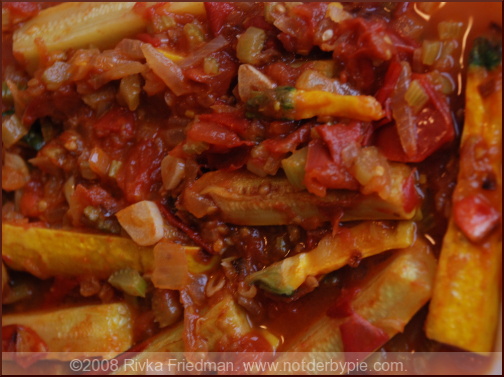
I also want to take a moment and pay homage to the humble celery. I often hate on celery, having disliked its taste when raw for quite some time, and having dreaded those ants-on-a-log snacks as a kid. I buy it almost never -- in fact, the last time I bought it was probably in college. But I had a bunch left over from the caponata, and I thought that since this stew was a clean-the-fridge stew anyway, could adding a little celery hurt? No, it most certainly couldn't. And sure enough, celery's flavor was awesome in the stew. Can I describe how so? Nope. Maybe you should try it and see for yourself?
stew3.jpg

Summer vegetable (and fish) stew

  • olive oil
  • 2 stalks celery, minced
  • 1/2 a yellow onion, minced
  • 2 cloves garlic, sliced
  • carrot, if you'd like (I didn't have any but a handful minced would do)
  • 1 tomato, chopped
  • 1 bay leaf, optional
  • 1 zucchini or yellow squash, or three of those small summer squash, cut vertically into thick slices
  • <1/2 cup liquid (stock, wine, and water will all work)

  • salt and pepper
  • 1 Tablespoon butter
  • 2 fillets turbot or other white, mild fish (total a bit more than half a pound)
  • In a heavy bottomed saute pan over medium heat, add a few Tbsp. of olive oil, and sweat the onion and garlic until very aromatic and translucent, about 2 minutes. Add bay leaf, celery, and carrots, if using, and continue to cook until soft, about 5-6 minutes. Add zucchini/squash and saute until browned, about 4 minutes. Add tomato, stir to incorporate, and add a bit of your liquid of choice, to scrape up the little bits that have gathered on the bottom of the pan. Season with salt and pepper to taste. Continue to add liquid gradually, cooking for an additional 3-4 minutes until it all comes together. Remove from heat, transfer to a bowl, and wipe out pan. (If you're not adding the fish, taste and adjust, and serve.)

    Blot fillets dry with paper towels and season liberally. Heat the butter in the same pan over medium heat until bubbly and starting to brown. Add fillets. Once in the pan, don't move them around all too much -- you want them to develop color and crispness. After about 2 minutes, flip. At this point, if yours turn out as mine did, there'll be little brown bits of fish deliciousness, and that's ok. Start cutting into the fish with your spatula, breaking up the fillets into smaller pieces. Then add the vegetables back into the pan, toss to mix, and cook for an additional 3-4 minutes until fish is fully cooked (but not too cooked), and serve in big, homey bowls with nice, crusty sourdough bread. YUM.
Not Your Ordinary Gazpacho

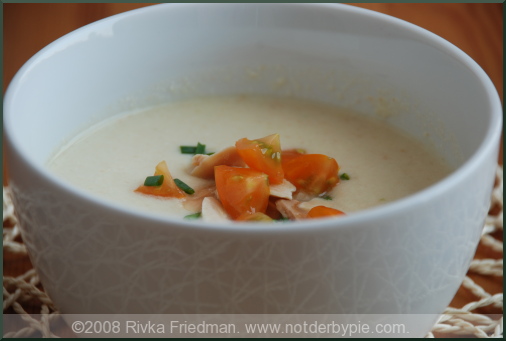
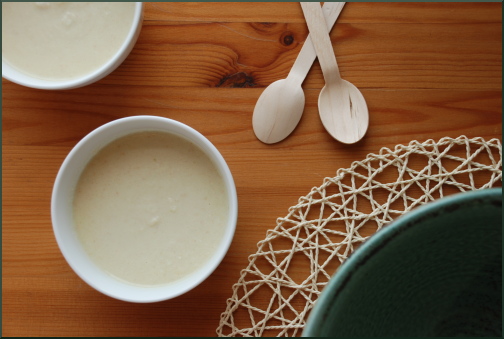
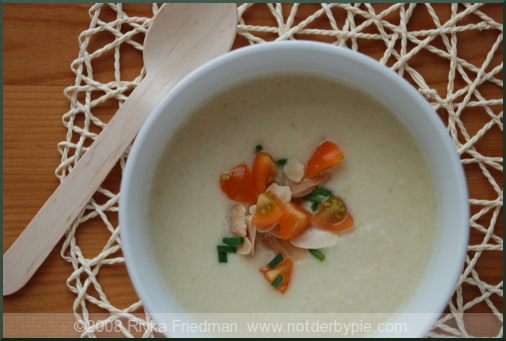
bcgaspacho1.jpg I rarely title my posts with anything but the name of the recipe I'm posting -- but this particular recipe is fabulous, and if I told you what it was called, I might scare you. Let's just say it's not your ordinary gaspacho. First off, it's white. As you might have guessed, cucumbers are definitely at play here, and they lend a wonderful fruity freshness that's key in offsetting...the other ingredients. Also in the mix are almonds that have been blanched, toasted, and ground, as well as rustic bread that's been soaked in water and blended to thicken the soup. And that other ingredient, you ask? Buttermilk. Don't freak out.

bcgaspacho2.jpg Here's the thing. The soup is called "Cucumber Buttermilk Gazpacho," but it should be called "Cucumber Almond Gazpacho." I get that buttermilk is a key player in this soup -- and I recommend making it with the real thing, and not milk mixed with a tsp of lemon juice -- but it's a flavor in the background, one that pulls everything else together, not worthy of the title. Especially since its presence scares people.

Let's just review our dairy trivia for a minute: according to Wikipedia, "fermented dairy product produced from cow's milk with a characteristically sour taste. The product is made in one of two ways. Originally, buttermilk was the liquid left over from churning butter from cream. Today, this is called traditional buttermilk. Buttermilk also refers to cultured buttermilk, a product where lactic acid bacteria have been added to milk." Ok, so it's fermented. Lest that scare you, so is wine...and who doesn't love a nice glass of wine? It's also sour. But so are lemons and limes and oranges, oh my! so don't hate. And if you've ever swallowed your nerves and tried buttermilk -- in pancakes, or ice cream -- you know that it's got a quite distinctive, quite lovely flavor. So there.

bcgaspacho3.jpg

Lest you be concerned that this soup is too rich, I can assure you, it's not. And I'm sensitive to creaminess. The generous garnishes of juicy tomato, sharp scallion, herby parsley and toasted almonds make this a fun soup to eat while offsetting the buttermilk perfectly.

Here's what I can promise: everyone cringes when I say the name of this soup. But guess what else? No one has not tried it. And? No one has not liked it. So maybe you'll try it. And maybe you'll like it. Just maybe.

**I must give props to Jana. Not only did she introduce me to this recipe (by way of making it for a recent lunch party), but she opened my eyes to the oft-doubted-but-kind-of-wonderful marthastewart.com. So thanks to Jana!

bcgaspacho4.jpg

Cucumber Buttermilk Gazpacho from MarthaStewart.com

Makes 6 cups

* 3/4 cup whole blanched almonds * 1/2 cup sliced blanched almonds, for serving * 4 ounces rustic white bread, crust removed, bread cut into chunks * 2 1/2 pounds Kirby or regular cucumbers, peeled, seeded, and coarsely chopped (about 4 3/4 cups), plus 1 unpeeled cucumber, diced, for serving (about 9 cucumbers total) * 2 small garlic cloves * 1/2 cup extra-virgin olive oil, plus more for drizzling * 3 tablespoons fresh lemon juice * 1 cup buttermilk * 2 teaspoons coarse salt * Freshly ground pepper, to taste * 3/4 cup cold water, plus more if needed * 1 large ripe beefsteak tomato, diced, for serving * 4 scallions, sliced, for serving * 1/2 bunch fresh flat-leaf parsley, for serving (I used chives instead of scallion and parsley, because that's what I had lying around...)

Directions

1. Preheat oven to 350 degrees. Spread whole almonds in a single layer on a rimmed baking sheet, and spread sliced almonds in a single layer on another rimmed baking sheet. Toast in oven until brown and fragrant, 7 to 10 minutes (sliced ones will brown more quickly). Let cool. 2. Place bread in a bowl, and cover with cold water. Let stand 10 minutes. Squeeze out liquid, and discard. 3. Puree half of each of the whole almonds, bread, peeled cucumbers, and garlic in a blender. Add half of each of the oil and lemon juice, and puree. Transfer to a large bowl. Repeat. 4. Stir in buttermilk, salt, and pepper. Add water; if a thinner consistency is desired, add more water. Pass through a medium sieve. Refrigerate at least 1 hour (or overnight). If desired, thin with water before serving. Serve cold. Drizzle with oil, and serve with diced cucumber, tomato, scallions, parsley, and sliced almonds on the side.

Portobello Burgers

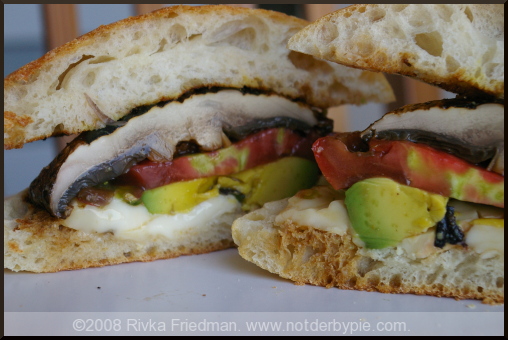
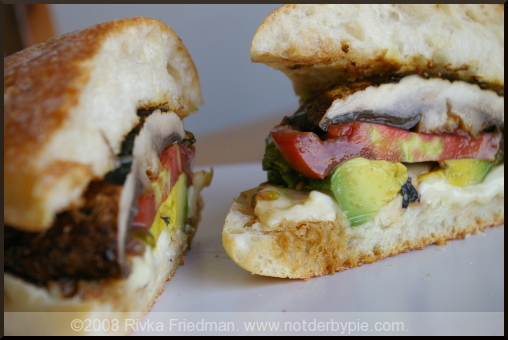
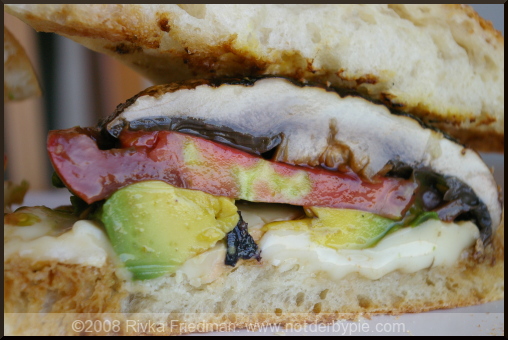
burger1.jpg Until two nights ago, I'd never made a portobello burger. Hard to believe, I know. It's, like, the simplest thing to make. Like, ever. And yet I somehow managed to make chocolate pretzels, potato foccacia, even Buche De Noel before getting around to this dead-simple dinner. Well, we've remedied that, folks, yes we have -- and it certainly won't be the last time I do it. Some facts about portobello burgers: they're freakin' easy. And tasty. Did I mention easy? Oh, and they're uber-versatile. Like last night, for example, D ate hers as she would a normal burger: pickles, honey mustard, tomato, bbq sauce. I had mine like a true snob: taleggio cheese, avocado, heirloom tomato, pesto, on ciabatta bread. Delicious either way, we'll both assure you. And really, took approximately 8 minutes to cook. I don't have a grill or grill pan, but I used a very hot castiron pan and it did the trick.

burger2.jpg

Will I be making these again? Uh, you bet. It's a non-recipe, but if you need step-by-step instructions, find them here, here, and here.

burger3.jpg

Portobello Burgers

Bun or roll (I used ciabatta) portobello mushroom, rinsed and stem removed 2 slices cheese: I used taleggio, but bleu, chedder, fontina, smoked mozzarella, or pepper jack would be lovely, among others toppings of all sorts. some suggestions: - cabbage, orange segments, teriyaki sauce - lettuce, tomato, mustard, pickles - lettuce, avocado, tomato, pesto - roasted red pepper, kalamata olives, feta, parsley - I could go on and on, you get the drift, yes?

Marinate the portobello for about 10-15 minutes in some sort of liquid (bbq sauce, teriyaki, pesto and olive oil and vinegar, etc).

Heat a heavy-bottomed stainless steel or castiron pan over medium-high heat. When the pan is hothot, drizzle a bit of olive oil in the pan, and immediately plunk down the mushroom, rounded side down. It'll sizzle away; that's a good sign. Meanwhile, toast your bread and gather your other ingredients for easy assembly.

Your burger should form a nice "crust" on the top of the cap after about 4 minutes in the pan; at that point, flip it over and cook another few minutes. Pile your burger with toppings, slice in half, and enjoy!

Price Comparison - local heirloom tomatoes: 3.99 per pound (definitely more expensive than hothouse tomatoes but soo much tastier) - portobellos, from the market, 3 bucks for 2; at the store, 6 oz (approx. 4) for 5 bucks - avocados, organic, not local (from CA): 2.39 a piece - pesto -- homemade from a gallon-size bag of basil, which cost 7 bucks

LocalSeasonal Take 1: Caponata

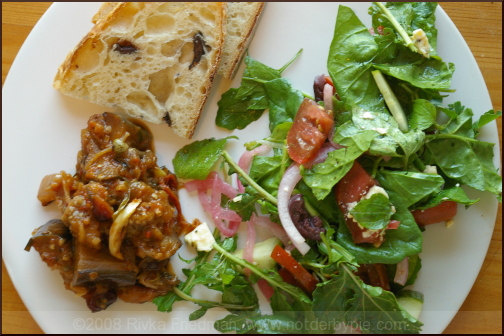
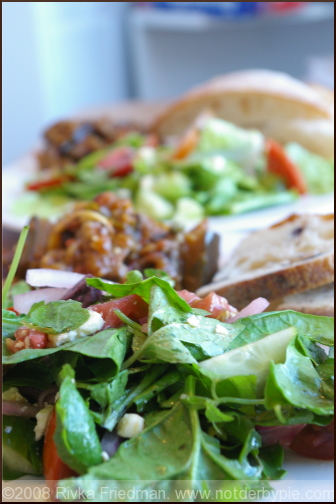
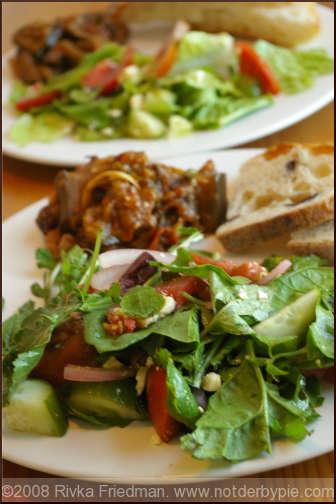
caponata1.jpg If I may say so myself, tonight was a smashing success. A whole day into my challenge and I'm still thrilled that I took it on! On the menu this evening was kalamata olive sourdough bread from the market, homemade eggplant caponata, and greens with heirloom tomatoes, feta, and red onions that I pickled in fresh-squeezed lime juice till they turned a beautiful shade of purple.

caponata2.jpg

Some thoughts on preparing and eating tonight's dinner:

  • This is really the clincher, I think -- everything just tasted so fresh. The heirlooms were bursting with juices, like perfect summer tomatoes should. The greens -- a mixture of spinach and arugula, also from the market -- were beautiful and quirkily shaped, not like th uniformly-chopped salad greens you can by at the store. They were also super fresh, the arugula nice and spicy. Even the caponata, which I made with tomato sauce that I cooked up this weekend, tasted fresh. It doesn't take much to sell me on the virtues of maximizing fresh produce in my cooking, now does it?
  • The irony about cooking and preparing such fresh produce is that while my mouth waters at the site of my farmers market bounty far more than it does with the contents of a Safeway grocery run, I also eat so much more slowly when what's on my plate smacks with fresh-homemade-ness. When the food isn't fresh, or isn't in season, or for some other reason doesn't taste its best, I tend to just shovel it in and scarf it down mindlessly. When dinner is as fantastic as it was tonight, I find myself savoring every bite, thus feeling full earlier and eating less. I made like the French tonight -- I ate 1 slice of bread, 1 ladleful of caponata, and 1 helping of salad; and I didn't go back for seconds.
  • caponata3.jpg

  • There's something sensual about cooking with local, seasonal ingredients. For one thing, they're more delicate. I wash them, dry them, chop them, and generally handle them with far more care then when I'm chopping up a couple winter tomatoes (which I hope to buy less, by the way). Time with myself in the kitchen has always been therapeutic and restorative for me; all the more so when I'm working with the best produce summer has to offer.
  • Some of you no doubt are thinking that I picked a mighty convenient time to do this -- at the height of summer's produce boon. And you'd be right! No way around that. But I will say that there are few things I love more than a good winter stew -- and there are few things more comforting to cook as well. So without making any promises, I imagine that I might take away from this experience a desire to eat seasonally even when the season has limited produce to offer.

caponata4.jpg

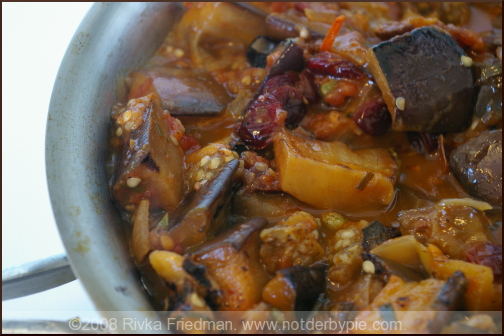
Are any of you out there trying this or something like it? If so, do share your stories! For now, here's a blueprint for the caponata I made tonight. As I made it by taste-and-adjust, there's no precise recipe. You'll just have to get in there and try it yourself. :)

caponata5.jpg

Caponata

Olive oil (at least 1/4 cup) 1 medium to large eggplant, firm and shiny, in 1-inch cubes 1 1/2 cups tomato sauce or crushed tomatoes 1 small red or yellow onion, chopped 1 stalk celery, chopped very fine 4 cloves garlic, peeled and kept whole 2 Tbsp capers 1/3 cup raisins, dried cranberries, cherries, or currants 1 cup white wine 1/4 cup white wine or cider vinegar several sprigs of mint dried marjoram, oregano, tarragon, or other herbs salt and pepper chili flakes

In a heavy bottomed large saute pan, heat a healthy dose (a few Tbsp) olive oil on medium-high. Add eggplant and toss around the pan, allowing to scorch in places, about 4 minutes. After the eggplant is browned and softened a bit, remove and place into a bowl off the heat. Add a few more Tbsp of oil, turn heat to medium-low, and add onions and garlic, allowing to cook just until they start to brown. When that happens, add the celery, brown a bit, then add eggplant back into the pan, and add a bit of the wine, just to deglaze the bottom of the pan. Add the tomato sauce, and toss or stir to coat. Add the herbs, the capers and the dried cranberries/raisins/whatever, as well as a bit more of the wine (total about 2/3 cup). Cover the pan and allow to simmer, on low heat, for at least 20 minutes until the garlic is soft and mushy, the raisins/cranberries are plumped a bit, and the eggplant is soft. From here on out, it's a game of taste and adjust. If needed, add more wine. If the flavoring tastes right to you, just add water if you need to thin it out. Add salt and pepper to taste.

Serve room temperature, hot, or cold, with sliced [I like toasted] crusty bread, and perhaps a few cheeses.

caponata6.jpg

Price Information: eggplant from the farmers market, 1.69 per pound 1.67 per eggplant at the store beefsteak tomatoes from the market, 2.50 per pound 1 dollar each at the store greens from the market, 5 dollars for half a pound 6 oz. for 3.79 at the store -- about equal heirloom tomatoes from the market, 3.99 per pound not available at my store herbed feta cheese, 9.75 per pound at the market 8.58 per pound and nowhere near as good! half a kalamata sourdough at the market, 2.50 price varies -- can you get half a loaf at your store?

On balance, I definitely think I came out ahead here, and the price differential is slim to none in most cases. Food for thought...