Portobello Burgers

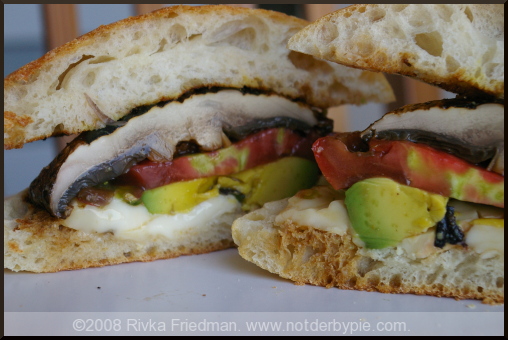
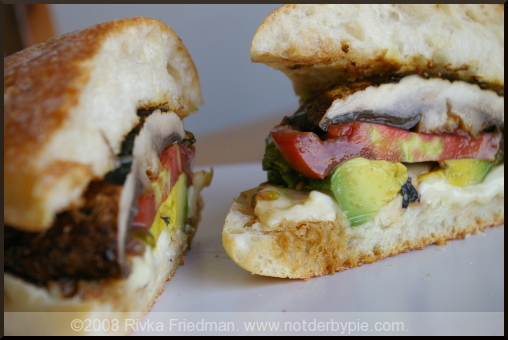
burger1.jpg Until two nights ago, I'd never made a portobello burger. Hard to believe, I know. It's, like, the simplest thing to make. Like, ever. And yet I somehow managed to make chocolate pretzels, potato foccacia, even Buche De Noel before getting around to this dead-simple dinner. Well, we've remedied that, folks, yes we have -- and it certainly won't be the last time I do it. Some facts about portobello burgers: they're freakin' easy. And tasty. Did I mention easy? Oh, and they're uber-versatile. Like last night, for example, D ate hers as she would a normal burger: pickles, honey mustard, tomato, bbq sauce. I had mine like a true snob: taleggio cheese, avocado, heirloom tomato, pesto, on ciabatta bread. Delicious either way, we'll both assure you. And really, took approximately 8 minutes to cook. I don't have a grill or grill pan, but I used a very hot castiron pan and it did the trick.
burger2.jpg

Will I be making these again? Uh, you bet. It's a non-recipe, but if you need step-by-step instructions, find them here, here, and here.
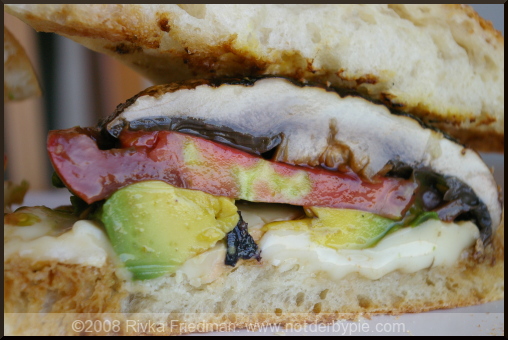
burger3.jpg

Portobello Burgers

Bun or roll (I used ciabatta) portobello mushroom, rinsed and stem removed 2 slices cheese: I used taleggio, but bleu, chedder, fontina, smoked mozzarella, or pepper jack would be lovely, among others toppings of all sorts. some suggestions: - cabbage, orange segments, teriyaki sauce - lettuce, tomato, mustard, pickles - lettuce, avocado, tomato, pesto - roasted red pepper, kalamata olives, feta, parsley - I could go on and on, you get the drift, yes?

Marinate the portobello for about 10-15 minutes in some sort of liquid (bbq sauce, teriyaki, pesto and olive oil and vinegar, etc).

Heat a heavy-bottomed stainless steel or castiron pan over medium-high heat. When the pan is hothot, drizzle a bit of olive oil in the pan, and immediately plunk down the mushroom, rounded side down. It'll sizzle away; that's a good sign. Meanwhile, toast your bread and gather your other ingredients for easy assembly.

Your burger should form a nice "crust" on the top of the cap after about 4 minutes in the pan; at that point, flip it over and cook another few minutes. Pile your burger with toppings, slice in half, and enjoy!

Price Comparison - local heirloom tomatoes: 3.99 per pound (definitely more expensive than hothouse tomatoes but soo much tastier) - portobellos, from the market, 3 bucks for 2; at the store, 6 oz (approx. 4) for 5 bucks - avocados, organic, not local (from CA): 2.39 a piece - pesto -- homemade from a gallon-size bag of basil, which cost 7 bucks
LocalSeasonal Take 1: Caponata

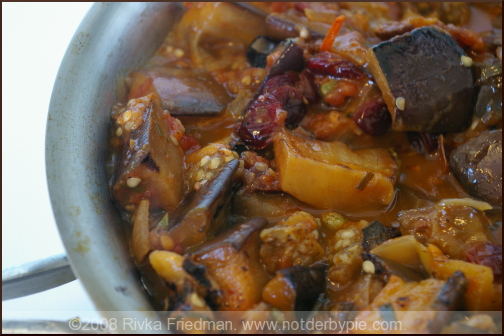
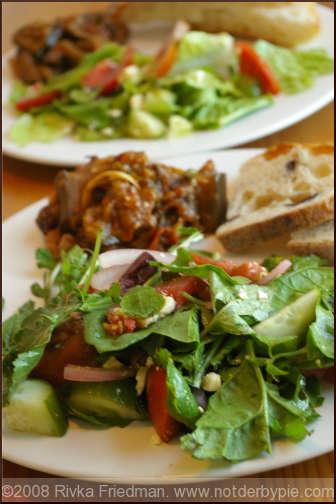
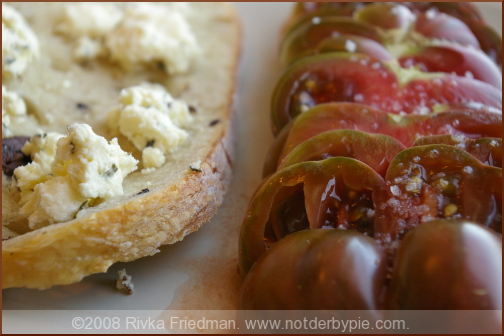
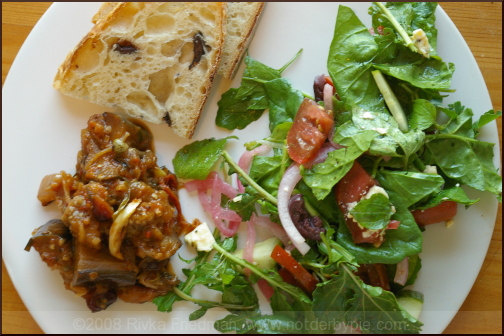
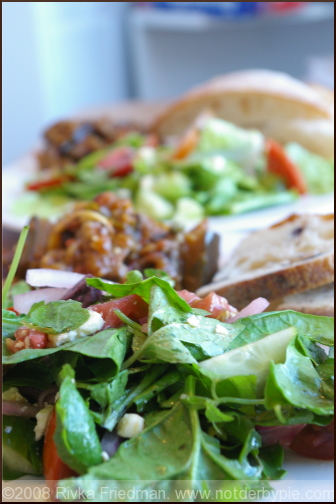
caponata1.jpg If I may say so myself, tonight was a smashing success. A whole day into my challenge and I'm still thrilled that I took it on! On the menu this evening was kalamata olive sourdough bread from the market, homemade eggplant caponata, and greens with heirloom tomatoes, feta, and red onions that I pickled in fresh-squeezed lime juice till they turned a beautiful shade of purple.

caponata2.jpg

Some thoughts on preparing and eating tonight's dinner:

  • This is really the clincher, I think -- everything just tasted so fresh. The heirlooms were bursting with juices, like perfect summer tomatoes should. The greens -- a mixture of spinach and arugula, also from the market -- were beautiful and quirkily shaped, not like th uniformly-chopped salad greens you can by at the store. They were also super fresh, the arugula nice and spicy. Even the caponata, which I made with tomato sauce that I cooked up this weekend, tasted fresh. It doesn't take much to sell me on the virtues of maximizing fresh produce in my cooking, now does it?
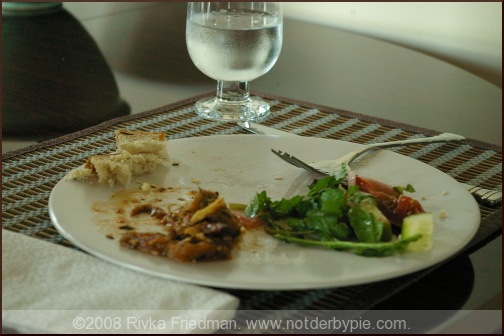
  • The irony about cooking and preparing such fresh produce is that while my mouth waters at the site of my farmers market bounty far more than it does with the contents of a Safeway grocery run, I also eat so much more slowly when what's on my plate smacks with fresh-homemade-ness. When the food isn't fresh, or isn't in season, or for some other reason doesn't taste its best, I tend to just shovel it in and scarf it down mindlessly. When dinner is as fantastic as it was tonight, I find myself savoring every bite, thus feeling full earlier and eating less. I made like the French tonight -- I ate 1 slice of bread, 1 ladleful of caponata, and 1 helping of salad; and I didn't go back for seconds.
  • caponata3.jpg

  • There's something sensual about cooking with local, seasonal ingredients. For one thing, they're more delicate. I wash them, dry them, chop them, and generally handle them with far more care then when I'm chopping up a couple winter tomatoes (which I hope to buy less, by the way). Time with myself in the kitchen has always been therapeutic and restorative for me; all the more so when I'm working with the best produce summer has to offer.
  • Some of you no doubt are thinking that I picked a mighty convenient time to do this -- at the height of summer's produce boon. And you'd be right! No way around that. But I will say that there are few things I love more than a good winter stew -- and there are few things more comforting to cook as well. So without making any promises, I imagine that I might take away from this experience a desire to eat seasonally even when the season has limited produce to offer.

caponata4.jpg

Are any of you out there trying this or something like it? If so, do share your stories! For now, here's a blueprint for the caponata I made tonight. As I made it by taste-and-adjust, there's no precise recipe. You'll just have to get in there and try it yourself. :)

caponata5.jpg

Caponata

Olive oil (at least 1/4 cup) 1 medium to large eggplant, firm and shiny, in 1-inch cubes 1 1/2 cups tomato sauce or crushed tomatoes 1 small red or yellow onion, chopped 1 stalk celery, chopped very fine 4 cloves garlic, peeled and kept whole 2 Tbsp capers 1/3 cup raisins, dried cranberries, cherries, or currants 1 cup white wine 1/4 cup white wine or cider vinegar several sprigs of mint dried marjoram, oregano, tarragon, or other herbs salt and pepper chili flakes

In a heavy bottomed large saute pan, heat a healthy dose (a few Tbsp) olive oil on medium-high. Add eggplant and toss around the pan, allowing to scorch in places, about 4 minutes. After the eggplant is browned and softened a bit, remove and place into a bowl off the heat. Add a few more Tbsp of oil, turn heat to medium-low, and add onions and garlic, allowing to cook just until they start to brown. When that happens, add the celery, brown a bit, then add eggplant back into the pan, and add a bit of the wine, just to deglaze the bottom of the pan. Add the tomato sauce, and toss or stir to coat. Add the herbs, the capers and the dried cranberries/raisins/whatever, as well as a bit more of the wine (total about 2/3 cup). Cover the pan and allow to simmer, on low heat, for at least 20 minutes until the garlic is soft and mushy, the raisins/cranberries are plumped a bit, and the eggplant is soft. From here on out, it's a game of taste and adjust. If needed, add more wine. If the flavoring tastes right to you, just add water if you need to thin it out. Add salt and pepper to taste.

Serve room temperature, hot, or cold, with sliced [I like toasted] crusty bread, and perhaps a few cheeses.

caponata6.jpg

Price Information: eggplant from the farmers market, 1.69 per pound 1.67 per eggplant at the store beefsteak tomatoes from the market, 2.50 per pound 1 dollar each at the store greens from the market, 5 dollars for half a pound 6 oz. for 3.79 at the store -- about equal heirloom tomatoes from the market, 3.99 per pound not available at my store herbed feta cheese, 9.75 per pound at the market 8.58 per pound and nowhere near as good! half a kalamata sourdough at the market, 2.50 price varies -- can you get half a loaf at your store?

On balance, I definitely think I came out ahead here, and the price differential is slim to none in most cases. Food for thought...

September 2008: An NDP experiment

local2.jpg You hoo -- anyone out there? It's been a rough couple months for NDP, between six weeks of crazy work schedules and a long vacation to Alaska (yes, I'm back and I've got beautiful pictures to share!). But I promise, I haven't forgotten about you. No, no, no. Never. In fact, I've decided not only to resume regular posting, but to do so with a bit of a bang. Read on.

(But first, peek at my pics from Alaska....)

alaska1.jpg

alaska2.jpg

alaska3.jpg

alaska4.jpg

alaska5.jpg

alaska6.jpg

alaska7.jpg

alaska8.jpg

alaska9.jpg

alaska10.jpg

alaska11.jpg

alaska12.jpg

alaska13.jpg

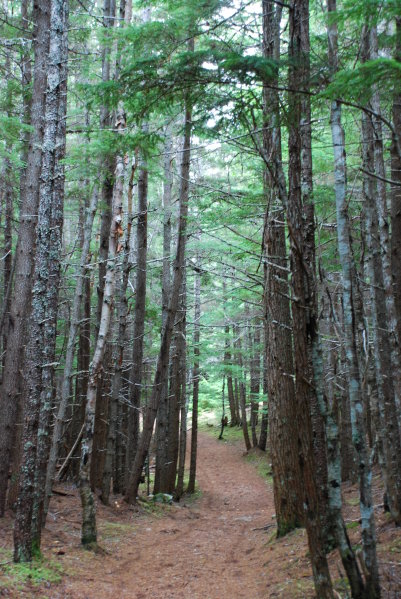
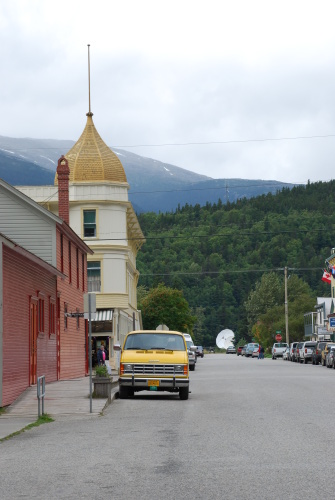
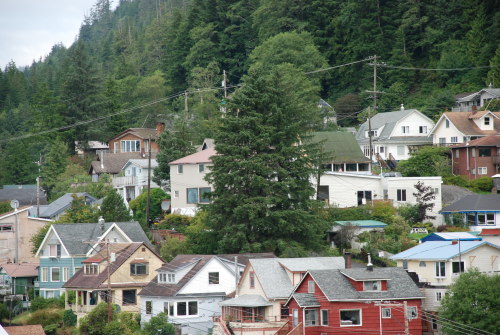
Alaska truly is one of the most beautiful places I've ever been. The hiking is fantastic, and the summer weather -- a cool 50-some degrees the whole time we were there -- was perfect for brisk walks. That's not to mention the other wild excursions we did -- including rock climbing, rapelling, kayaking, and snorkeling (in 45-degree water -- amazing!) If you've any inclination to go, any at all, do it.

Now, back to business. While on the Alaska cruise, I read Michael Pollan's The Omnivore's Dilemma. Aside from being an absolutely fantastic read, it's a really important book about the way our food system works, and it [re-]opened my eyes to how broken and troubled the system is.

The Omnivore's Dilemma charts the agricultural history behind the foods that we Americans regularly eat. Pollan explores the backstories behind the Iowa cornfields that serve as the basis for cereal, cookies, crackers, chicken nuggets, corn syrup, and almost any other processed food item; he visits the factory farms that cultivate, kill, and package hundreds of cows, chickens and pigs each hour; he even investigates the often-surprising details of the various "organic" options that one might find in a Whole Foods; and, ultimately, he grows, forages, and hunts the ingredients for a meal, trying to fully understand every aspect of producing the food he eats. The book is surprising, at times upsetting, but always enlightening and inspiring. Not surprisingly, I'd strongly recommend it.

Reading it on a cruise added an ironic dimension to Pollan's account of our food situation. As regular cruisers know too well, the linchpin of any cruise is its all-you-can-eat buffet. Open 24/7, the buffet puts others to shame in the sheer quantity of its offerings. I can't get into the details at the moment -- it might make me ill -- but there aren't too many things in this world that the buffet didn't have, including people with monstrous appetites and perennial hunger. It was a classic display of overindulgence, and -- dare I say it -- the consequences that follow. For every average-sized person on the boat, at least 4 were obese. Not surprising, considering the growing percentage of obese Americans, including children. Not surprising - but very, very disturbing.

local3.jpg

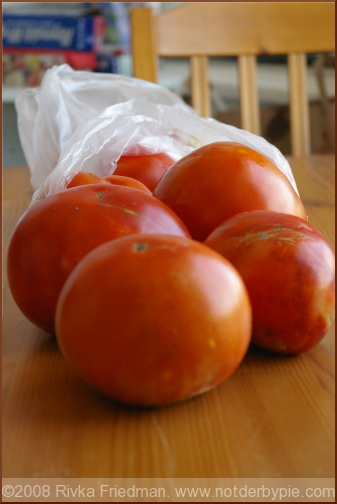
With the cruise as my backdrop and the book as my muse, I decided to take on a challenge, to begin promptly upon my return. For one full month, I'll be doing my darndest to eat seasonally, and mostly locally. I say "mostly locally" for two reasons: first, considering recent debates about the environmental benefits of eating locally, I'll be prioritizing the seasonal aspect of this challenge over the local aspect. Second, while my fresh produce will be local wherever possible, I'll be using dried fruit, certain canned items, grains and condiments that aren't.

Four more bits to add:

One is that in case you're curious, D is very, very excited about local seasonal month here at NDP. She's been telling all our friends (which of course puts the pressure on to invite them over).

Two is that I plan to provide as much information as I can remember and/or chart about the cost of eating locally and seasonally. I know that cost is a real consideration for me as I plan my weekly eats, and I bet it is for you as well. I'll do my best to record how much it costs to make each meal, including comparison figures if I can manage to track them down.

local1.jpg

Three is that I'm hoping to blog very frequently this month, work permitting. We'll see how frequent is frequent -- but at the very least, expect more than one post per week. I'm baaaack.... :)

And last, but not least: to those of you lurking behind NDP's woodwork: now is the time to make yourself known! If you're at all interested in any aspect of this challenge, please do not hesitate to leave a comment on this post. I'll do my best to answer your questions and take your thoughts/concerns/comments into consideration as I tackle LocalSeasonalSeptember.

Thanks to you all for reading, and wish me luck!

Cherry Sour Cream Coffee Cake

cherrycake1.jpg I don't know if trashy is your cup of tea, but when I was a kid I absolutely loved Entenmann's ultimate crumb cake. The ratio of crumbs to cake on that thing was approximately 8:1, the little bit of cake base wholly overwhelmed by a thick coat of streusel. Still, I hardly ate the cake. Frankly, I just liked those crumbs.

cherrycake3.jpg

While Entenmann's isn't exactly my thing anymore, I still have an uber-softspot for crumb cake. Something about that combination of brown sugar, nuts, cinnamon, and (of course) butter makes almost any cake better. I've outgrown my habit of picking crumbs off the cake (ahem, almost), but to compensate, I've taken to putting in twice the amount of streusel called for in the recipe. In case you're not so inclined, I've recorded the original recipe here.

cherrycake2.jpg

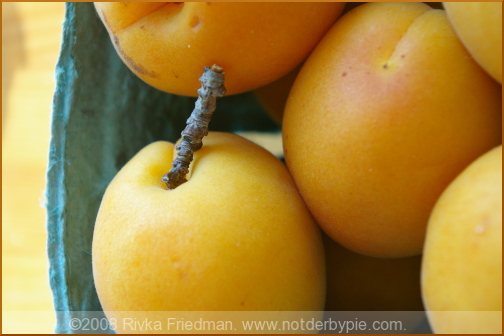
Well, almost the original recipe; I happened to have some of the last of summer's sweet cherries, which I pitted for this cake. If you have sour cherries lying around, they'd be even better.

cherrycake4.jpg

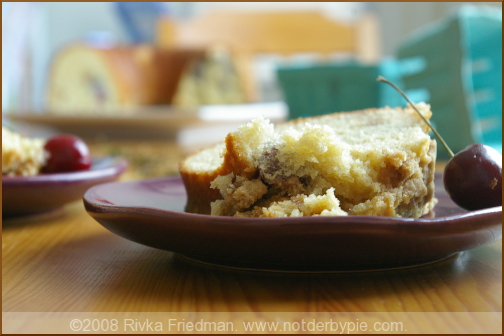
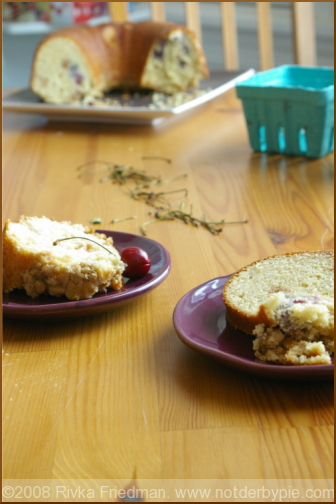
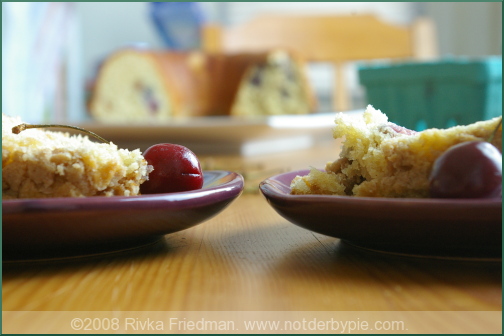
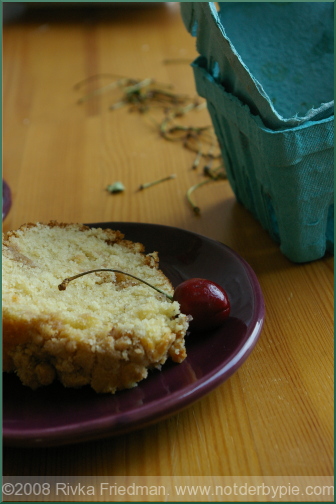
The cake turned out splendidly, indeed: sour cream makes it incredibly moist, the copious amounts of butter give it a fine and delicate crumb, and the cherries add some zing and moistness as well. All in all, quite a success. When a close friend came to town, I served it as a lazy and indulgent breakfast; lemme tell you, there's nothing quite as wonderful as piping hot crumb cake. Call my bluff -- give it a try.

cherrycake5.jpg

Cherry Sour Cream Coffee Cake

12 tablespoons (1 1/2 sticks) unsalted butter at room temperature 1 1/2 cups granulated sugar 3 extra-large eggs at room temperature 1 1/2 teaspoons pure vanilla extract 1 1/4 cups sour cream 2 1/2 cups cake flour (not self-rising) 2 teaspoons baking powder 1/2 teaspoon baking soda 1/2 teaspoon kosher salt 2 cups cherries, pitted

For the streusel: 1/4 cup light brown sugar, packed 1/2 cup all-purpose flour 1 1/2 teaspoons ground cinnamon 1/4 teaspoon kosher salt 3 tablespoons cold unsalted butter, cut into pieces 3/4 cup chopped walnuts, optional

Preheat the oven to 350 degrees F. Grease and flour a 10-inch tube pan.

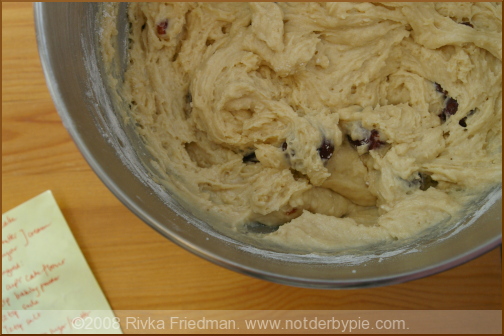
Cream the butter and sugar in the bowl of an electric mixer fitted with the paddle attachment for 4 to 5 minutes, until light. Add the eggs 1 at a time, then add the vanilla and sour cream. In a separate bowl, sift together the flour, baking powder, baking soda, and salt. With the mixer on low, add the flour mixture to the batter until just combined. Finish stirring with a spatula to be sure the batter is completely mixed.

For the streusel, place the brown sugar, flour, cinnamon, salt, and butter in a bowl and pinch together with your fingers until it forms a crumble. Mix in the walnuts, if desired.

Spoon half the batter into the pan and spread it out with a knife. Sprinkle with 3/4 cup streusel. Spoon the rest of the batter in the pan, spread it out, and scatter the remaining streusel on top. Bake for 50 to 60 minutes, until a cake tester comes out clean.

Let cool on a wire rack for at least 30 minutes. Carefully transfer the cake, streusel side up, onto a serving plate.