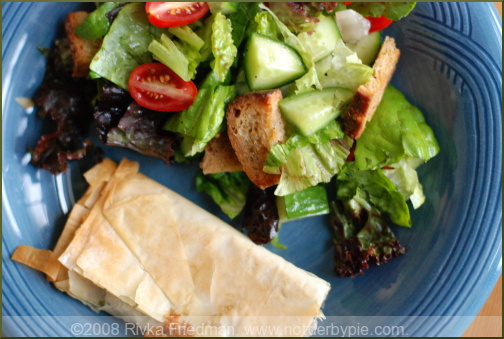
Pesto Streudel and Panzanella Salad

panzanella1 Now that it's summer, my counters are teeming with beautiful red tomatoes and my fridge is packed with brightly-colored produce of all sorts: radishes, favas, beets, strawberries, you name it. It's a welcome change from the endless supply of potatoes, yams, potatoes, and kale, oh, the kale. Thank goodness I've got some red back in my life!
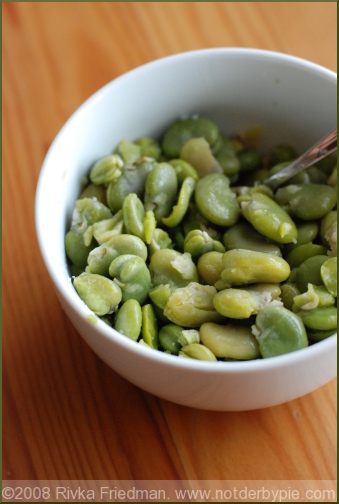
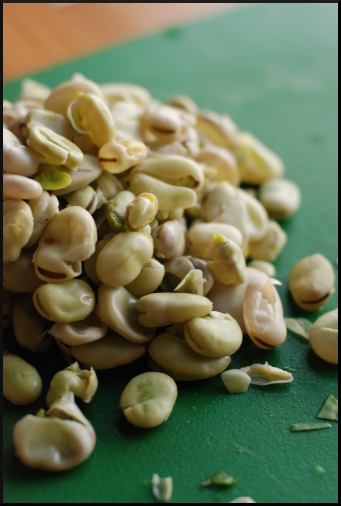
favas

fava-shells

Of course, with beets and radishes come a whole new type of greens -- the kind attached to the stems of the beets and the radishes, of course. Both are too often overlooked -- especially radish greens, for which I've never seen a recipe. Until now.
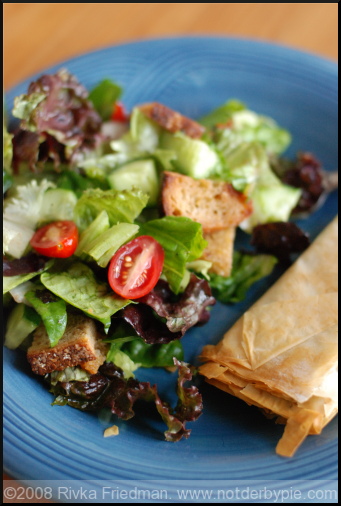
panzanella2

Here's the thing. Pesto? It doesn't just have to be basil in there. Stick in some cilantro and call it chimichurri or -- better yet -- send some radish greens under the knife and start to enjoy what too often ends up in the disposal (or, in my case, the compost bin. Yay!)

Radish greens are best used within a couple days of buying or picking them, so they're a bit more finicky than basil. But they're spicy and a little bitter like arugula, and quite flavorful. They're also almost always attached to the radishes you buy, so why not use them? I've blended them up with walnuts and pinenuts, and they pair beautifully with both. But I've got a lingering curiosity about how they'd play with pecans, so if you try it, lemme know.

Last time I made this, I stuffed it in phyllo dough for a variation on spanikopita. Radish leaves contain a fair amount of water, so I'd recommend putting the ground leaves into a fine mesh strainer to let some of the liquid drain out. After that's done, feel free to add any other things you'd like. I've added Parmesan before, which is quite nice, but since this last time I was going for a Greek theme, I opted with feta cheese and liked it even more. I also added a squeeze or two of lemon, which gives the pesto some tang and has the added benefit of delaying oxidation (when pesto hits the air and turns brownish).

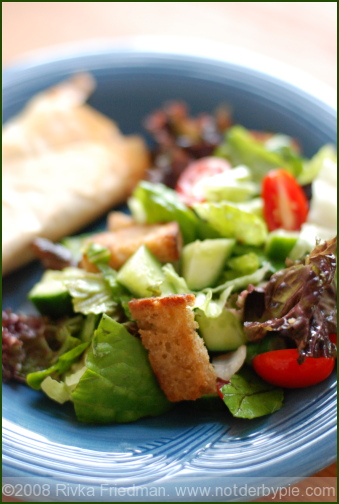
As you can see from the pictures and the post title, we ate this streudel with Panzanella, or bread salad. I can't say I have a recipe; we really just used the vegetables from this week's trip to the farmers' market, and any vegetables will work. The key is to have some good, juicy, ripe tomatoes in there, whose juices will seep into the pieces of bread. Other than that, no rules -- sky's the limit.
panzanella3

Radish-Beet Pesto Streudel

I know this recipe is really rough and that the measurements are as imprecise as can be -- but this is one of those things that is ever so contingent upon your tastebuds. If you're nervous, start with 3/4 of the greens and 3/ 4 of the nuts, and after you've blended that quantity, start tasting and adjusting until you achieve your preferred balance of greens to nuts.

1 bunch (about 1 1/2 cups) radish leaves, rinsed and dried 1 bunch (about 3 1/2 cups) beet leaves, rinsed, dried, and ripped into large pieces 1 1/2 cups walnuts or pinenuts salt and pepper 1 cup feta cheese, crumbled juice of half a lemon, optional

Preheat oven to 350 degrees. Set phyllo dough out on the counter, in its box, until thawed, at least half an hour.

Chop greens in a food processor. Transfer to a fine mesh strainer set over a bowl, and either leave for an hour to let the liquids drain out, or (much more efficient) press on the greens to expel their liquid. Return to the food processor.

Add nuts and blend until the pesto is your preferred consistency (I like this radish-beet pesto quite smooth with only a few very small chunks, but others like it super chunky -- up to you). Add cheese, and give the processor a couple quick pulses just until the cheese is incorporated. Taste and adjust for salt, and add pepper and lemon if desired.

Remove the plastic covering from the phyllo dough, unroll it, and cover it with a slightly damp towel; this will prevent the sheets from drying out and turning brittle.

On a rimmed baking sheet covered with a piece of parchment paper or tin foil, place one layer of phyllo dough and brush lightly with olive oil. Cover with a second sheet of phyllo dough. Repeat five times, until you have six layers of phyllo dough stacked on top of each other with a thin layer of olive oil in between (if you have five or seven layers, please don't sweat it).

With one of the long ends facing you, spread the pesto horizontally about a third of the way from the edge closest to you, leaving about 1 inch at either end. You'll be rolling the up the streudel along the long edge of the dough. Start rolling the filo away from you, making sure the pesto stays inside the dough as much as possible (if it leaks out a bit, no worries). Pause at the halfway point to tuck the edges into the roll (or be lazy like me and leave it open, though the pesto will seep out during baking). Brush the top with a little olive oil and bake at 350 for about 25 minutes, until the top is golden and whatever filling has seeped out is bubbling.

Panzanella Salad with Fava Beans

Ingredients

Several handfuls of fresh lettuce, whatever is on hand is fine The best tomato (or cherry tomatoes, in my case, though large ones are preferable) you can get your hands on 2 mediterranean little cucumbers or 1 regular cucumber, chopped 1 lb. fava beans, shucked, blanched, and peeled ** 2 slices or 1 big hunk of good, crusty bread that's a couple days old, cut or ripped into squares or small pieces 1/8 cup olive oil 1/8 cup red wine vinegar salt pepper

Mix vegetables, favas, and bread together in a medium salad bowl. In a separate smaller bowl or dressing container, mix oil, vinegar, and salt and pepper to taste. About ten minutes before serving, shake dressing well and drizzle over salad. Toss to combine, and allow to sit for a bit until the bread starts to soak up the dressing. Serve.

**To prepare favas, start by popping open the pods and picking out the beans. The beans are coated in a waxy outer layer that also needs to be removed; to do this, cook fava beans in medium saucepan of boiling salted water until just tender, about 1 1/2 minutes. Drain. Rinse under cold water; drain well. Peel fava beans and set aside. (Can be made 1 day ahead. Cover and refrigerate.)
Avocado Tomato Salad

avocado-tomato-salad-4 summer-produce-1

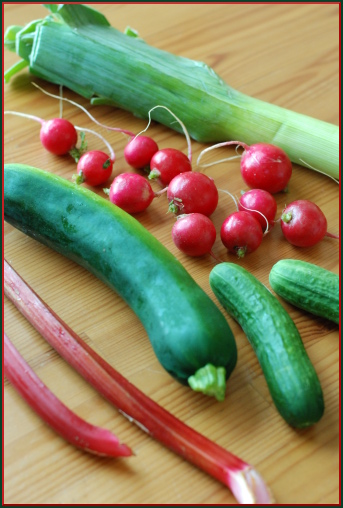
It'd be a shame to spend too much of this day indoors, because it's beautiful outside and I have an all-day pool pass -- so I'm going to keep this short: It's summer, people! That means I'm barely to be seen at the grocery store, stocking up on fruit and veggies almost exclusively at the three nearby farmers' markets to supplement my CSA. I'm high on summer produce.

avocado-tomato-salad-2

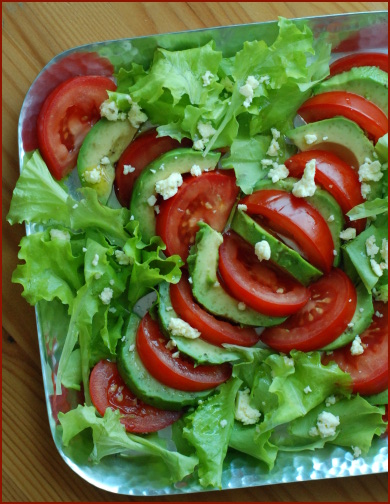
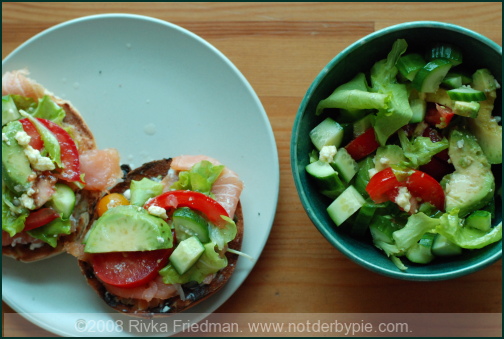
Avocados and tomatoes are especially excellent right now. Tomatoes haven't quite hit their peak, but I picked up some beautiful heirlooms this morning and we enjoyed them in salad, with a bit of salt and not much else. Last week, I had some beautiful on-the-vine tomatoes in the house, as well as some perfectly ripe avocados and some baby lettuce from a friend's garden, so I threw together a really simple salad that's definitely going to be a staple on my plate this season. It's just lettuce, avocados, tomatoes, a crumble or two of my usual Keswick Creamery feta, and some lemon, salt, and pepper. It doesn't get much simpler or better than that. avocado-tomato-salad-3

As you can see, we enjoyed this salad both in the bowl and atop a bagel and lox leftover from my dear friend Dellie's med school graduation party. Congrats, Dr. Sorel! So proud!

If I could make one suggestion for summer eating, it would be to Keep It Simple (excuse the weird capitalization). Let the produce speak for itself -- it doesn't need much to sing.

Happy Summer, everyone!

Wisdom: How to Build a Cheeseplate

cheeseplate1 When summer rolls around, the heat in Washington DC can be rather prohibitive. Almost nothing is worth touching that oven dial, especially in our loft apartment that gets a whole lot of hot air and nary a breeze. Dinner most frequently comprises an easy salad like this broccoli slaw or this Mediterranean orzo salad, or maybe even a cold soup like this quick-and-easy zucchini number I made last summer. Tie that all together with some crusty bread and I've got an easy supper.
Salads and cold soups are definitely an antidote to the heat and humidity, but when the weather is so debilitating that I want to just crash when I get home, a cheeseplate is really the way to go. Cheeseplates are easy to assemble but elegant enough for company, and while people seem to think they go best with red wine, I've found (and had more authoritative sources corroborate) that a chilled (but not too chilled) glass of white wine makes even better company.

Recently, I was reading a great post from Mr. Amateur Gourmet, Adam Roberts, about his trip to the famed Murray's Cheese in Greenwich Village and his quest for the perfect cheese plate. He asked the man behind the counter for help selecting his cheeses, and the man gave him a mild but interesting goat cheese, a sharper cow-and-sheep cheese, and a stinky washed rind cheese. Lost yet? Don't despair. You can do as Adam did -- and as I often do -- and ask the advice of the person behind the counter. My favorite cheese spots here in DC are the wonderful Cowgirl Creamery, where cheese nerds come to play, and Calvert Woodley, which has a great selection and some really helpful folks behind the counter. That said, even the folks at Whole Foods can help steer you in the right direction. Meanwhile, whether you're enlisting a team of advisers or going at this alone, there are a few basic things that are helpful to know before embarking on your cheeseplate expedition. This post will shed some light on how to build a cheese plate, how to cut and serve each of the cheeses, and what sorts of breads and spreads make the best vehicles and complements for enjoying the cheese. cheeseplate2

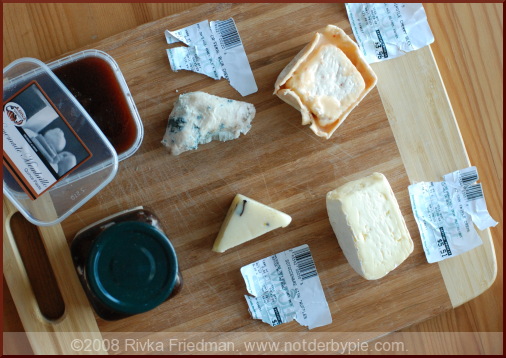
CHOOSING YOUR CHEESE When building a cheese plate, one good guiding principle is that the plate should reflect a range of funk, hardness and origins. There's nothing wrong with a plate composed entirely of cow's milk cheese, but having a variety is a good place to start.

I usually like to have at least one goat cheese on the plate. Sometimes I pick something spreadable, perhaps with herbs. Other times, I choose a harder, semi-aged goat cheese, like Bucheron, or one of my all-time favorite goat milk cheeses, Humboldt Fog. Humboldt Fog is made by Cypress Grove Chevre, and it's got a beautiful layer of ash running through the middle of the cheese. It's also got three distinct layers: the cakey interior, the creamier outer layer, and the rind. It's a wonderful cheese.

I'm not a big sheep milk cheese person, but I really enjoy Manchego and Idiazabal, both Spanish sheeps' milk cheese. Manchego is salty and robust; Idiazabal is grassier, but really complex. Both are good options, and both will be harder than most goats' milk cheeses.

Other types of Cheese:

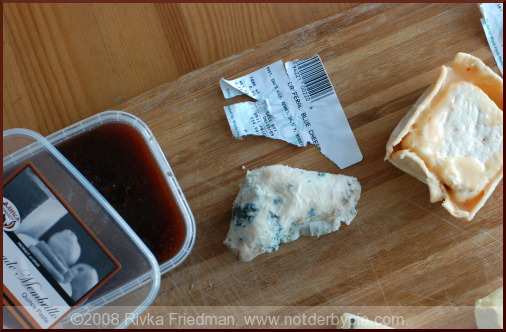
Blue Cheese, which is cheese laced with (delicious) bluish mold. Blue cheeses are pungent, sometimes even a bit spicy, and strong. Some are quite salty, others on the sweeter side. A couple of my favorites are Fourme D'Ambert, which is creamy and rich, and Rogue Creamery Rogue River Blue, which is wrapped in grape leaves and is uber smoky and delicious.

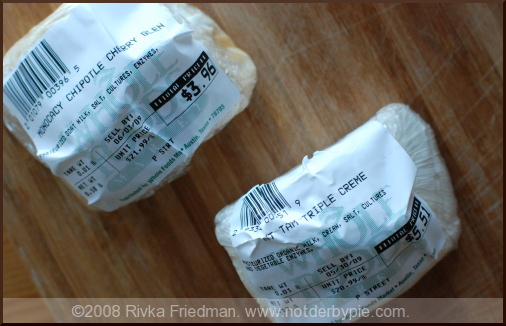
Bloomy cheeses, which are covered in a white, slightly damp rind. Bloomy rinded cheese tends to be soft, and ranges from the chalky goat-cheese consistency to the unbeatable richness of triple cream cheese.

Washed rinds, which are, as the name suggest, washed in any number of liquids including but not limited to water. Washed rind cheese can be quite funky. One of my favorite washed rind cheeses is Epoisses, which is salty and pretty runny, but also has a sort of funky sweet-smokiness to it. I find it absolutely addictive.

One last shout-out to one of my other favorite cheeses, Cowgirl Creamery Mt. Tam. It's a triple cream cheese that's got a thick, creamy texture and an endless array of wonderful aromas. It's won lots of awards, and it's truly a phenomenal cheese.

If even after trying them you're hesitant to invest in a big hunk, try the "cheese treasures" section. They tend to have sections like it at Whole Foods as well as major cheese stores (and I know that the Calvery Woodley here in DC has one, too). Usually buried somewhere in the corner of the display case (as all treasures should be), there'll be a pile of cheese nubs, usually the bits of whatever cheese was killed that day. It's a great place to experiment, and at only a couple of bucks per piece, it's hard to go too far astray.

cheeseplate3

PLATING AND SERVING YOUR CHEESE

Plate your cheese in order from mildest to most stinky. Theoretically, you should eat the cheeses in this order as well, though after trying an initial round of bites in the correct succession, I tend to take bites of this or that in no particular order, using a glass of wine as a palate cleanser.

For hard cheeses, use a slicer that'll take off shavings of the cheese. If you have a big hunk of hard cheese, you won't enjoy it nearly as much as when your slice of baguette cushions several paper-thin slices.

Serve softer cheeses with cheese knives -- those blunt-bladed stubby ones that can spread just about anything. Also put out some spoons for any accompanying chutneys, jams, or pastes.

TO ACCOMPANY YOUR CHEESE

Most people seem to serve cheese plates with crackers, since they're easy to serve, easy to eat one-handed, and come in a variety of flavors. However, most cheese experts say that a classic baguette is actually the way to go; its flavor, while pronounced, is more neutral than crackers, and thus serves as a prime vehicle for tasting the true flavor of the cheese. I eat cheese most often on baguette, but every once in a while, I enjoy a crispy cracker (especially those rainforest crisps from Whole Foods -- they're like biscotti, with bits of dried figs or cranberries and some nuts too). Best solution? Serve both. See for yourself which goes first.

In terms of condiments, everyone's got their favorites, and I'm no exception. For Manchego or Idiazabal, I like a nice hunk of Membrillo, the delightfully sweet-tart and thicker-than-jam quince paste. Mitica is my favorite brand: it's homemade and fresh-tasting. It might look like a lot for just a cheese plate, but buy yourself some and I guarantee you'll find ways to use it. Plus, it lasts in the fridge for months.

For creamy, runny, nosey cheeses, I like a jam or compote that can stand up. Fig jam is my standby, but I'll settle for something else in a pinch. Nothing too fruity though -- strawberry jam will kill the cheese with its overpowering sweetness.

Goat cheese goes well with any number of things, from sweet to savory. Tomatoes, capers, olives, and pesto are all good savory choices; for something sweet, try a tomato or pepper jam, a chutney, or even a drizzle of date honey.

I hope this list is a good beginner's guide, but please don't let it be restrictive. The last time I was at Cowgirl, one of the women behind the counter was helping me out, slicing tastes of this or that as I poked around. Suddenly, she had some sort of lightbulb moment and ran to the back of the shop. She came back carrying a massive (think a yard wide) half-wheel of what she described as the best cheese she's ever had. It was a Basque cheese, handmade by a husband-and-wife team, and wrapped in all sorts of fresh and dried herbs, including bay leaves and various peppercorns. The cheese was firm, pale whitish yellow, and looked pretty ordinary inside -- but the flavors, WOW, the flavors! It felt creamy and rich, but then it started to open up, and I got herbs, wood, some barnyard-y aromas, then sweetness, a punch of salt, and who even knows what else. I asked for two or three more tries and took home a big hunk with me. The cheese didn't even have a name, so I can't recommend it, but it was really earth-shattering. I'm willing to bet your local cheese shop has something in stock that one of the folks behind the counter is really excited to share. Be sure to take them up on it.

Biscotti, the even-healthier way

Just thought you'd all like to know that we've been tinkering around here at NDP and I've managed to make some biscotti that are better for you and equally delicious. After some tinkering, I made the same ones I made the last time -- cherry almond -- with half white whole wheat flour and half turbinado (unrefined) sugar. I'm willing to bet you can even do all unrefined sugar with great results. For the eggs, I used 1 egg and 2 egg whites this time, and it produced a crunchy cookie that wasn't too much of a tooth-cracker. Just a little FYI for the weekend. I'll be back with an actual post soon...