Sardine and Fava Bean Bruschetta

fava-sardine-1 I can't remember if I've ever written a love song to favas on this blog. I mean, I've written about them, but I probably haven't sung their praises as much as they deserve. Starting in late May, I bother the farmers at my local market every Sunday, trying to subtly nudge them to pick their favas as soon as they're ready so I can dig in. The first few weeks, I'm met with transparently frustrated replies of "they're not ready, lady!" but around the second week in June, out they come. From them on, you'll find me and my tote bags by the fava bin. That's right.

Favas come double-wrapped, so to speak; they're tucked in a waxy coating that's nestled inside a pod. To eat favas, you pop open the pods, scoop out and blanch the beans, and then remove the outer shell. Work intensive? Yea, but you won't find me complainin'. Favas are sweet and green and, with a little salt and not much else, the delicious essence of early summer.

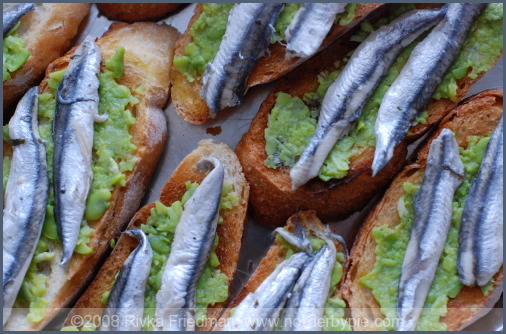
While I usually just toss my favas in a salad or mix them with some pasta and other vegetables, I also really like fava bean spread. Mine is smooth enough to spread but still quite chunky, and laced with a whole lot of garlic and a squeeze of lemon. If I don't finish it all before using it, I'll spread it on a baguette and eat it just so. Or, if I'm really feelin' it, I'll top my bruschetta with some vinegar-and-oil-cured sardine fillets. The idea came to me from an Epicurious recipe for cannellini and sardine bruschetta. I love cannellini, but I don't stock my pantry with dry or canned beans when fresh ones are so readily available during the summer, so I subbed in favas for the cannellini the recipe called for. The combination worked perfectly: the headiness of the garlicy fava spread stood up well to the sardines, which added just the right amount of richness and tang. Toasted baguette, more than a vehicle, was crunchy and light, a fine contrast for the favas and sardines perched atop it. I finished off the bruschetta simply, with a bit of olive oil and a grind of the pepper mill. It didn't need much else. fava-sardine-2
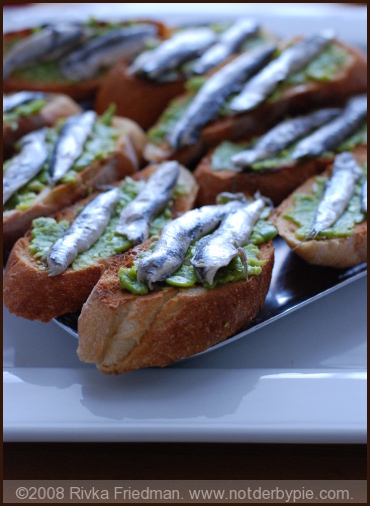
The fact that I've managed to get this far without begging ya'll not to hate sardines is a testament only to how silly I think sardine-squeamishness really is. Sardines are awesome; their flavor is strong and pungent, they're a bit oily and somewhat tangy, they're packed with omega-3s, and really, they're delicious. If you hate'em, be that way. If not, welcome to my club. Enjoy your stay. Want some sardine and fava bean bruschetta?

Sardine and Fava Bean Bruschetta inspired by a recipe from Gourmet

1/4 lb. sardines, oil-packed or salt-packed are fine (if salt packed, be sure to rinse thoroughly) (1 tin sardines will be plenty) 4 lbs. fava beans, shelled, blanched, and peeled (see here for instructions) 2 cloves garlic 2 Tbsp. lemon juice salt and pepper 1 baguette olive oil

Slice baguette on sharp bias into 1 3/4-inch slices and set aside. On a cutting board, chop garlic into small pieces. Add a sprinkle of salt; using a very sharp knife, drag the blade toward you across the garlic, mashing it and the salt with the side of your knife. Keep dragging and regathering the garlic until it resembles a pretty smooth paste. Add favas. Continue this motion until favas have been pretty mashed with the garlic, and the whole thing looks smooth enough to spread but still fairly chunky. Scoop up and put into a medium sized bowl. Add salt and lemon juice and mash up with a fork to incorporate. Add salt to taste.

Toast baguettes until golden. Cool five minutes on a rack, then plate and spread with some of the fava spread. Top with 2 fillets of sardines, a glug of olive oil, and a grind of the pepper mill. Serve just so.

Linguini with Artichokes and Sweet Peas

pastapeas3 Here's another round of my "weekday lunch" series, where I offer recipes that'll make your colleagues green with envy.

Peas are one of those foods that have completely changed for me since I started shopping at the farmers' market. In regular grocery stores (that aren't Fairway, Whole Foods or Dean and Delucca), it's pretty rare to find whole peas in the pod. If you want peas, you're likely headed for the frozen section or even the canned section (though I really think that frozen peas are 100x better than canned). The first time I saw peas at the farmers' market, I was mystified: peas come in a pod, with a couple of teeny leaves on one end -- and unlike canned or frozen peas, they're completely raw.

pastapeas4

I've now made this recipe twice, and I can assure you that raw peas really make all the difference. These pictures are from the time I made it with frozen peas, and you can see that the peas are kind of shriveled in places; that's because frozen peas are already cooked, so even a quick blanch or a toss in the pan makes them soften and shrivel. When using raw peas, you can do a super-quick blanch or saute and still keep the integrity of the peas shape. And that's not to mention how much sweeter fresh peas are! They actually taste like....peas. It's wonderful. pastapeas1

To keep this recipe vegetarian, I used a mixture of wine, vegetable stock, and water as the base, but if you have chicken stock on hand, I imagine it would lend the dish some added depth.

One last wonderful thing about this dish: it's super-friendly as lunch leftovers the next day.

Linquini with Artichokes and Sweet Peas

1 lb. linguini or other long pasta 2 lbs. peas, shelled 1 lb. artichoke hearts, frozen (thawed) or fresh if available; if using fresh, run a slice of lemon over the exposed flesh of the artichokes to slow oxidation 1 recipe caramelized onions (cook 1 sliced onion in a fair amount of olive oil over low heat until brown and soft, about 1 hour) olive oil 1 c. chicken or vegetable stock (if none on hand, water and a splash of wine will do) zest of one lemon 2 sprigs mint or tarragon, both are really lovely with peas 1/3 cup grated Parmesan cheese

Cook pasta according to package directions, cutting one minute off the cooking time to leave room for a final toss on the stove with the sauce.

In a large shallow saute pan over medium heat, combine several Tbsp. of olive oil and the diced shallot. Add artichoke hearts and toss to coat with the olive oil. Cook about 5 minutes, until artichokes have browned. Add broth or cooking liquid, turn heat to high, and cook about 15 minutes until quantity of liquid has been reduced by half to two thirds. Add lemon zest. Test artichokes to make sure they're cooked through; they should be able to be pierced easily with a knife. When artichokes are cooked through, reduce heat to low and add peas and pasta to pan. Using tongs, toss to incorporate pasta with sauce and vegetables. If desired, add a tab of butter to the sauce to finish it off richly. Off the heat, add cheese and toss to combine. Serve immediately, but be sure to pack yourself some for lunch the next day.

Cherry Pit Ice Cream w/Caramelized White Chocolate Ribbon

cherrypit1 Well, you've caught me red-handed. Not two weeks after I confessed my inclination toward only the purest of ice cream flavors when making it at home, I've gone stir crazy. First, I went nuts on vanilla by adding drizzles of chocolate; then I made maple ice cream (which, alas, was devoured before I could even get out my camera, but I'll pass along the recipe at the bottom of this post for interested souls). Now I'm really pulling out the big guns. Cherry Pit Ice Cream? What exactly was I thinking?
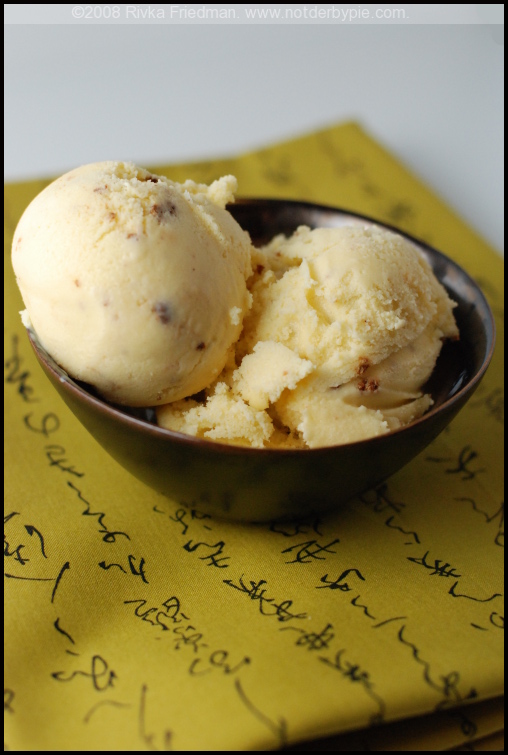
I'll tell you what. I was thinking that I've been reading about cherry pit ice cream since last year, and the strangeness, the sheer absurdity, piqued my curiosity and eventually won me over. People say it's the best flavor of ice cream they've ever tasted, and all it is is milk, cream, sugar, eggs, and crushed cherry pits. Tell me you're not curious! Who even knows what a cherry pit innard tastes like?

cherrypit3

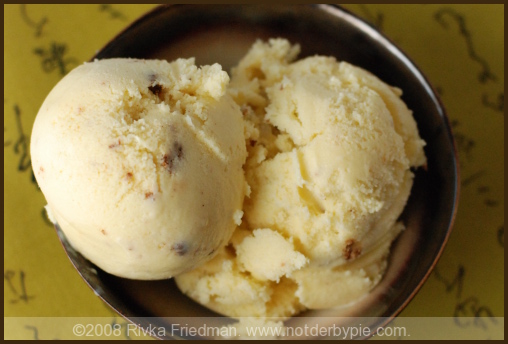
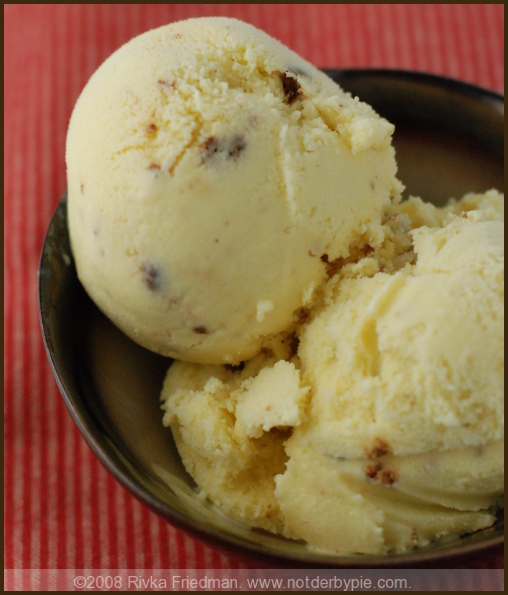
I had to know, and I had to know by steeping a bunch of them in a hell of a lot of organic milk and cream and farmers' market eggs (which, as we've already discussed, are quite the investment). Ten buckaroos later, I'm not waxing poetic like this here Bloggerette, whose cherry pit love-song tends toward the PG13 (gulp!). But I am pretty intrigued. Cherry pit ice cream has the best qualities of almond flavored things -- that is to say, a smooth, nutty, toasty, yet green and somewhat woodsy flavor, with great fragrance -- but none of the bad qualities, which is to say, it tastes nothing like almond extract. Thank heavens. That said, I did find it to be a bit on the bland side, but this is probably my fault -- I used a smaller quantity of pits than the recipe called for, because I can't eat cherries that quickly. But I did alleviate some of the blandness with a new trick from David Lebovitz, and I'm IN LOVE with it: caramelized white chocolate, which actually bears strong resemblance to crack. Oh man, it is so freakin' good. I won't go through the steps of making it -- just see the link to David's blog for all the instructions. Then do yourself a favor and make it.

cherrypit2

Cherry Pit Ice Cream adapted from Eggbeater

1 Cup Whole Milk 2 Cup Heavy Cream 3/4 Cup Sugar 5 Large Egg Yolks 1 - 1 1/2 Cups Smashed Cherry Pits

Heat milk, cream, pits, and half the sugar, in that order, in heavy bottomed stainless steel saucepan over low to medium heat. When hot to the touch, shut off heat, whisk and let steep 1-2 hours, tasting every 30 minutes.

When hot dairy tastes as strong as you'd like it (remembering that it will taste stronger in flavor and sweetness when it's hot), pass through a fine meshed sieve, pressing on the solids to press out as much of the liquid as you can.

Whisk together the egg yolks in a separate bowl and gradually add some of the warmed milk into the yolks, stirring constantly as you pour. Once all the milk is in the bowl with the yolks, pour the mixture back into the saucepan.

3. Cook over low heat, stirring constantly and scraping the bottom with a heat-proof spatula (I used a wooden spoon), until the custard thickens enough to coat the back of the spatula. Strain the custard into a large bowl and chill thoroughly in the refrigerator, then freeze in your ice cream maker according to the manufacturers instructions.

Caramelized White Chocolate From David Lebovitz About one cup (250ml)

The idea behind this recipe is that, when you cook white chocolate over a low heat for a long period of time, stirring all the while, the white chocolate will begin to caramelize; its color darkens and its flavor takes on a deeper, nuttier quality. You must, however, be very careful about overcooking; I did a test run with just a couple bits of white chocolate, and before I knew it, they were dark brown and grainy. Be sure to check every ten minutes -- even every 8, to be safe -- and when you remove the pan from the oven to stir, make sure you scrape around the edges of the pan to really incorporate those straggling bits into the greater mass. David says that if you overcook the chocolate and it takes on that grainy quality, you can press it through a fine mesh sieve and it'll be just fine -- but I ate mine, right off the pan, and it was still pretty delicious.

12 ounces (340gr) white chocolate, a block or in fêves (as shown) pinch of flaky sea salt

Preheat the oven to 250F (120 C)

1. If the white chocolate is in a block, chop it into coarse pieces.

2. Distribute the white chocolate on a rimmed baking sheet and heat for ten minutes.

3. Remove it from the oven and spread it with a clean, dry spatula, making sure to incorporate those bits at the edges and to really fold the chocolate over itself several times.

4. Continue to cook for and additional 40-60 minutes, stirring at 10 minute intervals. At times it will lump together and appear to harden, or lose its sheen and look lumpy (as mine did), but that's ok -- just keep stirring it and folding it together and it'll smooth out in the end.

5. Cook until the white chocolate is deep-golden brown, and caramelized. Stir in a good pinch of sea salt.

David recommends using an immersion blender if the chocolate is lumpy. I wonder if this would make whipped white chocolate, an interesting concept...

Store in a jar, at room temperature, until ready to use. It should keep for several months, if stored in a cool, dry place.

Classic Mac and Cheese

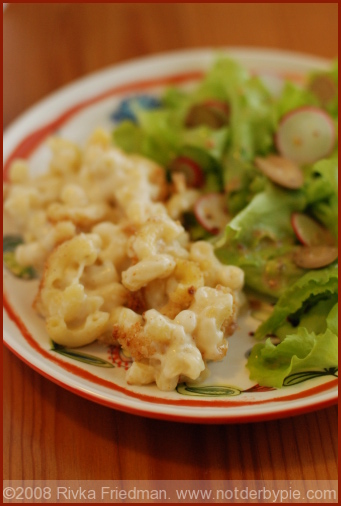
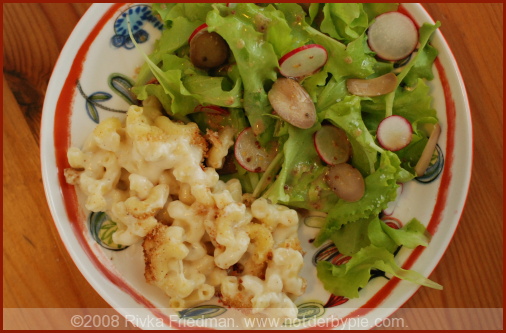
macncheese5 As you all know by now, D's made lots of culinary concessions for the sake of our relationship. In the four-plus years we've been together, she's become someone who appreciates good food far more than I ever thought she would. So this past week, I felt inspired to acknowledge that by taking a couple of steps in her direction and finally trying my hand at macaroni and cheese.
macncheese2

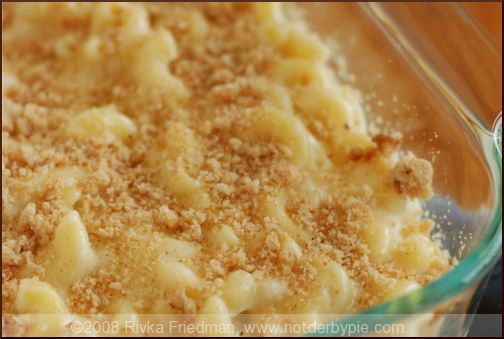
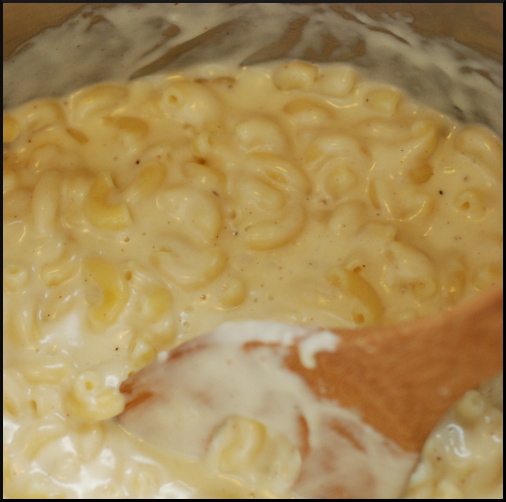
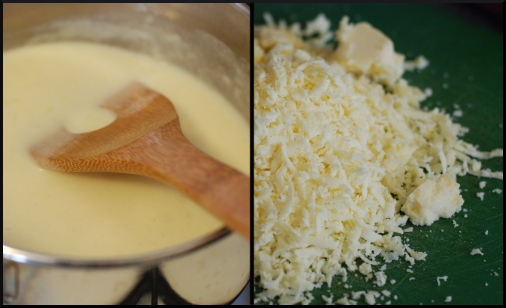
I've been meaning to make mac and cheese for quite some time. After seeing Ina Garten make it several months ago on her FN show, Barefoot Contessa, I knew it wouldn't be difficult to make. Then I saw that show rerun like four or five times (ok, Ina, I get it!) and decided to give it a go. The method is simple: heat flour and butter to make a roux. Add milk and mix to combine, then continue stirring until the milk is thickened. Add lots of cheese, stir until it melts, then incorporate cooked and drained macaroni. Optional step: transfer macaroni to a gratin, add some very optional tomato slices, top with buttered bread crumbs, and broil until bread crumbs are golden and crunchy.

macncheese6

macncheese1

In terms of cheese, the sky's the limit. Ina (she's so congenial, I can't help but feel like we're on a first-name basis) recommends a mix of cheddar and gruyere, which is probably ideal. I didn't have gruyere around so I used just Cabot white cheddar, and I liked the final result -- but the sharpness of gruyere would go very nicely with the hit of nutmeg in Ina's recipe. On one of her shows, Ina uses part gorgonzola or other blue cheese for an added layer of complexity. Me? I like my blue cheese in small portions, so I'd skip, unless blue cheese is really totally your thing.

macncheese3

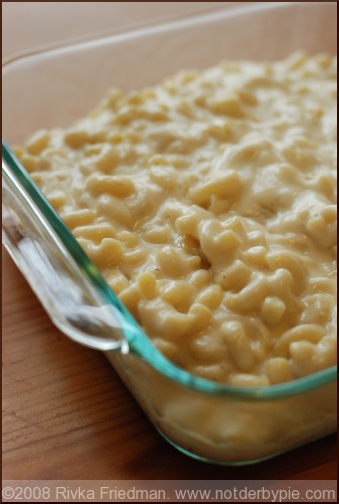
Though I bet the tomatoes would provide a much-needed hit of juiciness and freshness amid the layers of cheesy pasta, I was making this for a lover of all things traditional and someone who takes her mac and cheese very seriously (she boasts a long repertoire of restaurants whose mac she's tried and critiqued; for those in DC, I think her faves are Napoleon, on Columbia road, where a side will set you back a mere 5 bucks, and Belga Cafe, where the mac is truffled (!) and not too goopy.) In any event, I'd definitely have used the tomatoes otherwise and would blindly recommend that you do the same. In terms of servings, I halved this recipe and baked it in an 8x8, and it served 4+, so make adjustments accordingly.

macncheese4

Macaroni and Cheese adapted from Ina Garten, via Food Network

Kosher salt 1 pound elbow macaroni or cavatappi 1 quart milk 8 tablespoons (1 stick) unsalted butter, divided 1/2 cup all-purpose flour 12 ounces Gruyere, grated (4 cups), or sub out for cheddar or other melty cheese 8 ounces extra-sharp Cheddar, grated (2 cups) 1/2 teaspoon freshly ground black pepper 1/2 teaspoon ground nutmeg 3/4 pound fresh tomatoes (4 small), optional 1 1/2 cups fresh bread crumbs (5 slices, crusts removed)

Directions Preheat the oven to 375 degrees F.

Drizzle oil into a large pot of boiling salted water. Add the macaroni and cook according to the directions on the package, 6 to 8 minutes. Drain well.

Meanwhile, heat the milk in a small saucepan, but don't boil it. Melt 6 tablespoons of butter in a large (4-quart) pot and add the flour. Cook over low heat for 2 minutes, stirring with a whisk. While whisking, add the hot milk and cook for a minute or two more, until thickened and smooth. Off the heat, add the Gruyere, Cheddar, 1 tablespoon salt, pepper, and nutmeg. Add the cooked macaroni and stir well. Pour into a 3-quart baking dish.

Slice the tomatoes and arrange on top. Melt the remaining 2 tablespoons of butter, combine them with the fresh bread crumbs, and sprinkle on the top. Bake for 30 to 35 minutes, or until the sauce is bubbly and the macaroni is browned on the top.