Chewy Toffee Blondies

blondies1 Can I just say how touched I am? You all left the sweetest congratulatory messages on the last post, and I'm really just tickled. We're told this is a pretty exciting time in our lives, and if the last two weeks are any indication, exciting is quite an understatement. We're floating.

But I digress: this is a food blog, not a get-all-mushy-about-my-engagement blog, and I think it's about time I passed along some recipes! I was in Chicago on business for the past few days, and in New York with friends to celebrate before that, so the kitchen's been dark lately, but in the past few weeks, I've made some pretty tasty things, including one thing I probably haven't made in years...

When it's mid-July and summer's taken up residence here in Washington, the fruit are at their peak. With ripe peaches and juicy plums in abundance, there's no good reason to make anything but fruit desserts. That's why, for the past 10 years, I seem to have forgotten about blondies. They just fell of my radar entirely; when I think of dessert, I think of crostadas and pies and fruit crisps galore. Chocolate? Chocolate who?
blondies3

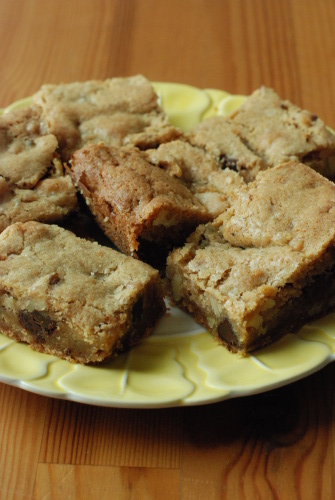
The other day, I was moments away from making Dorie Greenspan's Brown Sugar Bundt Cake (from her book Baking From My Home to Yours). I had the bundt pan out and ready to go, the stand mixer fitted with the paddle, and then, suddenly, had a second thought. Didn't the recipe say that the bundt was better the next day? I wanted something sweet now. Maybe I should stick to something I know, something comfortingly chewy and chocolatey and altogether delicious, that'd be delicious in under 30 minutes. I flipped a couple of pages and there, staring back at me, were some thick, unctuous-looking blondies. I was sold.

Now, some of the things I've made from Baking have been less than stellar. Dorie's chocolate chip cookies really didn't hit the spot for me, and I was a little worried about her blondies, since they're so similar in flavor to chocolate chip cookies. But the worrying was for nothing. These blondies were, without a doubt, the best I've ever had. They were perfectly chewy without being undercooked; the balance of salty to sweet and the undercurrent of vanilla running throughout were just right, and the generous addition of heath bar chips pushed them over the top. And no, they definitely weren't too sweet: the bitterness of the walnuts balanced out the sugar. I wish I'd made a double batch!

blondies2

Chewy Toffee Blondie adapted from Dorie Greenspan

2 cups all-purpose flour 3/4 teaspoon baking powder 1/2 teaspoon baking soda 1/2 teaspoon salt 2 sticks (8 ounces) unsalted butter, at room temperature 1 1/2 cups (packed) light brown sugar 1/2 cup sugar 2 large eggs 1 teaspoon pure vanilla extract 6 ounces bittersweet chocolate, chopped into chips, or 1 cup store-bought chocolate chips 1 cup butterscotch chips or Heath Toffee Bits (I used Heath) 1 cup coarsely chopped walnuts 1 cup sweetened shredded coconut (I omitted these)

Center a rack in the oven and preheat the oven to 325 degrees F. Butter a 9×13-inch baking pan and put it on a baking sheet.

Whisk together the flour, baking powder, baking soda and salt.

In a stand mixer fitted with a paddle or using a hand mixer, beat the butter on medium speed until smooth and creamy. Add both sugars and beat for another 3 minutes, until well incorporated. Add the eggs one by one, beating for 1 minute after each addition, then beat in the vanilla. Turn the mixer to low and add the dry ingredients, mixing just until they disappear into the batter. Using a rubber spatula, stir in the chips, nuts and coconut, if using. Scrape the batter into the buttered pan and use the spatula to even the top as best you can.

Bake for about 40 minutes, or until a knife inserted into the center of the blondies comes out clean. The blondies should pull away from the sides of the pan a little and the top should be a nice honey brown. Transfer the pan to a rack and cool for about 15 minutes before turning the blondies out onto another rack. Invert onto a rack and cool the blondies to room temperature right side up.

Cut into 32 bars.
No Better Reason to Celebrate

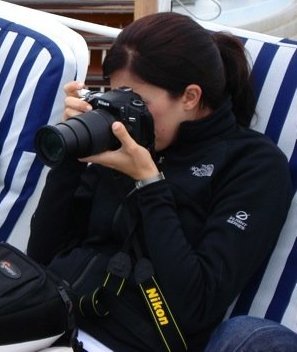
n101070_35336367_102 I've never been an early adopter. I came to this food blogging thing way after it had taken off; by the time I got a dSLR camera, food photography had already become a professional sport. And while other folks share whole chunks of their life online, the virtual snapshot I've created on this here blog is vague at best -- taken in dim light, say, without a flash. And a low battery. I'm not one for full exposure, and D's even less keen on it.
Well, today I take the plunge.

D and I have been together for almost five years. We met in college, spent a year together in Israel, and have made a pretty awesome life for ourselves in DC.

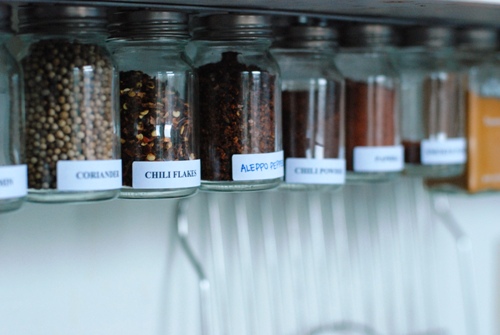
Since moving here together, our kitchen collection has probably tripled in size. I'm constantly buying just one more colorful plate or artfully decorated utensil. I don't even try to resist the pull of exotic spices and salts, and we recently indulged my many powdered purchases by building an awesome under-cabinet magnetic spice rack.

spicerack2

I insist on making the house smell like sauteed onions and roasted garlic just about as often as possible, and D abides the smell in the early morning and the late evening way more often than she'd like. I keep this blog, which demands that I cook new, exciting, sometimes altogether strange recipes, on a regular basis. I'm sure she'd rather just eat pasta and sauce, but she always encourages me to further develop this site and add bells and whistles, and is my #1 supporter when I go off to "industry events" to try to meet other folks as crazy as I am.

In short, D rocks my world. But all that's just prologue: this past weekend, in a fashion that couldn't have been more "us" -- think back of our neighborhood, amid heaps of fall foliage, on an uncharacteristically beautiful November afternoon...we got engaged!

douglas9

Readers, I couldn't be happier. I'm literally sitting up here on cloud 9. Care to join? It's nice and cushy.

As if the engagement itself wasn't adequate cause for thrill, we spent that first night at the newly-renovated Sushi Taro, and indulged in a 10-course kaiseki tasting dinner. This being a food blog, surely you'd like to hear about what we ate.

Normally, when we plunk down lots of cash to eat luxuriously, we do so at Mediterranean or Italian restaurants. We're suckers for those big, bold flavors. Taro offered pleasure of a different sort entirely. Taro's interior is quiet and clean, even austere. Its waitresses speak in hushed voices and glide across the room, seemingly without ever taking a step. It's an airier space than it once was, the tables each on their own little islands. We sat next to a window in the front hallway, with a nice view of both the street below and the back room of the restaurant, which envelops an awesomely large yet oddly light chandelier made of white lantern paper.

Many of the tables around us had ordered kaiseki tastings, and that's part of the fun: looking to your left, you'll see a couple dipping wide brushes into bowls of brown sauce and giddily painting pristine slices of fish; you wonder what that sauce is, whether you'll be painting fish a couple courses down the road. Look ahead, and you can enjoy a young woman's surprise as she bites into that braised tuna you just polished off and discovers, as you did moments earlier, that it's not piping hot as she'd expected, but thoroughly chilled. The meal is a game, and everyone's at a different stage. Stealing glances at nearby tables lets you relive the excitement of earlier courses and anticipate surprises to come.

After the tuna, whose soy marinade aids its likeness to beef, further delights await. Take the soup course, which we'd assumed would be a bowl of dashi. Make no assumptions here; our adorable waitress perched at our table with two small teapots. Each was covered by a lid and a teacup; we removed the teacup, lifted the lid, squeezed a slice of key lime into the pot, replaced the lid, and began doling ourselves petite portions of that lovely, simple broth. When all the liquid was gone, we opened our teapots once again, and reached in using chopsticks to capture the maitake mushrooms and slices of fish that had flavored our soup. That course was so simple, and so perfect.

Just when we thought we were winding down, our waitress approached again, this time with an open menu in hand. "The 9th course is sushi by request. You may ask the chef for any 3 pieces you like." At this point, we were both on the brink of stuffed. Notwithstanding, I reached for some inner strength and requested, among other things, a piece of toro. It's not every day that I get to try the fatty underbelly of the bluefin tuna, and I wanted to sieze the opportunity when it presented itself. The marbling on the pink sliver of fish was truly marvelous, as was its silky, smooth texture. To paraphrase Frank Bruni, biting into that piece of toro made my cheeks flush.

And you know what else made my cheeks flush? Sitting on a stoop, on a beautiful fall day, surrounded by pretty red and yellow leaves, with the person I'll be spending life with. There simply is no better reason to celebrate.

Broccoli with Capers and Olives, Two Ways

broccoli-olives1 Finally, the next chapter of "Weekday Lunch," where I offer recipes for food that fits in tupperware and warms in the office microwave.
This dish happened completely by accident. D had decided to order a pizza for dinner, and I decided to do something else, seeing as it would have been my fourth pizza meal of the week. (Ugh.) I did a quick scan of the fridge and saw a bag of nice-looking young broccoli that I'd picked up at the weekend farmers' market. I also had the last of a tub of greek olives that I'd recently replaced with a new tub and wanted to use up, and the end of a jar of summer's tomato sauce. There was about 1/4 of a box of macaroni left in the cupboard, so I figured I'd throw the last little bits of each of these to make a nice pasta dinner.

I started by finely chopping a shallot and heating a tab of butter in a large, shallow pan over medium-low heat. When the shallot was translucent and fragrant but not brown, I added about 1/2 teaspoon of red chili flakes and 2 cups of broccoli. I knew I planned to cook the broccoli just until al dente, but I wanted to use the stems as well as the florets, so I sliced the stems pretty finely -- about 1/3-1/2-inch thick -- so that they'd cook pretty quickly. I added a hefty pinch of salt and tossed the pan a couple times to combine.

Soon after adding the broccoli, I tossed in what was left of the olives, probably about 1/2 cup worth. I also added about a tablespoon of capers. At this point, the broccoli was heating up and had turned a vibrant shade of green. I wanted to preserve this color, so I added a very little bit of water from the pasta, which had already started to cook. Non-pasta water would have been fine as well, but it helps to have the water be hot, so that it doesn't slow down the cooking.

After about five minutes, the broccoli was almost perfect; still that beautiful green shade, mostly cooked but still with a bite. I ended up adding several ladlefuls of my tomato sauce, and eventually some hot pasta, to make this dinner. But before tomatoes ever hit the pan, I looked down at the broccoli with its briny accompaniments and thought, gosh, this'd make a fantastic side. So there you have it; broccoli with capers and olives. I'd probably squeeze a bit of lemon if I were serving this alone; hitting it with some acidity would compliment the vegetal and salty flavors. I could see it served atop israeli couscous, or as an accompaniment to chicken. It was also pretty great mixed with tomato sauce and tossed with the end of the box of macaroni. Just sayin'.

pasta-broccoli-olives

Buttermilk Country Cake, Homemade Creme Fraiche

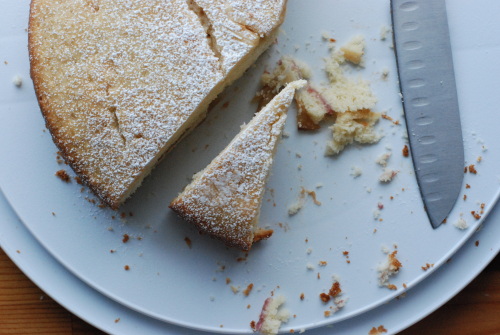
countrycake4 In my minds eye, a good cake is at least two layers high. It's fluffy and moist and laden with chocolate and, if I'm lucky, coated from head to toe and all in between with cream cheese frosting. Or better yet, chocolate cream cheese frosting. In a word, decadent.
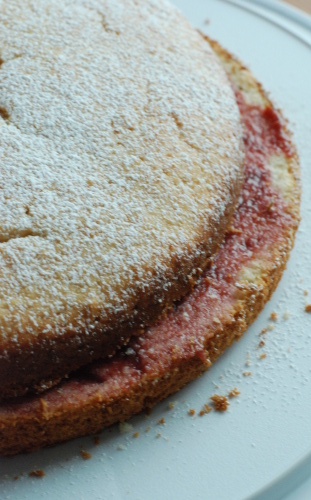
It's easy to pass up simpler cakes in favor of the sky-high versions I make for birthdays and such. But when a more casual occasion comes along and I have good reason to make a cake that's not coated in frosting, I jump at the chance. Much like the toasted flour sables I made in my last post, this cake is very girl-next-door. It's the epitome of rustic simplicity, a simple batter flavored with just buttermilk and vanilla. The resulting cake is clean and pure, its texture at once moist and airy. It's a cake made for brunch or a picnic in the park. A slice would also be the perfect accompaniment to a cup of tea, which is a ritual for me on winter mornings.

countrycake3

Oops! I've gotta let you know where this cake is from: it's Rose Levy Beranbaum's brainchild, in her genius bakebook The Cake Bible. If there's one thing I've gleaned from poring through the book these past two weeks, it's that Beranbaum's cakes are fundamentally different than most I've made before. Instead of creaming the butter and sugar together and subsequently adding the dry ingredients, this cake starts with flour, sugar, salt, and leavening agents. Butter and buttermilk are added after that, and the mixture is beaten for 3 minutes to "aerate the cake's structure." It seemed a bit odd at first -- especially when my batter was so thick that aerating seemed out of the question -- I dutifully followed her instructions anyway, and the cake came out perfect.

I brought my buttermilk country cake to an engagement brunch for my good friends R and K. I'd planned to top it with some baked sliced apples, but I ended up changing the plan a little: see, it was pretty hot in my kitchen and the butter holding the ring of parchment paper to the base of the pan had melted, so the paper kept curling at the edges. I'd already made the baked apple slices, so I laid them out in a spiral pattern on top of the parchment paper to hold it down, then poured the batter overtop. I considered serving it upside down to show off the fruit, but the top of the cake had formed such a lovely crust that I left the apples underneath as a surprise. I also had some concord grape puree I'd made a couple weeks ago when grapes were available at the market, so I sliced the cake into two layers and spread the grape preserve in between.

cremefraiche1

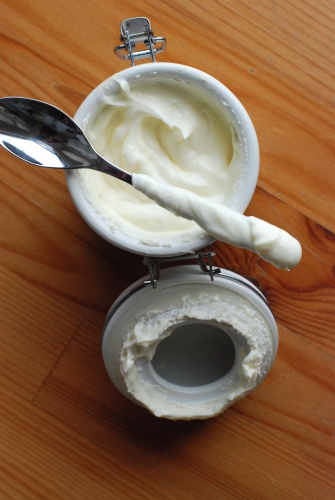
I'd intended to serve it with homemade creme fraiche(!) -- another super easy recipe from The Cake Bible -- but it hadn't quite set in time for brunch. Back at home, I sampled a slice with the creme fraiche, you know, just to make sure I wasn't misguiding my readers. Boy did I lick that plate clean.

Ruth Levy Beranbaum's Buttermilk Country Cake

4 large egg yolks (I used 2 eggs instead) 2/3 cup buttermilk 1 1/2 teaspoons vanilla 2 cups sifted cake flour 1 cup sugar 1 tablespoon baking powder 1/2 teaspoon salt 8 tablespoons unsalted butter (softened)

Preheat oven to 350 degrees. Butter a 9"x2" springform pan; line the pan's bottom with a disk of parchment paper, then butter and flour the entire pan, shaking out the excess flour.

In a medium bowl, combine the yolks (or eggs), about 1/4 of the buttermilk, and the vanilla.

In the bowl of a stand mixer fitted with a paddle attachment, combine all dry ingredients and mix on low for 30 seconds. Add the butter and the remaining buttermilk and continue to mix until everything is moistened. Increase to medium speed and beat for 1 1/2 minutes. (This is where Beranbaum says you're "aerating the structure of the dough." Mine felt more like bread dough and less like cake batter, but given that the cake came out very tasty, I think it's supposed to be this way.) Scrape down the sides of the bowl, then begin gradually adding the egg mixture in 3 batches, beating for 20 seconds after each addition. Scrape down the sides once more.

Pour batter into a prepared 9" in prepared pan and smooth the top. Bake for 30 - 40 minutes (mine baked 35), until a toothpick comes out clean and the center springs back when pressed. The edges aren't supposed to pull away from the pan until it is removed from the oven.

Let the cake cool still in the pan on a rack for 10 minutes. Then slide a knife around the perimeter of the cake to loosen it from the pan, and carefully remove the cake by flipping it onto the rack upside down. Immediately flip it back onto a plate or cake stand -- you need to store it rightside up so it doesn't break.

To serve, simply dust with powdered sugar and top with a dallop of whipped cream or creme fraiche. Fresh fruit would also be lovely -- Beranbaum recommends peaches.

Homemade Creme Fraiche adapted from The Cake Bible

1 cup heavy cream 1 tablespoon buttermilk sugar to taste

In a jar or container with a tight-fitting lid, mix the cream and buttermilk, and stir to combine. Close tightly and set in a warm place (I used the top of my stove). The buttermilk will take at least 12 hours to do its job, possibly up to 24; for ultra-pasteurized cream, Beranbaum says it could take as many as 36 hours. Be patient. You're aiming for a very thick product; Beranbaum says it should be pourable, but I wanted it thicker so I left it for 24 hours even though it had thickened after 12. Once thick, transfer to the refrigerator until ready to serve.

When you first open the jar, you'll see that the cream smells strong and sour. Don't mistake that smell for spoilage -- it's just the bacteria doing their job, as in homemade yogurt. The smell will fade almost completely after the creme fraiche is refrigerated.

When you're ready to serve the creme fraiche, stir in a teaspoon or so of sugar. Taste and adjust; I wanted mine pretty sweet, so I used 1.5 teaspoons. Beranbaum recommends whipping the creme fraiche until soft peaks form, but like I said, mine was the texture of cream cheese frosting and didn't need to be refrigerated.