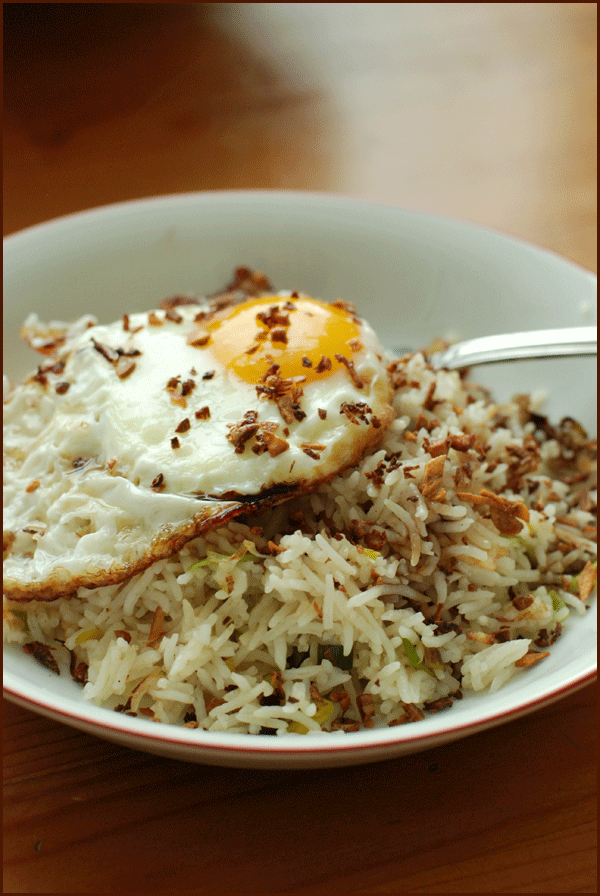
Ginger Fried Rice

It's a rare day that I get to make lunch for myself at home. When I do, I tend to steer clear of the fancy in favor of those simple things that simply don't work in my office toaster. Especially in winter, when I put a premium on warm, cozy meals and crusty, toasty bread, I feel especially lucky on those rare occasions that I can make a pot of something or other, pour it straight from the stove to my plate, and eat it piping hot.
Quite often, lunch at home amounts to a bowl of leftover soup, topped with some grated cheese and browned under the broiler, that I eat alternately with a big ole' spoon and thick slice of toasted bread for dunking. But it's not always soup that wins my vote when I'm home. Sometimes I prefer something I can really sink my teeth into, like a big bowl of long fusilli, my new favorite pasta. But other times, it's neither soup nor pasta that does it. It's something simpler, more elemental. It's rice.
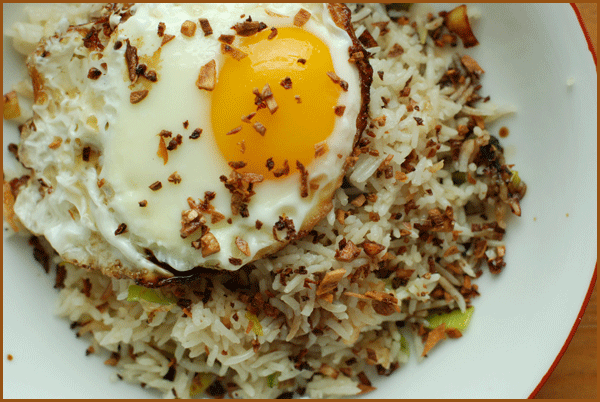
I'm not one of those weird people who can actually cook rice properly on the stovetop. If you are, share your magic in the comments. For the rest of us mortals, the oven is just fine. Jasmine and basmati, your best bets for this dish, need twice their volume in water, and if they start out cold in a 400-degree oven, they'll take about an hour to cook and steam. Be sure to grab a spoonful when it's fresh; there are few better things than freshly cooked rice.
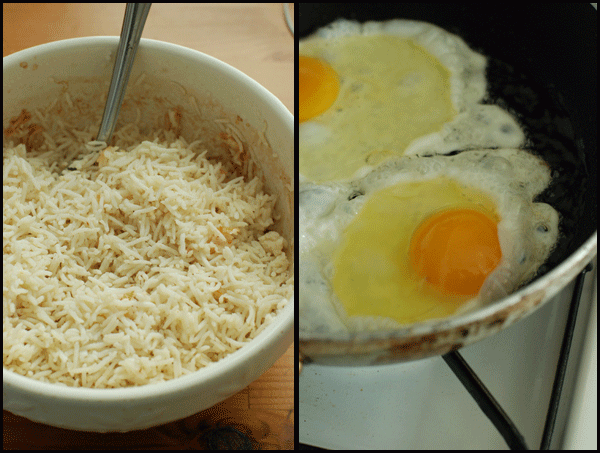
I'd been eyeing this recipe from via Mark Bittman for quite some time. It is the epitome of comfort food, the kind of thing you eat curled up on the couch beneath a heavy blanket. Also, true to Bittman's trademark, the recipe is relatively simple. The rice is leftover from the night before. The ginger and garlic are crisp and pleasantly bitter after just a short swim in oil. The leeks are softened, browned on the edges, and intensely flavorful. And if a deep bowl of steaming rice with leeks, garlic, and ginger isn't quite enough to have you climbing off the couch, there's a fried egg on top. Now go.
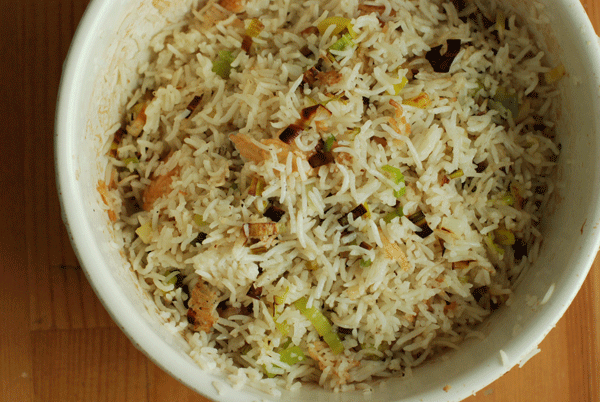
Ginger Fried Rice adapted from Mark Bittman serves 4

2 tablespoons minced garlic 2 tablespoons minced ginger Salt 2 cups thinly sliced leeks, white and light green parts only, rinsed and dried 4 cups day-old cooked rice, preferably jasmine or basmati, at room temperature 4 large eggs 2 teaspoons sesame oil 4 teaspoons soy sauce.

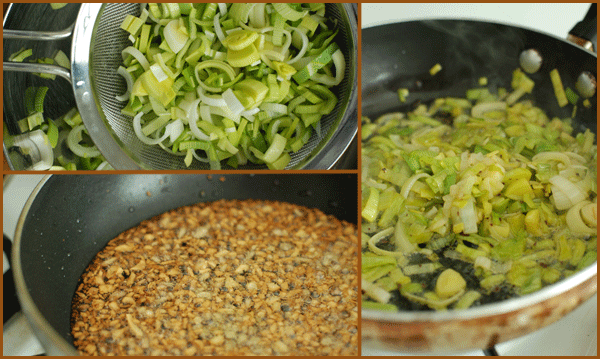
1. In a large skillet, heat 1/4 cup oil over medium heat. When oil shimmers, add garlic and ginger. Shake pan to evenly distribute, then cook, stirring occasionally, until crisp and brown. With a slotted spoon, transfer to paper towels and salt lightly.

2. Reduce heat to medium-low and add 2 tablespoons oil and leeks. Cook about 10 minutes, stirring occasionally, until very tender and just slightly browned. Season lightly with salt.

3. Raise heat to medium and add rice. Cook, stirring well, until heated through. Maybe leave it on a couple extra minutes without moving it around to crisp up some of those rice kernels. Season to taste with salt.

4. In a nonstick skillet, fry eggs in remaining oil, sunny-side-up, until edges are set but yolk is still runny.

5. Divide rice among four dishes. Top each with an egg and drizzle with 1/2 teaspoon sesame oil and 1 teaspoon soy sauce. Sprinkle crisped garlic and ginger over everything and serve.
Fennel and Apple Salad

If you're like me, the snow isn't the only thing that's making you crawl the walls a bit this February. White stuff or not, it's pretty hard to find a good lookin' salad in these parts. Restaurants are peddling beets and potatoes with a very erstwhile passion, with nary a leaf in sight. Okay, I'm exaggerating, but the greens are endangered these days. And snowpocalypse didn't help; at some point, a friend pulled out a bowl of lettuce, and someone at the table actually squealed with enthusiasm. If you're listening, internet, I could really use some salad.

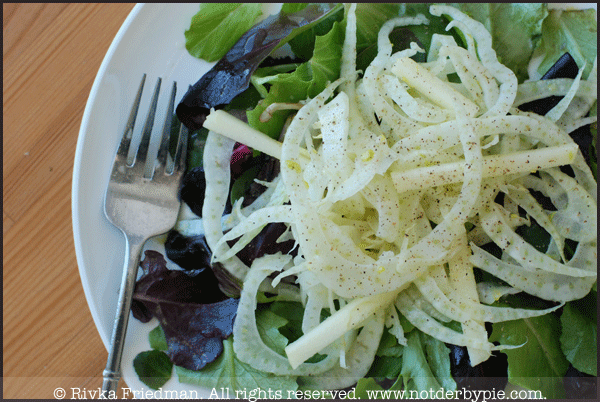
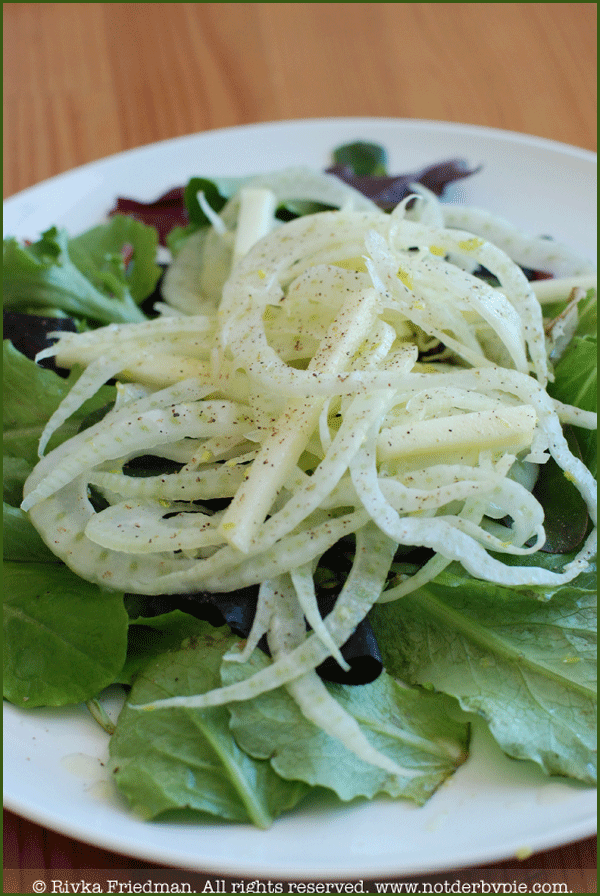
But I'm not here to complain. I'm writing because, at least temporarily, I've found just the thing to hold me over. This fennel and apple salad fresh and crunchy, dressed with a punchy shallot-lemon vinaigrette. (I love lemon, and shallots are, quite simply, the difference between ehh and amazing in so many things.) Best of all, unlike some winter salads, with their candied nuts and their cooked squash and their big hunks of cheese, it's not at all heavy. It's truly an antidote to the bitter cold outdoors, and a loud and clear answer to those wilted greens I've been seeing everywhere. It's absolutely lovely as is, right out of the bowl. For picture purposes, I mounded it atop a bed of (not wilted) greens, which helped balance the tang of the lemon and added a nice third dimension to the finished dish. I could also see finishing this with something sweet -- pomegranate seeds, perhaps. Or, if you're making this in the dead of winter as I did, supremed clementines or blood oranges. One last alternative: to make this salad even more substantial, I'll be making it for brunch on an upcoming Sunday and serving it with black olives alongside charred tuna and hard-boiled egg segments for a creative play on salade nicoise. And those are just a couple options. I know there are some mighty creative cooks lurking around here: if you've got an idea for this salad, be sure to leave it in the comments.

Fennel and Apple Salad adapted from Bon Appetit

Note: I mentioned this in the post, but I want it documented in the recipe for those who print it out alone. This salad lends itself to many possible variations, and as home cooks, it's our opportunity, dare I say our responsibility, to play around here. Feel free to eat this as is, just out of the bowl. For a more formal presentation, cushion a mound of the salad atop a bed of salad greens (arugula or watercress might be nice) and top with some pomegranate seeds or clementine or blood orange segments. For something more substantial, serve with charred tuna, hard-boiled eggs and black olives for a take on salade nicoise. Those are my ideas; what are yours?

For the dressing:

1/3 cup extra-virgin olive oil 1/4 cup fresh lemon juice 1 shallot, minced 1/2 teaspoon (packed) grated lemon peel 1/2 teaspoon salt, more to taste freshly cracked pepper 2 large fresh fennel bulbs, trimmed, halved, very thinly sliced (preferably using a mandoline) 2 8-ounce Fuji apples, halved, cored, cut into matchstick-size strips

Whisk first five ingredients in a bowl. Taste and adjust salt content, then add freshly cracked pepper to taste.

In a medium bowl, combine fennel and apple. Add half the dressing and taste. Add more as desired. Serve immediately.

No-Knead Bread

The first morning after the snow started, I woke up in a bit of a frantic state. I knew there'd be no way to get to work, so rushing to the office was off the table. I had plenty of work to do, but the commute downstairs to my couch is about the length of President Obama's. So why the rush? It was entirely the kitchen's fault. The kitchen was packed solid with groceries, Y2K style, and I, in a way that only other cooking-obsessed people can understand, felt a sudden urge to cook it all.

Reader, I have cooking neuroses.

When cooking panic hits, there's only one thing to do: get something started. And that's just what I did. I pulled a big bowl off the shelf, added a few cups of flour, an itsy little bit of yeast, some salt, and a couple glugs of water. I stirred. I covered.

I'm sorry, did you want more steps?

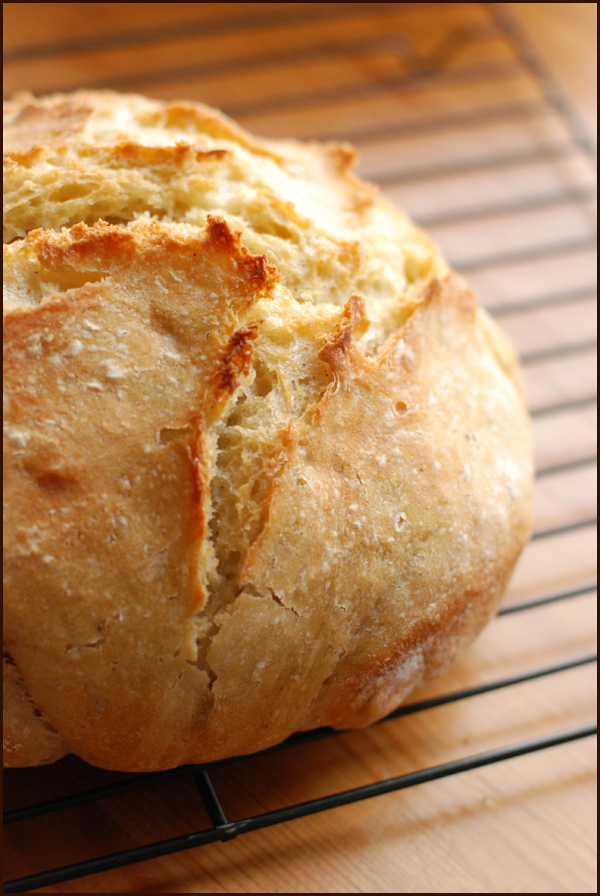
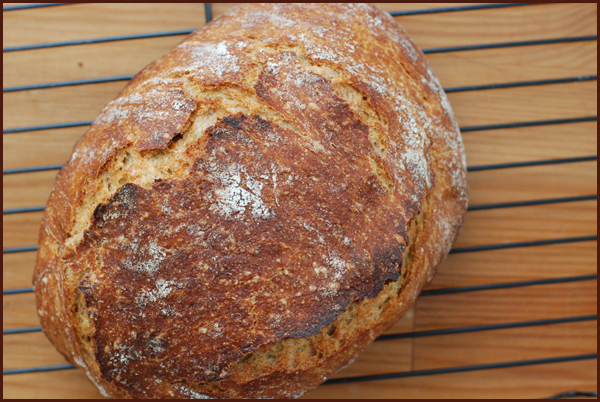
Really, that's all there is to this bread. It takes 2 minutes to start, and afterward, you have that wonderful sensation of having done something with your day. Works like a charm every time. As the name suggests, you don't knead this bread; instead, you leave it alone to rise for about 18 hours, which develops both the flavor and the gluten that obviates the need to knead (hehe). To cook it, you heat a heavy pot in a very hot oven, then drop in the dough and listen to it sizzle. You bake it in that very hot oven mostly covered -- the steam aids the bread's rise -- and then uncovered at the end, to achieve that crackly crust. It's pretty much foolproof, and it yields a wonderfully flavorful loaf, every single time.

I should add that the recipe below is really a master recipe, to which no small number of things can be added. Among my favorite extras are raisins and walnuts, olives, parmesan cheese, thyme, and rosemary. But please don't stop there. If cornmeal loaves with cheddar and jalapenos are your thing, go for it.

You can also experiment -- and boy, do I urge you to experiment -- with alternative flours. I've used up to 1/3 rye flour (from Anson Mills, and truly delicious), up to 2/3 white whole wheat, and up to 1/4 corn flour, all with great results.

No Knead Bread Adapted from Jim Lahey, Sullivan Street Bakery, via Mark Bittman

Time: About 1½ hours plus 14 to 20 hours’ rising

3 cups all-purpose or bread flour, more for dusting ¼ teaspoon instant yeast (aka regular yeast, such as Fleishmann's; not rapid rise) 1¼ teaspoons salt Cornmeal or wheat bran as needed (I frequently just use flour)

1. In a large bowl combine flour, yeast and salt. Add 1 5/8 cups water, and stir until blended; dough will be shaggy and sticky. Cover bowl with plastic wrap. Let dough rest at least 12 hours, preferably about 18, at warm room temperature, about 70 degrees (that's about, people. Don't go crazy trying to find a perfect spot.)

2. Dough is ready when its surface is dotted with bubbles. Lightly flour a work surface and place dough on it; sprinkle with a little more flour and fold it over on itself once or twice. Cover loosely with plastic wrap and let rest about 15 minutes.

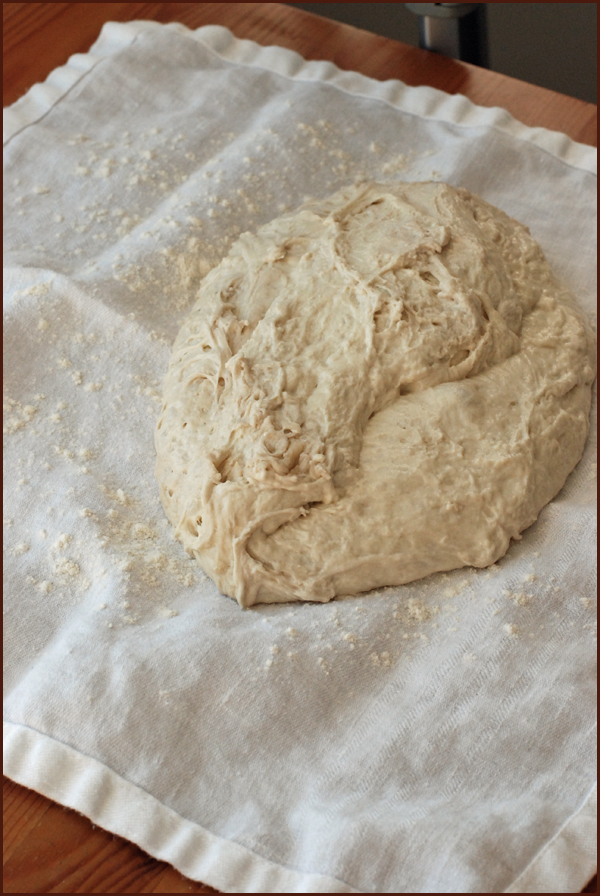
3. Using just enough flour to keep dough from sticking to work surface or to your fingers, gently and quickly shape dough into a ball. Generously coat a cotton towel (not terry cloth) with flour, wheat bran or cornmeal; put dough seam side down on towel and dust with more flour, bran or cornmeal. Cover with another cotton towel and let rise for about 2 hours. When it is ready, dough will be more than double in size and will not readily spring back when poked with a finger.

4. At least a half-hour before dough is ready, heat oven to 450 degrees. Put a 6- to 8-quart heavy covered pot (cast iron, enamel, Pyrex or ceramic) in oven as it heats. When dough is ready, carefully remove pot from oven. Slide your hand under towel and turn dough over into pot, seam side up; it may look like a mess, but that is O.K. Shake pan once or twice if dough is unevenly distributed; it will straighten out as it bakes. Cover with lid and bake 30 minutes, then remove lid and bake another 15 to 30 minutes, until loaf is beautifully browned. Cool on a rack.

Yield: One 1½-pound loaf.

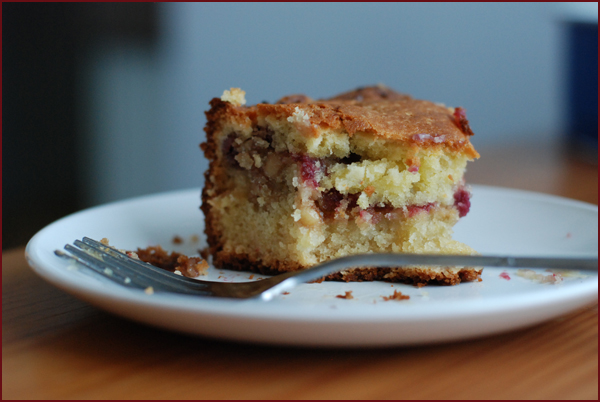
Raspberry Streusel Coffee Cake

So...yea. It's been pretty snowy here, as you no doubt have heard. It's not the kind of weather that makes you eager to jump off the couch and run to the grocery store. Fortunately, I subjected myself to supermarket hell before last weekend, when the first blizzard was on its way, and fortunately, I'm a typical Jewish woman and totally overshopped, so I've got plenty of food in the fridge.

If getting off my lazy derriere to go outside isn't really in the cards, spending copious amounts of time in the kitchen most certainly is. The snow storm(s) provide an opportunity to make something complicated, something with steps, something luxurious, something you otherwise would flip past in favor of baked ziti. Raspberry streusel coffee cake was that thing for me.

I've been eyeing Rose Levy Berenbaum's streusel coffee cake from her fantastic book The Cake Bible for quite some time. It's easy to understand why: she's an expert baker, and she says it's one of her favorite cakes, so I assumed it'd instantly become one of mine. The recipe is a classic sour cream coffee cake that's layered with a walnut streusel. It calls for 2 sticks of butter for the cake, another half stick for the streusel, 4 egg yolks, loads of sugar, and a few other things. Needless to say, this one ain't gettin' tagged "good for you." But delicious? Oh yes.

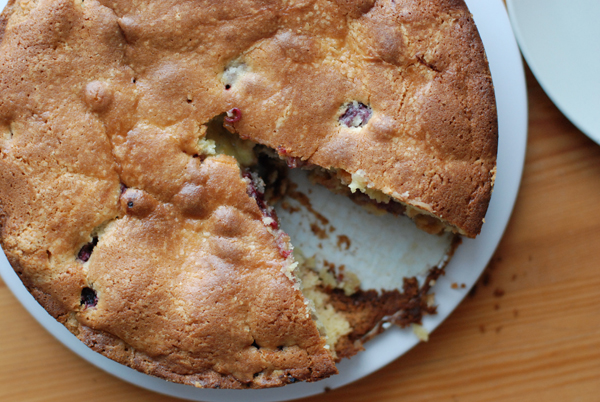
Knowing myself as well as I do (we're pretty close after all these years), I figured I'd want something tart to offset all the sweetness, so I tossed half a bag of frozen raspberries atop the streusel topping, tucked beneath that top layer of cake batter. Perhaps that's why my cake wouldn't firm up in the center, even after 75 minutes of baking. A little annoying, but certain members of my household don't mind mushy cakes, so all was well. If you add the fruit, definitely either thaw and drain them, or use fresh berries instead. And you're not limited to berries: apples would be splendid here, as would peaches in summer.

If, like me, you're indoors today, and all is white, and the wind is blowing, and there's absolutely nowhere to go but the kitchen, this cake may just be an antidote to your cabin fever.

Raspberry Streusel Coffee Cake adapted from Rose Levy Berenbaum's The Cake Bible

For the streusel:

1/3 cup firmly packed light brown sugar 2 T granulated sugar 1 cup walnuts or pecans (I used pecans) 1 1/2 t cinnamon 1/2 cup (dip and sweep) unsifted cake flour 4 tablespoons (half a stick) softened unsalted butter 1/2 teaspoon vanilla

For the batter:

4 large egg yolks 2/3 c. Sour cream 1 1/2 tsp vannilla 2 c. sifted cake flour 1 c. Sugar 1/2 tsp. Baking powder 1/2 tsp baking soda 1/4 tsp salt 12 T (2 sticks) unsalted butter 2 cups fresh (preferred) or frozen, thawed, and drained raspberries

Prepare a 9 inch springform pan by greasing it, lining the bottom with a circle of parchment paper cut to fit, and then greasing and flouring the over that. Beranbaum suggests something called Magi-Cake Strips to insulate the sides as this cake browns a lot due to the yolk content and a long baking time. Instead I just folded foil over about 4-5 times and wrapped it around the pan, insulating it. Although I think the Magi-Cake Strips may work even better, this solution seemed to work ok as my cake browned but not excessively.

Preheat the oven to 350 F.

Streusel Topping and Filling:

In a food processor with the fitted blade, pulse the sugars, nuts and cinnamon until the nuts are coarsely chopped. Remove 3/4 cup to use as filling. To the remained add the cake flour, butter and vanilla and pulse briefly to form a coarse, crumbly mixture for the topping.

Batter:

In a medium bowl, lightly combine the yolks, vanilla and about 1/4 of the sour cream. Set aside.

In a large mixing bowl (or your mixer) combine the dry ingredients (I included the sugar here) and mix on low speed for 30 seconds to combine. Add the butter and remaining sour cream. Mix on low speed until the dry ingredients have been moistened and then increase to medium speed (high speed if using a hand mixer) and beat for 1 1/2 minutes to aerate the cake’s structure. Scrape down the sides as needed. Gradually add the egg mixture in 3 batches, beating for 20 seconds after each addition and scraping the sides each time. Remove from the mixer and use a spatula to fold the batter a few times, making sure that the very bottom and the sides all incorporate evenly.

Reserve about 1/3 of the batter and scrape the rest into the prepared pan. Smooth the surface with a spatula—this is a thick cake batter and will require smoothing. Sprinkle with the prepared streusel filling and then layer the apple slices over that. Dollop the rest of the batter into blobs over the apples slices and smooth it out with a spatula. Sprinkle the streusel topping over the top of the cake.

Bake for 55-65 minutes or until a cake tester comes out clean. Cover loosely with buttered foil after 45 minutes to prevent overbrowning. The cake should start to shrink back from the sides of the pan only after removing from the oven so that is not a sign that it is done. As I said in my post, my cake took about 75 minutes and still wasn't completely done in the center; blame the frozen raspberries. If you have fresh on hand, use them.

Let the cake cool in its pan on a rack for 10 minutes. Loosen the sides with a small metal spatula and remove the sides of the springform pan. Cool completely before wrapping airtight. Serve at room temperature.