Whole Fish Roasted in Salt Crust

There's a certain amount of risk involved in cooking. Many times, I spend all day prepping for a recipe that's a total clunker. I've shelled out lots of cash on "novelty" ingredients that end up being nothing special. And I've definitely made my share of rookie mistakes that, if I were the type of normal cook that makes something more than once, probably wouldn't happen nearly as often. Yes, D thinks I'm crazy. She'll never understand why I'd pass up chocolate chip cookies to try my hand at chocolate-dipped hazelnut shortbread. Or why, instead of making my tried and true recipe for lemon curd, I insist on blowing 2 whole meyer lemons on a whole-lemon tart that was so saccharine, so unpleasantly textured, I nearly threw it out. But such is the life of a blogger: constantly in search of the next internet-worthy recipe, making plenty of duds along the way.

So imagine my delight when my hard work actually paid off. This wasn't just any old success. On the contrary: it was a complete and total knockout.

I've been wanting to roast a whole fish for quite some time now. I'd been told it wasn't particularly difficult, but pfff -- it's a whole fish! With a tail! And eyeballs! And it's a whole fish. You get the point. But after a rough week at work, I decided hell! If other people can do it, why can't I? And thus began the most fearless, the most exciting, and by far the most successful adventure I've ever had in my kitchen.

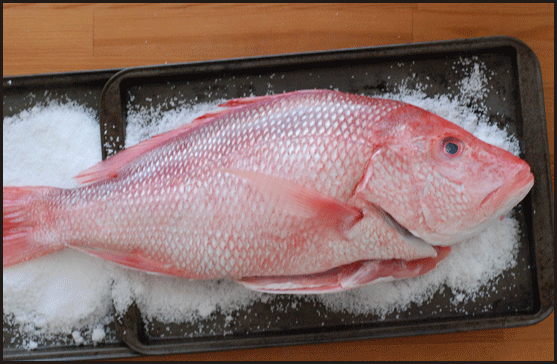
I called my fishmonger midweek and reserved a 6.5-pound red snapper. When I came to pick it up, I took a look -- what a beaut! -- and asked him to scale and gut it for me. "You aren't, by any chance, cooking this in salt, are you?" He asked. Why yes, I was, I said. "Glad I asked: don't scale the fish. If you scale it, the salt leaches in and renders the fish inedibly salty. Scales protect your dinner." See why I love my fishmonger?
I picked it up and stuck it in my bag along with its accompanying bed of ice. I felt like I had a pet in tow. So did my officemate. When fishie and I got home, I cleared out a whole shelf in the fridge, stuck him in there to stay cool, and pulled out my measuring tape. My young person's apartment has a relatively small oven, and I didn't actually have a baking sheet large enough to fit the fish. Instead, I cobbled together a baking surface out of two smaller pans. I overlapped the two pans in the exact length I needed to fit the snapper, and guess what? That length was also exactly the width of my oven. Couldn't have worked out more perfectly.

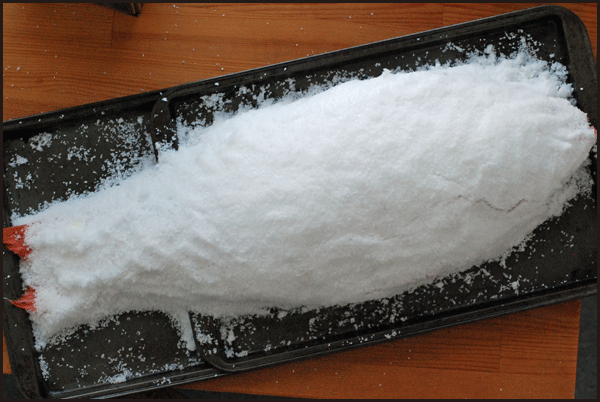
I mixed some salt with... wait. "Some salt" really doesn't do it justice. I mixed SIX POUNDS of salt with a bunch of egg whites to form a sort of cakey mix that would adhere to the fish. I poured a third of it down on the pans, laid the fish on top, and proceeded to cover that fish with enough salt to clear last month's blizzard, eeeasy.
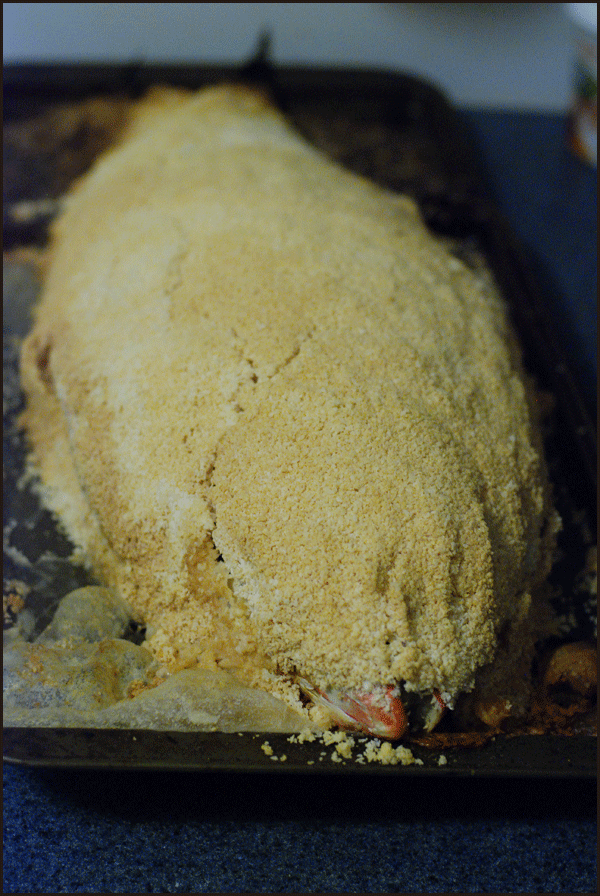
I left the fish in the fridge for a few hours until I was ready to cook it. About 1.5 hours before dinner, I preheated the oven to 450. I carefully tucked the two pans, with their fish-shaped salt cake, into the hot oven and sat on my hands for an hour crossing my fingers that everything would cook, that the fish wouldn't explode, and that it might -- *gulp!* -- even wind up tasty.

Our guests that night were adventurous types, happy to be my guinea pigs as I played around in the kitchen. And I'm proud to say I didn't let'em down. The fish, seasoned with absolutely nothing other than that salt crust, was soft and tender, luscious and buttery, an absolute pleasure to eat. The rest of the meal wasn't too shabby either, but that's a story for another time. It all starts with this recipe, simple enough to let the fish flavor sing, fussy enough to make your guests feel special. It can be scaled up or down; quantities and cooking times are below. If you're like me, and you've always wondered how salt-crust roasting is even possible, throw caution to the wind. After all, that's what cooking is all about.
Whole Fish Roasted in Salt Crust adapted from a recipe on Food52

1 whole fish, gutted but NOT scaled, head and tail intact 1 pound salt for every pound fish 1 egg white for every 1.5 pounds salt/fish, roughly lemon and/or parsley for serving, optional and really unnecessary

Preheat oven to 450.

Mix salt and egg whites until salt is cakey.

Pour 1/3 of salt down on baking tray to cover the whole area where the fish will be. Lay the fish down overtop, and pour and cake salt onto sides and top of fish to completely cover. If you don't have enough salt, leave the tail uncovered -- that's preferable to the head or the sides.

For a small (2-3 pound) fish, bake 20-30 minutes. For a 5 pound fish, 40-45. For a 6.5 pound doozie like mine, give it about 60 minutes.

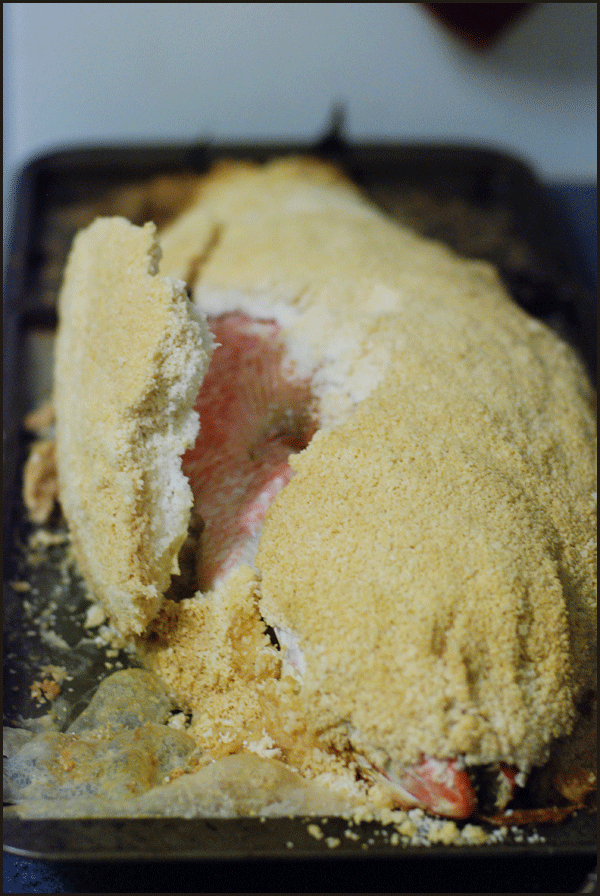
Remove fish from oven and let rest 10 minutes. Take a hammer or a heavy metal spoon and tap crust in several places to break up. Remove crust and discard.

Slice along the jawline of the fish, and peel back the skin. It should come off pretty effortlessly. Use a knife and spatula to scoop out that first filet. Then remove the backbone, and take out the second filet. Please, whatever you do, don't forget to scoop out those precious cheeks -- both above the jawline, next to the (eeek!) eye, and below the jaw just above that initial spot where you cut. It's the sweetest, most succulent piece of the whole fish.

"Serve immediately" goes without saying, right?
Maple Yogurt Pound Cake

I rarely make the same thing twice. If something truly blows me out of the water -- as this did -- I'll make something like it again. Something like it, mind you; never identical. I like recipes, but I don't really like following them. I'd rather just take an old idea and riff on it. That's what I do best. So when I take out my pen, when I actually skip over to the fridge every ten seconds to scribble how much maple syrup I'm pouring into the bowl, you better believe whatever it is I'm making will absolutely knock your socks off.

Such is the case with this cake.

Chalk it up to the weather, but I've been on a serious maple kick recently. I guess it all started two Sundays ago, when I was whacked square across the face with the world's biggest craving for maple syrup. This was no small itch: I'm serious, people. I just wanted to shmear maple syrup all over my face. I could've tipped the jug and drunk it straight. It was that kind of craving.

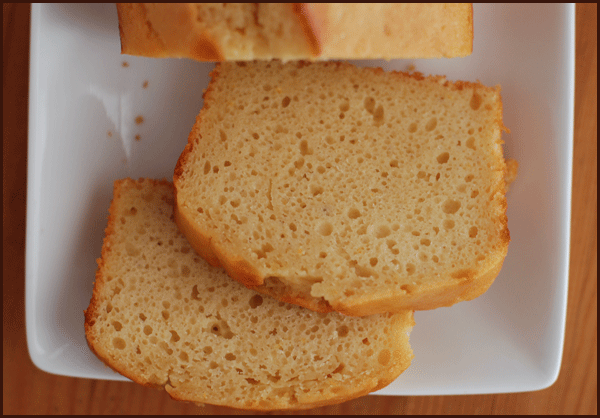
How did I get from straight-no-chaser to the more subtle, more refined loaf you see here? Well, admittedly there was a middle step that involved hot toast drizzled with the stuff, which calmed me down a bit. Also, while I'm being honest, I also recently discovered this thick, viscous maple butter that's found its way onto more than one piece of challah. So the craving was fed. But still, I really wanted to make a cake. I wanted a loaf that I could slice up, take to work, and enjoy some maple on the road. Since maple goes so well with tart flavors like lemon and apple and berries, I thought I might do well to add it to a yogurt pound cake base. I checked out a few yogurt cake recipes to start; all of them called for sugar, and I was concerned replacing all the sugar with syrup would change the texture of the cake, making it too moist. My maple craving was stronger than this concern, though, so I did it anyway. If you have maple sugar on hand, feel free to use it in place of some of the syrup.

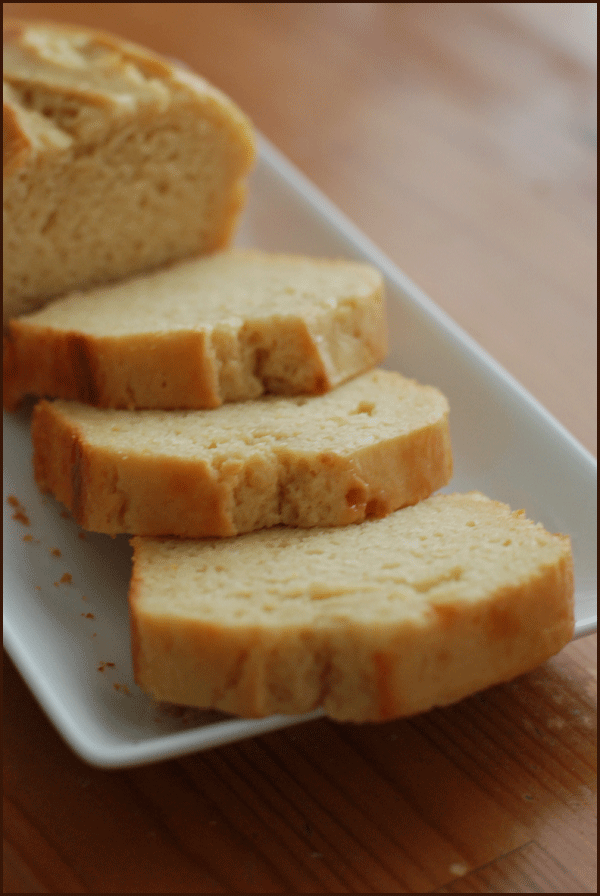
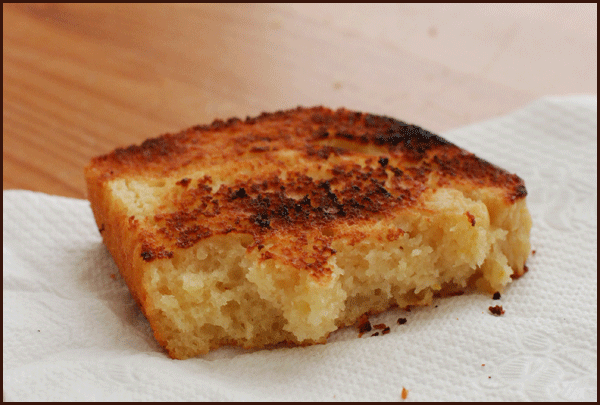
There are distinct upsides to using all syrup, though. First, the woodsy syrup and the tangy yogurt do something absolutely lovely together. But more importantly, they create an ultra-moist cake, a cake so moist it's a bit reminiscent of custard. This custardy texture is even more pronounced if you take a slice of the cake and toast it. Then it's truly crisp on the outside and luscious within. In a subtle, have-a-slice-with-tea kind of way, this cake is perfect.

Maple Yogurt Cake inspired by Bon Appetit

1/2 cup maple syrup, preferably grade B 3/4 cup yogurt 1/4 cup sugar 3 eggs 1 teaspoon vanilla 1 teaspoon lemon zest 1 1/2 cups flour 2 teaspoons baking powder 1/4 teaspoon salt 1/2 cup oil

Position rack in center of oven and preheat to 350°F. Generously butter 8 1/2x4 1/2x2 1/2-inch metal loaf pan.

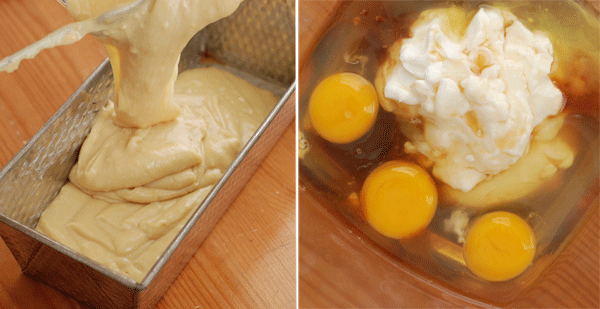
Combine syrup, yogurt, eggs, sugar, vanilla, and lemon zest. Stir or whisk to combine. In a separate bowl, combine flour, baking powder, and salt. Add to wet ingredients and stir to incorporate. Add oil, and fold gradually until oil absorbs into the batter.

Place cake on baking sheet in oven and bake until tester inserted into center comes out clean, about 50 minutes. Cool cake in pan on rack 5 minutes. Cut around pan sides to loosen cake. Turn cake out onto rack. Turn cake upright on rack and cool completely. (Can be made 1 day ahead. Wrap and store at room temperature.)

Beets with Fennel, Orange, and Walnuts

It'd be unfair if I didn't confess to you that as I try to write about beets and fennel and orange and walnuts, I'm watching Lydia Bastianich add home-cured mackerel to cannelini bean bruschetta and red onion salad, and all I can think about is how delicious that oily, vinegary cured fish must taste. Holy dear, I need to turn this off.

Where were we? Ah, yes. Beets.

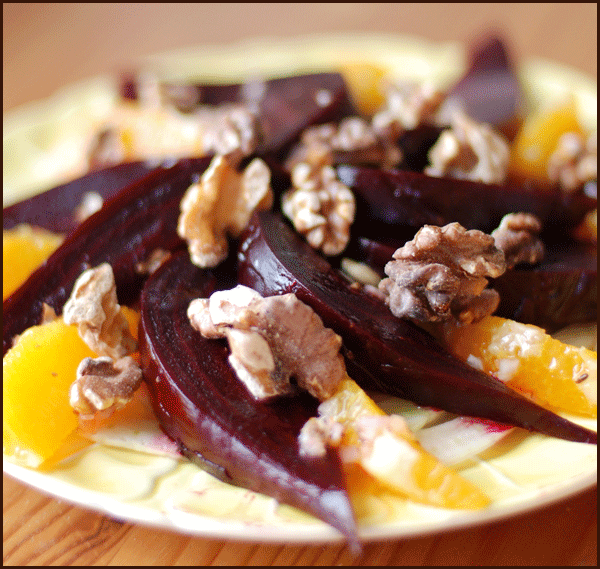
By now you know it's winter here, I certainly don't need to tell you that. And surely you're also aware that I'm having a bit of a fennel moment. But stay with me for a second. Fennel is crunchy and bright, the perfect antidote to February (not that I have anything against my birthday month, but holy bejeezus, it's cold out there!). Fennel's also a lovely addition to roasted beets, helping them feel less like a mid-winter consolation prize and more like an antidote to that cold weather. Ditto oranges, one of the few fruits that not only is readily available all winter long, but actually hits its peak right around this time. (Granted, they're shipped in from Florida and elsewhere, but until you find me a job and an apartment squarely in California, I'm stuck with airplane citrus.) Put those flavors together on a plate, along with some toasted walnuts, and you've got yourself a nice looking winter salad.

Ok, so that won't win a prize for originality. But what if you upped the flavor contribution of each component of the salad by including it in two (or even three) different forms? Yes, clearly I have a weakness for nerdily contemplating the what-ifs of recipe development. But when I tasted my walnut oil vinaigrette, I stopped making fun of myself and kinda jumped for joy. So nutty! So earthy! A perfect match for beets. Toasted fennel seed, orange zest, minced shallots, and champagne vinegar rounded out the dressing, which I used to marinate the fennel and beets in advance and to drizzle overtop at the end. I topped the salad with some toasted walnuts and fennel fronds, strengthening the fennel and walnut undercurrents of the dish. The result, to be frank, was delicious. I'm still marveling at how a classic flavor combination became so much more than the sum of its parts simply by combining the elements in new forms, toasting the seeds and zesting the oranges and really wringing several dimensions of flavor out of each ingredient. Dishes like this one remind me why I insist on spending a bulk of my free time clanging pots and pans together in this little kitchen of ours: it's because I love to cook, and I love to eat, and most of all, I love that moment when everyone pops a bite of something innocent-looking in their mouths, and then grow wide-eyed as the flavors start opening up and the dish is revealed. It may not be an olympic sport, but cooking really can be riveting.

Beets with Fennel, Orange, and Walnuts

note: I recently submitted this recipe to the crowd-sourced recipe site, Food52. Have you checked it out? It's a website founded by Amanda Hesser and Merrill Stubbs (of NYT fame), and the idea behind it is to create a cookbook composed entirely of crowd-sourced recipes. If you haven't seen it, it's really worth a look. There are some great recipes there, and every week, Amanda and Merrill offer up two contests for reader submissions ("your best beets" was what prompted me to submit this recipe). So check it out!

2 large beets 1 bulb fennel, stalks removed, fronds reserved 3 oranges, zested and supremed 3/4 cups freshly toasted walnut halves 2 teaspoons orange zest 1 teaspoon fennel seeds, dry toasted in a hot pan 1 shallot, minced 1/4 cup orange juice, squeezed from oranges after segments have been removed 1/4 cup champagne or white wine vinegar 1/2 cup walnut oil flaky salt and freshly cracked pepper

Preheat oven to 375. Wrap beets completely in aluminum foil and set on baking sheet. Bake 45 minutes to an hour, until a knife can be easily inserted into beets. Remove from oven, unwrap foil, and allow beets to cool. While beets cook, make dressing: combine orange zest, fennel seeds, shallot, orange juice, vinegar, and 3/4 teaspoon salt.. I like my dressing chunky, but if you prefer it smooth, puree these ingredients together. Slowly whisk in walnut oil.

When beets are cool enough to handle, cut off root end and tip, and use paper towel to slip skin off (should come off pretty easily once beets are fully cooked). Halve beets lengthwise, slice each half into 7 or 8 wedges, and transfer to bowl. Drizzle half the dressing over the beets and toss to incorporate using a large wooden spoon (metal may cut or break beet wedges). Transfer to refrigerator to chill.

Using a mandoline or a very sharp knife, slice fennel as thinly as possible. Transfer to a bowl drizzle with a few tablespoons of dressing, to taste. Do this as soon as possible to prevent fennel from oxidizing. Let marinate about 5 minutes.

When beets are sufficiently cool but not cold, plate salad: lay down a bed of fennel on each plate. Set beet wedges in spiral pattern overtop, and alternate orange wedges in between. Sprinkle toasted walnuts overtop. Finish with a little drizzle of remaining dressing, a sprinkle of flaky salt, and a grind of the pepper mill. Top with a few fronds of fennel. Serve immediately.

Preserved Lemons

I like sour things. I don't mean tart or citrusy or with a faint hint of brightness; everyone likes that. I mean sharply, brightly, eye-squintingly mouth-puckeringly sour. I've been known to suck on the end of a lemon wedge on occasion. I love lemon-based vinaigrettes. Basically, if something's a bit on the tart side, squeeze that lemon a couple more times, -- op, maybe once more -- give it one last little shake, yep just like that, and I'll take it, thankyouverymuch.

But lemons aren't the one-note that my sour obsession might suggest. They're among the more versatile ingredients in your fridge, actually. In fact, when the kind folks at Washingtonian asked me if I had any advice for new cooks, I suggested keeping fresh lemons on hand, because they very often end up being the finishing touch to whatever it is I'm making. You've got the juice, fruity and sour and just a bit sweet at times; then there's the zest, more mellow in tartness but fully present in aroma and flavor; and if that's not enough dimension, there are endless things you can do to lemons to radically change the flavors they bring to the table, such as grill them, braise them, candy them, or....preserve them.

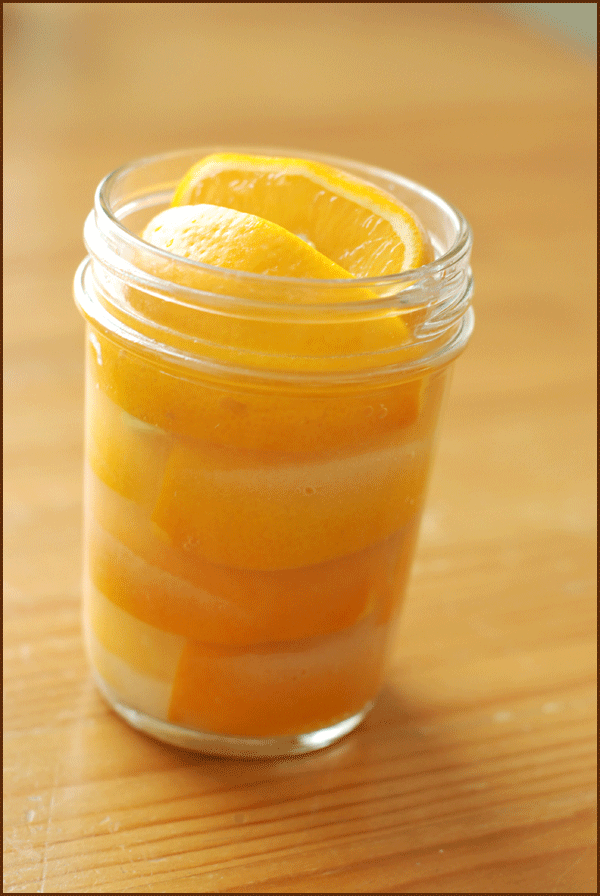
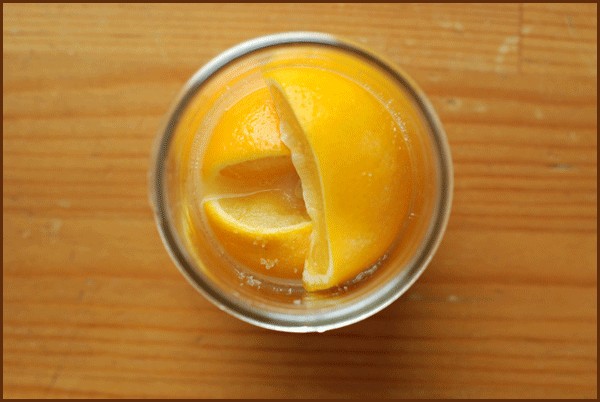
So what are preserved lemons, you ask? I'll tell you this: their name is quite deceiving. If you're thinking preserves, think again. This ain't no jam. It's not even sweet. It's completely and utterly savory, in the most wonderful sense. Instead of preserving lemons with sugar as in marmalade, here you're preserving them in salt. The lemons are either sliced, quartered, or packed whole into jars layered with plenty of salt and enough lemon juice to fill the jars, then allowed to sit about on the countertop for several days (or weeks) until the salt and lemon and time work together to do their magic. The result is at once vigorously tart and deeply aromatic. It hits sour and sweet and salty, yes salty, and then it opens up and hits you with floral, spicy notes. If fresh lemons are the finishing touch to many recipes, preserved lemons are the cornerstone to some truly spectacular food.

Did I mention that they're an absolute cinch to make? That's right folks. Have your cake and eat it, too.

Preserved Lemons

4 Meyer lemons, or regular lemons if Meyers aren't available 1/4 cup salt, more as needed extra freshly-squeezed lemon juice if needed 2 cloves or 1/8 teaspoon ground cloves 1 sterilized half-quart jar

Clean lemons very well and blot dry. Slice lengthwise into quarters. Add a sprinkle of salt to the bottom of the jar, and pack 2 quarters tightly into jar, pressing so that quarters emit their juice a bit and most air bubbles rise to the top. Sprinkle salt overtop. Continue layering lemons and salt this way until jar is full. Add cloves. Add extra lemon juice if necessary to fill jar, and top with a final layer of salt. Seal jar, shake a couple of times to distribute salt and lemons, and then set on counter for a few days, up to a week. Shake and turn up and down once a day. After several days, transfer to the fridge for about 3 weeks, turning once a day. At the end of three weeks, peels will be sufficiently tender.

To use, rinse lemon quarter to remove salt. Remove pith if desired (not necessary) and use in Moroccan and Middle Eastern dishes.