Chocolate Babka

When I was a kid, I couldn't wait for Saturday to come. I'd like to say I loved the break from homework and the chance to spend time outdoors, but really, it was just the Babka. Green's Babka, specifically. The chocolate came in the blue wrapper; if you wanted cinnamon, you went for the green. Inside were many countless sheets of paper-thin dough, folded accordion style as densely as could be, and protectively encasing layers of chocolate. A cross-section had the complex structure of brisket, with all those layers to cut through. I ate mine from the outside in, peeling the layers apart slowly and seeing how thin I could rip each piece. It was quite the treat.

The complex structure of the dessert was etched in my mind. So many layers! And so impossibly thin! However did they do it? For years, I (stupidly) assumed that homemade babka was out of reach. But after a brush with the old-school Green's a couple months back, I was jolted from the romance reminded that Green's is made with wow, so much margarine. And no butter at all. I was convinced that by using the real stuff, I could make an even better version of the childhood classic.

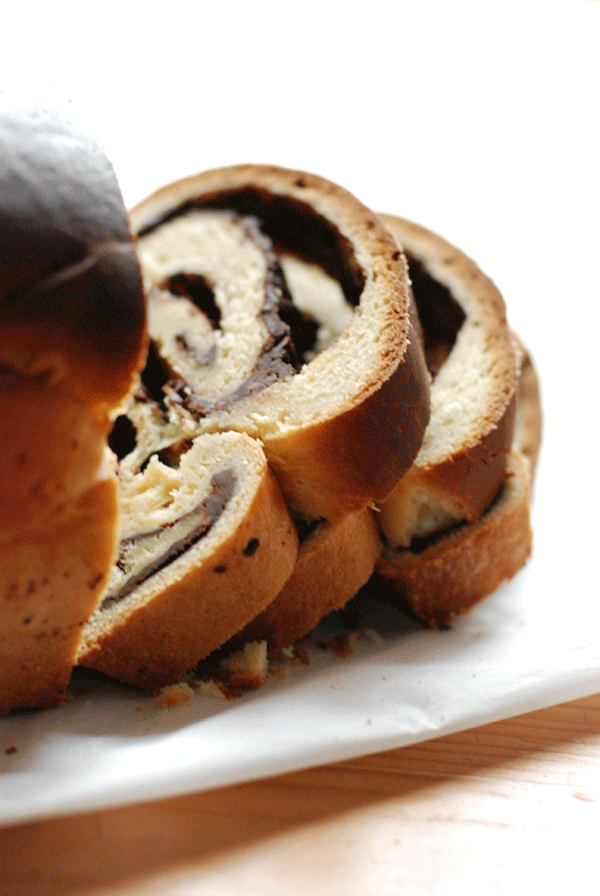
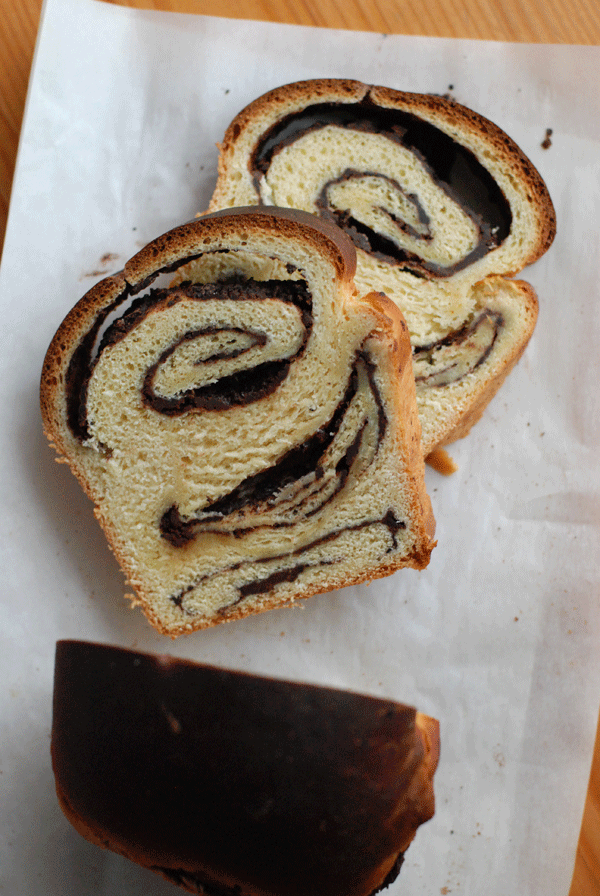
I was right. The babka I made last week, while not really anything like Green's, was delicious. It was less like a croissant and more like a not-so-delicate brioche: soft and buttery, with occasional folds of chocolate and plenty of richness. And seeing as I'm in the middle of a toasting trend, I'll just say it: slices of babka older than a day should be toasted.

This babka comes from Peter Reinhart. Since his pizza dough was such a success, I couldn't resist giving one of his more complex recipes a try. Admittedly, there are a couple rises involved in making this babka, so it's a bit time-consuming and not as hands-off as some of the other baked goods I've been making. That said, the results are sure to elicit oohs and ahhs from your brunch companions. Babka also makes a splendid rustic dessert.

Chocolate Babka adapted from Peter Reinhart

Note: Reinhart suggests a crumb toping that, while traditional, isn't altogether necessary. I omitted it.

2 tablespoons yeast 3/4 cup lukewarm milk 6 tablespoons butter, melted or at room temperature 6 tablespoons sugar 1 teaspoon vanila 4 egg yolks, broken up slightly 3 1/3 cups unbleached all-purpose flour 1 teaspoon salt 1 egg and 1 tablespoon water for egg wash, if using crumb topping

Filling:

1 1/2 cups frozen semisweet chocolate chips or chunks 1 teaspoon cinnamon 1/4 cup cold butter

Streusel Topping:

1/4 cup cold butter 1/2 cup flour 1/2 cup brown sugar pinch salt 1/4 teaspoon cinnamon

In a small bowl, whisk yeast into milk until dissolved and let proof for 5 minutes.

In a large bowl or the bowl of a stand mixer, cream butter and sugar on medium until combined, about 1-2 minutes. Add vanilla to egg yolks, and add to dough in four portions, mixing until combined each time. Once mixed, turn mixer to medium high and continue mixing until uniform and fluffy, scraping down as you go. If using a hand mixer or a spoon, mix as powerfully as possible.

Stop mixing, add flour and salt, and pour in milk mixture. Continue mixing on low until well-incorporated, about 2-3 minutes, until dough is soft and somewhat sticky. If mixer struggles, switch to dough hook or mix by hand.

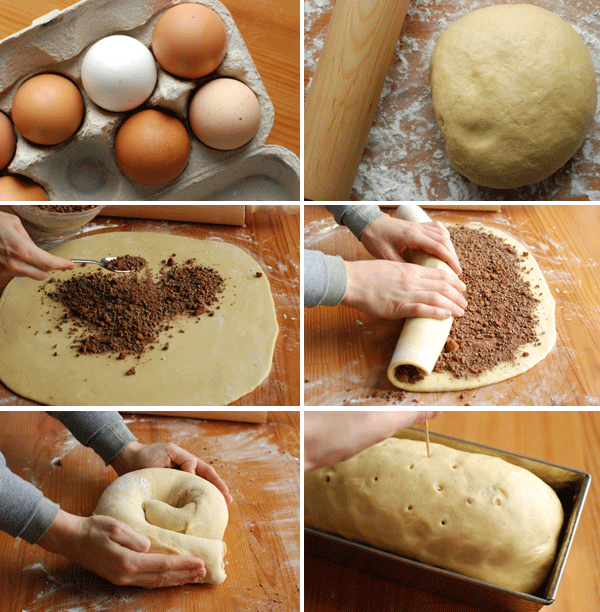
Transfer dough to floured work surface and continue kneading by hand another 2 minutes, until dough is no longer sticky, but still soft and pliable. Form dough into a ball. Place in lightly oiled bowl, cover tightly with plastic wrap, and let rise at room temperature about 2.5 hours. Dough will rise some, but not double in size.

Meanwhile, prepare filling: grind chocolate in food processor, then add cinnamon. Cut butter into small pieces and add to food processor, mixing until butter is evenly dispersed into the chocolate.

Roll risen dough into 15x15 inch square on lightly floured work surface. Dough should be between 1/4 and 1/8 inch thick. Be sure to lift the dough regularly in between rolls and add flour as necessary to prevent sticking.

Sprinkle filling evenly over dough, leaving 1/4-inch border. Roll up dough and place it seam-side down on work surface. Rock dough back and forth gently to extend roll to about 20 inches long.

Wrap dough around itself to form coil shape. Stand coil on its side, compress lightly to form a loaf shape, and transfer to greased loaf pan. Cover loosely with plastic and let rise at room temperature for 2-3 hours until babka fills out the pan. At this point, either bake babka immediately or refrigerate overnight. BE SURE TO BRING TO ROOM TEMPERATURE BEFORE BAKING!

Preheat oven to 350 degrees. Poke a few holes in top of babka.

If using streusel, combine all ingredients in processor or mix in bowl with pastry blender until it is in small bits. Brush top of babka with egg wash, then sprinkle streusel over top. Bake 25 minutes, then rotate pan and bake until top and sides are dark brown and loaf sounds hollow when thumped, about 25 minutes more. Dough will quickly turn brown, but won't burn; don't panic if it's dark, just check the hollowness and the sides for doneness. Total baking time shouldn't be more than 60 minutes (though depending on your oven, I suppose it may be; trust the dough -- if it sounds hollow and looks deep deep brown, it's probably done).

Let cool at least 90 minutes before serving.

Thin Crust Pizza

I've tried making pizza on several occasions. Every time, as I bite into a not-quite-crunchy crust and get a lick of too-thick tomato sauce on my tongue, I wonder why we didn't just hop on the 96 bus and get off at Two Amys, the best pizza in town. Well, all that's changed. Armed with not one, but two excellent pizza recipes, I'm here to assure you that homemade pizza really is within reach.

I recently indulged in a couple new cookbook purchases. Peter Reinhart's Artisan Breads Everyday" and Jim Lahey's My Bread have joined the party on my cookbookshelf, and I've spent the better part of the last several weekend mornings tucking into their recipes, devouring their advice. I've been making Lahey's No Knead Bread for quite some time now, both plain and with all sorts of add-ins. His book offers all that and more: imagine his bread dough, studded with fruit and infused with spices, then baked wrapped in banana leaves. Or the same dough, flavored with coconut and chocolate, baked in that hot oven so that some of the chocolate crusts on the outside of the bread. The pictures in this book animate already-delicious-sounding recipes. I'm thrilled to have it on my shelf, and his pizza recipe is just one more reason. Ditto Reinhart, who offers many solid recipes for sandwich breads, challah, and even a cinnamon chocolate babka, sitting on my counter now and the subject of a future post. But I'm getting carried away: let's talk about pizza.

Last Sunday, we watched the oscars with a few friends, so I decided to put all this learning to use, and make a bunch of pies for dinner. After reading both pizza recipes through thoroughly, I opted for Reinhart's "popular" pizza dough recipe, which calls for honey or agave nectar to flavor the dough.

While I had grand plans for toppings, including a white pie loaded with mushrooms and a yuppie pie with raw arugula on top, I ended up (wisely) sticking to the standard sauce-and-cheese combo, always a crowd pleaser. I used some buffalo mozzarella from the farmers' market and a jar of good Italian pizza sauce. I added mushrooms and caramelized onions on one pie and snuck some pesto onto another, but that was it.

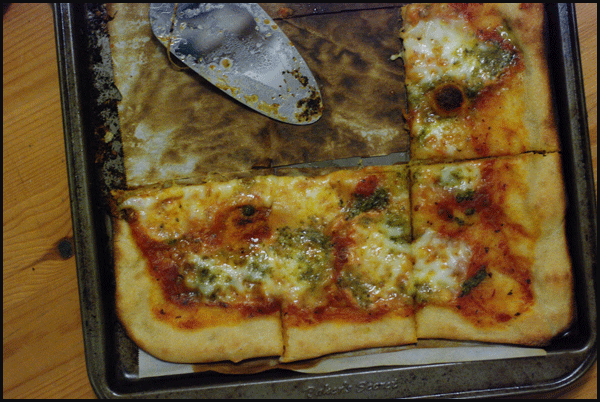
If you're wondering whether you need any special tools to bake these pizzas, the answer is a definitive NO. I have neither a pizza stone nor a peel, and I baked these pies to crispy perfection on a couple of ordinary baking sheets, no sweat. The key is to crank that oven up as high as it will go, and really give it time to heat up completely before sticking the pizzas inside.

What else can I tell you? Once you make this dough, you will never again question the value proposition of sitting on your couch, holding a plate of your own homemade pizza. Even when faced with the alternative of heading out to your nearest pie place, homemade pizza is worth the trouble.

Thin Crust Pizza based on Peter Reinhart's recipe in Artisan Breads Everyday

5 1/3 cups bread flour 2 teaspoons salt 1 teaspoon yeast 2 tablespoons sugar, honey, or agave nectar (I used agave) 2 cups plus 2 tablespoons water, room temp 2 tablespoons olive oil

Combine everything in stand mixer or large bowl and mix, using wooden spoon or paddle attachment, for 1 minute or until blended. Let rest 5 minutes.

Switch to dough hook and mix on medium-low speed 2-3 minutes (or continue mixing by hand) until dough is soft, and somewhere between tacky and sticky.

Spread 1 tablespoon olive oil on kneading surface and turn dough out onto surface. Stretch dough out and fold over itself. Do the same from the opposite end, then from side to side, for a total of four stretch-and-folds. Divide dough into the number of pies you plan to make: I initially divided into 5, as Reinhart recommends, then later realized I wanted 3 big pies instead of 5 personal ones. Form each piece into a ball and either put each into an oil-sprayed plastic bag, or set them atop parchment-lined baking sheets and cover tightly with plastic wrap. Refrigerate overnight or upto 4 days, or freeze upto several months.

90 minutes before making the pizzas, remove dough balls from refrigerator. With oiled hands, stretch and fold each piece into a tight ball, then let rest on lightly oiled baking pan loosely covered with plastic wrap.

1 hour before baking, turn oven as high as it will go. If you have a pizza stone, heat it in the oven. Those with stones will prepare pizzas on a peel (a large, spatula-shaped surface used to transfer pizzas in and out of the oven). The rest of us will just use baking sheets.

Coat your peel or baking sheet and your hands with flour. Choose one dough ball, sprinkle a bit of flour on top, then flip over onto peel or baking sheet and use your thumbs to slowly coax the edges of the dough into a larger circle. Work from the edges, not from the middle; the middle will spread as the edges are drawn out. Keep turning and stretching, turning and stretching, about 13 times (according to Jim Lahey), until dough is quite thin. If dough resists or shrinks back, let it rest a few minutes, then return.

At this point, you're ready to top your pizzas. I like a spoonful of tomato spread thinly, several pieces of fresh mozzarella, a couple pieces of basil or drops of pesto, and a swirl of olive oil. Do as your stomach commands.

Bake about 4-7 minutes, depending on heat of the oven, rotating halfway through. Let cool for one minute before serving.

Blueberry Cornmeal Tart

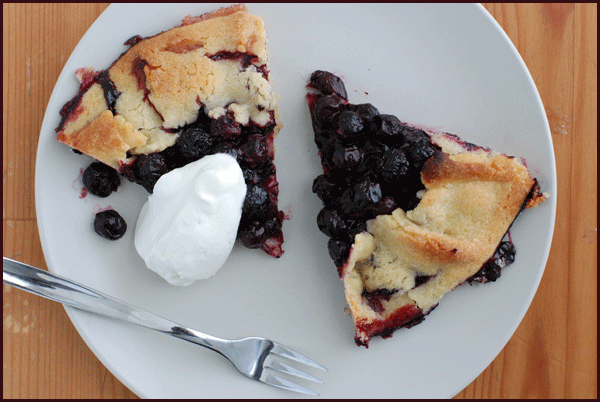
The only thing better than discovering in your fridge the ingredients for a fantastic winter salad is discovering in your freezer the ingredients for a fantastic summer tart in the middle of March. I was looking for the wheat bran I use to make my weekly bread, when I jackpot and happened upon a bag of frozen blueberries in the very back of my freezer. I thought I'd run out of summer berries long ago, but no! I still had some blueberries left (along with a litle bit of sweet corn and a couple precious strawberries -- stay tuned.)

When frozen blueberries present themselves, you make something crusty and flaky and oozy with fruit juices: a tart or a pie, either will do. In this case, I'd been eyeing the blueberry tart in cornmeal crust from a new addition to my cookbook shelf: Karen DeMasco and Mindy Fox's The Craft of Baking, and this seemed like a golden opportunity to try it.

What first intrigued me about the recipe was the ingredient list for the cornmeal crust. Specifically, it didn't call for an egg or egg yolk, which most tart crust recipes I've used do. Instead, TCOB calls for buttermilk. I need not have been skeptical: this cornmeal crust is, by far, the best I've ever had. It's perfectly sweet, a wee bit salty, and gets extremely crunchy and crusty in the oven.

DeMasco and Fox also do quite well by way of the blueberries, which are treated with sugar, flour, and a bit of lemon juice (I also added zest), then brought to room temperature so the juices thicken up. While the juice definitely leached out of the crust in the oven, it didn't prevent the crust from crisping, and the juices were well-thickened, certainly not runny. The tart was such a welcome break from apples, I can't even tell you. And a generous dollop of unsweetened whipped cream certainly didn't hurt. If you've got leftover berries lying around, this is just the recipe to hold you over until summer.

Blueberry Cornmeal Tart adapted from The Craft of Baking by Karen DeMasco and Mindy Fox

Note: you only need half a recipe of tart crust for this recipe. Freeze the other half for later use.

For the cornmeal crust:

10 tablespons butter, room temp 3/4 cup sugar 1/4 cup buttermilk or milk 3/4 teaspoon vanilla 1/2 cup cornmeal 1 1/2 cups unbleached flour 1 teaspoon kosher salt

Beat butter and sugar in an electric mixer or a stand mixer fitted with the paddle attachment until well combined. Add milk and vanilla, scrape down the sides of the bowl, and beat to combine.

In a separate bowl, whisk together remaining ingredients. Add to the butter mixture and beat just to combine.

Turn dough onto lightly floured surface, making sure to include any bits stuck to the bowl. Using a gentle hand, bring together to form a mass. Divide in half, form into disks, and refrigerate at least 1 hour or overnight. Dough can be frozen for upto 1 month; bring to room temperature before using.

For the tart:

3 cups blueberries; frozen is fine 1/3 cup sugar 1 tablespoon flour, plus extra for rolling; 2 tablespoons flour if using frozen berries 1 tablespoon lemon juice 1 teaspoon lemon zest 2 tablespoons Demerara sugar

On a piece of parchment paper sprinkled with flour, roll out dough into an 11-inch circle. Transfer dough, on parchment, to refrigerator and chill about 5 minutes.

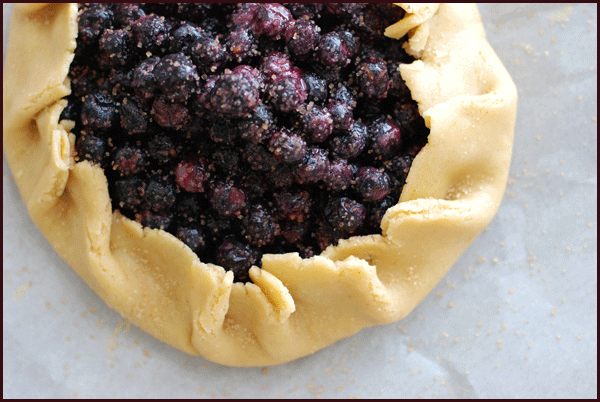
In a medium bowl, toss blueberries with sugar, flour, lemon juice, and lemon zest. If frozen, bring berries to room temperature so juices can mingle with flour and thicken. When berries have thawed, set crust on countertop and mound berries in middle, leaving large (about 4-inch) border around. Fold crust edges up over berries; you can tuck and fold the dough to make a nice pleated pattern, or just fold casually for a rustic look. Sprinkle with Demerara sugar and refrigerate 20 mintues.

Preheat oven to 375. Bake tart 40 minutes, rotating half way through baking. Transfer carefully to wire rack to let cool. Serve warm or room temperature with a dollop of unsweetened whipped cream or creme fraiche.

Gnocchi with Butternut Squash and Shiitake Mushrooms

As you probably already know, I've had a pretty big food week. For one thing, I managed to roast a whole fish in a big pile of salt. I also made 2 loaves of bread, and 4 pizzas -- pizzas that actually tasted as good as something I could buy, which has never happened before. If that's not enough, I decided to take advantage of my already gutsy week and try a Thomas Keller recipe. People, the sky is falling.

Thomas Keller is the renowned chef of The French Laundry, Bouchon Bakery, and a handful of other spots. He's certainly one of the most famous chef in America. He's known for his particularity, his precision, and his meticulousness. Every recipe of his -- even the simplest, most elemental -- consist of countless steps, involve several pans, and have you running around the kitchen in a mental state that's pretty much the opposite of the low-key way I like to cook. See why I was nervous?
If you read Carol Blymire, you probably think TK recipes are no biggie. After all, she made a whole book of them. And now she's working her way through the only cookbook I can think of that seems more intimidating than Keller's: Alinea at Home, Grant Achatz's documenting of the molecular-gastronomy-heavy dishes at his Chicago restaurant Alinea. Not all of us are as adept at guestimating weights in grams, using products like methocel F50, and generally rocking out. But we've gotta start somewhere, now don't we.

This here recipe, which I found on epicurious, seemed a pretty comfortable place to start. It's something I might have made up myself (in a much less sophisticated manner with many fewer steps, of course). I had planned to serve it for a dinner party, but I made a little trial batch to make sure I had the method and flow down pat. That's what you see here.
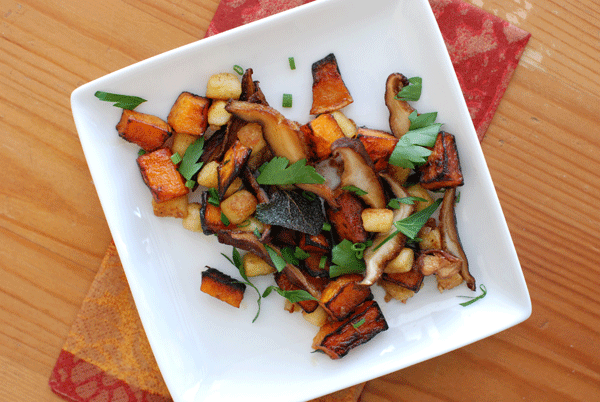
The gnocchi in this recipe are Parisian gnocchi, not Italian: instead of being made with potato, they're made from pate a choux, a versatile dough that's used for everything from gougeres to eclairs to dumplings and beyond. You'll be a bit awestruck the first time you make pate a choux. When the flour goes in, and it looks all messy and bumpy, you wonder if you've made a mistake; but then your eyes grow wide and you do a doubletake as the dough suddenly pulls away from the sides of the pan and becomes a smooth, perfect mass. It's very cool. After that, the gnocchi are pretty simple. The most time-consuming part is squeezing the little cushions through the piping bag. Worth it, though, I promise. I also used a very small tip (the largest I had) -- so if you use a normal size tip, you'll have an easier time.

One caveat: this dish is best eaten the moment it's made. If making this for a crowd as part of a dinner party, make the rest of the menu low-maintenance so that you can finish this dish immediately before serving.

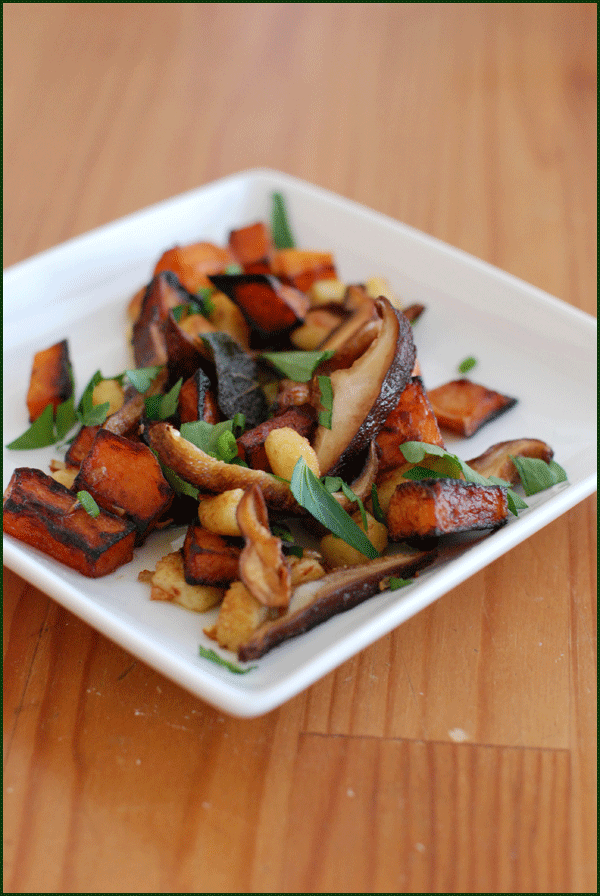
Lucky I snapped these pictures before tucking in: this was so absolutely delicious, I polished it off in ten seconds flat. The squash and mushrooms, browned in butter, are sweet and earthy. The gnocchi are crunchy outside and pillowy within, a real treat. Crispy herbs and their fresh counterparts give depth and contrast. And the lemon, combined with that extra brown butter, finish everything off with a pow. YES. Really, I can't bear to carry on writing this post when there's gnocchi to be made.

Gnocchi with Butternut Squash and Shiitake Mushrooms from Thomas Keller's Bouchon serves 6 as a side or 4 as a main

Squash One 2 1/2- to 3-pound butternut squash (one with a long neck) Canola oil 1 tablespoon unsalted butter Kosher salt and freshly ground black pepper 12 small sage leaves

Mushrooms 12 ounces shiitake mushrooms, cleaned Canola oil 1 1/2 teaspoons kosher salt 1 tablespoon unsalted butter 3 tablespoons minced shallots 1 tablespoon minced thyme 3/4 teaspoon freshly ground black pepper Extra virgin olive oil 4 tablespoons (2 ounces) unsalted butter 1/2 recipe Herb Gnocchi , thawed if frozen (see recipe below) Kosher salt and freshly ground black pepper 2 tablespoons minced chives 1 tablespoon chopped Italian parsley 1/2 lemon print a shopping list for this recipe

preparation

For the squash: It is easier to dice the neck of the butternut squash uniformly than the bulb, which is important for this recipe. We use the remaining bulb for soup. Cut off and discard the stem end of the squash, then cut off the neck. Use a paring knife or sharp vegetable peeler to slice away the peel deep enough to reach the bright orange flesh of the squash. Trim the neck to straighten the sides, then cut it lengthwise into 1/2-inch-thick slices. Cut the slices into 1/2-inch dice. (You need about 3 cups diced squash.) If you have less than 3 cups, peel the bulb of the squash, cut it in half, and scrape out the seeds. Trim and cut as much of the bulb as you need into 1/2-inch dice. Reserve the remaining squash for another use.

Line a baking sheet with paper towels.

Heat a thin film of canola oil over medium heat in a skillet large enough to hold the squash in a single layer (or cook the squash in two batches). When the oil is hot, add the butter and brown it lightly. Add the squash, salt and pepper to taste, and the sage leaves. Cook, stirring the pieces to brown them on all sides, for 4 to 6 minutes, or until tender throughout. Reduce the heat as necessary to cook the squash and brown it lightly, without burning; the best way to see if the squash is fully cooked is to eat a piece. Drain the squash on one end of the paper towel–lined baking sheet and set aside the sage leaves for the garnish. Wipe out the skillet with a paper towel and set aside.

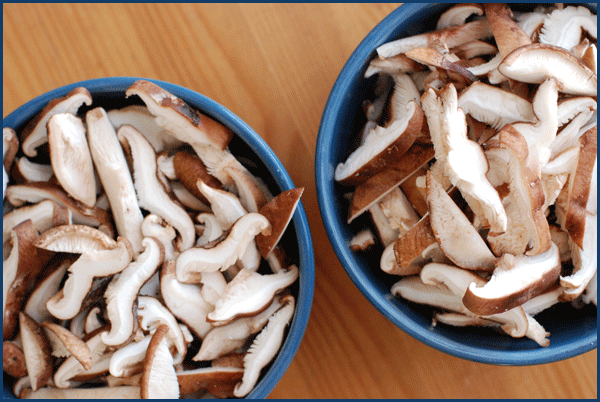
For the mushrooms: Trim away the tough stems and cut the caps into 1/4-inch-thick slices. Heat a thin film of canola oil in the same skillet over high heat. When the oil begins to smoke, add the mushrooms and salt and sauté for about a minute. The mushrooms will absorb the oil and should not weep any liquid. Add the butter, shallots, thyme, and pepper, then toss and sauté until the mushrooms are thoroughly cooked, 3 to 4 minutes total. Drain the mushrooms on the paper towel–lined baking sheet. The gnocchi should be cooked in two skillets: Wipe out the mushroom skillet with paper towels and add a light coating of olive oil to it and to a second large skillet.

To complete: Heat the oil over medium-high heat until hot. Add 1 tablespoon of the butter to each skillet. When the butter has browned, divide the gnocchi between the two skillets and season to taste with salt and pepper. Once the gnocchi have begun to brown, shake and rotate the skillets, tossing the gnocchi so that they brown and crisp on all sides, about 2 1/2 minutes.

Add the squash, mushrooms, and chives and heat just through. Spoon the gnocchi and vegetables onto serving plates and return one skillet to high heat. Add the remaining 2 tablespoons butter and cook until it is a rich brown, then quickly add the parsley to crackle for a few seconds. Standing back—the butter will spatter—add a squeeze of lemon half. Spoon the brown butter and herbs over the gnocchi and around the plates. Garnish with the reserved sage leaves.

Parisian Gnocchi:

1 1/2 cups water 12 tablespoons (6 ounces) unsalted butter 1 tablespoon plus 1 teaspoon kosher salt 2 cups all-purpose flour, sifted 2 tablespoons Dijon mustard 1 tablespoon chopped chervil 1 tablespoon chopped chives 1 tablespoon chopped parsley 1 tablespoon chopped tarragon 1 cup loosely packed shredded Comté or Emmentaler cheese 5 to 6 large eggs

Set up a heavy-duty mixer with the paddle attachment. Have all the ingredients ready before you begin cooking. Combine the water, butter, and the 1 teaspoon salt in a medium saucepan and bring to a simmer over medium-high heat. Reduce the heat to medium, add the flour all at once, and stir rapidly with a stiff heatproof or wooden spoon until the dough pulls away from the sides of the pan and the bottom of the pan is clean, with no dough sticking to it. The dough should be glossy and smooth but still moist. Enough moisture must evaporate from the dough to allow it to absorb more fat when the eggs are added: Continue to stir for about 5 minutes, adjusting the heat as necessary to prevent the dough from coloring. A thin coating will form on the bottom and sides of the pan. When enough moisture has evaporated, steam will rise from the dough and the aroma of cooked flour will be noticeable. Immediately transfer the dough to the mixer bowl. Add the mustard, herbs, and the 1 tablespoon salt. Mix for a few seconds to incorporate the ingredients and release some of the heat, then add the cheese. With the mixer on the lowest speed, add 3 eggs, one at a time, beating until each egg is completely incorporated before adding the next one. Increase the speed to medium and add another 2 eggs, one at a time, mixing well after each one. Turn off the machine. Lift some of the dough on a rubber spatula, then turn the spatula to let it run off: It should move down the spatula very slowly; if it doesn't move at all or is very dry and just falls off in a clump, beat in the additional egg. Place the dough in a large pastry bag fitted with a 5/8-inch plain tip and let it rest for about 30 minutes at room temperature. (If you have only a small pastry bag, fill it with half the dough two times.) Bring a large pot of lightly salted water to a simmer. Line a baking sheet with paper towels. Line a second baking sheet with parchment paper. Because this recipe makes such a large quantity of gnocchi, your arm may get tired: An easy way to pipe the gnocchi is to place a large inverted pot, canister, or other container that is slightly higher than the pot on the right side of the pot (left side if you are left-handed) and set the filled pastry bag on it so that the tip extends over the side and the container serves as a resting place for the bag. Twist the end of the pastry bag to push the dough into the tip. (From time to time, as the bag empties, you will need to twist the end again.) As you squeeze the back of the bag with your right hand, hold a small knife in your left hand and cut off 1-inch lengths of dough, allowing the gnocchi to drop into the pot. Pipe about 24 gnocchi per batch. First, the gnocchi will sink in the pot. Keep the water temperature hot, but do not boil. Once the gnocchi float to the top, poach them for another 1 to 2 minutes, then remove them with a slotted spoon or skimmer and drain on the paper towel–lined baking sheet. Taste one to test the timing; it may still seem slightly undercooked in the center, but it will be cooked again. Repeat with the remaining dough. When all the gnocchi have drained, place them in a single layer on the parchment-lined baking sheet, cover with plastic wrap, and refrigerate for at least 30 minutes, or up to a day. Or, for longer storage, place the baking sheet in the freezer. Once the gnocchi have frozen solid, remove them from the baking sheet and place in a freezer bag in the freezer. Before using frozen gnocchi, spread them in a single layer on a baking sheet and defrost in the refrigerator for several hours.