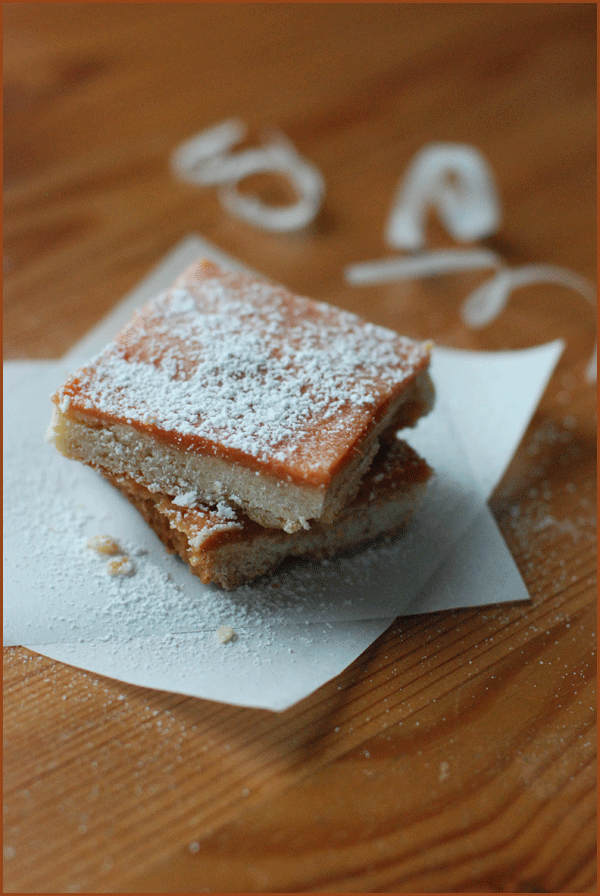
Rhubarb Curd Shortbread

It's official: Rhubarb Curd Shortbread is a winner! These treats took top prize over at Food52's "your best rhubarb" contest, and they'll be going into the food52 cookbook! Thanks to you all for voting and visiting!

When it comes to pantry stocking, I'm a minimalist. I keep only those things I need, being careful to clear out those non-essentials, so that I have as much space as possible for vegetables and cheeses in the fridge, ample room in the cabinets for all my pots and pans.

Um, can you hear the snickers and scoffs in the background?

In truth, I couldn't be less of a minimalist if I tried. I have absolutely no this-not-that discipline; I so readily add to my growing list of "essentials" that my fridge simply feels naked without homemade rum-soaked cherries, Shady Maple Farms maple butter, Huy Fong sriracha and sambal oelek, Aleppo pepper, homemade tamarind pulp, and even a jar of caramelized onions (which I make in bulk and keep on hand -- perhaps my wisest decision ever). What has become of my fridge? Whither simplicity?

If you thought this'd be my mea culpa, the one where I clean out the clutter and make some simple toast and butter, think again. The above items, however quirky and specialized, truly have become staples. My toast simply wouldn't be as good in the morning without a slather of thick maple butter. The rum-soaked cherries made my brunch pound cake a whole different thing, all the more so for its finishing gloss of that cherry-rum syrup. Yes, I'm crazy. But these are the items that bring character to my fridge. They're what make those "what's for breakfast?" questions so fun to answer.

And today, I'm adding one more item to this list: rhubarb curd.
Is it totally ridiculous to declare rhubarb curd a new pantry staple? Because I think I'm headed in that direction. If I can keep it around that long, that is.

While lemon curd has long been a favorite here at NDP, rhubarb curd gives lemon a run for its money. Come to think of it, rhubarb curd reminds me of a passionfruit curd I had once (I think it was from Zingerman's in Ann Arbor). There's something about it that makes you eat a spoonful, think for a moment, and go back for more. The fact that it's pink food also doesn't hurt.
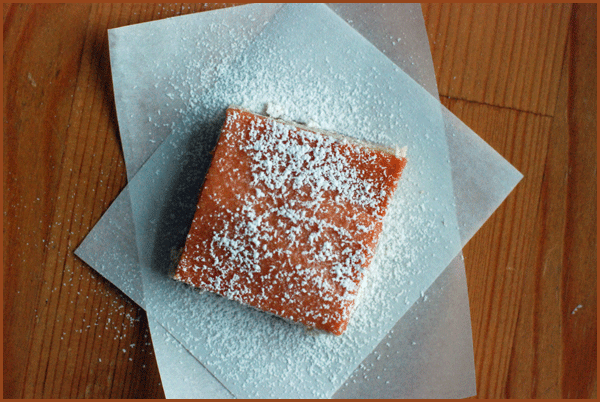
The idea for the rhubarb curd shortbread came from Lara over at Cook and Eat. Her photos might be some of the most gorgeous I've ever seen; they instantly had me in drool-mode. I had bought a nice big load of rhubarb over the weekend, and was planning to put half in a crisp and play around with what was left. Those rhubarb bars couldn't have gone up at a better time.

The shortbread recipe I used is adapted from Karen DeMasco, my new dessert guru. I took her basic shortbread recipe, cut the sugar, and added some spices to complement the rhubarb.

While I ate an embarrassingly large portion of the curd straight out of the bowl, I spooned the rest onto the shortbread, which I generously shared with the lady. Think it's no biggie that I shared it with one other person? Well, you go make this, and then let me know how you do on the sharing.

Rhubarb Curd Shortbread curd adapted from Cook and Eat, who adapted it from Ginger Tablet

For the curd:

3/4 pounds rhubarb (about 6 stalks) 4 tablespoons water 1/4 cup sugar 4 egg yolks 1/3 cup plus 1/8 cup sugar 1 teaspoon lemon zest 2 teaspoons lemon juice 3 tablespoons butter, cut into chunks

For the shortbread:

12 tablespoons butter, cut into small pieces 1/4 cup powdered sugar 1/2 teaspoon salt 1 1/2 cups all purpose flour 1/4 teaspoon powdered galangal or ginger 1/4 teaspoon cinnamon a pinch cloves

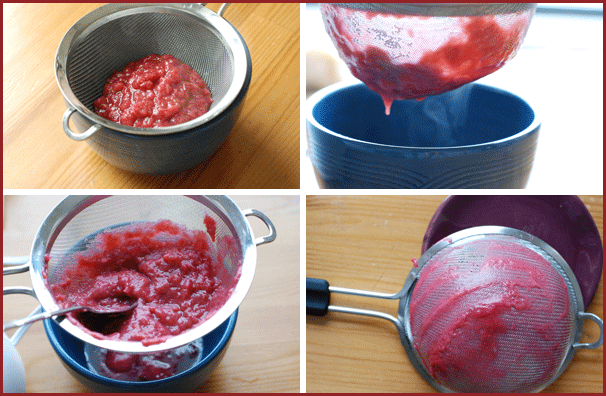
Wash rhubarb and trim as little off the ends as possible. Cut rhubarb into 1-inch chunks. In a small saucepan, heat rhubarb, 1/4 sugar, and water on medium. Cook until rhubarb falls apart and there are no whole pieces left, adding water by the tablespoon if rhubarb sticks to the bottom of the pan. At this point, either use an immersion blender to puree the mixture, or (if you’re like me and your blender is otherwise occupied) push the mixture through a strainer. The first method is definitely easier.

Preheat oven to 350. Now, make the shortbread: blend all ingredients in a stand mixer or food processor until combined. Wrap in plastic and refrigerate about 1 hour. Then, either roll into 8×8 square and place square in 8-inch square baking pan, or dump dough into pan and use fingertips to press evenly into pan. Bake 30 minutes, until golden. Let cool on a rack or on the counter.

Add a couple inches of water to the pot of a double boiler and set over medium heat. Put egg yolks, butter, remaining sugar, lemon zest, and lemon juice in the boil of the double boiler and whisk to combine. When sugar has dissolved completely, remove bowl from heat and add the rhubarb puree by the spoonful, to temper the eggs. When all rhubarb has been added, set bowl over pot; the water should be simmering. Continue stirring the rhubarb mixture; after about 5 minutes, the mixture will be warm and slightly thickened. At this point, remove from heat. Press through a strainer -- this will give your curd that smooth, pudding-like texture.

Use an offset spatula to spread curd evenly over shortbread. If you haven’t eaten half the bowl right then and there, you should have enough curd to make a layer about the thickness of the shortbread; I didn’t. Bake another 10 minutes, then remove from oven and cool on rack. Refrigerate about 20 minutes, and you’ll find that they’ve firmed up enough to slice cleanly. Cut into 16 equal bars. Dust with powdered sugar before serving; do your best not to polish them all off in one sitting.
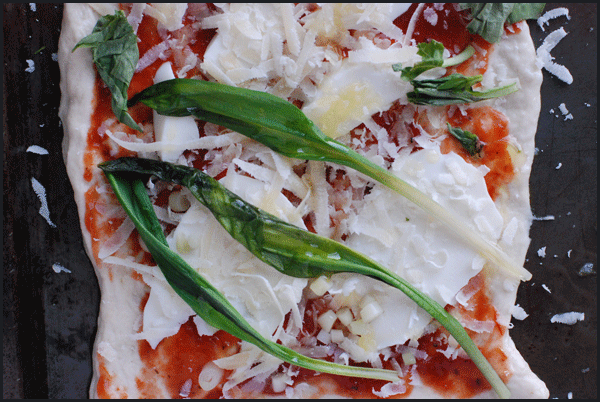
White Pizza with Ramps

In the five-plus years that D and I have been together, I think she'd probably say she's learned that vegetables aren't half bad. Hell, she really does enjoy them sometimes. Does she love asparagus? No. Ditto brussels sprouts. But I make 'em, she eats' em, and we all come out alive.

It's not a one way street, either. D's got plenty to teach me about the wonder of simplicity. I may love my arugula salads dressed with nothing more than lemon and olive oil, but that girl knows her mac and cheese. She's got the Subway sandwich situation down to a science. And she's the reigning expert on homemade pizza.

I never used to want to make pizza, but these days, I seemingly can't get enough of it. I always used to marvel at what a wood oven and ten minutes could do to a lump of dough; since giving homemade pizza a whirl, I can marvel at the fact that my modest little oven produces a damn good pie.

I generally prefer red sauce pizzas, and that's certainly D's flavor of choice. But there are some pretty awesome-sounding pies out there, and when I read about their ingredients, I think I could eat them happily and not miss the red sauce at all.

Take the sardine pizza I had at Two Amys a couple weeks back. Okay, so it had tomato sauce. But you know what it didn't have? Cheese. At all. And I absolutely loved it, which tells me that unconventional pizzas can be really great.

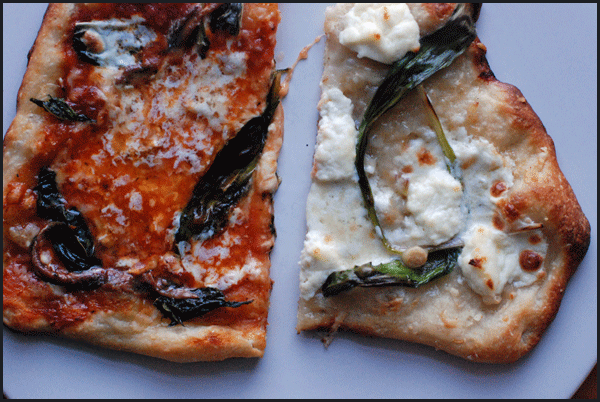
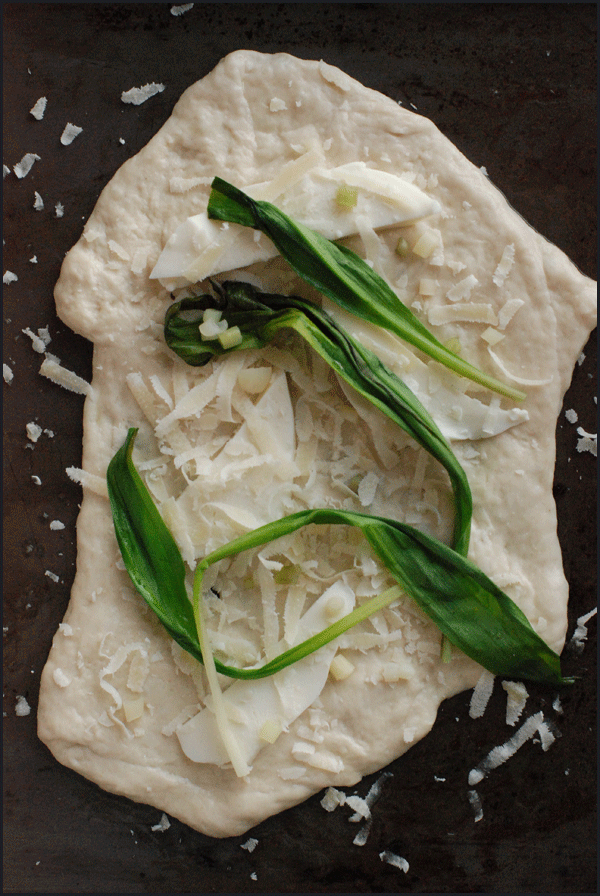
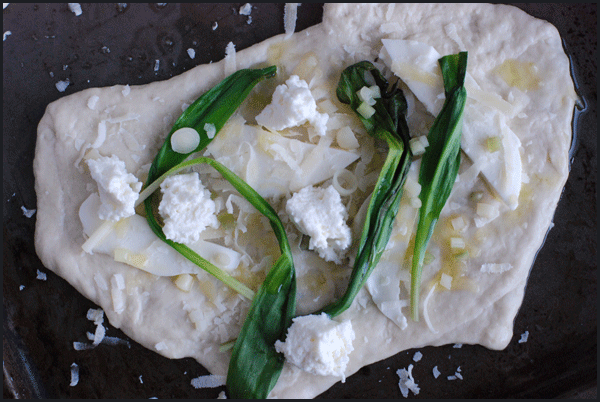
The idea of ramp pizza is certainly not new; Otto in New York is known for their version, a classic margarita pizza with plenty of charred ramps and (sometimes) a poached egg on top. I made two pizzas last night: the first was my take on Otto's, with red sauce, fresh mozzarella, parmesan, and charred ramps. (that covered half of my red pie; the other half I prepared in my all-time favorite fashion, with tomato, basil, mozzarella, parmesan, and salt-cured anchovies....yea.) The other pie was a more pared-down version, a white pizza boasting three cheeses: stretchy mozzarella, tender ricotta, and nutty parmesan. The ramps themselves play a supporting role, giving the pizza a smokey flavor. And you know what? I'm slightly addicted to it. The best part? You don't even need a pizza stone. Which is a good thing, 'cause I don't have one.

White Pizza with Ramps 5 1/3 cups plus a couple tablespoons all-purpose flour 2 teaspoons salt 1 teaspoon yeast 2 tablespoons sugar, honey, or agave nectar (I used agave) 2 cups plus 2 tablespoons water, room temp 2 tablespoons olive oil, plus more for drizzling

Combine flour, salt, yeast, honey, water, and 2 tablespoons olive oil in stand mixer or large bowl and mix, using wooden spoon or paddle attachment, for 1 minute or until blended. Let rest 5 minutes.

Switch to dough hook and mix on medium-low speed 2-3 minutes (or continue mixing by hand) until dough is soft, and somewhere between tacky and sticky.

Spread 1 tablespoon olive oil on kneading surface and turn dough out onto surface. Stretch dough out and fold over itself. Do the same from the opposite end, then from side to side, for a total of four stretch-and-folds. Divide dough into the number of pies you plan to make: I initially divided into 5, as Reinhart recommends, then later realized I wanted 3 big pies instead of 5 personal ones. Form each piece into a ball and either put each into an oil-sprayed plastic bag, or set them atop parchment-lined baking sheets and cover tightly with plastic wrap. Refrigerate overnight or upto 4 days, or freeze upto several months.

90 minutes before making the pizzas, remove dough balls from refrigerator. With oiled hands, stretch and fold each piece into a tight ball, then let rest on lightly oiled baking pan loosely covered with plastic wrap.

1 hour before baking, set a rack in the lowest rung of the oven and turn heat as high as it will go.

Meanwhile, prepare ramps: rinse in several changes of water, pat dry, and remove bulbs from leaves. Slice bulbs into thin disks, and slice leaves lengthwise into 2 or 3 slices. Heat a small pan with a couple inches of water over medium heat until water boils. Blanch bulb slices for 45 seconds, then leaves for 30 seconds, removing each immediately with slotted spoon and setting aside.

Coat your hands with flour. Choose one dough ball, sprinkle a bit of flour on top, then flip over onto baking sheet and use your thumbs to slowly coax the edges of the dough into a larger circle. Work from the edges, not from the middle; the middle will spread as the edges are drawn out. Keep turning and stretching, turning and stretching, about 13 times (according to my pizza hero Jim Lahey), until dough is quite thin. If dough resists or shrinks back, let it rest a few minutes, then return. Do your best to preserve the little gas bubbles in the dough as you stretch it; they'll make lovely charred lumps in your pizza.

At this point, you're ready to top your pizzas. Start with mozzarella slices. Then grate parmesan onto pies. Top with ramp bulbs and leaves, and dot fresh ricotta overtop. Finish each pizza with a swirl of olive oil and a light sprinkle of flaky salt.

Bake on the lowest rack of the oven for about 10 minutes, rotating pans halfway through. Pies are done when the crusts are very charred and the cheese is bubbling (oh yes, it will bubble). Remove pies, and try to wait a couple minutes before taking a bite, or the roof of your mouth will not be happy!

While We Were Out...

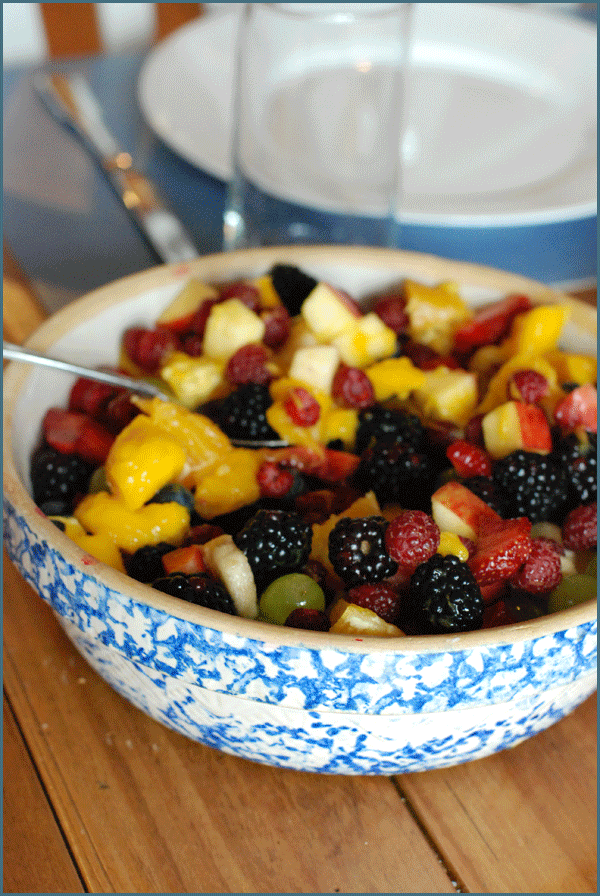
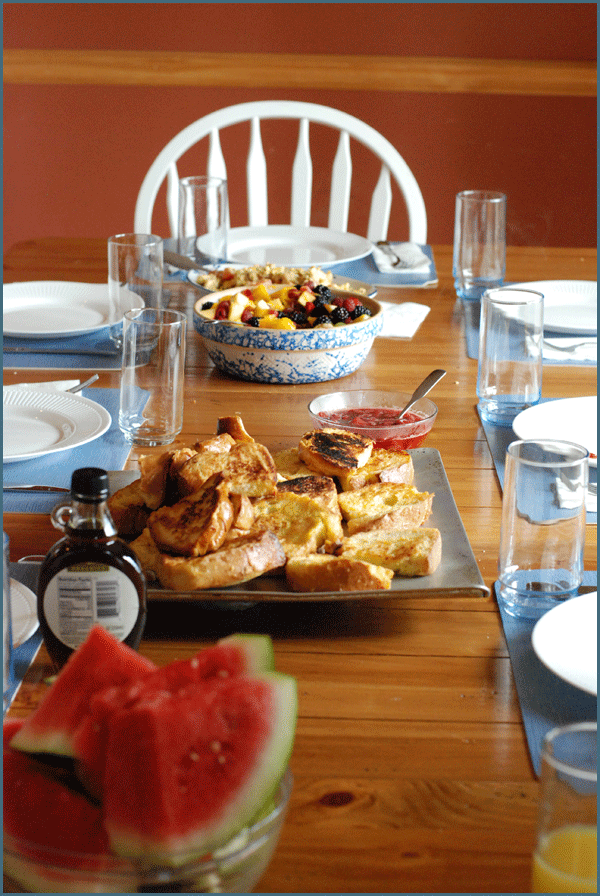
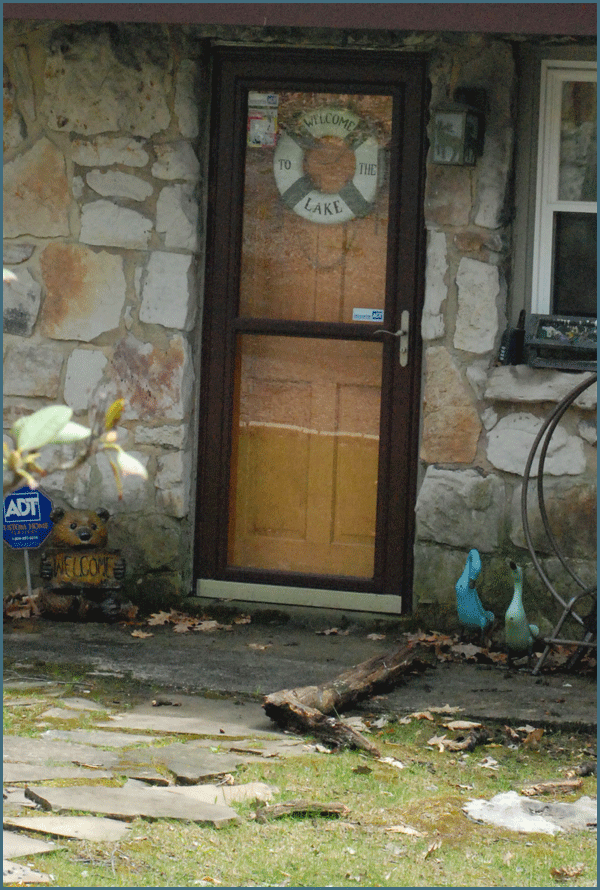
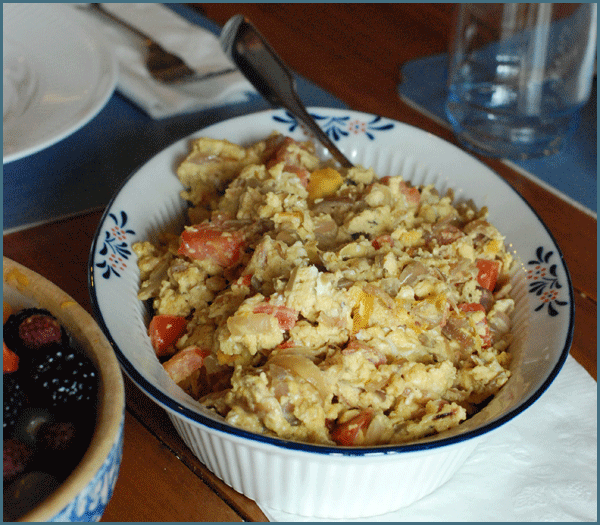
NDP was out of pocket this weekend. After a few very long weeks at work and some serious head-down time, we packed out bags and headed for the lake with some of our all-time favorite people. The goal of the weekend? Simple. Relax.

And relax we did. PJs and yoga pants were worn, and slippers, too. Beds were warmed, eyes were closed, sleep was had. Movies were watched. Games were played (Taboo and Settlers of Catan, our two favorites).

And of course, stomachs were very, very full.

We're back now, and recharged for the week to come.

Before I forget, there's one more bit of delicious news to share: last week, the wonderful team over at Food52 wrote a profile of NDP for their weekly "reciprocity" column. I couldn't be more flattered! Check it out if you have a chance: I'm truly touched to be featured on their great site, and I hope you enjoy the write up!

Hearty Struan Bread

The Dupont Circle farmers' market has a bread stand. They make all sorts of bread, from tangy sourdough to crusty boule to grainy raisin walnut and beyond. The line to buy bread at the market starts forming around 8:30, and by 9am, it's pretty darn long. People spend 30 minutes just waiting in that line. I think it's kind of crazy.

Don't get me wrong, the bread is good. And in summer, when our apartment is about 100 degrees hotter than the temperature outdoors, I want my oven blasting on 450 for a couple hours about as much as I'd like to climb inside and sit for a while. But pretty much every week of fall, winter, and spring, I make my own bread. I really don't understand why, when there's perfectly good flour in my pantry and fine water flowing from the tap, I'd give up the pleasure of making my own bread dough. It's tacky, stretchy, sticky, and smells alive. I love dough.

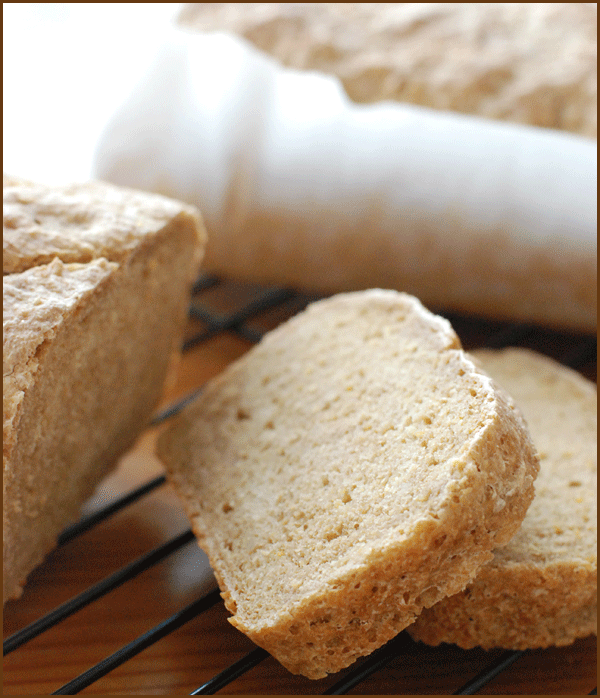
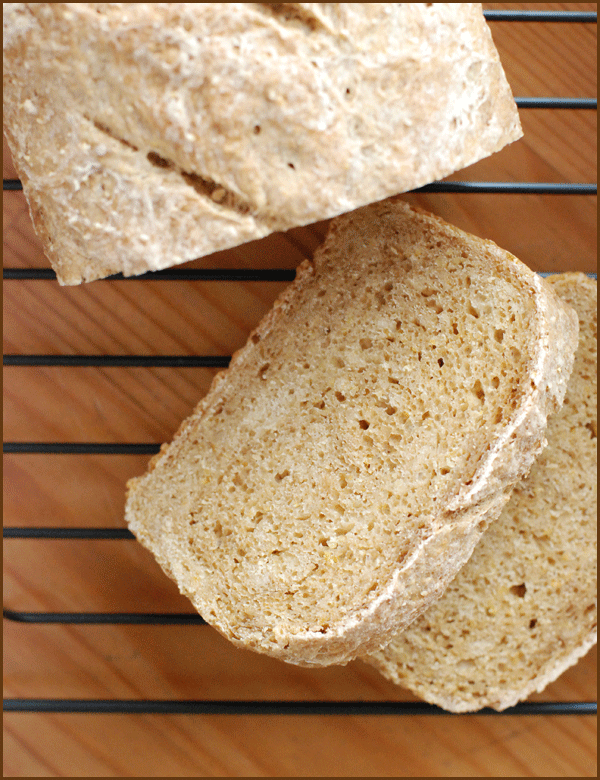
Take, for instance, this struan, a seemingly modest loaf that's got as much other stuff (cornmeal, oats, yogurt, molasses) as it's got flour and water. Struan is happy bread. It somehow manages to be rich and still wholesome. And it makes what quite simply is the best piece of toast I've ever had.

The recipe comes from Peter Reinhart's book, Artisan Breads Every Day. This book is awesome -- it's where I found that amazing babka recipe. Who knows what else I'll find in this book? For now, I'm sticking to this struan. You might want to give it a try, too.

Struan Bread Adapted from Peter Reinhart's Artisan Breads Every Day Makes 2 loaves

5 cups unbleached bread flour 1/2 cup coarse cornmeal or polenta 1/2 cup oats 3 tablespoons wheat or oat bran 1/4 cup brown sugar 2.5 teaspoons salt 2 tablespoons yeast 1.5 tablespoons molasses (Reinhart calls for honey or agave, which I'm sure also work -- I like the stronger flavor of molasses) 1.5 cups lukewarm water 1/2 cup buttermilk, milk, or yogurt (I used half yogurt and half buttermilk)

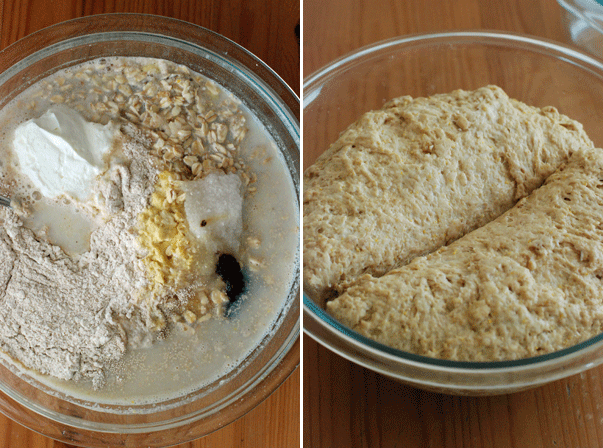
In a large mixing bowl or stand mixer bowl, combine everything. (How easy is that?) Use the paddle attachment on low speed for about 2 minutes until everything is well-combined. Let the dough sit for 5 minutes to fully hydrate the flour.

Mix again with the paddle attachment for about 2 more minutes, then let rest again. Transfer onto surface sprinkled liberally with flour, and begin to knead for 2-3 minutes total, adding water as needed, until dough is firm but still tacky.

Oil a large bowl, to be used for rising. Take dough, stretch, and fold back over itself. Repeat in the other direction. Form into a ball. Roll dough in oil to coat, rest in bowl, and let sit covered for 10 minutes. Repeat stretch-fold-rest process twice more. When dough has been stretched and folded three times, set in bowl, cover, and let rise in about 2 hours on the counter or overnight in the fridge.

If refrigerating, remove 2 hours before baking. Butter two loaf pans. Divide dough in half. Take one half, and roll into an 8x5 rectangle. Roll along the 5-inch side into a log, pinch seam, and let proof in loaf pan about 1.5 hours, until doubled in size. Repeat with other half. Meanwhile, preheat oven to 350.

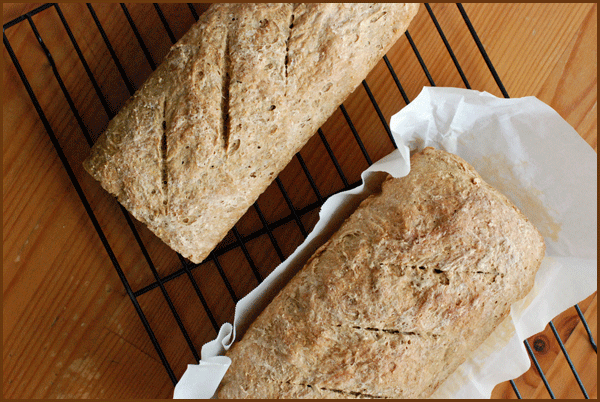
Bake loaves for 60 minutes total, rotating pans halfway through, and cool completely before cutting (about 1 hour).