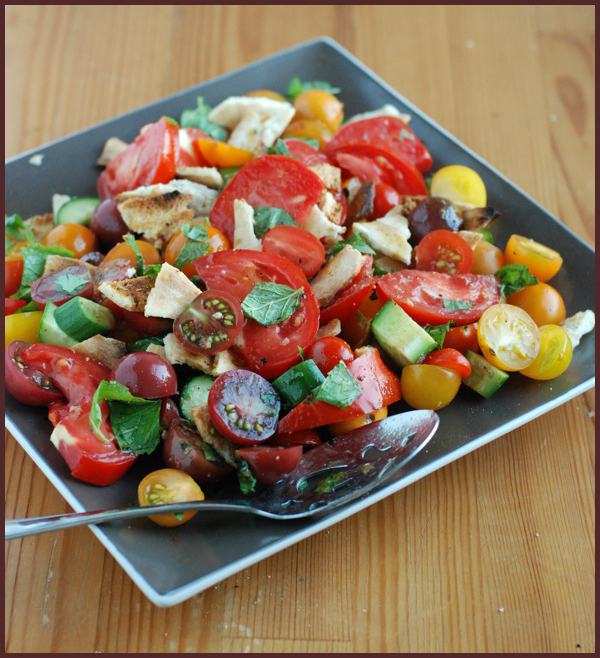
Fattoush

If the history of this blog is any indication, I'm a huge fan of bread salads. My love is easily explained: bread adds heft to make a salad feel like a meal, and since i'm going to dunk a hunk of baguette in my leftover dressing anyway, ripping bread right into the salad is the best kind of shortcut.

Fattoush is a member of the bread salad family, an honored and much loved one at that. Its origins are Levantine, and in various Middle Eastern countries, it's a definitive staple. Instead of the crusty bread you often find in American or Italian bread salads, fattoush relies on the Middle Eastern staple, pita. Like other bread salads, the idea behind fattoush is to use stale bread -- but the salad is so addictive, I confess to finding myself at the bread basket, grabbing some perfectly unstale pita to toast for the purpose.

For some, fattoush is all about the pita. For others, it's about those beautiful persian cucumbers -- the skinny, seedless variety that have finally found their way to farmers' markets on the east coast. But if you ask me, especially in this season, fattoush begins and ends with excellent tomatoes.

I use a mix of big, voluptuous heirlooms and the small, bursting red and yellow cherries. This week, I got my hands on some baby heirlooms in red, yellow, and a beautiful greenish purple; in they went.
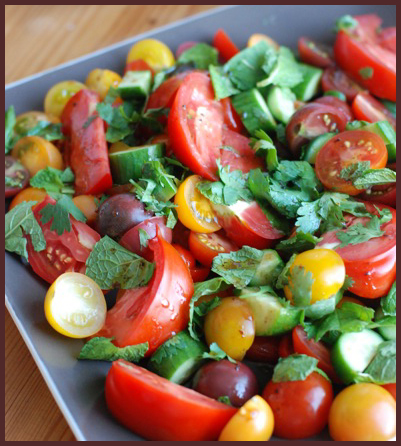
The dressing on fattoush varies widely; sometimes it's heavy on the lemon, almost to the point of masking the other flavors in the salad. Other times, it has such a low proportion of acid to oil, it brings to mind Julia Child's vinaigrette. My ideal is somewhere in between. I like some lemon -- just a bit -- tempered with pomegranate syrup, which adds sweetness. I also add sumac, a tangy spice that's traditionally in fattoush.

Whatever you do, make sure your tomatoes are top-notch. Their seeds and juice will commingle with the dressing, and the result is not to be missed. That's also why it's important to dress the fattoush at least 20 minutes before serving (I usually give it 30): the cucumbers, scallions, tomatoes and pita will soak up some of the dressing, and they'll also lend their juices to the mix, allowing the flavors to marry. Writing this, I just wish I had another bowl of the stuff.

While I'm a pretty straightforward gal when it comes to making fattoush, you can add any number of things to it: feta, olives, and even watermelon would tip it in the direction of Greek salad, and really, who complains about that?

Fattoush serves 6 as a first course

For the salad: 3 big heirloom tomatoes in different colors: I like one red, one purple cherokee, and one yellow 1 pint cherry tomatoes, most flavorful you can find - I favor yellow ones 3-4 persian cucumbers, halved lengthwise and sliced into chunks 3 scallions, bulb end removed, sliced 1/4 red onion, thinly sliced, optional 4 pieces good quality pita bread 2 tablespoons olive oil 1 teaspoon sumac salt and pepper 1/4 cup mint, roughly chopped 1/4 cup flat-leaf parsley, roughly chopped

For the dressing: juice of 1/2 lemon 3 tablespoons pomegranate syrup 1/4 cup extra virgin olive oil 1/2 teaspoon crushed dried mint 1/2 teaspoon sumac 1/2 teaspoon salt freshly cracked pepper

Preheat the oven to 350. If pita is pocket-style, slice open. Put in a single layer on a rimmed baking sheet, drizzle with 2 tablespoons olive oil, and sprinkle with salt, pepper, and sumac. Bake pita 15-20 minutes, until crisped. Alternative: if it's too hot to turn on the oven, you can just slip the pita slices in the toaster and toast until crisped. Remove toasted pita from oven or toaster, and break into uneven bite-sized pieces. Set aside.

Set aside a bowl for making the dressing; as you slice tomatoes, you'll add the collected juices to the bowl. Rinse and dry large heirloom tomatoes delicately. Halve tomatoes, then slice each into 2-bite wedges, taking care to reserve the collected juice and transfer it into the dressing bowl. Halve cherry tomatoes. Transfer all tomatoes to large, shallow bowl or rimmed serving platter. Add cucumbers, red onions if using, scallions, and mint to salad bowl, and carefully incorporate without smushing tomatoes. (That's a technical term.) Add pita chips on top.

Make dressing: combine all ingredients except oil, and whisk to combine. Add oil in slow stream, whisking as you pour to emulsify dressing. Drizzle dressing over salad, and let sit for 20-30 minutes before serving, tossing every 10 minutes or so to meld flavors.
Taco Night Coleslaw

Taco night is a perennial favorite. It's an easy meal to prepare, most components can be prepared well in advance, and if you make it for a dinner party, you'll be feasting on leftovers for days. When I say "taco night," of course, I'm referring to that generic category of weeknight suppers, including but not limited to tacos, fajitas, burritos, and anything else involving tortillas, fillings, and toppings of your choice.

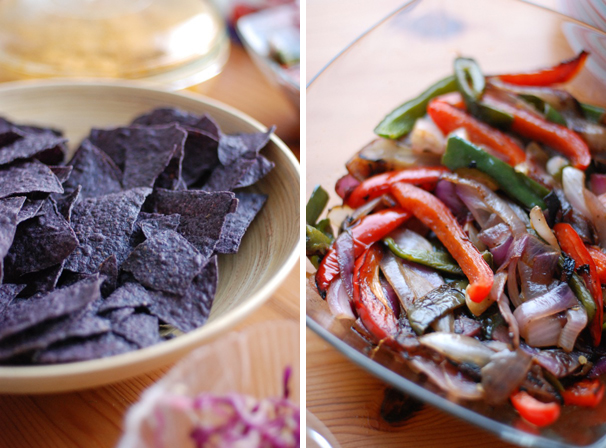
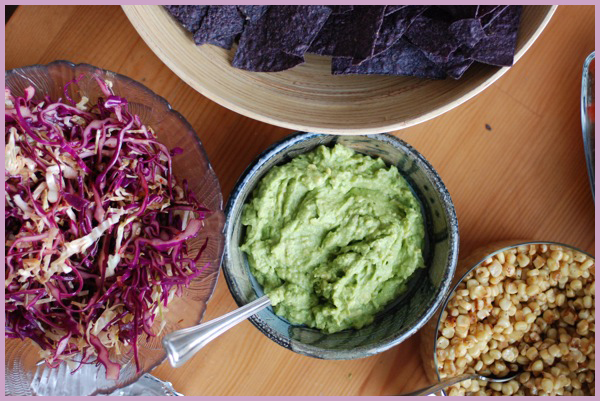
In case you're at a loss for where to start, here's my go-to iteration of Tex-Mex dinner: I serve warm flour tortillas, refried beans, sauteed peppers and onions, cabbage slaw with lime and chile, and salsa, guacamole, and queso fresco to top it all off. It's a regular feast.

And please, don't let me cramp your style: the possibilities aren't limited to beans and whatnot. If you're not a fan of the legumes, pan-fry some chicken, fish, or beef slices over high heat until charred, squeeze a lime juice and sprinkle some salt and pepper, and you've got yourself a taco or fajita filling.

The peppers and onions are dead simple. Halve a red onion, trim the ends, and slice each half into three. Take a few bell peppers (I like red) and poblano peppers (the big dark-green ones -- they're pretty mild, with just a whisper of spice) and slice them into long strips. Add pepper and onion slices to a hot pan with a bit of olive oil and some salt, much like you did with the protein. Stir at regular intervals so that lots of different pieces get charred. When you see enough brown spots, turn off heat, and transfer hot vegetables to serving bowl. They'll steam and soften while sitting there, so by the time you're ready to serve, they're ready, too.

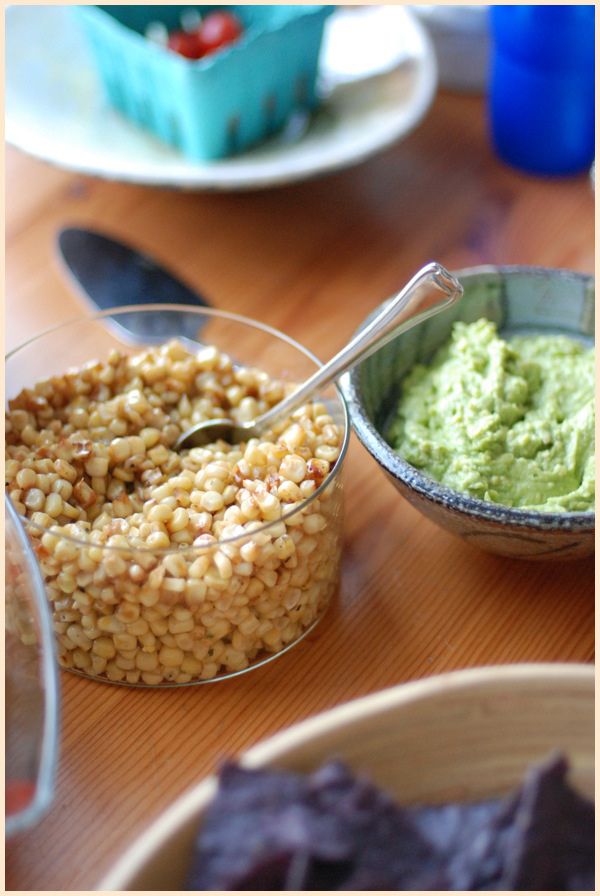
Another great dish is simple charred corn. If you have fresh ears available (and there's no time like July for fresh, sweet corn), use them. If not, frozen kernels work great here, too. Follow the rules above: into a hot pan with just a spoonful of oil, and maybe some epazote (if you have it) or cilantro (works too). Toss once in a while, let the kernels char, you get the drill. Hit with some salt and pepper, maybe a squeeze of lime, done.

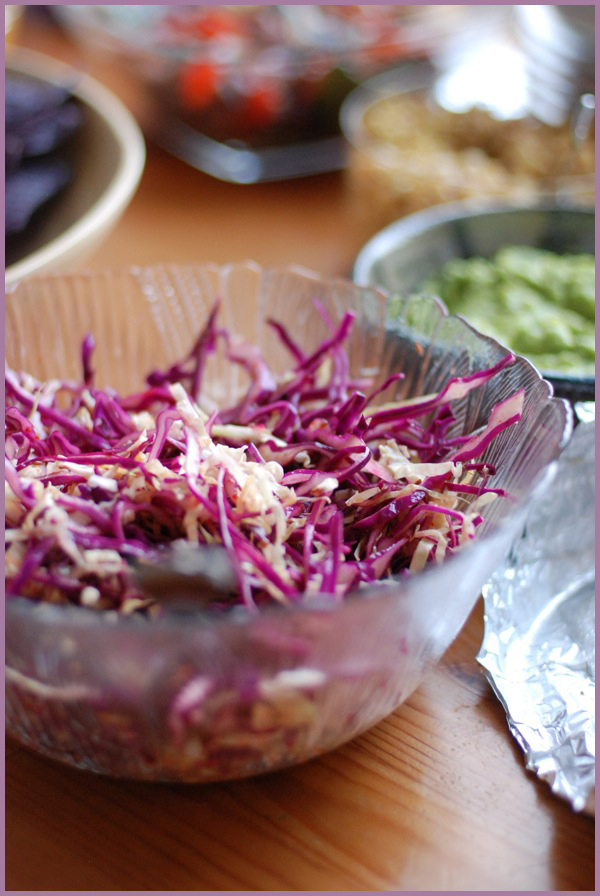
The crown jewel at dinners like these is the cabbage slaw. (When isn't it?) This one is about as basic as they come: red and green (or Napa) cabbage, lime dressing. Fin. The tangy crunch of this simple concoction, provides the perfect contrast to tacos and fajitas. It's the must-have dish in the spread, if you ask me. Then again, I'm hard-pressed to pick a favorite element. Every dish in this meal is pretty darn tasty.

Taco Night Coleslaw

1 small head red cabbage 1 small head green or Napa cabbage (I prefer Napa, as it's slightly softer but just as crunchy) juice and zest of 2 limes 1/2 teaspoon chile flakes, preferably something smoked like chipotle or ancho, but any will do 1/3 cup olive oil 1/2 teaspoon salt black pepper to taste

Shred cabbage using sharp knife or mandoline; you're going for as thin slices as possible. Combine remaining ingredients in a large bowl and stir to combine. Add cabbage, and toss to coat. Set aside to macerate for at least 15 minutes before serving. If you leave it for more than an hour or so, put it in the fridge. You'll note that as time passes, the red cabbage will turn the dressing (and with it, the rest of the slaw) a bright pink shade. All the prettier, if you ask me.

Summer Peach Cake

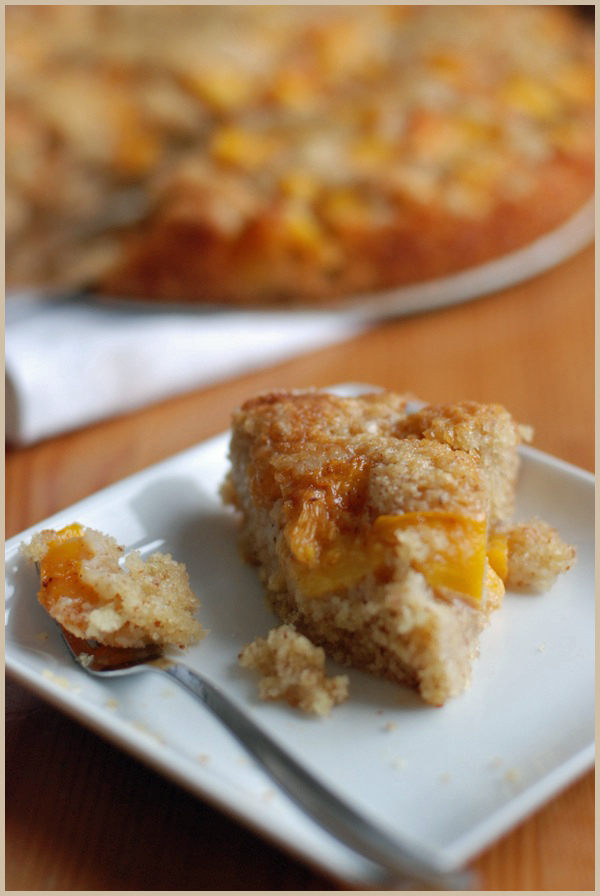
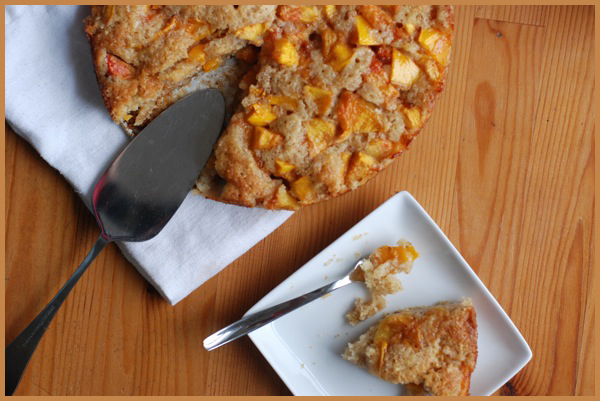
If you can muster the inner peace to not explode when you turn on the oven, you should definitely make this cake. Granted, the 100+ temperatures make summoning the will to add heat to your home that much more masochistic, but like I said: if you can find that inner namaste, this cake is a handsome reward. It's a simple summer cake recipe, one whose heft and flavor comes as much from thick, juicy peach slices as from freshly ground almonds.

You'd think the big hunks of fruit and almond flour would make this cake heavy, but they don't. No, it's not the lightest, most fluffy cake, but you know what? Neither is summer the lightest, freshest season. These are the dog days. With weather like this, you have two choices. You can sip cold soup, do a 10-day cleanse, and will the season to fade into fall, or -- if you can't beat'em, join'em. This slightly dense, incredibly moist cake will bring that love-hate relationship with summer right to the fore. It's plump and bursting with peach juice. It's not the least bit cold. And as you eat it, you'll realize that succumbing to the dog days of summer, while sweaty as hell, can actually be liberating.

While this recipe calls for peaches, summer nectarines are really hitting their stride. They work very well here, too. I've got a funky thing about peach fuzz, so I'm actually partial to nectarines -- but I admit that peaches were just made for this cake. Either way, make it. Set it out on the porch. Then pour yourself a glass of white, or mix a cold drink. Sit outside, cake slice in hand, and accept summer for the hot, sticky mess it is.

Summer Peach Cake adapted from Savour on Food52

3 ripe peaches (cling and freestone are both fine) 3/4 teaspoon freshly ground nutmeg 1 cup sugar, preferably unbleached 6 tablespoons softened unsalted butter 1 large egg 1/2 cup buttermilk 1/2 teaspoon vanilla extract 1/4 teaspoon almond extract 1 cup all-purpose flour 1/2 cup almond flour (or finely ground almonds) 1 teaspoon baking powder 1/4 teaspoon baking soda Turbinado Sugar, for topping the cake

Preheat the oven to 350 degrees. Butter and flour a 9-inch cake pan.

Cut the peaches in half and remove pits, then chop roughly. Toss the peaches with nutmeg and 2 tablespoons sugar. Set aside.

Cream together the butter and remaining sugar with a wooden spoon or spatula. Add the egg, buttermilk, vanilla and almond extracts, and stir to combine.

Combine the flours, baking powder, baking soda and salt. Add the flour mixture to the wet ingredients and mix until smooth (some lumps may remain). Pour batter into the prepared pan, and smooth top.

Lightly press the peaches into the top of the cake. (There's really no need to arrange them fancily, as they'll sink into the cake as it bakes.) Sprinkle turbinado sugar over the top of the cake; you'll need about 2 tablespoons.

Bake cake for 10 minutes, then reduce the oven heat to 325 degrees and bake for an additional 45 to 55 minutes, or until a toothpick in the center comes out clean.

Apricot Basil Ice Cream

Admittedly, it all started with apricot curd. I know, I know...more curd? You must think I've gone mad. But consider the humble apricot, whose thrilling tang and sultry sweetness lies pretty much dormant until cooked. Rhubarb is much the same, and you'll remember how that turned out - so can you blame me for trying again? No, you can't. And let me tell you, that apricot curd was really, really good.

But then it got really, really hot in DC. When it's 100 degrees out with 99% humidity, it's hard to rationalize making anything but cold soup and ice cream. So I turned back to my humble apricots, wondering if I could turn them into something sweet, tangy, and frozen.

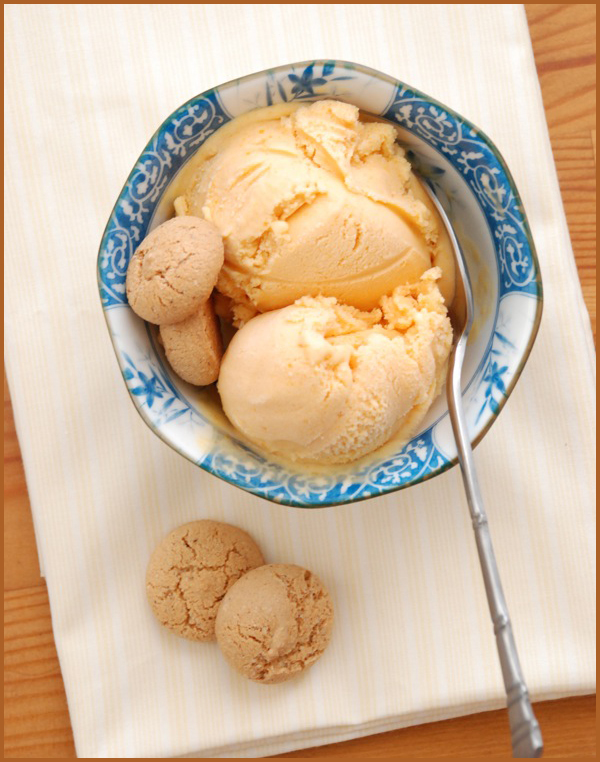
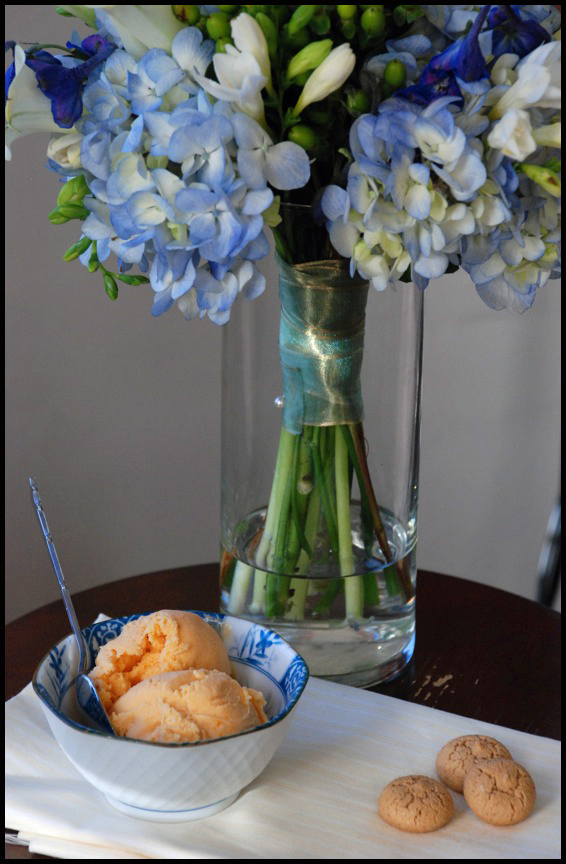
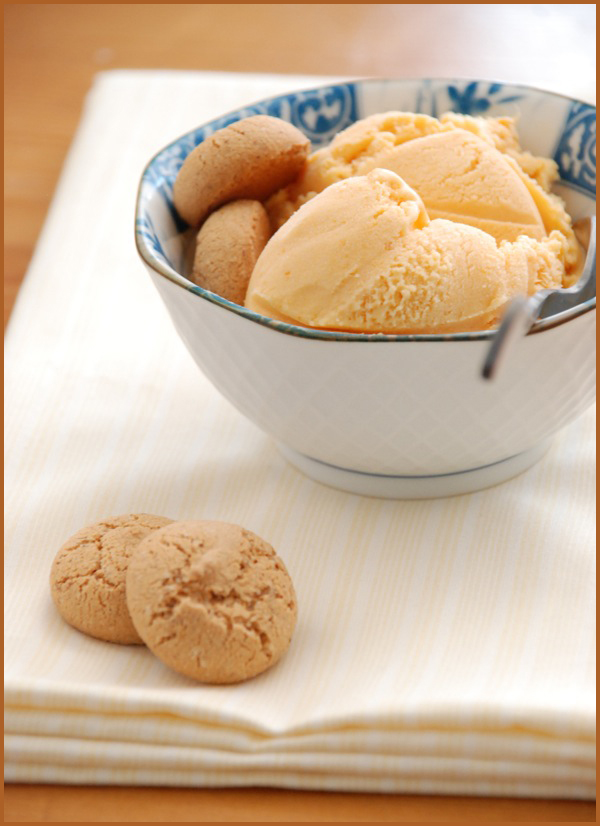
I did so with the help of my summer partner in crime, the ice cream king himself, David Lebovitz. Of course, David has an apricot ice cream recipe. But his is eggless, and after tasting that amazing curd, I knew I wanted my ice cream be similarly rich and yolky. I figured with all that richness, I'd need some contrast, so I decided to add in some basil. From there, things sort of figured themselves out. Now there's apricot basil ice cream in the freezer, and it's taking my every ounce of self control not to polish it off right now. You know wha.....

Um...

...Oops.

Apricot Basil Ice Cream

1/2 cup water 1/2 cup plus 2 tablespoons sugar 10 small basil leaves (use the plant's inner leaves, which have a more delicate flavor); if using larger leaves, use only 5 1 pound fresh apricots (I needed 9 sizable fruits) 1 cup heavy cream 2 egg yolks juice of a small lemon wedge

In a small saucepan over medium heat, simmer water, sugar, and basil leaves until sugar melts and basil goes limp, about 5 minutes. Turn off heat and let sugar-water mixture steep 15 minutes.

Meanwhile, halve the apricots by slicing along their dimple all the way around. Remove the pits, which should slip out easily. Slice each half into 2 or 3 pieces. By now the basil mixture should be finished; remove basil leaves, pressing against the side of the pan with the back of the spoon to coax all the flavor out of them. Discard basil.

Transfer apricot pieces into saucepan containing basil-infused syrup. Return heat to medium, and cook until apricot pieces are soft and tender, about 8 minutes. Set pan aside and bring to room temperature.

If you have a hand blender, use it to puree the apricot mixture right in the pan until smooth. Alternatively, puree apricots in blender or food processor. Transfer apricot mixture to bowl of double boiler or, if you don't have one, transfer apricot mixture to a metal bowl, and add egg yolks one at a time, mixing well after each addition. Set bowl over a small saucepan with a couple inches of water in it, turn heat to medium, and begin heating apricot mixture over water, stirring thoroughly and often. After about 7 minutes over the simmering water, apricot mixture should begin to thicken. It will only thicken slightly, never getting as viscous as creme anglaise or pudding. The whole thing should be done after 10 minutes. Remove from the heat and stir in lemon juice.

Pour cream into large bowl and set strainer over the bowl. Pour apricot custard through strainer into cream. Press on any solids left behind, then discard. Stir custard and cream together until they turn a uniform shade of light orange. Chill thoroughly.

Process ice cream in ice cream maker according to manufacturer's instructions.