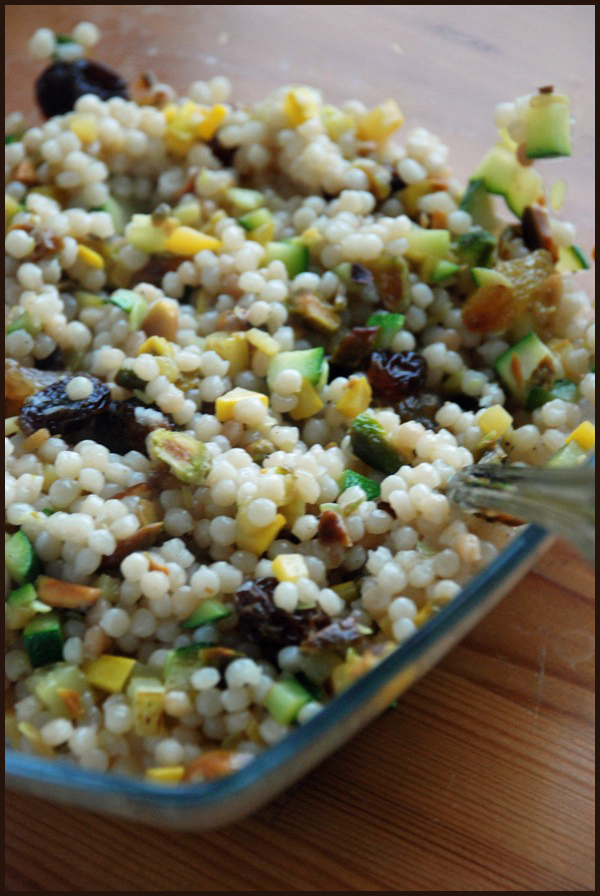
Summer Squash Couscous with Sultanas, Pistachios, and Mint

My newest hero? The Internet Cooking Princess. Have you seen her blog? I hope you'll clicking over there and check it out. The retro look is lovely, the recipes are top-notch, and her voice is funny and fresh. Also: she made up this couscous salad recipe, and it has become my food of summer.
I took a first look at this recipe and thought, yep -- this is totally something I would make. Hook, line and sinker, I was sold. But examining the recipe more closely, I noticed all sorts of little touches that -- how do you say? -- I'd never have thought to do.

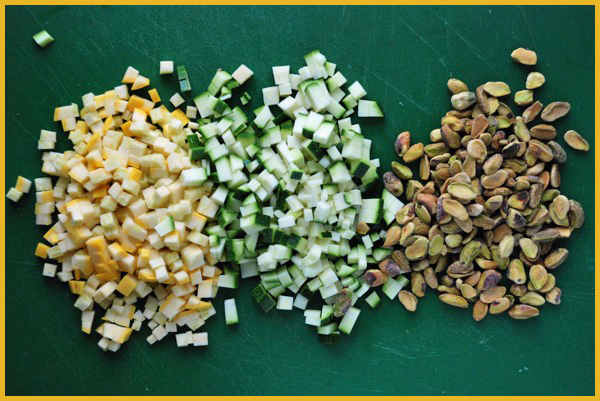
Example: it all starts with a brunoise, a summer squash chopped into pieces so tiny, so evenly tiny, you'll be hooked on their cuteness. Also, she has you cook some shallot, but just for a scant minute or two. I always brown shallots, or caramelize them, or hell, use them raw. I never just cook them for a hot minute. But it works; the shallot softens slightly, but retains its distinctive bite and stands up to the other ingredients in the salad.
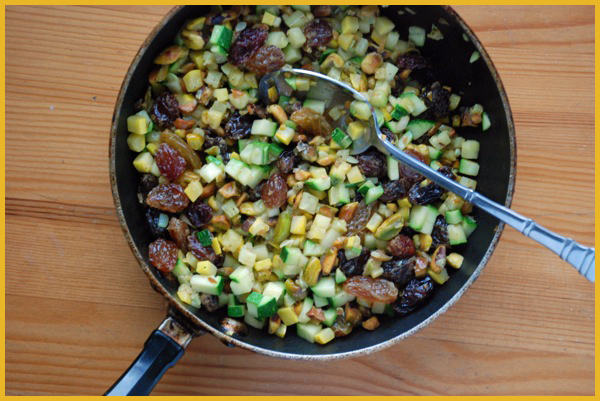
And then there's that whole cooked-pistachios thing. I remember when Top Chef-Stephanie made a lamb dish with braised pistachios a few seasons back, and Tim Allen raved that he wished more people would serve him braised pistachios. I was as puzzled then as I was when I saw that ICP has you cook the pistachios. I always toast them until golden, adding them to a dish just before serving so they stay crunchy. Admittedly, I did toast them before following ICP's instructions, because I know I like that intensified pistachio flavor, but heating them through with the moist zucchini and raisins softens them both texturally and flavor-wise to nice effect.

Lastly, and most memorably, Internet Cooking Princess understands the value of subtlety. She has you smash a couple of garlic cloves and let them infuse the dressing while you do everything else. The salad is balanced: sweet and savory, tangy and nutty, rich and fresh. It's just right; it's addictive. And considering I've made it once with regular couscous, once with Israeli pearl couscous, and hell, once with leftover spaghetti, I think I'm an expert on the subject.

Summer Squash Couscous with Sultanas, Pistachios, and Mint From the Internet Cooking Princess, via Food52 (but of course!)

1 tablespoon lemon zest Juice of one lemon 1/2 teaspoon honey Olive oil 3 garlic cloves, crushed 1 1/4 cup vegetable stock 1 cup couscous 1/2 cup diced yellow squash 1/2 cup diced zucchini 1 medium shallot, finely chopped 1/2 cup sultanas/golden raisins (I used a mix) 1/4 cup chopped pistachios Kosher salt 2 tablespoons chopped fresh mint Freshly ground black pepper

Preheat the oven to 350. Spread pistachios on rimmed baking sheet in a single layer. Toast about 10 minutes, until pistachios have turned golden. Set aside.

In a small bowl, whisk the lemon zest, lemon juice, honey, and 1/4 cup olive oil. Add garlic cloves and let them steep for about 30 minutes.

Next, bring stock to a boil in a medium saucepan. Stir in couscous, cover, and turn off heat; allow couscous to sit for 5 minutes, or until it absorbs all the liquid. Fluff the couscous with a fork so the grains don't start clumping together, pour into a large mixing bowl, and set aside.

In a skillet over medium high heat, add 2 tablespoons of olive oil. Add the chopped squash and zucchini, shallot, sultanas, pistachios and a pinch or two of salt. Only cook for about a minute or two -- you still want the squash and zucchini to be al dente. This just ensures they aren't too al dente, and all the flavors can marry before they hit the couscous. Set aside until everything reaches room temperature. (Admittedly, I wasn't so strict about this part, and added everything while it was warm. Such is the way with weekday lunch...)

Once the vegetables have reached room temperature, add them to the couscous and toss to combine. Remove and discard cloves of garlic from the dressing, and toss it with the couscous (add the dressing gradually, as you may not need it all; I used about half). Fold in the mint, season with additional salt and pepper if necessary and serve at room temperature.
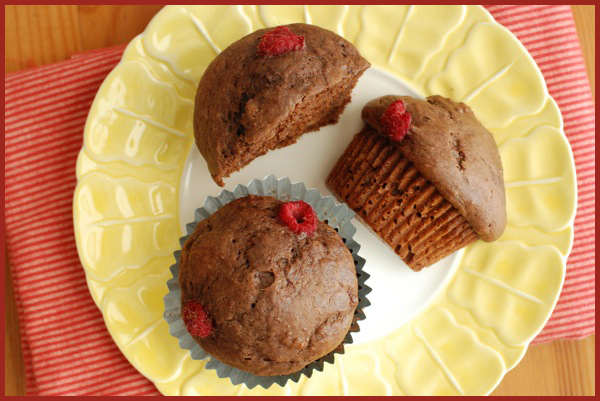
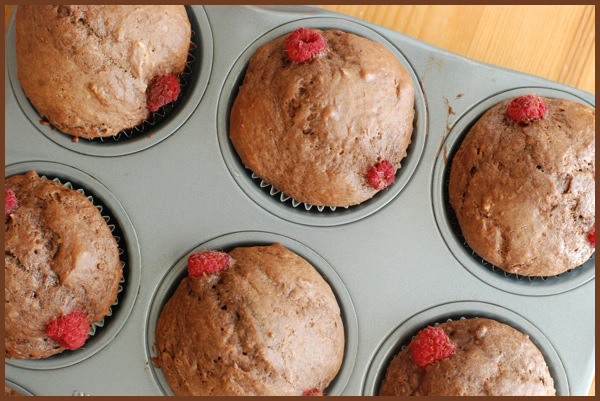
Chocolate Raspberry Muffins

Yes, I love chocolate. Just as much as the next person. I used to be the type that couldn't resist a chocolate dessert. If chocolate cake/mousse/torte/souffle was on the menu, I'd kiss all else goodbye, turning my back on rhubarb crisp and panna cotta without a second thought. These days -- especially these hot summer days -- big chocolate desserts have taken a back seat. Back in May, at 2Amys, I had a flawless rhubarb-almond tart to chase the sardine, broccoli rabe, and tomato pizza I'd had for dinner. Two weeks ago, dining with old friends at Jaleo, we chose soft, tender flan and rich, vanilla-spiked basque cake to finish our meal.

Blame it on the heat, but not entirely on the heat: these days, it's rare that I enjoy a chocolate dessert as much as I savor the clean snap of a piece of chocolate itself. Chocolate pudding is still a regular work snack, and I made a feathery, simple chocolate cake for a friend's bachelorette party last week, but as a general rule, I'm just more excited by peach cake and sour cherry torte.

I haven't written off chocolate altogether, though; I'm just incorporating it into baked goods in moderation. These muffins are an example. They don't hit you over the head with chocolate, but good quality cocoa and (if you'd like) little bits of chocolate perfume and flavor the muffins just the right amount. "Just the right amount" = enough to eat chocolate for breakfast and not feel the least bit guilty about it.

As if the chocolate weren't enough of a draw, I swirled homemade raspberry jam through the batter and topped each muffin with a couple fresh raspberries. Cherries or strawberries would also be great, and they're easier to fold into the batter. If you have your heart set on raspberries and want them in the muffins instead of just on top, you can freeze them -- that way they'll be firm enough to incorporate without turning to mush.

Not that I'd complain about a chocolate muffin laced with raspberry jam and smushed raspberries...

Chocolate Raspberry Muffins adapted from Dorie Greenspan's Baking from My Home to Yours Makes 12 muffins

3/4 of a stick (6 tablespoons) unsalted butter 4 ounces bittersweet chocolate, coarsely chopped; 2 ounces if you don't want chunks in the muffins 2 cups all-purpose flour 2/3 cup sugar 1/3 cup unsweetened cocoa powder, sifted 1 tablespoon baking powder 1/2 teaspoon baking soda 1/2 teaspoon salt 1 1/4 cups buttermilk; can substitute milk with squeeze of lemon 1 large egg 2 teaspoon pure vanilla extract 3 tablespoons raspberry jam 1 pint raspberries, fresh if using to top muffins, frozen (not thawed) if you plan to fold them into the batter

Preheat oven to 375 degrees. Line muffin tin with paper liners sprayed with nonstick spray, or with silicon liners. If using fre

Melt butter and half the chocolate in microwave or over low heat on stove, just until uniformly incorporated. Set aside.

In large bowl, combine flour, sugar, cocoa, baking powder, baking soda, and salt. In another large bowl, whisk buttermilk, eggs, and vanilla until combined. Pour wet ingredients and chocolate-butter mixture into dry ingredients and mix with rubber spatula just until dry ingredients disappear. Fold in remaining chopped chocolate, if using, and raspberries, if folding into batter. Drop three tablespoons jam into batter in different spots, and use a knife to swirl into batter.

Transfer batter into muffin tin, filling each cup about 3/4 full. If using fresh raspberries, top each muffin with 3 or 4, pressing them into batter if desired. Bake 20 minutes. Remove muffin tin from oven and transfer to cooling rack. When tin is cool enough to touch, remove muffins, in liners, to cool directly on rack.

Simple Sauteed Snow Peas

Readers, meet my new favorite side dish.

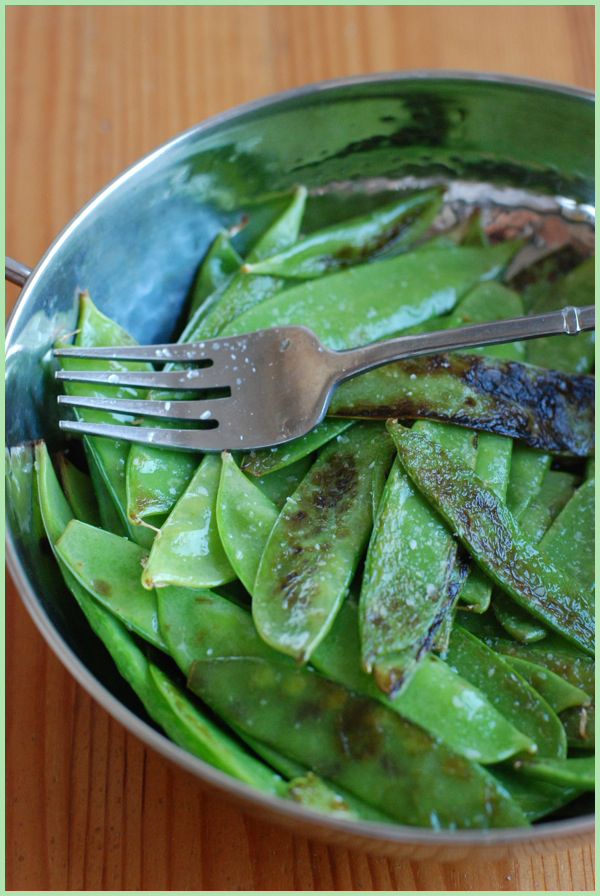
We spent the morning of our first full day in Santa Fe downtown, at a farmers' market adjacent to an artists' market (a lethal concoction as far as my wallet was concerned). At the tail end of our stroll through the farm stands, I caught a glimpse of an overall-clad gentelman manning a fry pan set over a camping stove. I headed over to see what he was cooking, and before I could see any of the wiry, bright green snowpeas bouncing around the frying pan, I hear the crackle-snap of their dip in the hot oil and knew the end result would be mighty tasty. I stuck around. Sure enough, after a few flips of the pan, the blistered snowpeas landed on top, giving their still-green comrades a turn over the heat. Once all the peas were glistening with oil and many were blackened in spots, the gentleman tossed a generous pinch of flaky salt over the vegetables, poured them onto a plate, and shouted for customers and neighboring farmers to get one while they're hot. I wasted no time popping one of the smoking-hot snowpeas into my mouth.

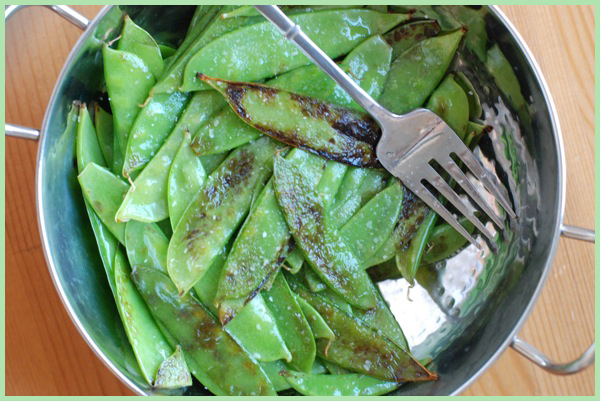
Their crunch was what caught me first: blackened where their bumpy surfaces had touched the scalding pan, much of the flesh managed to remain crisp, striking just the right balance of doneness. The snowpeas were vivid green, their juices gathering at the bottom of the plate and mixing with that lovely salt. I could've eaten the whole lot myself. Naturally, I bought a couple pounds of his bounty, determined to wow D's family with this surprising treat.

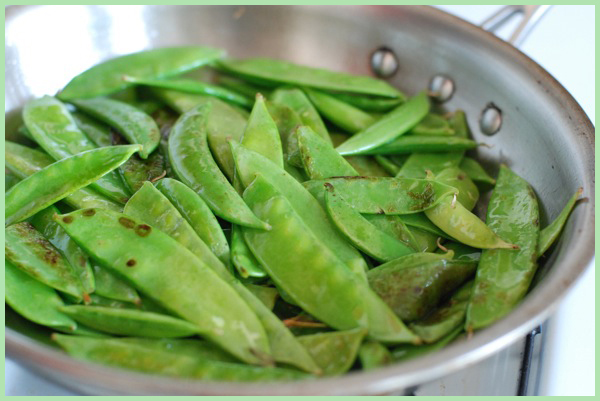
This isn't one of those stories that ends in failure. I'll spoil the punch-line right now: for an addictive appetizer or side, it just doesn't get more foolproof than this. You need only the most modest mis en place: a hot pan, a glug of oil, a couple pinches of salt, and the freshest, crispest snowpeas you can find. The dish practically makes itself. If you want to put them over the edge, squeeze some lemon over the peas just before serving.

If you're making these for a crowd and don't have a very large (15-inch) pan, make them in batches. You want these guys to really blister, and they won't if the pan is crowded. Let the snap-crackle of the peas be your guide: when the vegetables first hit the pan, they'll really sizzle (watch those forearms -- the oil will spatter). After a while, the sound will let up. If the next time you flip the peas, none have browned on the bottom, add a splash more oil: let the sizzling resume. I've made these twice, and each time, the peas have needed about four pan-flips, maybe a total of 7-8 minutes in the pan. Don't stress if yours seem done after 5 minutes or need a bit extra time -- they'll be done when they're done.

Last night, I served a dish of these snow peas as a side dish to complement seared tuna. But the first time I made them, I served them up right out of the frying pan, smoking hot, to a crowd of hungry bellies waiting on barbequed chicken. These were the perfect low-key appetizer, just the sort of thing you want to absentmindedly munch on while waiting for dinner to hit the table.

Simple Sauteed Snow Peas serves 6

2 lbs. snow peas, as fresh and crunchy as you can find 'em, rinsed and thoroughly dried olive oil 2 pinches salt wedge of lemon

Heat 2-3 tablespoons olive oil on medium-high in a large stainless steel pan, not a nonstick one. When the oil shimmers on the surface, add 1/3 of the snow peas (careful! oil will splatter). Leave the pan alone for a minute or two, and the peas on the bottom will begin to blister. After about 2 minutes, give the pan a big toss. Blistered peas should rise to the top, and less cooked ones should descend to the bottom of the pan, close to the heat. Again, let the pan be for about 2 minutes. Toss again, to redistribute peas. If peas haven't blistered, add a tablespoon more olive oil to the pan.

After about 7-8 minutes, peas should be cooked through but still crispy, and some should have darkened or blistered spots. At this point, sprinkle a pinch of salt over the peas, and transfer to a serving bowl or platter. Repeat this process twice more, cooking 1/3 of total peas each time. After all peas have been cooked and transfered to serving dish, squeeze wedge of lemon over peas, use large wide spoon to distribute lemon juice, and serve immediately. (Peas will also be delicious at room temperature, so if you're not serving as an appetizer to some hungry folks, don't sweat it; set them aside, and serve when everything else is ready.)

Sesame-Crusted Tuna on Arugula Salad

Much as I love to serve fish for dinner, I return to my weeks-old whining about the heat. How are we expected to endure an hour of 400-degree air in the kitchen, followed by several hours of still-not-cool temperatures, just to get a piece of protein on the table? We're not, is the answer. We make a salad -- any salad will do, but there are lots of nice ones here -- and call it a night. But we both know that gets old. At a certain point, we start craving something more.

Here, then, is an entree that won't blow the gasket on the delicate balance between the blazing outdoors and the "little engine that could" of an air conditioning system. It requires no braise, no long boil, but a quick flash-sear on a hot stovetop, followed by a rest in the fridge, while you set the table, stick your head in the freezer for a moment, and suck on an ice cube hoping for that sweet, sweet redemption known as fall.

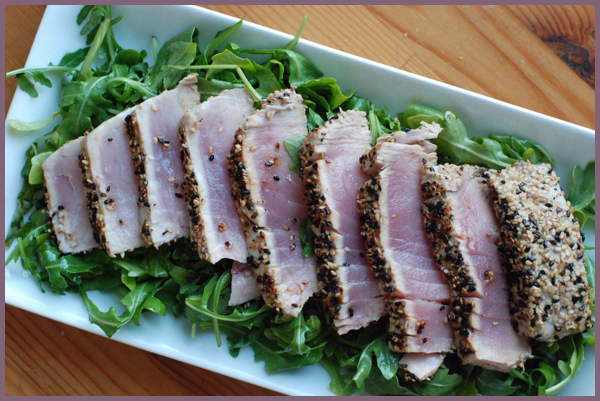
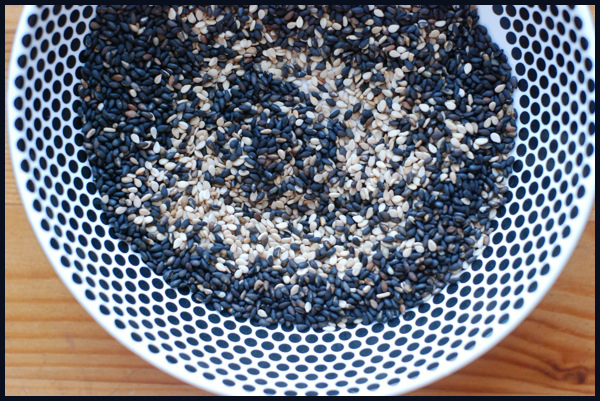
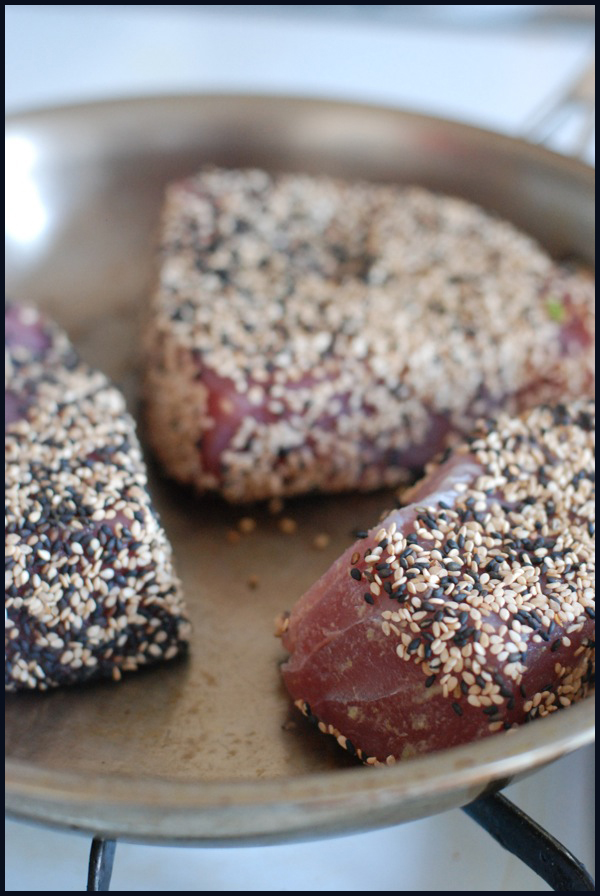
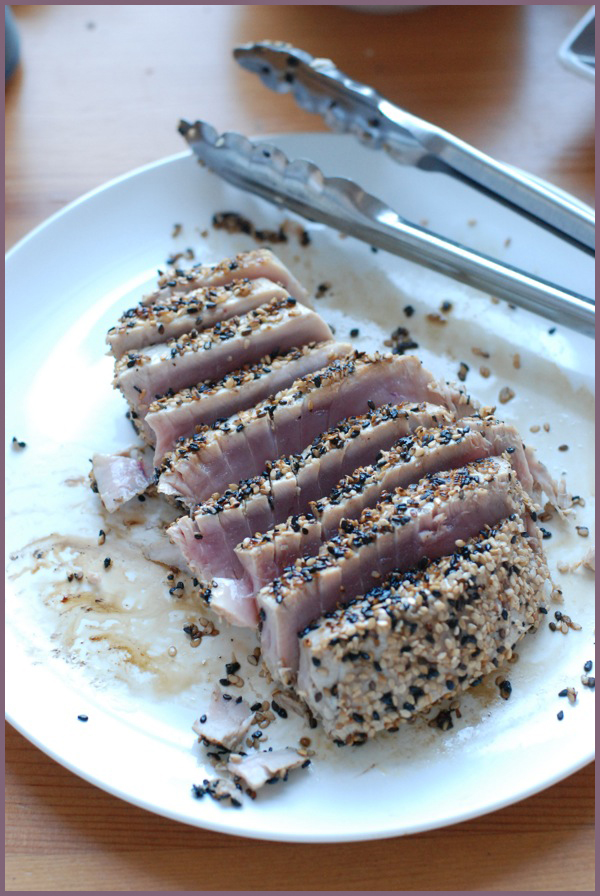
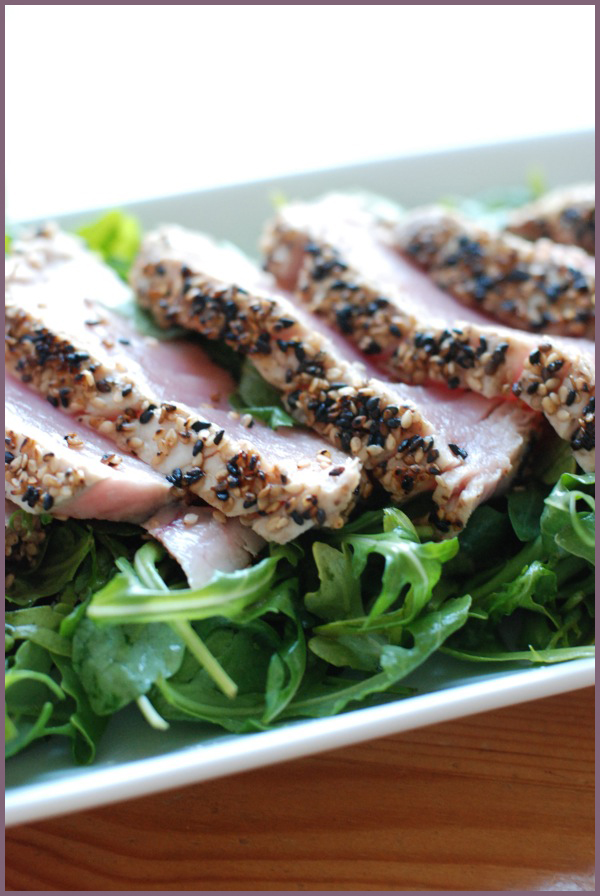
We're talking about tuna, rubbed with wasabi and coated with a mix of black and white sesame seeds, seared until it develops a crust to hide that jewel-pink interior. I'm being totally serious when I say that this tuna would be good on just about anything. I served it on a bed of arugula, dressed in rice wine vinegar, a little soy sauce, and sesame oil. Leftovers were cut into rice and piled onto sourdough toast. If only there'd been more.

To incorporate more of the tasty stuff that redeems this awful season, set the tuna (chunks, slices, whatever) in a salad of butter lettuce, corn, small cucumbers, and chopped red bell pepper. If you have some or none of those vegetables, just make a salad from whatever you've got. Put some of this tuna in, and you've got a simple, substantial summer lunch.

And with this, dear friends, I depart for a much-needed vacation. You'll find me with my nose deep in a glass of zin -- I'm going to San Francisco and wine country, and I couldn't be more excited. Not to worry: I've got a couple posts in the pipeline, so even in my absence, NDP will still have the goods. I'll be back in a couple weeks, with pictures and stories and, hopefully, some good wine in tow. Adieu!

Sesame-Crusted Tuna on Arugula Salad inspired by a recipe from Jaden of Steamy Kitchen and a recipe from Epicurious serves 6

2-3 lbs tuna, about 3 large pieces 1-2 tablespoons wasabi paste 1 cup sesame seeds (I like a mix of black and white) salt and pepper vegetable oil

1/2 lb arugula 1/8 cup rice wine vinegar 2 tablespoons sesame oil 1 teaspoon soy sauce 1 teaspoon honey salt and pepper

Put sesame seeds in wide, shallow bowl. Blot tuna with paper towel until dry. Season with salt and pepper on all sides, then rub wasabi paste evenly over top, bottom, and sides of tuna pieces. Place each piece of tuna in the bowl of sesame seeds, one at a time, and coat all sides with the seeds.

Heat heavy-bottomed pan (not non-stick) over medium-high heat. Add 1 tablespoon vegetable oil. When pan is very hot and oil shimmers, place tuna in pan. It will spatter -- be careful! Cook tuna about 2 minutes on each side; white sesame seeds will have browned, but in testing one of the pieces with a sharp knife, you'll see that it's quite pink in the middle. You want it seared on the outside, rare within; please, don't overdo tuna; it doesn't like to stay on the heat too long. When it's cooked properly, transfer tuna to plate or cutting board to rest.

Combine ingredients for dressing, and drizzle over arugula. Toss to incorporate. Transfer arugula to a serving platter, reserving remaining dressing.

Using a very sharp knife, slice tuna against the grain on a bias into 1/2-inch slices. Keeping the slices of each piece of tuna together, transfer onto arugula, then use a knife or spoon to nudge them into a fan or domino pattern. Drizzle reserved dressing over tuna, and serve immediately. (If not serving promptly, store in fridge until ready to serve.)